





 Portuguese
  English
  Spanish
  3 min of reading
  0 comments


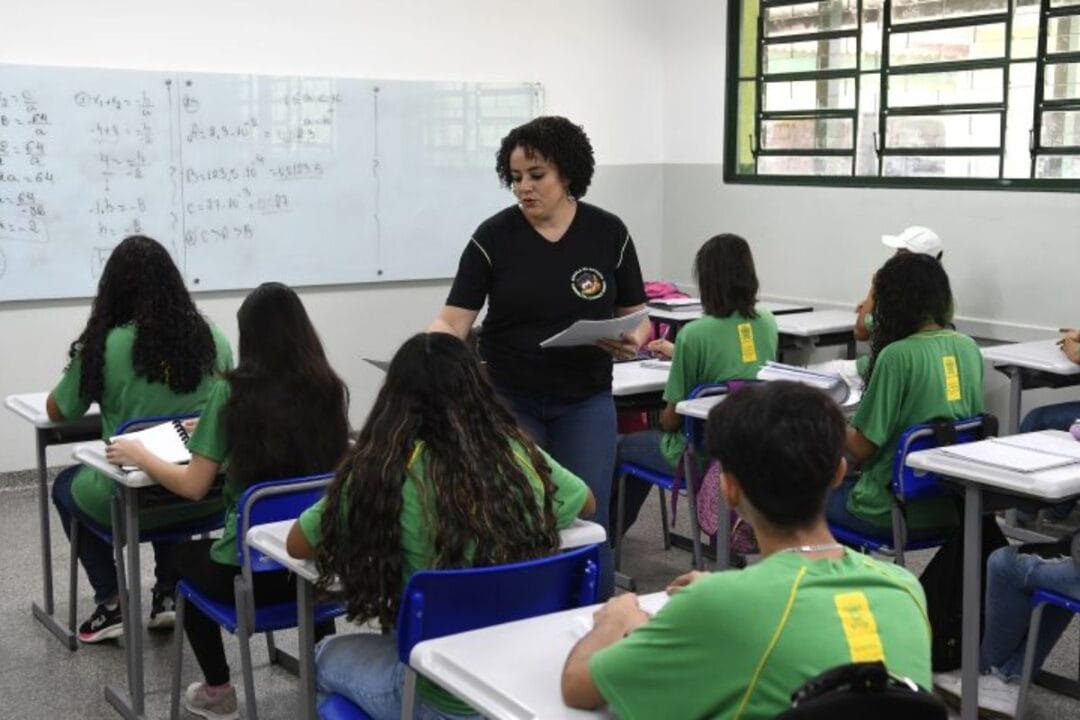
Mass Hiring Of Temporary Teachers Reveals Instability In Public Education And Weakens The Bond Between Teachers And Students, According To Data From Census 2024
The portrait of Brazilian public education continues to be marked by uncertainty. For the third consecutive time, the number of temporary teachers has exceeded that of tenured teachers in state networks across the country. The data comes from the Basic Education Census of 2024, released this Wednesday (9) by Inep, and has raised an alert among educators and specialists.
Temporary Hiring Became The Rule, Not An Exception
In total, 331,971 professionals were hired temporarily, against 331,440 permanent teachers. This represents more than 50% of the state teaching staff consisting of temporary teachers, who, in many cases, do not have a career plan, service time bonuses, or any stability.
-
Brazilian city bets on the business environment to generate jobs and attract investments in the energy sector — secretary reveals strategy at Macaé Energy 2026.

-
50 viaducts, 4 tunnels, 28 bridges, and 40 kilometers of bike paths: BR-262 in Espírito Santo will receive 8.6 billion reais for the largest engineering project in the state’s history, inspired by the Immigrant Highway in São Paulo.

-
Brazil produces too much clean energy and doesn’t know what to do with it: over 20% of solar and wind capacity was wasted in 2025 while investors flee and 509 renewable generation projects were abandoned in the last year.

-
Piauí will produce a new fuel that replaces diesel without needing to change anything in the truck’s engine and reduces pollutant gas emissions by half: truck drivers from all over the Northeast are already celebrating the news that will arrive later this decade.


“For public management, it’s great: a mass of workers who remain on base salary, without progression,” criticizes João Batista dos Santos, a researcher at UERJ. “But for education, this is devastating.”
Precarious Conditions And High Turnover
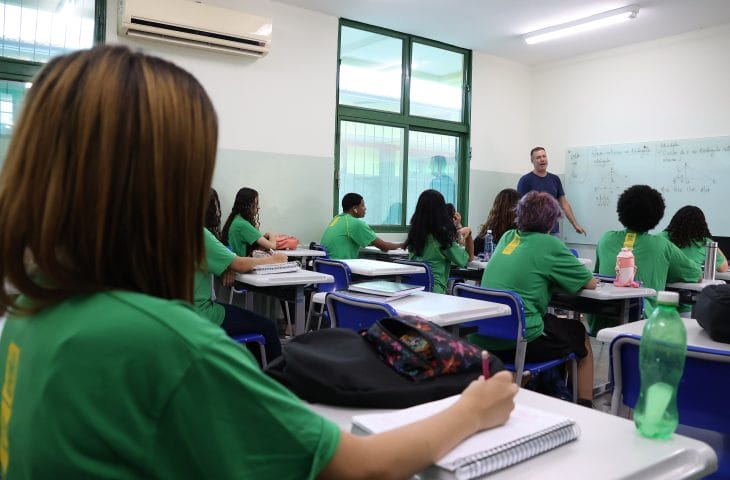
The temporary teachers face broken schedules, unstable contracts, and shorter leaves. When the bond ends, the income simply disappears. And to survive, many teach at several schools at the same time, which compromises their dedication, bond with the students, and even ongoing training.
“It’s the famous game of musical chairs. The students barely get used to one teacher, and they leave and another one comes in,” says a public network coordinator in Santa Catarina — a state where 76% of teachers are temporary.
Which States Lead In Temporary Contracts?
Among the 27 state networks, 14 have more temporary teachers than permanent teachers. The problem is more severe in the following states:
- Acre – 79.28%
- Santa Catarina – 75.96%
- Mato Grosso – 74.88%
- Espírito Santo – 73.22%
- Mato Grosso do Sul – 69.20%
- Distrito Federal – 60.84%
- Rio Grande do Sul – 60.45%
- Ceará – 60.03%
National Teacher Exam May Change The Game
According to Gabriel Corrêa, from the NGO Todos Pela Educação, the solution may lie in the newly created National Teacher Exam. “This unified exam will facilitate the hiring of permanent teachers with more solid and fair criteria. The expectation is that this will be reflected in the Censo of 2026 and 2027,” he explains.
The exam, which will be administered later this year, will allow the same candidate to compete for positions in different states or municipalities, increasing efficiency and transparency in the selection processes.
Teachers Deserve More Than Temporary Contracts
The hiring of temporary teachers is necessary in emergency situations, such as leaves or retirements. But making this the dominant model, as shown by the Census, precarizes one of the most essential professions for the country.
If Brazil wants a strong public education, it needs to start valuing those who are in the classroom — with stability, careers, and respect. Because you cannot build a future with contracts that expire at the end of the year.










Seja o primeiro a reagir!