





 Portuguese
  English
  Spanish
  5 min of reading
  0 comments


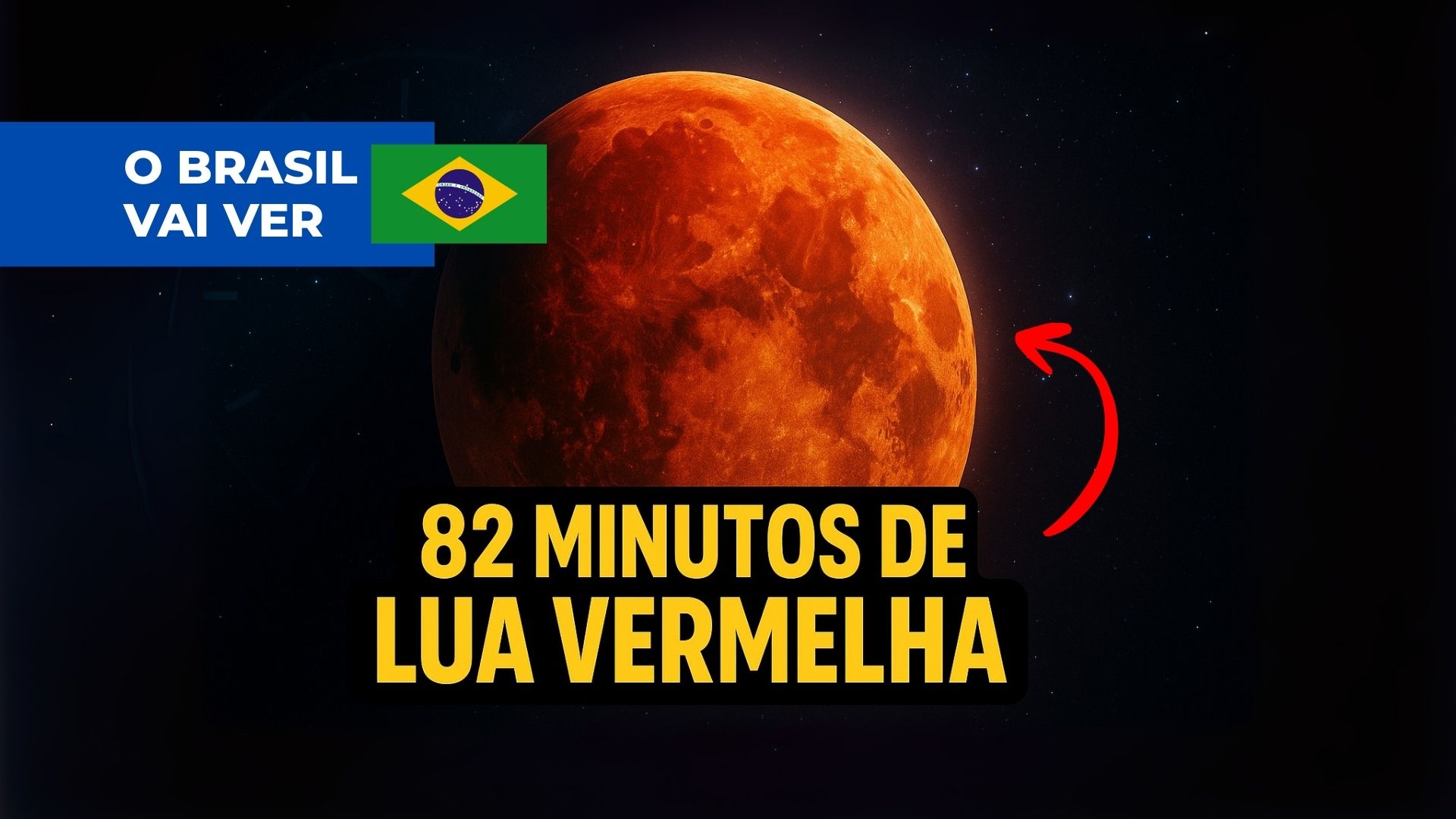
Rare Astronomical Phenomenon Can Be Followed in Real Time on the Internet, with the Moon Tinged Red for Over an Hour, Even Without Direct Visibility in Brazilian Skies.
On the night of September 7 to 8 (Sunday to Monday, Universal Time), the Moon will completely pass through the Earth’s shadow and will take on reddish tones in the phenomenon known as Blood Moon.
According to the TNH1 website, this will be the longest total lunar eclipse of 2025, with 82 minutes of total phase. In Brazil, direct observation will not be possible, but the event can be followed through live broadcasts on YouTube.
What Happens During the Blood Moon
During a total lunar eclipse, the Earth positions itself between the Sun and the full Moon, casting its shadow on the satellite.
-
Russia reveals that it is already conducting 95% of all its business with China without using a single dollar; dedollarization has ceased to be a promise and has become a reality in record time, and the West watches helplessly.

-
While Brazilians work more than 44 hours a week, Norwegians leave the office at 3 PM and are now testing a four-day workweek with full pay and no loss of productivity.

-
A legend of Brazilian TV is 75 years old, returned to narrate the World Cup for SBT, and still finds time to manage a farm of over 100 hectares in Rio Grande do Sul where she produces award-winning wines, olive oil, and raises cattle.

-
Family buys mansion destroyed by fire for $1.5 million, faces over 500 days of construction, transforms loss into high-end property, and leaves neighbors in awe.

The sunlight that surrounds the planet is filtered by the Earth’s atmosphere, which scatters the blue and allows the red to pass through. It is this natural filter that gives the Moon its characteristic orange or red glow during totality.
Time and Duration in Brazil
Although the global peak occurs between Sunday night and early Monday morning, in Brazil the spectacle takes place during the afternoon.
The phase when the Moon will appear red will be from 2:30 PM to 3:52 PM (Brasília time), peaking around 3:12 PM.
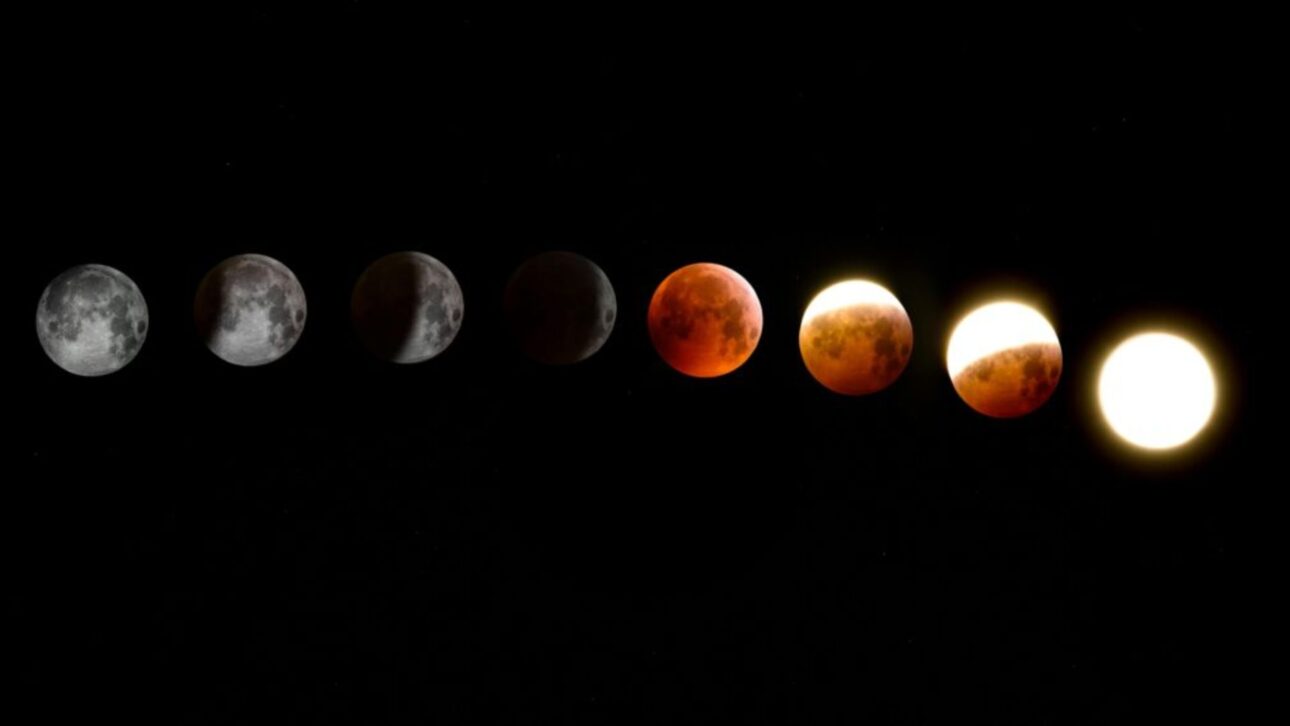
Before that, the penumbral phase begins in the early afternoon, and the partiality precedes totality, when the darkening becomes visible in regions where the phenomenon appears in the sky.
Visibility Around the World and Absence in the Americas
Totality will be visible to the naked eye in vast areas of Europe, Africa, Asia, and Australia.
In part of these locations, the beginning, peak, and end of the eclipse will occur above the horizon, allowing continuous following for more than an hour.
In the Americas, however, the Moon will have already set when totality begins, preventing direct observation from Brazil, other South American countries, and much of North America.
How to Watch Live on YouTube
Those in Brazil will be able to watch the eclipse in real time through online broadcasts.
Astronomy projects that conduct remote observation usually provide images from telescopes pointed at the Moon throughout the event, with technical narration and explanations for each phase.
Among the options, recognized international platforms release public sessions starting shortly before totality, ensuring coverage from the initial moments of reddening until the return to normal brightness.
To not miss it, it’s worth seeking out scheduled broadcasts in advance, setting reminders, and checking the quality of the streaming.
A stable connection and a high-resolution screen help to perceive color nuances and the edge of the Earth’s shadow advancing across the lunar disk, details that make the experience richer.
The Step-by-Step of the Phenomenon
The eclipse evolves in stages. The Moon first enters the Earth’s penumbra when the darkening is subtle.
Next, it crosses the umbra, the densest part of the shadow, and begins partiality, with a visible “bite” on the disk.
Totality begins when the satellite is completely immersed in this darker shadow and takes on a reddish hue.
Throughout the 82 minutes of totality, the color may vary depending on the planet’s atmospheric conditions, influenced by dust, aerosols, and humidity.
Finally, the Moon gradually leaves the umbra and returns to the penumbra until it recovers its full brightness.
Why This Eclipse Stands Out
In addition to its above-average duration, the geometry of the alignment favors a prolonged totality.
The lunar disk crosses a more central area of the Earth’s shadow, which extends the period it remains fully immersed in the umbra.
In 2025, there was another total eclipse in the first semester, with a shorter totality.
Therefore, the one in September is pointed out as the longest of the year. This combination of factors explains the interest of observers and the volume of live broadcast initiatives.
Tips for Those Traveling
Brazilian travelers in visibility regions can follow the spectacle with the naked eye, without the need for equipment.
Still, a pair of binoculars enhances contrast and reveals the lunar relief cut by the shadow.
In urban areas, it is best to find locations with an unobstructed horizon and less light pollution.
Checking the weather forecast and arriving early increases the chance of observing also the penumbral and partial phases, when the progression of the shadow is more evident.
Upcoming Events in the Astronomical Calendar
Two weeks after the Blood Moon, the cycle continues with a partial solar eclipse in September, visible in other parts of the globe.
For the Brazilian public, new lunar and solar eclipses will occur in the coming years, with direct observation windows and others accessible only through broadcasts.
Consulting reliable ephemerides and observatory channels helps plan observation and confirm local times accurately.
Where to Seek Last-Minute Information
As the date approaches, institutions and scientific outreach projects update their live schedules and detail times by time zone.
Specialized astronomy channels, including international initiatives with a tradition in eclipse coverage, usually provide specific pages with countdowns and event agendas.
For those who prefer content in Portuguese, Brazilian science channels and observatories maintain programming aimed at the local audience, with explanations of the phenomenon’s dynamics and observation guidance.






-

-

-

-

-

-

171 pessoas reagiram a isso.