





 Portuguese
  English
  Spanish
  5 min of reading
  14 comments


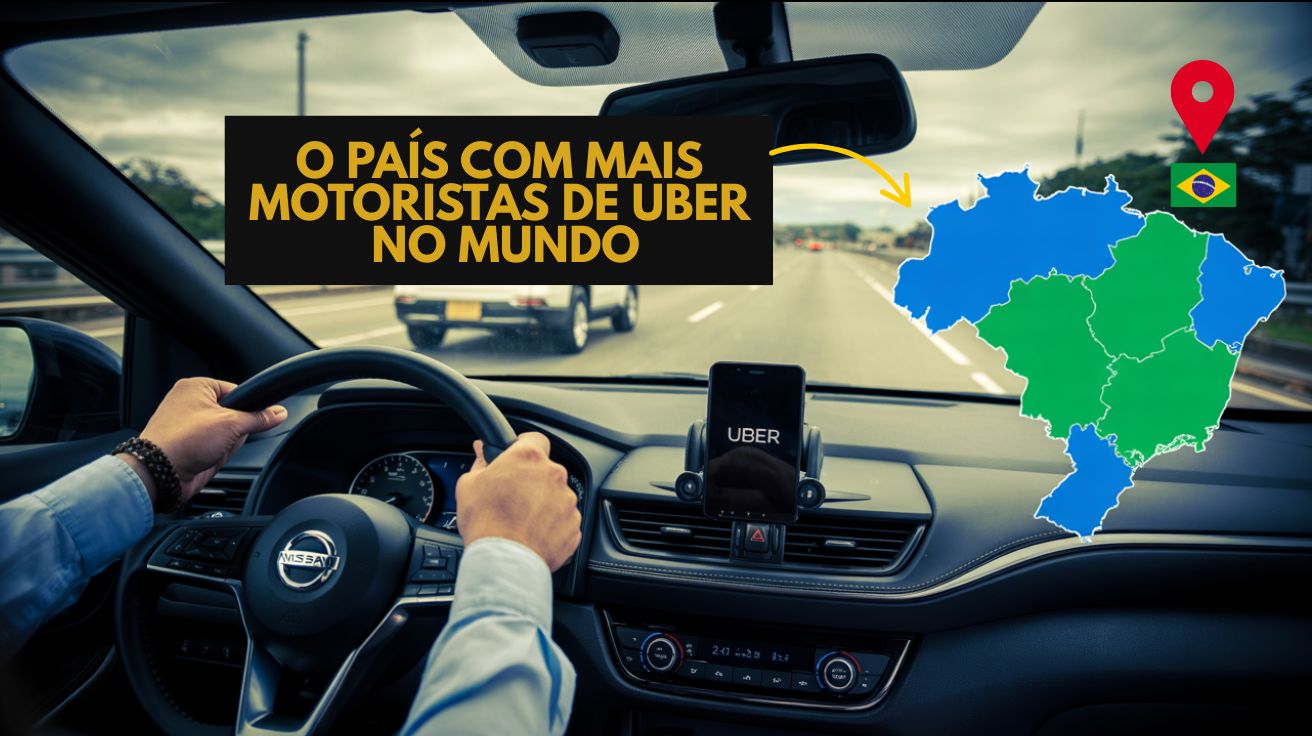


With thousands of drivers across the country, the scenario of app-based work reveals stories of overcoming, daily challenges, and a transformation that deeply impacts the informal market and urban mobility in contemporary Brazil.
Brazil stands out globally for having the largest number of Uber partner drivers, with around 1.4 million registered professionals.
Despite the historic crisis of labor shortages in various sectors, unemployment is still cited as the main factor driving thousands to seek a means of livelihood through the platform.
According to updated data from 2025, the use of the transportation app exceeds 125 million Brazilians, which represents approximately 60% of the country’s population.
-
Spain surprises the world by erecting 62 artificial dunes, mixing sand with natural remains of posidonia, and causing the structure to lose only 1.4% of its volume in 1 year.

-
With 16 Bulava missiles, improvements in acoustic stealth, and a design focused on silent patrols, Russia’s nuclear submarine was born to ensure Moscow’s invisible retaliation and has become one of the pillars of its maritime strength.

-
‘Populous’ city in Rio among the worst in Brazil in national ranking and exposes silent development crisis.
-
Couple buys house in the South Zone of São Paulo, opens a hidden door in the garage, and finds a secret wine cellar with dozens of old wines forgotten since the 1970s.


The platform, which arrived in Brazil just before the 2014 World Cup, changed how millions view informal work and extra income.
But how much do drivers actually earn?
And what are the real working conditions of these individuals who, in many cases, rely exclusively on Uber to guarantee their income?
Uber: An Income That Became a Main Profession for Many
Initially, Uber’s promise in Brazil was to provide a temporary source of income to supplement earnings or meet a demand for flexible jobs.
Today, however, many drivers report that their activity has become their primary occupation, despite daily challenges.
According to the Brazilian Association of Mobility and Technology (Amobitec), between May 2023 and April 2024, partner drivers spent an average of 85 hours per month driving, not including waiting time between rides.
This working time translates to an average gross earning per hour of R$ 47, a real increase of 5% compared to the 2021-2022 period.
In the case of app-based delivery workers, the average working hours drop to 39 hours monthly, with a gross earning of R$ 31.33 per hour, also showing a real growth of 5%.
The Amobitec survey considers approximately 2.2 million drivers and delivery workers throughout Brazil, of which about 800,000 are not registered with Uber specifically, working on other platforms.
Still, 42% of drivers have another parallel occupation, while 46% of delivery workers split their time with another professional activity, which reinforces the complementary nature of the work for many.
Profile and Routine of App-Based Drivers
To better understand the daily lives of these professionals, the website O DIA spoke with drivers and delivery workers who shared their stories and challenges.
Marcus Vinicius Ribeiro, 52 years old, a resident of Niterói, has been working as an Uber driver for four years and has completed over 14,000 rides.
According to him, “knowing the city well is essential to deal with traffic and optimize work”.
He usually works five to eight hours daily, including weekends, and reports that his gross income is around R$ 4,500 per month, with about R$ 1,000 in monthly vehicle-related expenses.
For Marcus, the biggest problem is the abuse by passengers and the aggression from some delivery riders, who threaten drivers during rides.
Another example is Marcelo Gomes, 47 years old, who has been working in the profession for eight years and also lives in Fonseca, Niterói.
He reports that initially, the activity allowed him to support his family, but today the scenario has changed with rising costs of fuel, insurance, and vehicle maintenance.
Marcelo prefers to work only in Niterói to avoid risks, as he considers the violence in Rio de Janeiro to be very high.
He says his shift usually lasts up to 12 hours, the limit imposed by the app, and his net monthly earnings are around R$ 3,500.
Lucas Helmold, 23 years old, a driver in the “Uber Moto” category and freelance delivery rider, speaks about the daily risks he faces in São Gonçalo.


“It’s always very risky. We go out asking for protection and come back thanking”, says Lucas, highlighting the high rate of accidents and robberies in the area.
Besides the dangers in traffic, he mentions that even police checkpoints often generate concerns, as, according to him, police sometimes make up reasons to seize the motorcycle, even when it is in proper condition.
To optimize his earnings, Lucas sets financial goals instead of hourly work targets.
He claims he can earn at least R$ 250 in about six hours of work and prefers to have most meals at home to save money.
Market Challenges and Prospects for 2025
The rapid growth in the number of app-based drivers in Brazil coincides with the transformation of the labor market, which presents new dynamics and challenges.
According to specialists in economics and urban mobility, the shortage of formal labor, combined with the high unemployment rate, keeps thousands of Brazilians seeking income through transportation and delivery apps.
However, this flexibility comes with instability, as earnings can vary based on external factors, such as fuel prices, vehicle maintenance, and safety conditions.
Moreover, the issues of regulation and labor protection for these professionals still generate intense debates among lawmakers, companies, and unions.
Safety, both physical and legal, remains one of the main challenges for drivers and delivery workers in the country.
On the other hand, technology and the expansion of the sector indicate that the app-based work model is likely to continue growing, with the potential to solidify as a viable alternative for a portion of the economically active population.
What Does the Future Hold for App-Based Drivers?
With rising operational costs and pressures for better working conditions, many drivers are seeking strategies to balance income and quality of life.
Among the alternatives are diversifying platforms, planning shifts, and investing in more economical and safer vehicles.
According to industry analysts, 2025 will be a decisive year for the professionalization of the segment, which may gain more recognition and protection, but will also face new regulatory and market challenges.
In light of this scenario, the question remains: will app-based work be a sustainable alternative in the long term for millions of Brazilians?







Hoje existem um grupos de motoristas de aplicativos em todo o Brasil que faturam mais de R$ 3 mil reais mensais com ganhos extras aproveitando o tempo de viagem com seus passageiros para simplesmente fazer uma publicidade dentro do seu veículo, com apenas uma tela digital ou uma lojinha física você já consegue obter ganhos vendendo ou indicando produtos e serviços para grandes empresas parceiras locais, para mais informações me chamem no WhatsApp 021 983015906 ( Vitro Gomes )
Quanta mentira. Totalmente fora da realidade. Motorista passando fome. Pagando carro, manutenção, multas e eventuais, seguro etc etc… e a plataforma só baixa a cada dia as dinamicas
É só o governo não se meter e diminuir o preço do combustível e impostos já resolve.