





 Portuguese
  English
  Spanish
  5 min of reading
  0 comments


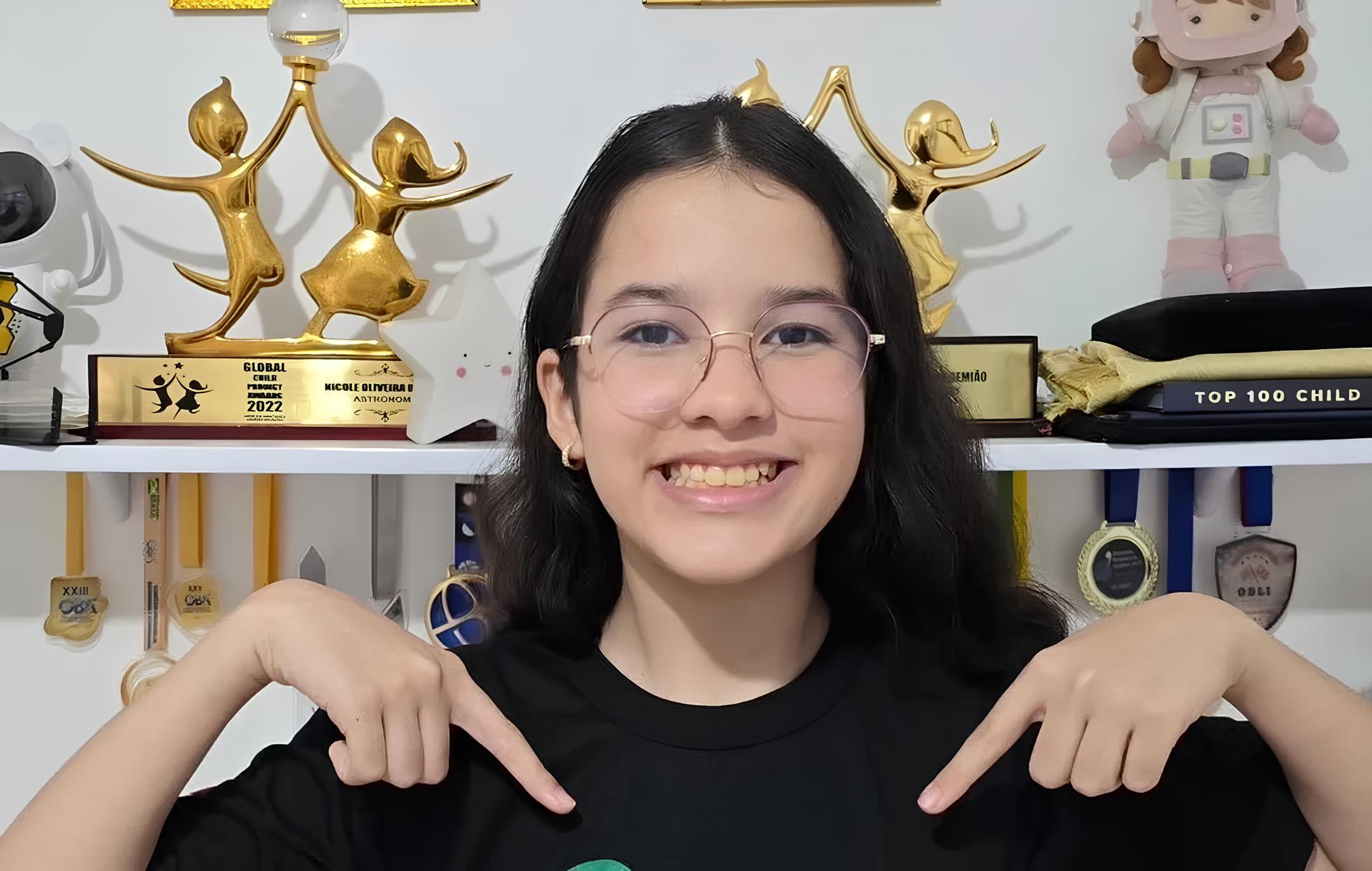
In 2021, the BBC and CNN highlighted Nicolinha Oliveira, 8 years old, who identified seven asteroids in a NASA program and became one of the youngest astronomers on the planet.
In September 2021, the story of a Brazilian girl spread around the world. According to BBC Brasil and the scientific portal Phys.org, Nicole Oliveira, affectionately called Nicolinha, then 8 years old, had achieved a feat that many adult scientists have never accomplished: identifying potential asteroids in partnership with NASA. Participating in the international program of the IASC (International Astronomical Search Collaboration), Nicolinha analyzed astronomical images provided by high-precision telescopes and managed to locate seven uncataloged objects. The discovery was sent for official evaluation, and if confirmed, will ensure the Brazilian’s name is recorded in the history of astronomy.
According to Phys.org, Nicolinha became one of the youngest astronomers in the world to actively participate in international scientific projects, becoming an inspiration for children, teachers, and researchers.
A Passion That Started Early
According to CNN Brasil, Nicolinha showed interest in outer space from a very young age. At 4 years old, she was already asking her parents intriguing questions about stars and planets. While other children asked for dolls or toys, she wanted telescopes, astronomy books, and miniature rockets.
-
While the world looks at oil, the war with Iran is already disrupting helium supply from Qatar, affecting car and iPhone chips, threatening AI expansion, and putting pressure on aluminum packaging at the highest value in four years.

-
Global warming will expose a treasure hidden under the ice of Antarctica and may spark an international dispute over gold and valuable minerals.

-
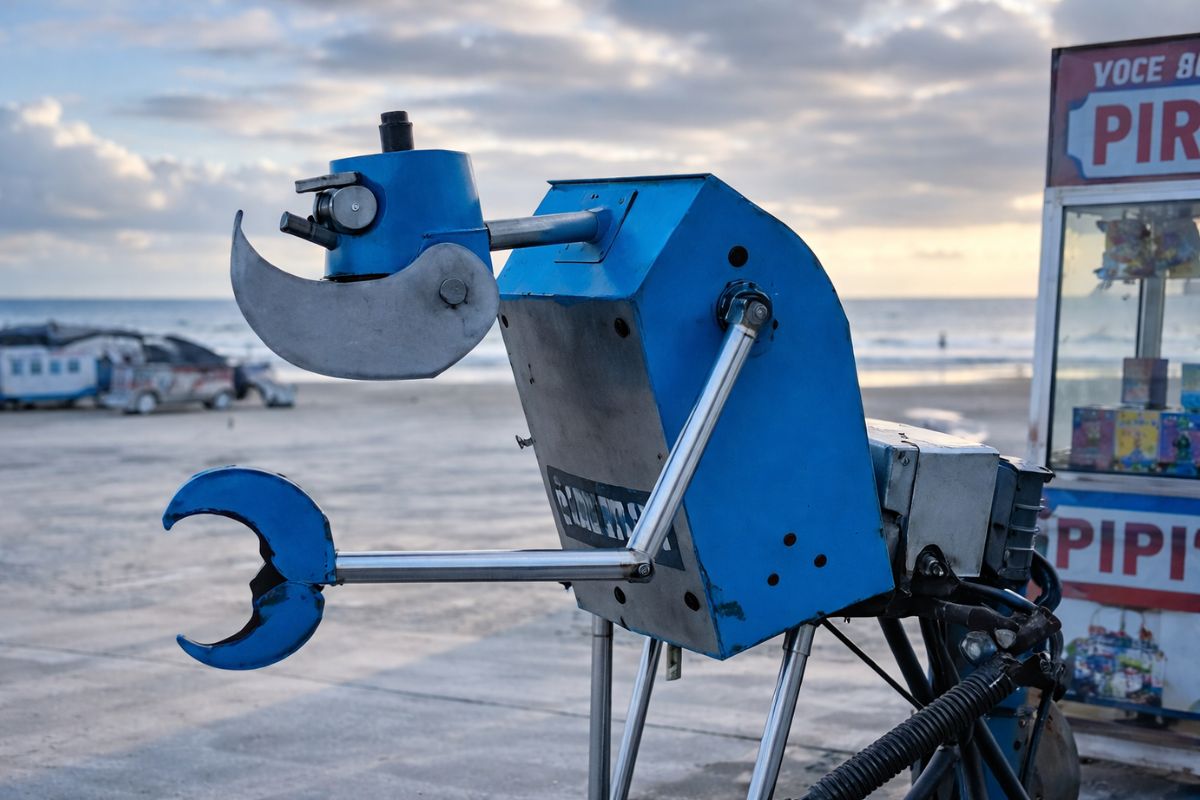
A street vendor from Praia Grande built a robot made of scrap from scooters and washing machines that pulls his popcorn cart on the beach, emits sounds, and interacts with customers, becoming an attraction on the coast of São Paulo.
-
The specifications of the Xiaomi 18 Pro Max have been leaked, and the highlight is a dual 200 MP camera with a new 22-nanometer technology that promises to consume less energy and capture details in shadows and bright areas using LOFIC HDR.


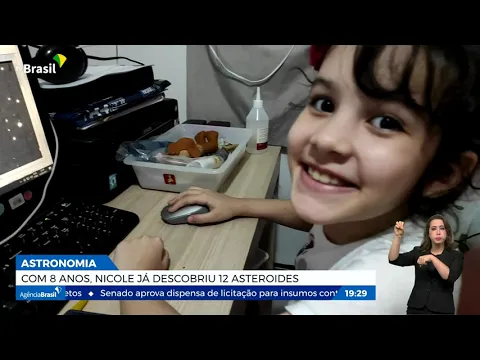

At 6 years old, she received her first telescope and began participating in activities at the Centro de Estudos Astronômicos de Alagoas (CEAAL), where she impressed adults with sharp questions and above-average comprehension for her age. There, she became the youngest member of the center, paving the way for lectures and participation in scientific conferences.
According to BBC, Nicolinha also started getting involved in science fairs, always presenting topics related to astronomy, which reinforced her reputation as a child prodigy.
How The NASA and IASC Program Works
The asteroid identification program of the IASC, in partnership with NASA, is one of the most innovative scientific initiatives at the educational level. It allows students and amateur scientists from different countries to receive images from powerful telescopes, such as Pan-STARRS in Hawaii.
According to Phys.org, these images are distributed in batches, and participants are tasked with observing and recording points of light that move in relation to fixed stars. Each suspicious movement could be a near-Earth asteroid.
It was precisely through this process that Nicolinha, at 8 years old, managed to identify seven uncataloged space objects. If confirmed, they will receive official names — and hers may be included as the discoverer.
The Girl Who Put Brazil on the Map of Child Astronomy
The impact of Nicolinha’s story was immediate. In 2021, BBC, CNN, and Phys.org covered her trajectory, highlighting the young Brazilian’s early talent. It wasn’t long before she was called “the child astronomer of Brazil.”
According to CNN, Nicolinha even created a YouTube channel, where she shares content about astronomy, explains basic concepts, and encourages other children to fall in love with science. This made her not only a prodigy but also a young science communicator.
Her example showed how it is possible to bring new generations closer to science, in a country where investment in research is still limited.
Comparisons with Other Prodigies
Cases of child prodigies draw attention in various fields. According to Phys.org, there are isolated examples in the field of astronomy, but Nicolinha gained prominence for combining early age, international engagement, and verifiable discoveries.
In Brazil, the city of Cândido Godói (RS) is already known for its abnormally high number of twins, which also intrigues scientists. But Nicolinha is proof that scientific curiosity can be born early and create global impact.
Internationally, the young Brazilian has been compared to prodigies in mathematics and physics, who at similar ages published articles or solved complex problems. The difference is that in the case of astronomy, her discoveries can literally help map space and increase Earth’s safety against future asteroid impacts.
What Experts Say
According to BBC Brasil, teachers and researchers who followed Nicolinha emphasize not only her technical ability but also her dedication and discipline. Analyzing images from the IASC requires patience, concentration, and hours of work — something rare in children her age.
For experts, cases like Nicolinha’s reinforce the importance of educational programs that connect young talents with real scientific projects, stimulating the formation of future scientists.
The Future of The Child Astronomer
In an interview with BBC, Nicolinha stated that she dreams of becoming a aerospace engineer and working at NASA. To achieve this, she continues studying astronomy, participating in scientific events, and getting involved in educational projects.
Her parents report that, despite the normal school routine, she dedicates part of her free time to reading science books, watching videos about space exploration, and engaging in astronomy-related activities.
According to Phys.org, her story shows that Brazil has the potential to train scientists from an early age, as long as there is encouragement and family and institutional support.
Nicolinha as a Symbol of Inspiration
More than numbers and discoveries, Nicolinha represents the ability of a Brazilian child to carve out a space in a field dominated by adults and international institutions. Her journey inspires not only other children but also educators, showing that scientific curiosity should be encouraged from an early age.
According to CNN, the impact of her story has already reached Brazilian schools, where teachers cite her as an example in science classes.
Her seven asteroids identified in 2021, in cooperation with NASA and IASC, are just the beginning. What is to come in the next few years is still an unknown, but one thing is certain: the name of Nicole Oliveira has entered history as the Brazilian child astronomer who conquered the world before even turning 10 years old.








-

Uma pessoa reagiu a isso.