





 Português
  Inglês
  Espanhol
  6 min de leitura
  0 comentários


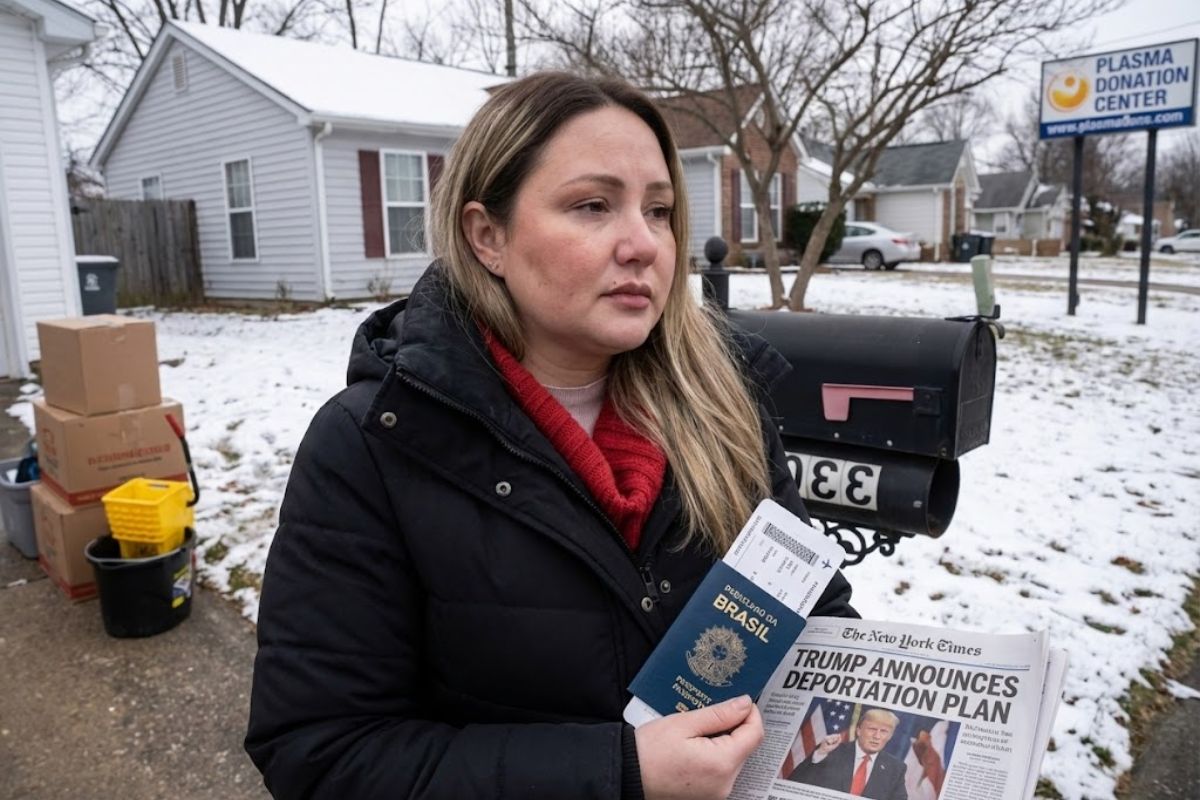
After Arriving on August 7, 2024 for Vacation, Brazilian Spends 11 Months Irregular in the United States, Cleaning Houses, Donating Plasma, and Living Daily Fear, While Trump Returns Fuels Climate of Hunting Immigrants, Until She Requests Her Own Deportation to Return Alive and Whole to Brazil
On August 7, 2024, Brazilian Lilian Divina Leite, a lawyer, arrived in Miami for what was supposed to be just a quick vacation, with little money, little planning, and a return ticket already booked. Between August 2024 and the following year, her tourist trip turned into an 11-month irregular stay, going through different states, including Orlando, New York, Charlotte, and neighboring cities, until the fear of the new Trump government and its mass deportation policies led her to make an extreme decision. Realizing that the climate of hunting immigrants could put her life at risk, the Brazilian decided to request deportation before being arrested.
In practice, the Brazilian’s journey fluctuated between poorly paid cleaning jobs, donating plasma to earn a few dollars, assistance from churches and friends, and a daily coexistence with the fear of immigration raids. When the new Donald Trump administration began to intensify its rhetoric and actions against immigrants, including reports of people being stopped even with valid visas, the Brazilian concluded that she no longer controlled the risk. Tired, ill, tense, and confronted with a more aggressive political landscape, she chose the path that almost no one takes, activated the system and requested her own deportation to return alive to Brazil.
Brazilian Exchanges Vacation for 11 Months of Irregular Survival
The story began as a classic tourist script.
-
In a silent race, Shopee signs a mega contract in Guarulhos and accelerates the e-commerce war with faster deliveries, pressured shipping, and a new threat to rivals in Brazil.

-
Oil surged to $115 a barrel due to the war in the Middle East, and diesel in Brazil has already risen to R$ 7.45 per liter, while the United States…

-
Brazilian city bets on the business environment to generate jobs and attract investments in the energy sector — secretary reveals strategy at Macaé Energy 2026.

-
50 viaducts, 4 tunnels, 28 bridges, and 40 kilometers of bike paths: BR-262 in Espírito Santo will receive 8.6 billion reais for the largest engineering project in the state’s history, inspired by the Immigrant Highway in São Paulo.


The Brazilian arrived in Miami on August 7, 2024, spent a few days in the city, and then took a bus to Orlando, where she fulfilled her dream of visiting Disney.
There, still with tourist status, she decided to put her return ticket aside and extend her stay.
The impulsive choice paved the way for a sequence of 11 months where her stay gradually became illegal.
After Orlando, the Brazilian went to New York and then to Charlotte, North Carolina, where she claims to have arrived due to spiritual guidance.
In a city she didn’t know, without a solid support network and with a diploma that had no practical validity, she turned to social media.
In a direct appeal, the Brazilian offered herself for any type of work, which pushed her into the informal circuit of cleaning jobs and underemployment faced by many immigrants.
Cleaning, Exploitation, and Plasma Donation to Pay for Basic Needs
In Charlotte, the Brazilian was quickly absorbed by networks of fellow countrymen.
A church contact placed her in rented rooms by Brazilians and in residential cleaning jobs.
At first, she worked as an apprentice and earned around 30 dollars for a full day of cleaning, an amount well below the local standard.
She reports that employers “love newcomers,” because they know that the newly arrived are willing to accept practically any conditions.
When cleaning jobs became scarce, survival relied on other means.
The Brazilian donated plasma at health centers in exchange for money, used coupons to buy food, and relied on food donations and occasional financial support from churches.
According to her, there was no room for pride or shame.
The goal was simple and raw: to earn enough to eat, pay for room rent, and not be totally dependent on anyone, even though she was in an irregular situation.
Health Decline and Advancement of Trump Government Accelerate Decision
As the months went by, her body began to pay the price of the exhausting routine.
The Brazilian reports experiencing blood pressure crises and discovering endometriosis, problems that required medical care in an expensive and hostile healthcare system for those who are undocumented.
The combination of hard work, uncertainty, and silent illnesses deepened the Brazilian’s physical and emotional weariness.
At the same time, the political context changed. With the new Donald Trump administration, mass deportation policies returned to the center of the agenda.
The Brazilian says she heard cases of people approached by authorities even with their documents in order, which for her was a sign that no one was completely safe.
In this climate of hunting immigrants, the Brazilian assessed that staying meant accepting the real risk of being detained at any corner.
Life in Matthews, Rented Room and Fear Spread Among Brazilians
For part of the 11 months, the Brazilian lived in Matthews, a city in the Charlotte area with a significant presence of Brazilians.
She rented a simple room in a fellow countryman’s house for about 750 dollars, an amount that included shared kitchen and laundry facilities.
There was no comfort, but there was some stability.
Still, the general climate among Brazilians was one of constant fear, with stories of families threatened with reports to authorities in any conflict.
She recounts witnessing a woman having a panic attack in a car after hearing that her husband could be reported, even after living in the United States for over 20 years, paying taxes, and having American children.
For the Brazilian, the implicit message was that, with Trump back, it only took a phone call to turn an immigrant’s life into a disaster.
The Uncommon Decision of a Brazilian Who Requests Her Own Deportation
Unlike most undocumented immigrants, who do everything to avoid any contact with authorities, the Brazilian chose to approach the system.
Tired, ill, and convinced that her stay could end in arrest, she opted to join a return program.
Instead of waiting to be caught, the Brazilian formally requested her own deportation, a rare and little-discussed decision among compatriots living in irregularity.
She explains that this type of return offers conditional financial support.
The ticket must be issued by the program’s own structure, and only after the person arrives in Brazil is an international wire transfer payment made.
Those who buy the ticket on their own lose the right to the amount, which makes the decision even more delicate for those who are already financially fragile.
The Brazilian, who did not come to the United States to “succeed in life,” but to live the experience, decided that, in that context, the most rational choice was to leave.
Trauma, Sirens in Brazil, and Reflection on Freedom
Back in Brazil, the Brazilian only realized the extent of the trauma when she resumed her routine.
In São Paulo, while taking a bus with her son and hearing a siren, she reacted with a start and instinctively thought she might be arrested.
She recounts that it was in that moment that she understood she had spent months in a state of permanent alert, fearing arrest more than deportation itself.
Today, the Brazilian says she would do it all again for the experience, but makes it clear that she would not want to be in the United States under the current government.
Of religious background and with intense faith, she interprets her journey as a spiritual process while questioning the view of those who see Trump as a figure protected by God amid an environment of hostility toward immigrants.
For the Brazilian, the passage through the United States taught a harsh lesson: in some places, freedom is a privilege that can disappear at any moment for those who do not have the right document in their pocket.
In your opinion, this Brazilian’s decision to request her own deportation in the face of the immigrant-hunting climate with Trump back was a gesture of necessary prudence or a premature renunciation of the dream of staying in the United States?










-

-

-

4 pessoas reagiram a isso.