





 Portuguese
  English
  Spanish
  4 min of reading
  0 comments


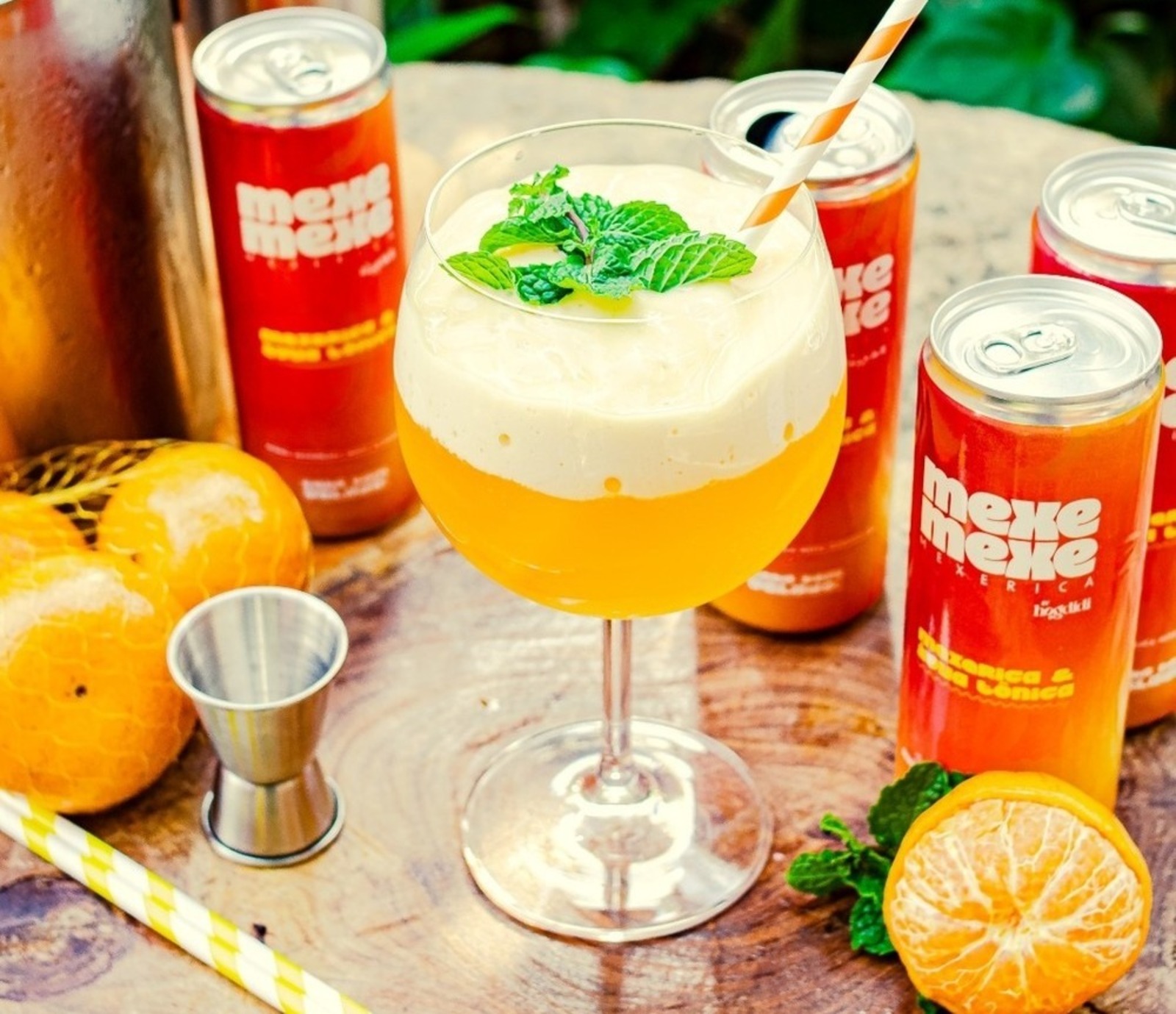
Created From Family Recipes, Mining Company Transforms Tangerine Into Ready-To-Drink Mexe Mexe, Bets on Innovation, Expands Market and Seeks Sales Year-Round
A mining company created from family recipes transformed the tangerine into a base for new products and launched the ready-to-drink Mexe Mexe. The launch took place in June 2025 and, in less than a year, the drink already shows growth potential.
Origin of Hogdidi and Start of Production
Hogdidi emerged from the initiative of the miner entrepreneur Christian Maciera, who decided to transform family recipes into a business.
The proposal was to unite tradition, innovation, and strategy in the beverage market, using tangerine as the main ingredient.
-
Brazilian city bets on the business environment to generate jobs and attract investments in the energy sector — secretary reveals strategy at Macaé Energy 2026.

-
50 viaducts, 4 tunnels, 28 bridges, and 40 kilometers of bike paths: BR-262 in Espírito Santo will receive 8.6 billion reais for the largest engineering project in the state’s history, inspired by the Immigrant Highway in São Paulo.

-
Brazil produces too much clean energy and doesn’t know what to do with it: over 20% of solar and wind capacity was wasted in 2025 while investors flee and 509 renewable generation projects were abandoned in the last year.

-
Piauí will produce a new fuel that replaces diesel without needing to change anything in the truck’s engine and reduces pollutant gas emissions by half: truck drivers from all over the Northeast are already celebrating the news that will arrive later this decade.


The story began in 2016, when Paula, Christian’s wife and partner, prepared an eggplant appetizer inspired by a recipe from her great-grandmother called “Didi.” The preparation pleased friends and encouraged homemade production.
With the increasing interest in the products, the portfolio began to include other items. In addition to appetizers, artisanal production incorporated jams and snacks, expanding commercialization possibilities.
In 2019, the business was formalized. However, growth brought financial challenges. Some products had high costs due to inputs, glass packaging, and labor.
According to Christian, items like the leek appetizer were appreciated by the public, but they were not economically viable. The situation required seeking new paths to maintain the company’s sustainability.
The Tangerine as a Competitive Differential
It was in this context that the tangerine sauce emerged. The product is made with 100% fruit, sourced directly from producers in the Belo Vale region, one of the main production hubs for the input in Minas Gerais.
For the entrepreneur, this choice also has emotional significance. He states that the tangerine evokes fond memories, the family environment, and the distinctive aroma associated with his grandparents’ backyard.
The sauce began to be packaged in biodegradable plastic. This solution brought together innovation, regional identity, and environmental concern in the company’s strategy.
The concern about waste led Hogdidi to seek alternatives to use the fruit peels. After tests and research, tangerine liqueur emerged, which quickly found good acceptance from the public.
The outcome revealed a new commercial potential and encouraged the expansion of the product line, creating different consumption forms for the main ingredient.
The Emergence of the Ready-to-Drink Mexe Mexe
In 2025, the opportunity for exclusive can packaging arose. From this possibility, the ready-to-drink Mexe Mexe was created, developed with a combination of tangerine and tonic water.
The official launch took place in June of that year. In less than a year in the market, the ready-to-drink shows signs of expansion.
According to Christian, the product’s name refers to both the fruit and the invitation to celebrate and share moments.
From the beginning, the proposal was to avoid having the product restricted to the Carnival period. The company sought to break away from the logic of drinks associated only with specific dates.
A study conducted by Hogdidi itself showed that the consumption of drinks linked to Carnival is concentrated in a few days of the year.
Based on this analysis, the company developed a strategy to expand the consumption moments of the ready-to-drink. Tasting actions during Carnival became part of the planning.
Partnerships with grocery stores were also included. In addition, the brand considers other high-demand periods, such as the World Cup, which boosts the market for weeks.
Distribution and Support from Sebrae
Currently, Hogdidi’s products are sold through e-commerce and physical points in the Belo Horizonte Metropolitan Region.
The brand also has a presence in São Paulo and Rio de Janeiro, expanding product distribution.
The company’s journey includes participation in initiatives from Sebrae Minas. For four years, Hogdidi has been part of the Origem Minas Program.
The company has also participated in programs such as Move+, Sebrae Delas, and Prepara Gastronomia.
According to Christian, the Origem Minas program helped increase brand visibility and open new market opportunities.
One of the most significant moments occurred during the International Coffee Week, when the company recorded the highest sales volume at the program’s booth.
The result encouraged the acquisition of its own booth the following year and the launch of new flavors.
Growth of the Ready-to-Drink Beverage Market
The ready-to-drink Mexe Mexe is positioned in a segment that is experiencing expansion. According to the Minas Gerais State Beer and Beverage Industries Union, there is an expectation of growth in the sector.
The projection is for a 9% increase in sales volume during Carnival 2026, mainly driven by ready-to-drink beverages.
In the coming years, Hogdidi aims to expand the production of Mexe Mexe and invest in tangerine liqueur.
The company also plans to develop non-alcoholic and zero-calorie drink versions, following the sector’s diversification trend.
The goal is to consolidate the ready-to-drink as an option available year-round and achieve larger distribution networks in the medium term.
With information from PEGN.








Seja o primeiro a reagir!