





 Portuguese
  English
  Spanish
  5 min of reading
  94 comments


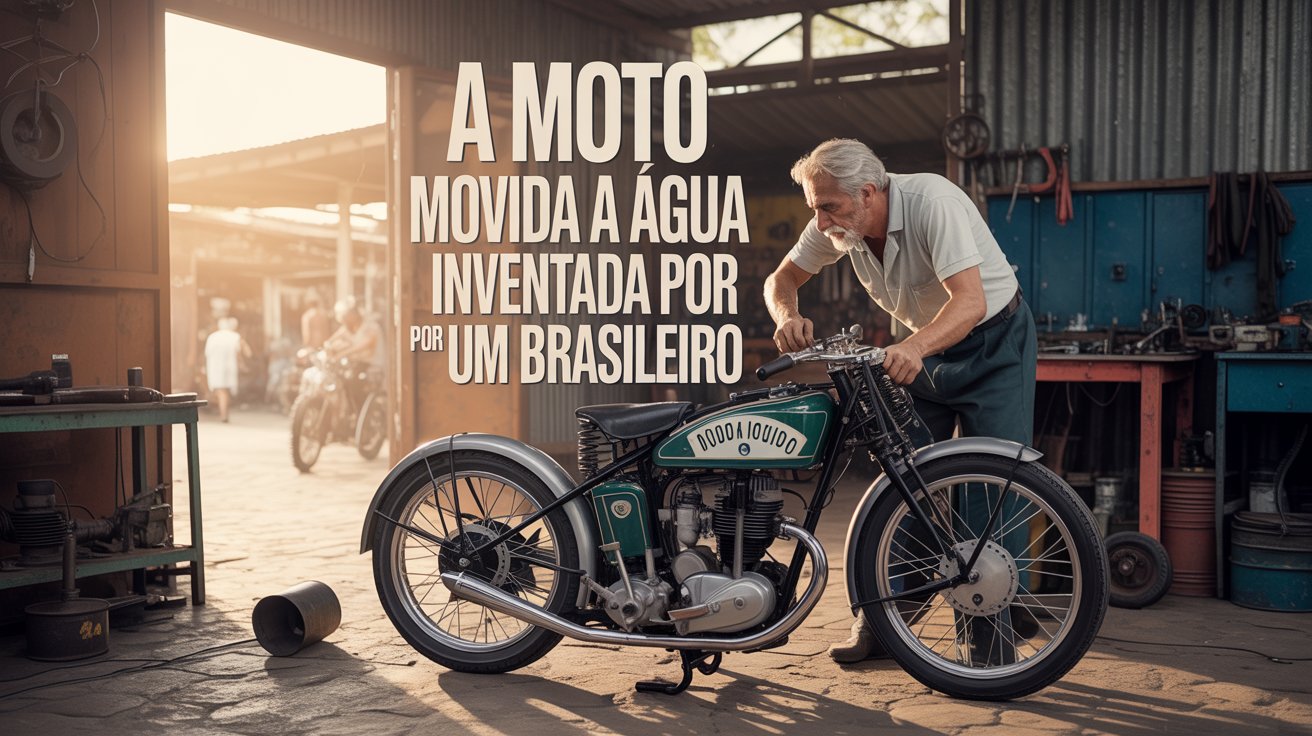

Brazilian Inventor Overcomes Challenges and Creates Motorcycle Powered by Hydrogen Extracted from Water. The Technology Promises a Thousand Kilometers of Range Per Liter, Without Pollutants, Awakening Interest and Distrust from the Industry. The Project is Still Experimental and Seeks Recognition.
A motorcycle that travels a thousand kilometers on just a liter of water may seem like science fiction, but it is a reality in the hands of a self-taught Brazilian.
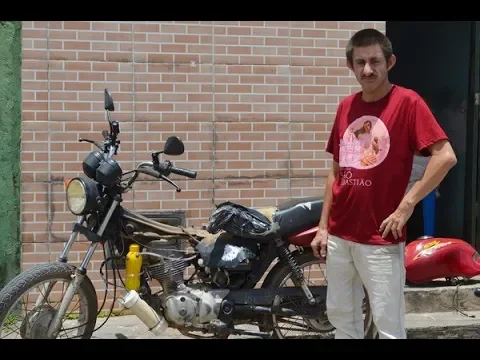
The invention, which has the potential to revolutionize urban mobility, is the work of Sandro Alves, an independent inventor who overcame personal and structural barriers to create a vehicle powered by hydrogen extracted from water.
The project, although not yet commercialized, arouses curiosity, fascination, and, of course, distrust from traditional sectors of the energy industry.
-
One of the most important lakes in the United States for birds, the balance of nature, and the climate has dried to historic levels, leaving boats stranded, revealing salt flats, and showing how the lack of water can transform an entire landscape.
-
It’s not Cristiano Ronaldo or Messi: the richest football player in the world is only 27 years old, has a fortune of 100 billion reais, and is the nephew of a sultan from an Asian country that few people know about.

-
Honda performs miracles in fuel consumption with a hatch that marks 13.2 km/l in the city and 15 km/l on the highway, leaving Polo, HB20, 208, and Onix behind and becoming a reference among compact cars without resorting to turbo or hybrid systems.

-
At 77, the king of one of the most famous and powerful crowns on the planet is said to be under pressure to leave the throne, while behind the scenes there are already talks of a new coronation that could cost R$ 260 million.


According to a report from the G1 portal, Sandro developed an aluminum reactor that can separate hydrogen from water molecules.
This hydrogen is then used as fuel to power the motorcycle, emitting no pollutants or requiring gasoline or ethanol.
The result?
An impressive performance: up to a thousand kilometers of range with a single liter of water, utilizing a sustainable, low-cost technology, and, according to the inventor himself, safe.

Overcoming and Innovation: The Creator’s Profile
Sandro Alves was born with a speech impairment and, for many years, faced illiteracy.
However, none of these difficulties prevented him from following his own path toward science and invention.
With limited resources and support, he decided to turn his frustration with high fuel prices into motivation to innovate.
The idea emerged in 2018 when fuel prices had already reached levels considered excessive by a large part of the Brazilian population.
Uncomfortable with the situation, Sandro began studying alternatives that could replace gasoline.
It was then that he delved into hydrogen extraction technologies and developed a special cell capable of storing this gas, using an adapted battery and a reactor with accessible components.

How Does the Water-Powered Motorcycle Work?
The system created by Sandro is based on electrolysis, but with an important innovation: the use of aluminum in its reactor.
This reactor separates hydrogen from the oxygen present in the water molecule, storing the resulting gas in a safe compartment.
This hydrogen is channeled directly to power the motorcycle’s engine, generating clean energy with no toxic residues.
Contrary to popular belief, the process does not involve storing large amounts of hydrogen under high pressure, as conventional hydrogen vehicles do.
The extraction is done in a controlled and continuous manner, ensuring safety and efficiency.
The motorcycle operates on a hybrid system, which combines hydrogen with an auxiliary fuel cell, allowing the engine to perform steadily during the ride.
Is it Safe to Fuel a Motorcycle with Hydrogen?
The main question for many experts and curious individuals is: “Is it safe?” According to Sandro, yes.
He assures that as long as the correct proportions of the reagents are respected and the components are properly maintained, the system is stable and poses no risks.
Still, the use of hydrogen as a fuel requires caution. The gas is flammable and needs precise technical handling.
Sandro explains that he conducted various tests in controlled environments, studying the reactions and calibrating the equipment to prevent leaks or explosions.
The result, according to him, is a safe and reliable technology — at least in the experimental context in which it is currently used.
Industry Resistance and Fear of Retaliation
Despite the enormous potential of the invention, Sandro avoids promoting his project on a large scale.
He fears retaliation from the fuel industry, which could feel threatened by an alternative and decentralized technology like the one he created.
In several interviews, he has expressed concern about the interest of large corporations in stifling innovations that directly impact their profits.
This fear, although it may seem conspiratorial at first glance, is not uncommon among independent inventors.
There are numerous historical accounts of promising technologies that were shelved or acquired just to avoid competing with established products.
For this reason, Sandro continues to develop his motorcycle for personal use and is waiting for the right moment for a possible commercial expansion.
Advancement of Technology and Challenges for the Future
Sandro’s invention occurs in a global scenario of energy transition, where renewable sources and sustainable vehicles are gaining increasing prominence.
Companies in countries like Japan, Germany, and the United States are investing millions in the development of hydrogen cars, but few have access to affordable technologies like the one proposed by Sandro.
Furthermore, Brazil lacks the infrastructure to support solutions of this kind.
Public policies, incentives for independent research, and adequate regulation are needed to enable projects like this on a national scale.
Sandro’s dream is simple: to make his water-powered motorcycle a real solution for thousands of Brazilians who can no longer afford the costs of traditional fuels.
He believes that, with institutional support and access to resources, it would be possible to enhance the system and adapt it even for cars, generators, and other means of transportation.
Growing Interest in Alternative Fuels in Brazil
The rising fuel prices continue to be a determining factor in the search for alternatives.
Recently, the increase in ICMS in several states caused gasoline prices to exceed R$ 6 in various Brazilian capitals, reigniting the debate over cheaper and more sustainable energy solutions.
In this context, inventions like Sandro’s gain relevance and stimulate the creativity of other inventors.
Universities, startups, and even independent workshops have been seeking ways to produce clean energy with accessible resources.
The advancement of technology and access to information make the emergence of new solutions in the national landscape increasingly possible.
Sandro’s motorcycle has not yet hit the streets, but it already travels long distances in the imagination of those who dream of a cleaner, more accessible, and self-sufficient future.
In a country where improvisation and creativity are part of popular culture, it would not be surprising if, soon, this type of technology began to gain space and institutional support.
And you, do you believe that Brazil is ready to adopt water-powered technology as a solution for urban mobility?




Seria esse o combustivel usado por disco voadores ? Brincadeiras a parte estamos diante de uma das maiores descobertas do seculo 21 esse vai ser o combustivel do futuro. Parabens pelo grande invento.
O jornalista dirigiu a referida moto????
Meu corretor me matou no comentario acima. Morri!