





 Portuguese
  English
  Spanish
  5 min of reading
  0 comments


The Registrato from the Central Bank Centralizes Your Financial History — Loans, Active/Inactive Accounts, Pix Keys, and Checks — and Helps Explain Why Credit, Financing, or Loan Applications Are Denied, Even Without a “Dirty Name” in Credit Bureaus.
Brazilian citizens have discovered, when consulting the Registrato from the Central Bank, that old debts, unused pre-approved limits, forgotten accounts, and bounced checks can reduce banks’ and fintechs’ appetite for credit. The effect shows up even when there is no blacklisting in bureaus like Serasa and SPC, as institutions analyze official BC data, which show the client’s relationship, leverage, and any pending issues.
According to the Central Bank itself, the Registrato from the Central Bank gathers free and official reports — SCR (loans and financing), CCS (accounts and relationships), DICT/Pix (keys), and CCF (bounced checks) — accessible via gov.br login. It is in this regulatory mirror that many discover the reasons for denials and low limits: an unclosed university account, fully paid financing that remains recorded, Pix key linked to a lost account, or noted old checks.
What Is the Registrato and Why Does It Impact Your Credit
The Registrato from the Central Bank is the official panel of your history with the financial system.
-
Oil surged to $115 a barrel due to the war in the Middle East, and diesel in Brazil has already risen to R$ 7.45 per liter, while the United States…

-
Brazilian city bets on the business environment to generate jobs and attract investments in the energy sector — secretary reveals strategy at Macaé Energy 2026.

-
50 viaducts, 4 tunnels, 28 bridges, and 40 kilometers of bike paths: BR-262 in Espírito Santo will receive 8.6 billion reais for the largest engineering project in the state’s history, inspired by the Immigrant Highway in São Paulo.

-
Brazil produces too much clean energy and doesn’t know what to do with it: over 20% of solar and wind capacity was wasted in 2025 while investors flee and 509 renewable generation projects were abandoned in the last year.


It does not “give a score”, but displays facts: which banks know you, which contracts you have had, consolidated debtor balances, active and closed accounts, registered Pix keys, and any occurrences of checks.
For risk assessment, banks cross this picture with internal data and bureaus, defining limits, rates, and approvals.
In practice, “a clean name” does not guarantee credit if the Registrato indicates high indebtedness, many idle relationships, uncancelled accounts (which can generate fees and micro-debts), or check alerts.
Institutions are required to report to BC (especially to SCR), which is why the Registrato almost always anticipates what the bank is already seeing behind the scenes.
Note: pre-approved limits (unused) show up as “other commitments” in the SCR. If they are high, they may signal potential risk and halt new approvals.
How to Access: Safe and Official Step-by-Step
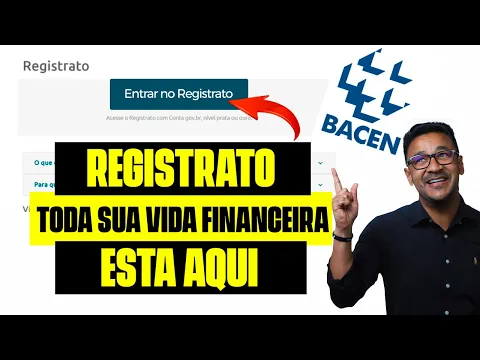
To consult the Registrato from the Central Bank, the official route is:
Access the Registrato site at the Central Bank and click on “Sign in with gov.br”.
Log in with your CPF and gov.br password (silver or gold account increases fluidity).
Authorize access and issue reports:
SCR — Loans and Financing: consolidates operations, status (current/past due), balances, and “other commitments”;
CCS — Accounts and Relationships: lists all accounts and the opening/closing date;
DICT/Pix — Pix Keys: shows keys associated with your CPF and which banks;
CCF — Bounced Checks: indicates historical occurrences in your name.
Best Security Practices: never share your gov.br credentials or PDFs from the Registrato.
If you find inconsistencies, first consult your bank (ombudsman) and, if unresolved, file a complaint with the BC (Consumer BC).
Where the “Invisible Bottlenecks” That Hinder Approval Arise
1) Old Accounts That Have Never Been Closed (CCS)
Even without use, open accounts appear in the CCS. If there has been no formal closure, micro-debts (fees, packages) and internal notes may arise. This worsens your relationship and can lower limits.
How to Act: check the CCS for a “end date”. If there is none, request written closure from the bank and keep the protocol. Check again in the Registrato after the next update cycle.
2) Limits and Contracts in the SCR (In Use or Potential)
The SCR shows debtor balances, delays, refinancing, and pre-approved limits. Many combined limits (even when unused) can raise an alert for potential indebtedness.
How to Act: renegotiate/settle what you can, reduce limits that you do not use, and avoid multiple idle cards/lines.
3) Forgotten Pix Keys (DICT)
Active keys in banks that you do not use confuse analysis and facilitate fraud (old emails/phones).
How to Act: revoke keys that you do not use, standardize where you want to receive, and keep data updated (phone/email).
4) Notes on the CCF and Sensitive Histories
Even when unused, old checks may have left occurrences. Some institutions “remember” these events when assessing risk.
How to Act: if there is a record, regularize with the originating bank and follow up on the resolution in the system.
Important: the Registrato is not instant — institutions update monthly. Regularized? Wait for the cycle and download a new report.
How Much Does It Impact? What Changes Practically for Rates and Limits
Banks combine Registrato from the Central Bank with income, internal history, bureaus, and open finance. In equivalent profiles, those who present a clear CCS, organized SCR, and updated DICT tend to pay less interest, obtain higher limits, and faster approvals.
Practical Translation: a “lean” CCS (only accounts you use), SCR without delays, calibrated limits, and Pix without leftovers improve your “risk profile” — and this translates into better conditions.
Why Use the Registrato Before Requesting Credit
Requesting credit without checking the Registrato is like requesting a job without reviewing the resume that the recruiter has already received. By anticipating what the bank will see, you:
- correct open accounts, keys, and limits;
- negotiate or settle problematic lines;
- document adjustments (protocols and receipts) for the next cycle;
- choose the timing to request credit, after the regulatory mirror reflects your improvements.
Is It Worth “Cleaning” Everything? What to Prioritize

Not every old relationship needs to be closed. Prioritize:
- close unused accounts and without essential packages;
- reduce idle limits that inflate your potential indebtedness;
- regularize discrepancies (e.g., a paid contract that continues to appear);
- unify Pix keys and update contacts.
The goal is to have a coherent history with your actual usage — less noise, more clarity.
Step by Step to “Unlock” Your Profile Before the Next Request
Download all reports from the Registrato from the Central Bank (SCR, CCS, DICT, CCF) and save the PDF.
Map: accounts without closing dates; idle limits; overdue contracts; redundant Pix keys; occurrences in the CCF.
Act with the bank: request formal closure, limit reductions, closure/update of paid contracts, revocation of keys, and regularization in the CCF.
Keep protocols and wait for the cycle (usually monthly) for the update in the Registrato.
Reissue the reports and only then request credit where it makes sense (negotiating rates based on the new profile).
The Registrato from the Central Bank is the mirror that banks use to understand your risk. Reading and “cleaning” this mirror is often worth more than multiplying credit requests and collecting denials. Have you checked yours?
Tell us: what did you find that you weren’t expecting (old account, forgotten limit, poorly reported contract)? After adjusting, did your rate drop or limit increase? Leave your account with practical details — this helps other readers navigate the Registrato from the Central Bank with more confidence.










-

-

-

-

-

35 pessoas reagiram a isso.