





 Portuguese
  English
  Spanish
  6 min of reading
  0 comments


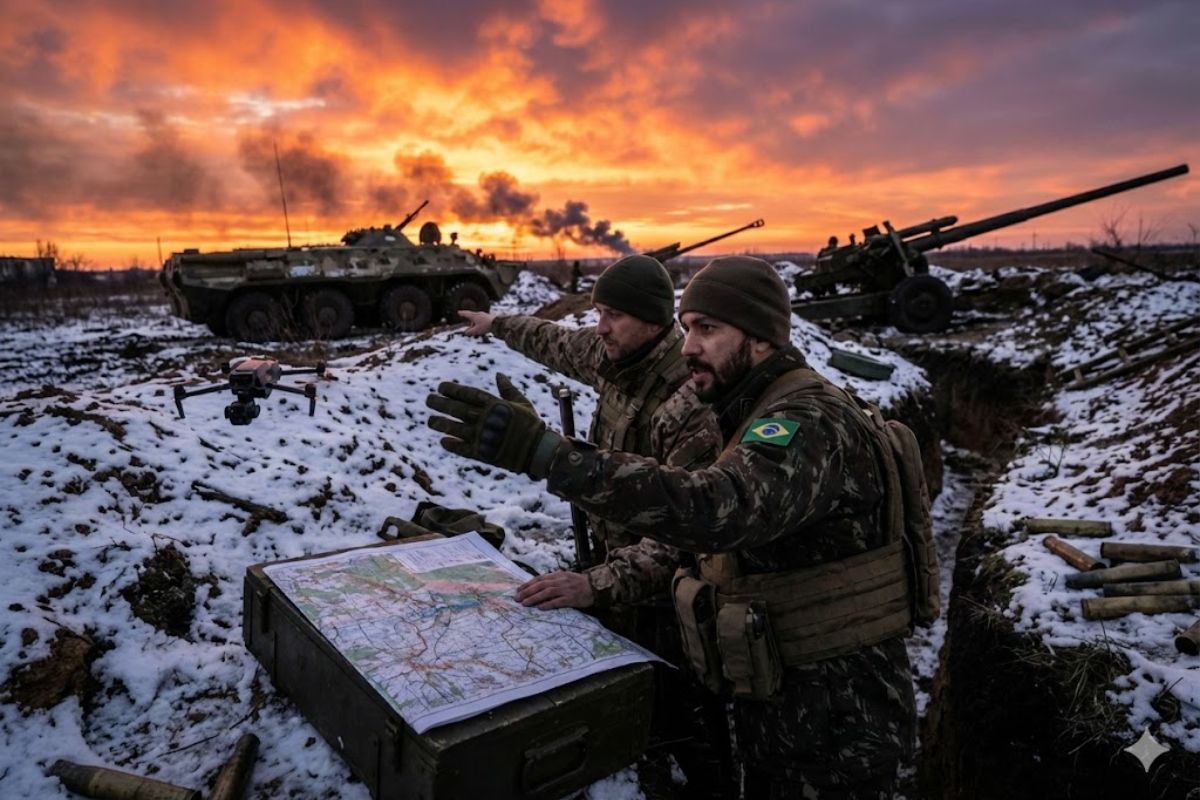
Brazilians Exchange Life in Brazil for War in Ukraine and Face Bombs, Drones, and Frozen Trenches in a Routine of Fear, Risky Missions, and Permanent Daily Longing for Family
On the front lines in Ukraine, Brazilian ex-military personnel and volunteers endure constant bombings, drones on attack missions, destroyed daycare centers, and endless shifts in trenches, while trying to maintain emotional sanity and some connection to the families they left behind in Brazil, waiting amid scarce news, fear, and hope.
According to a report from Domingo Espetacular that aired in November, Brazilians who traded their daily lives in Brazil for war in Ukraine currently live in an environment where the risk of death is 24 hours a day, under artillery fire, missiles, and drones, in devastated cities and ruined villages. The decision to cross the world to fight in another country mixes idealism, financial necessity, a search for purpose, and a very concrete sense that each day could be the last.
Brazilians on the Front Line in Donetsk and Kharkiv

On the edge of the trenches in the Donetsk region, Brazilian ex-military Carlos Eduardo Cândido, 32, summarizes the routine in a few words: “the risk of life here is 24 hours a day”.
-
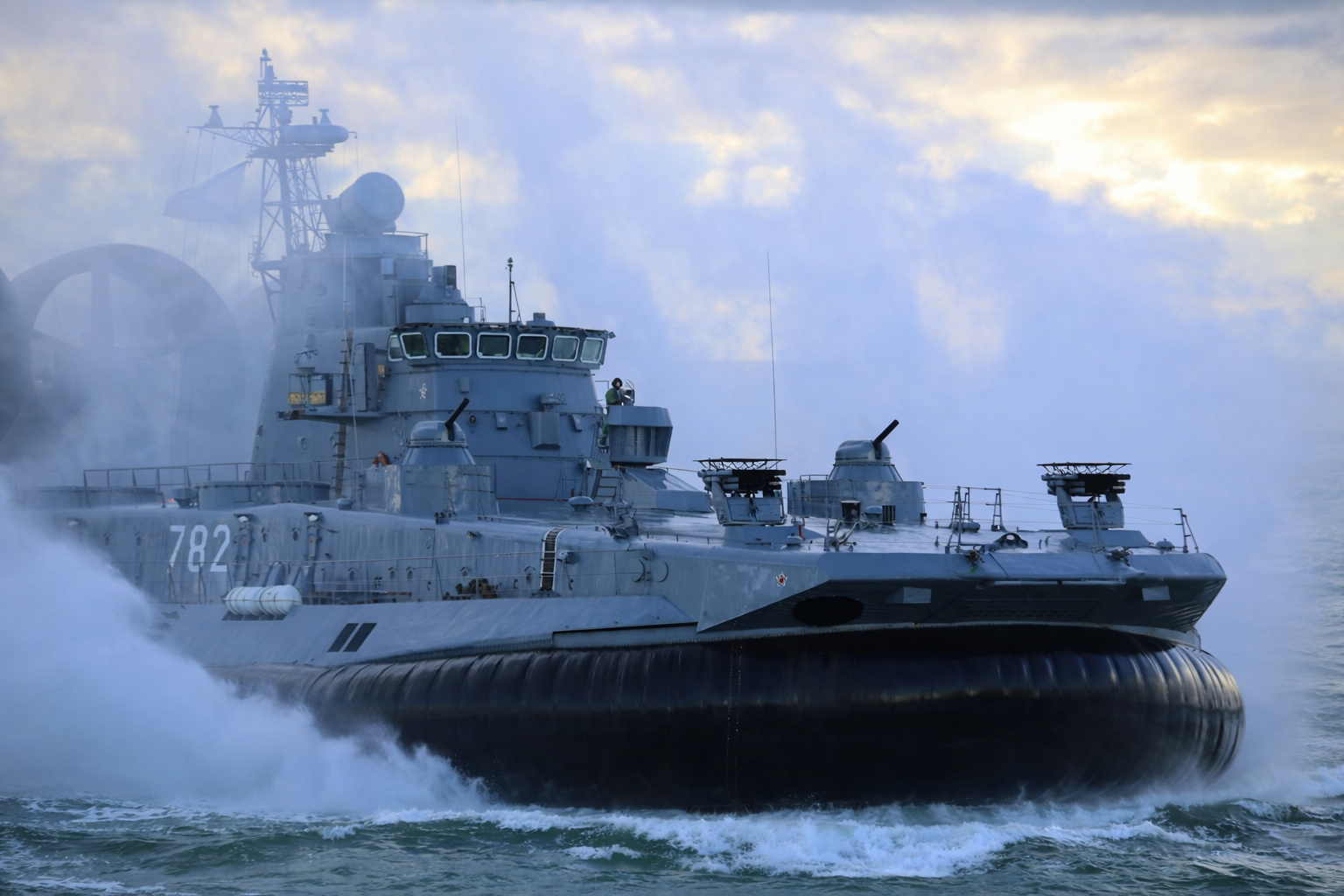
Classified as a “amphibious monster” weighing 555 tons, 57 meters long, and featuring three propellers with a diameter of 5.5 meters, the Zubr is the largest military hovercraft ever built, capable of transporting 3 tanks or 500 soldiers at speeds exceeding 100 km/h over water, ice, and sand, and China has resumed production of it to project power in the South China Sea.
-
The U.S. Army receives the first Black Hawk helicopter that can fly without pilots, be controlled by a tablet, and even land on its own during high-risk missions.

-
With 11,000 tons and sensors capable of hunting submarines at long distances, the Type 055 has become one of the most feared floating arsenals of the Chinese navy.

-
With over 15,000 tons, radars capable of tracking hundreds of targets simultaneously, and more than 120 missiles ready for launch in seconds, modern destroyers cease to be escorts and begin to dominate the naval battlefield.


He left Rio de Janeiro in 2022 to join the Ukrainian forces and is now working in sectors directly exposed to Russian artillery.
In one of his most critical missions, Cândido spent 24 consecutive hours inside a trench in a forest, under intense bombardment.
According to him, in these extreme moments, there is no tactic that overcomes fear, only the attempt to stay alive.
“In these moments, all you can do is pray, ask for God’s protection, nothing more. It literally rains missiles,” he reports, describing a pattern of attacks that repeats day and night.
Today, the Brazilian lives in Kharkiv, one of the main Ukrainian cities close to the border with Russia and a frequent target of attacks.
He reports that “almost daily, Russia attacks this city”, which turns sirens, air raid alerts, and distant explosions into part of the soundscape of daily life.
Destroyed Daycare, Children in Shock, and the City Under Fire

One of the episodes that marked the Brazilians in Kharkiv was the recent attack on a daycare, where 48 children were present at the time of the explosion from a Russian drone.
The building’s structure was destroyed, and according to local authorities, one person died and six were injured.
Residents who helped with the rescue reported the children’s panic.
The children were crying, trembling, and needed to be rushed to improvised shelters, while volunteers tried to calm them amid the smoke and debris.
Cândido visited the site the next day and described the scene as a brutal portrait of the logic of war.
Upon observing the destroyed facade and toys scattered among the rubble, the Brazilian questions the chosen target.
For him, the attack on the daycare has no military justification.
“Where has it ever been seen to attack a kindergarten full of children?”, he exclaims, pointing to the human dimension of the conflict that transcends trenches and front lines.
Drones, Real-Time Intelligence, and Brazilians in the Tech War


Another Brazilian who left Brazil to fight for Ukraine is Guilherme Ribeiro, 49 years old.
Since 2022, he has been working in combat reconnaissance units with drones, one of the symbols of the current war.
His role is to map targets, monitor movements, and guide artillery attacks based on real-time images.
Guilherme explains that “everything is reported in real time”.
As soon as a Brazilian or Ukrainian drone identifies a target, the position is sent directly to command, which then activates the bombing teams.
In certain missions, the drones carry grenades and other explosives, making the operator a decisive player on the line between life and death, even kilometers away from the contact line.
On average, the team Guilherme works with conducts about 50 flights a day, varying between observation missions and attacks.
The Brazilians who operate drones work surrounded by vests, helmets, grenades, rifles, radios, and communication systems, in a routine that alternates hours of waiting with seconds of irreversible decisions.
Improvised Houses, Cabinets Full of Equipment, and “Holidays” in a War Zone
Far from the immediate front, the house where Guilherme lives with two Ukrainian soldiers serves simultaneously as lodging, a storage facility, and a preparation center.
One of his companions is hospitalized, injured in combat.
In the rooms and corridors, tactical backpacks, rifles, ammunition, vests, helmets, gas masks, and grenades are piled up for the next movement.
The Brazilian reports that the military routine is marked by cycles of combat and brief rest intervals.
Every three months, he is entitled to a “holiday,” when he can temporarily step away from the front lines and spend a few days with his Ukrainian partner, whom he intends to marry.
Even during these breaks, however, sirens, news of attacks, and messages from injured colleagues keep the war present.
Guilherme describes a country trying to function despite the conflict.
“It is a country at war, yet everything is very clean, everything is functioning,” he states, showing stocked markets, open stores, and a city that, between air alarms, tries to preserve some semblance of normality.
When the alert sounds, employees and customers descend to underground shelters, wait for the risk to pass, and then resume commercial life.
Brazilians Between Two Wars: The Physical and the Psychological
For Brazilians who left the country to go to the conflict in Ukraine, the war is not limited to bombs, drones, and trenches.
It continues silently, in their heads and hearts, when the gunfire ceases and the only sound is that of messages arriving on their phones.
In Kharkiv, Cândido becomes emotional when he observes a memorial with flags planted in the ground, each representing a fallen fighter.
“Each of these flags represents a person who died defending the Ukrainian cause,” he reflects.
For him, Brazilians live two fronts at the same time: the physical war against Russian troops and the psychological war against the longing for family and the weight of daily losses.
The distance from Brazil reinforces the emotional impact.
The Brazilians on the front lines observe from afar birthdays, illnesses, their children’s achievements, and the routines of parents and siblings, almost always through quick video calls and messages sent during intervals between missions.
At any moment, a notification could be the last, whether because a soldier was hit or because an attack knocked out the connection across the region.
Uncertain Future, Open Mission, and the Question That Remains
Almost two years after the onset of the large-scale invasion, Brazilians who chose to fight for Ukraine know that there is no guarantee of return or quick victory.
They speak of courage, a sense of mission, and a desire to “help those in need,” but they also recognize the physical and mental exhaustion accumulated with each rotation on the front line.
In the cities where they live, infrastructure continues to function, but destroyed daycare centers, ruined villages, and hospitals filled with the injured remind them that any sense of normalcy is provisional.
As drones fly over ruins and new offensives are planned, they remain on the front lines, trying to balance the role of foreign fighters with the condition of sons, fathers, husbands, and friends who left behind a lifetime in Brazil.
Faced with this extreme reality, with Brazilians divided between the duty they have taken on in Ukraine and the longing for those who stayed in Brazil, an inevitable question arises for the reader: if you were in their shoes, would you also leave everything behind to fight in a war in another country?










-

Uma pessoa reagiu a isso.