





 Português
  Inglês
  Espanhol
  4 min de leitura
  0 comentários


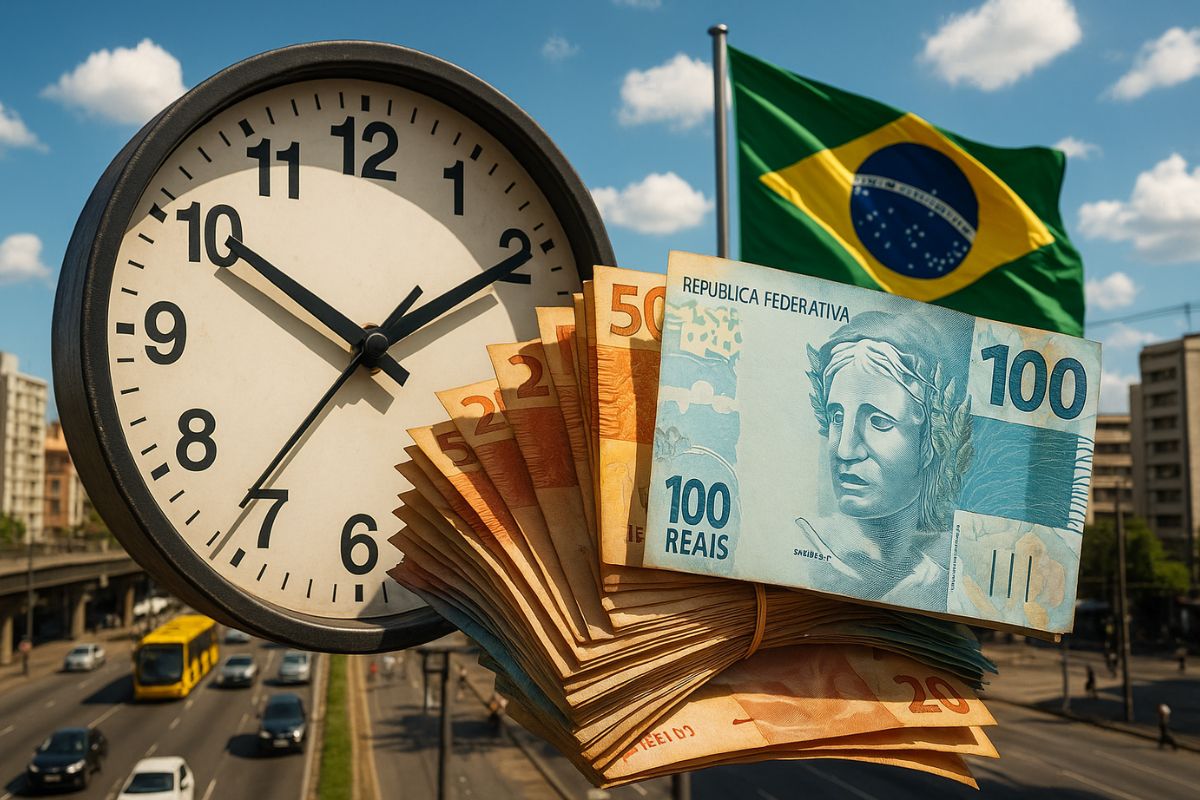
Study Shows That the Average Brazilian Dedicates About 150 Days a Year, Equivalent to Almost Five Months of Work, Just to Cover the Tax Burden Embedded in Products, Services, Income, and Assets.
The burden of taxes in Brazil is so great that, according to estimates from specialized tax entities, the worker needs to dedicate 40% of their annual income just to pay taxes. According to the Jornal Times Brasil, this amounts to about 149 days of work in 2025, a number that symbolizes the high national tax burden and helps explain why Brazilians feel the direct impact of taxes on the cost of living.
Although the country has a tax collection comparable to that of developed economies, the return in public services is considered one of the lowest in the world, which reignites the debate about tax reform and state efficiency.
How the Number of Days Worked to Pay Taxes Is Calculated
The calculation that leads to the number of 150 days is done by institutions such as the Brazilian Institute of Planning and Taxation (IBPT), which analyzes the national tax burden at the federal, state, and municipal levels.
-
In a silent race, Shopee signs a mega contract in Guarulhos and accelerates the e-commerce war with faster deliveries, pressured shipping, and a new threat to rivals in Brazil.

-
Oil surged to $115 a barrel due to the war in the Middle East, and diesel in Brazil has already risen to R$ 7.45 per liter, while the United States…

-
Brazilian city bets on the business environment to generate jobs and attract investments in the energy sector — secretary reveals strategy at Macaé Energy 2026.

-
50 viaducts, 4 tunnels, 28 bridges, and 40 kilometers of bike paths: BR-262 in Espírito Santo will receive 8.6 billion reais for the largest engineering project in the state’s history, inspired by the Immigrant Highway in São Paulo.


The study considers taxes, fees, and contributions on four main fronts: income, assets, consumption, and social security.
This average reflects the time that workers need to dedicate to cover taxes on their salaries, such as income tax and social security contributions, as well as the taxes embedded in practically everything they consume, from food and electricity to basic services and industrialized products.
Symbolically, the “Tax Freedom Day” in Brazil usually falls at the end of May, meaning that almost half of the year is spent just paying taxes.
Embedded Taxes in Consumption: The Invisible Weight on Product Prices
The majority of the Brazilian tax burden is embedded in the prices of products and services, making the system regressive, meaning that the poorest pay proportionally more than the wealthiest.
The main taxes on consumption are:
ICMS (Tax on the Circulation of Goods and Services), a state tax applied on goods, energy, and transportation;
IPI (Tax on Industrialized Products), charged by the federal government;
PIS and COFINS, which are levied on company revenue and passed on to the final price;
ISS (Tax on Services), a municipal tax applied on activities such as gyms, private schools, and beauty services.
In some products, taxes can represent up to 60% of the final price. In essential items such as food and fuels, the impact is felt immediately.
Brazilians pay taxes even on their daily bread, literally.
High Tax Burden, Low Return
Despite a tax burden equivalent to 32.3% of GDP in 2024, Brazil ranks low in international rankings of return to society.
A study by IBPT combining tax burden and Human Development Index (HDI) placed the country in 30th place, with low returns in health, education, and public safety.
While OECD countries that collect similar proportions return this money in well-being and efficient services, in Brazil, taxpayers face chronic deficiencies in infrastructure and social policies.
This inversion of logic—high taxes, low return—is one of the biggest challenges of the Brazilian tax system.
Complexity and Inequality: The System That Penalizes the Lowest Earners
In addition to being burdensome, the Brazilian tax system is considered one of the most complex in the world.
Since 1988, more than 517,000 tax regulations have been enacted in the country, raising the cost of tax compliance for companies and making transparency difficult for the average citizen.
This complexity exacerbates inequality. While wealthy families concentrate their incomes in capital gains and investments with milder taxation, the low and middle-income population bears the heavier weight of consumption, paying embedded taxes in every purchase, regardless of income level.
On average, 40% of the national tax burden falls on consumption, according to the Independent Fiscal Institution (IFI) of the Senate.
This means that those who earn less pay proportionally more—a model that perpetuates social inequality.
The Role of Tax Reform in Consumption
The Consumption Tax Reform, currently in the regulatory phase, promises to simplify the system and reduce distortions.
The idea is to replace the five current taxes (ICMS, ISS, IPI, PIS, and COFINS) with a single Value Added Tax (VAT), divided among the Union, states, and municipalities.
The new model aims to unify rules and simplify collection, but experts warn that the benefits will only be felt in the long term.
The goal is to make the system more transparent for consumers, who will finally know how much tax they pay on each product, and reduce the disproportionate impact on the poorest.
The fact that Brazilians work about 150 days a year just to pay taxes shows the burden and inefficiency of a system that collects a lot but returns little.
The challenge is not only to reduce taxes but to make the returns fairer and more visible with public services of quality commensurate with what is paid.
And you? Do you think the tax burden in Brazil is fair? Is the problem in the amount of taxes or in the lack of returns in services? Leave your comment; your opinion helps to broaden the debate on the tax system and the future of reform in the country.










Seja o primeiro a reagir!