





 Portuguese
  English
  Spanish
  4 min of reading
  0 comments


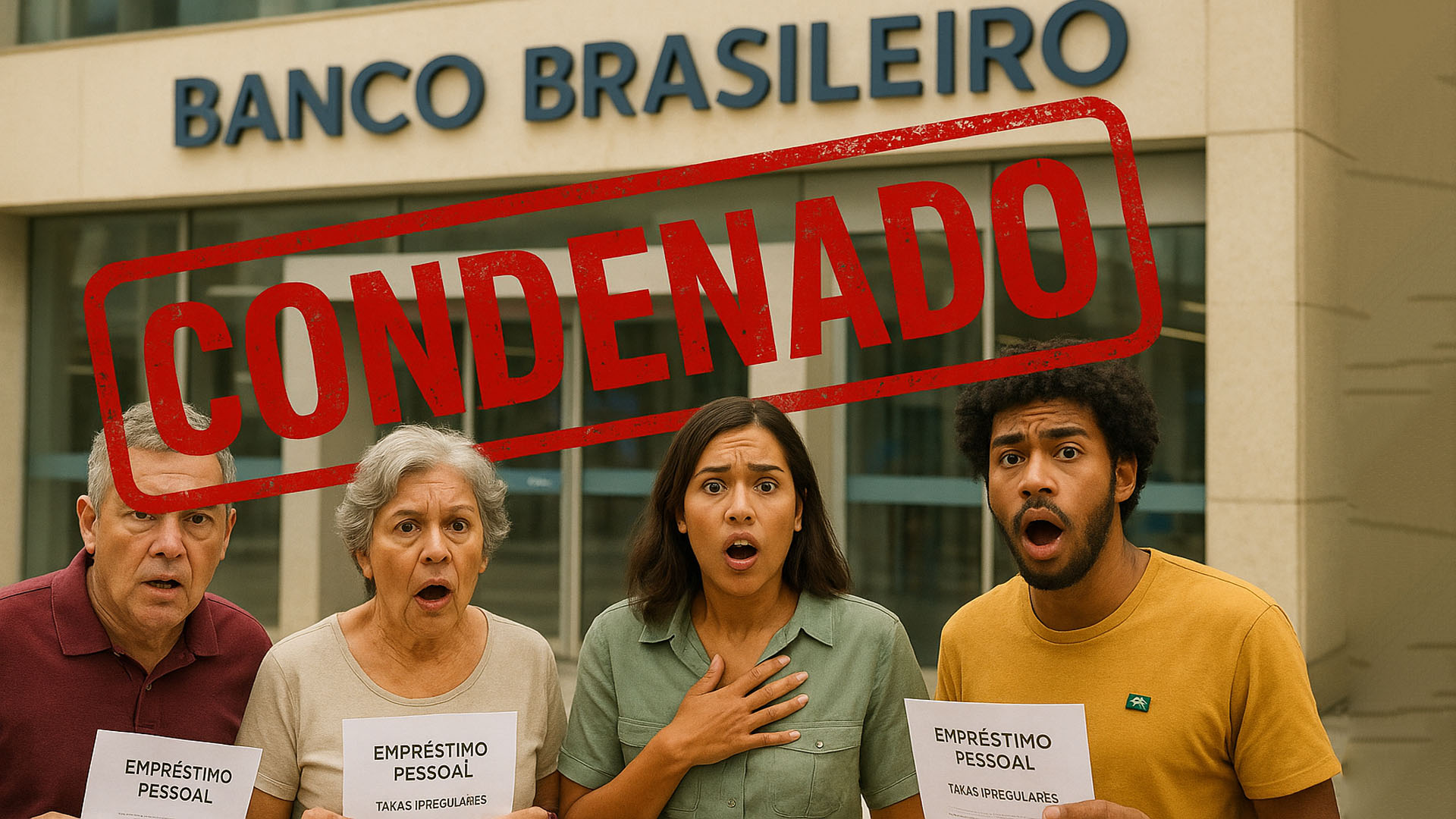
Mato Grosso Court Rules That Financial Institution Must Refund Amounts Unduly Charged in Personal Loan Contracts, Setting Precedent in the Brazilian Banking Sector. Final Decision Requires Disclosure of Conviction on Digital Platforms.
The Mato Grosso Court imposed a significant defeat for Unibanco, the former Brazilian banking institution that merged with Itaú, by confirming a conviction for charging irregular fees in loan contracts.
Judge Bruno D’Oliveira Marques, from the Specialized Court for Collective Actions in Cuiabá, ordered not only the refund of amounts to consumers but also the publication of the conviction sentence on the financial institution’s social media and in widely circulated newspapers in the state.
The decision, which has already become final, represents an important victory for consumer rights and reinforces the jurisprudential understanding that banks cannot charge fees prohibited by the Central Bank regulations.
-
The Chamber opens a debate on driver’s licenses at 16 years old as part of a reform that includes around 270 proposals to change the Brazilian Traffic Code and may redesign rules for licensing, enforcement, and circulation in the country.

-
The new Civil Code could revolutionize marriages in Brazil with “express divorce” and changes that could exclude spouses from inheritance.
-
Banco do Brasil sues famous influencer for million-dollar debt and intensifies debate on delinquency, risks of seizure, and direct impact on Gkay’s credibility.
-
The Senate approves a bill that criminalizes misogyny, hatred, or aversion towards women, and includes the crime in the Racism Law with a penalty of up to 5 years.


The court established a timeframe of 15 days for the bank to prove compliance with the imposed obligations.
The Origin of the Collective Action Against Early Settlement Fee
The process originated from a complaint presented by the Public Defender’s Office of Mato Grosso, which identified abusiveness in a contractual clause of Unibanco. At that time, the institution charged an early settlement fee from consumers who wished to pay off their personal loans before the contractually established deadline.
The argument of the public defense was based on two legal pillars: first, the Central Bank Resolution published in 2007, which expressly prohibited such charges in credit operations; second, the violation of the fundamental principles of the Consumer Defense Code, which recognizes the consumer’s right to be released from contractual obligations without unjustified penalties.
This practice was widespread in the banking sector but represented contractual abuse. Many vulnerable consumers, who sought to rid themselves of debts in advance to save on interest, were prevented or discovered, at the time of settlement, that they would have to pay an additional fee.
This situation characterized a vulnerability exploited by financial institutions, justifying the proactive action of the Public Defender’s Office in defense of homogeneous individual interests.
First Instance Judicial Decision and Confirmation in the Court
At first instance, the judge recognized the abusiveness of the clause and ordered Unibanco to refund the amounts unduly charged. The ruling did not go unnoticed, and the Mato Grosso Court of Justice (TJMT), upon reviewing the appeal, upheld the conviction in its entirety, reaffirming the illegality of the fee.
The state court followed consolidated jurisprudence that considers any charge that prevents or discourages the early payment of obligations to be contrary to consumer rights. According to this understanding, banks cannot create financial barriers to debt amortization, especially when there is an express prohibition from the regulator.
With the confirmation in the second instance, the conviction became final, acquiring a definitive character. This meant that the bank would have no way to appeal to higher instances and would move to the phase of execution of the sentence, where it would be obliged to comply effectively with what was determined by the court.
Execution of the Sentence and Disclosure on Social Media
In the execution phase, the Public Defender’s Office filed a petition requesting proof of full compliance with all obligations imposed by the TJMT. Among them: immediate cessation of the early settlement fee in contracts signed from December 11, 2007, and refund of amounts to consumers who are demonstrably vulnerable and who were charged the fee.

The judge also ordered the imposition of a daily fine of R$ 500 per affected consumer as a coercive measure to ensure compliance. Acknowledging the collective nature of the conviction, the judge set a period of one year for consumers to register in the process and request their refunds.
In a procedural innovation, the decision ordered Unibanco, now Itaú, to publish the sentence in full in two widely circulated newspapers in Mato Grosso and, considering the evolution of communication means, on its official pages and social media.
The judge justified this measure as necessary to ensure “the maximum effectiveness of collective protection,” recognizing that digital disclosure amplifies the reach of the decision among affected consumers.
Context of Convictions Against Financial Institutions for Abusive Charges
The case of Unibanco is not isolated. According to information from consumer protection agencies, several banks have faced similar actions. In 2024, institutions such as Banco Safra were convicted for unduly charging early liquidation fees, demonstrating that the practice was systemic in the sector.
The Public Defender’s Office routinely acts against irregular charges. Its Consumer Defense Unit in Mato Grosso specifically addresses actions related to abusive charges, health plans, electricity, banks, and illegal interest rates. In 2018, the unit registered over 5.8 thousand attendances, highlighting the volume of demands involving contractual abuse.
This consolidated jurisprudence signals an important trend: judges and courts recognize that financial institutions cannot exploit contractual gaps or hermetic clauses to charge undue fees. Consumer protection legislation prevails over abusive contractual provisions, reinforcing the right of borrowers to be released from debts without suffering arbitrary penalties.
Were you a customer of Unibanco and paid a fee to settle a loan early? Do you have documentation of this charge? Share your experience in the comments and help increase visibility of this achievement in defense of consumer rights.










-

-

-

-

-

-

159 pessoas reagiram a isso.