





 Portuguese
  English
  Spanish
 6 min of reading
  0 comments


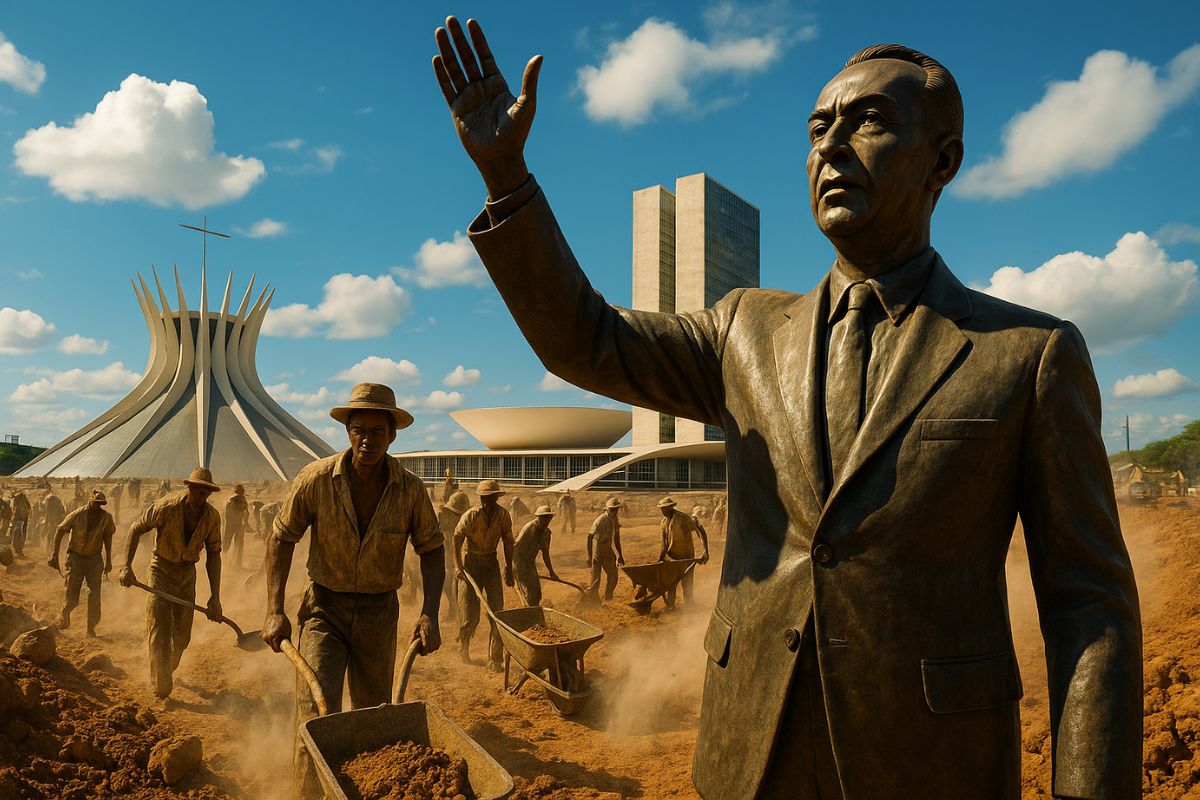
Brasília Was Born in Just 41 Months (1956 to 1960), Mobilized Workers from Across the Country, Materialized the Vision of Juscelino Kubitschek and the Audacity of Oscar Niemeyer, Became a World Heritage Site, and Continues to Challenge the World with Urban Planning, Monumental Architecture, and Social Contradictions
Brasília was built at a sprint: 41 months from drawing to inauguration. The new capital condensed political ambition, unprecedented engineering scale in Brazil, and a permanent construction site, where thousands of workers raised palaces, ministries, and superblocks under the sun of the savannah that would become icons of modernism. The promise of “50 years in 5” gained matter, concrete, and curves.
At the same time, Brasília became a global showcase of urbanism and architecture. The Pilot Plan by Lúcio Costa and the buildings of Oscar Niemeyer designed a monumental landscape, residential, communal, and bucolic. This ensemble was recognized by UNESCO in 1987 as a World Heritage Site. The achievement impressed the world, but also left challenges of inclusion, mobility, and preservation that still demand solutions.
How to Build Brasília in 41 Months
The political decision was the trigger. Juscelino Kubitschek elevated the construction of the new capital to the status of meta-synthesis, concentrating resources, schedule, and governance aimed at quick results.
-
Italian researchers have detected what appears to be a second Sphinx buried under the sands of Egypt, and satellite scans reveal a gigantic underground megastructure hidden beneath the Giza Plateau for over 3,000 years.
-
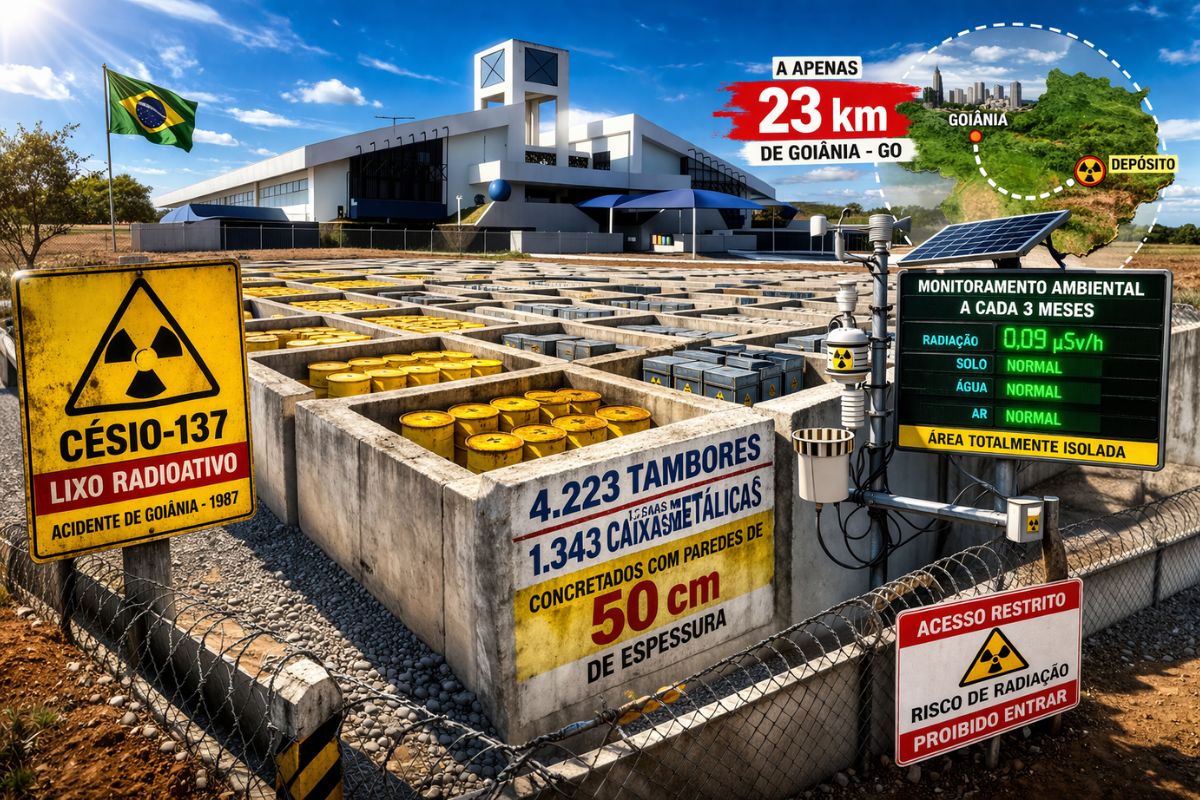
There are 4,223 drums and 1,343 metal boxes concreted with 50-centimeter walls that store the radioactive waste from Cesium-137 in the worst radiological accident in Brazil, just 23 kilometers from Goiânia, with environmental monitoring every three months.
-
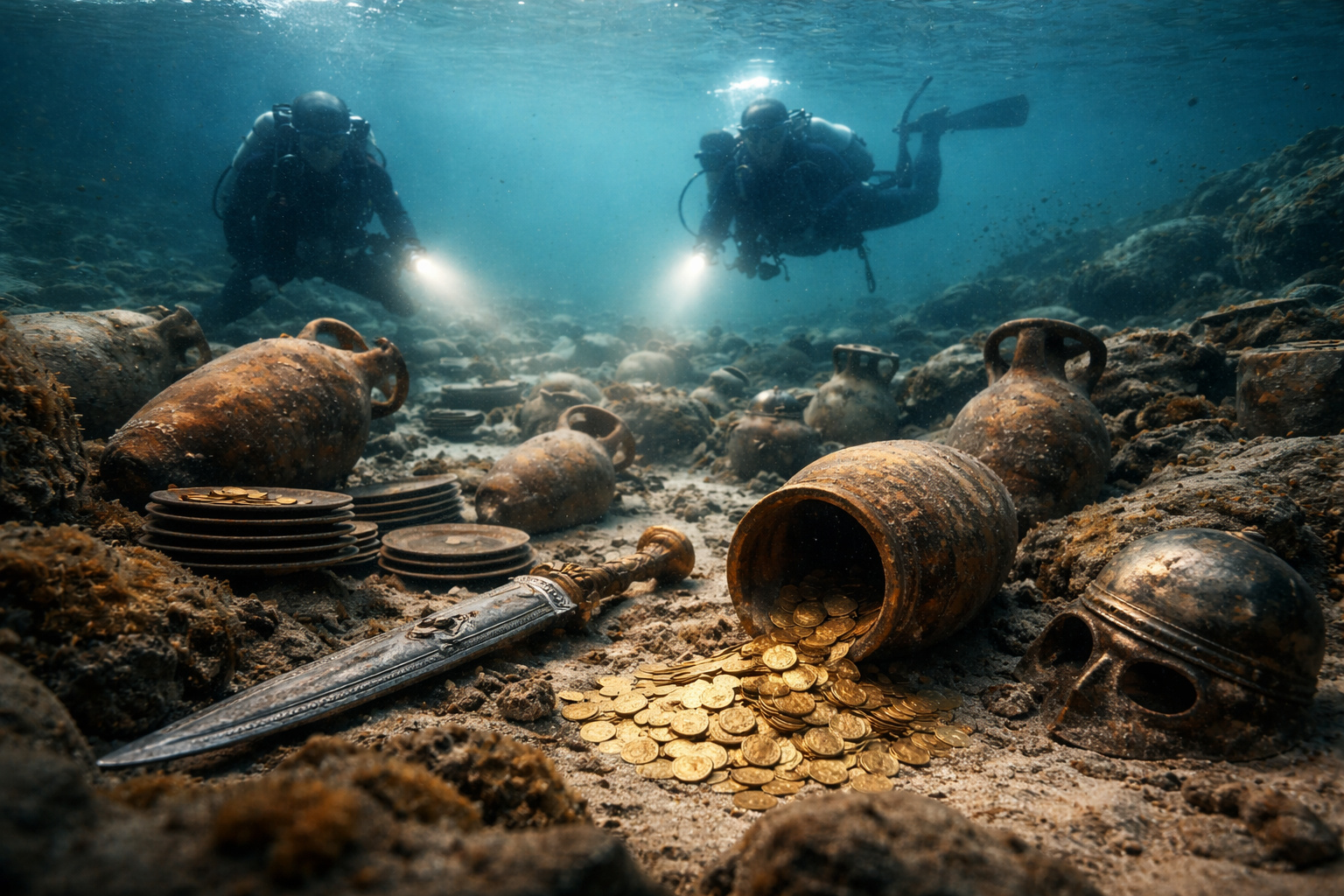
Giant Roman treasure found at the bottom of Lake Neuchâtel in Switzerland reveals an advanced trade system, circulation of goods, and armed escort in the Roman Empire about two thousand years ago.
-
He buried 1,200 old tires in the walls to build his own self-sufficient house in the mountains with glass bottles, rainwater, and an integrated greenhouse.

Between 1957 and 1960, key power buildings, such as the Palácio do Planalto, the Supreme Court, and the National Congress, emerged from paper as urban fabric advanced in simultaneous fronts.
The pace was only possible with centralized coordination and 24-hour work in an adverse logistical environment.
Behind the institutional spectacle was an army of workers.
The workers, mostly migrants from the Northeast and the countryside, sustained the schedule with intense workdays, makeshift housing, and varied trades.
The speed was the differential: Brasília was not born ready, but inaugurated, with the essentials delivered and the rest maturing with the city’s own life.
The Pilot Plan by Lúcio Costa: Four Scales for a Capital
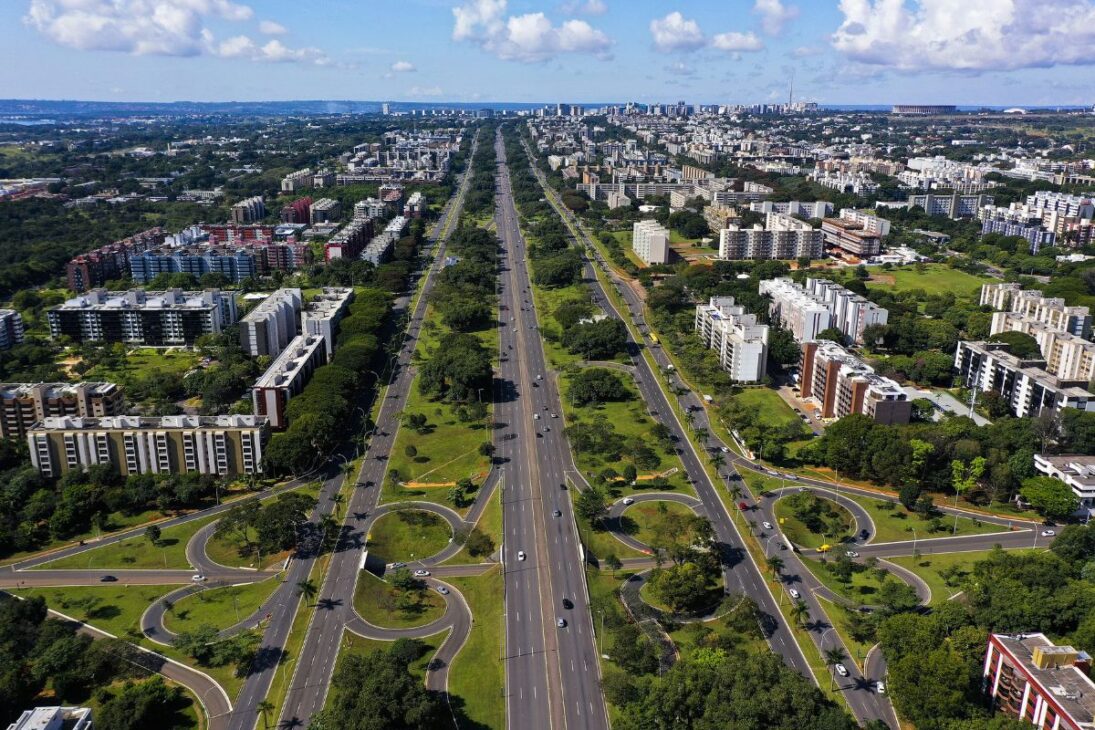
The Pilot Plan by Lúcio Costa, winner of the 1957 competition, organized Brasília in a shape popularly compared to an airplane.
This shape was not arbitrary. The design articulated functions and flows, separating pedestrian and vehicle traffic and distributing housing, services, and government in clear axes.
The legibility of the plan is one of its strengths, capable of guiding expansion without losing the original conception.
Costa’s work operates on four complementary scales. The monumental concentrates state symbols in wide axes and squares. The residential creates superblocks with controlled heights and common areas. The communal houses commerce, interaction, and culture.
The bucolic preserves green areas and landscape breathing spaces. This engineering of space explains why Brasília impressed the world and why its preservation is a constant theme.
Niemeyer and the Language of Concrete That Shocked the World
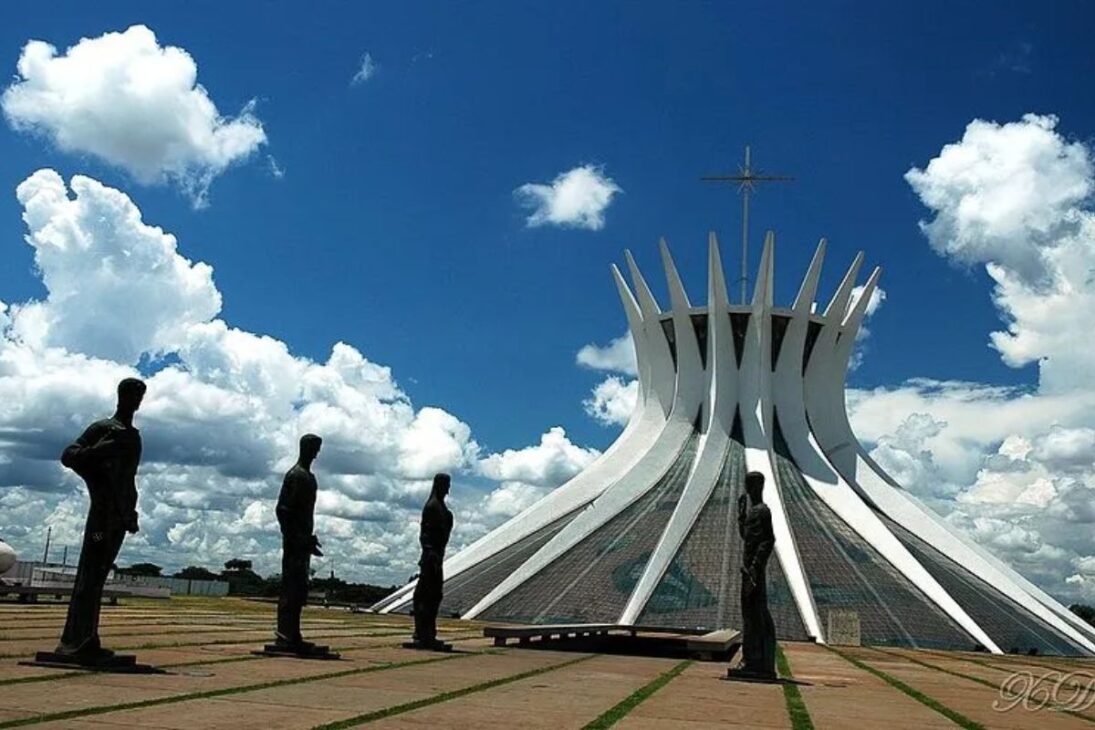
With Oscar Niemeyer, Brasília received an unmistakable aesthetic signature. Curves, openings, and lightness transformed reinforced concrete into poetic gesture.
The National Congress, with twin domes, the Palácio da Alvorada and the Palácio do Planalto, with elegant colonnades, the Supreme Court and the Metropolitan Cathedral, with structures that reinvented light and shadow, became immediate icons.
More than beauty, there is function and symbolism. Monumentality communicates state, transparency suggests republic, lightness coexists with scale.
Brasília not only showcased modernism but taught it to the world in a living urban fabric. Therefore, the statement that the city shocked the world does not sound like an exaggeration but rather the acknowledgment of a real impact.
The Workers and Life on the Construction Site: From Cidade Livre to Catetinho
The materialization of Brasília has anonymous protagonists. The workers built camps like Cidade Livre, which became Núcleo Bandeirante, with its own social and cultural life.
Rádio Nacional de Brasília, created in 1958, brought voice, music, and talent contests, alleviating homesickness and creating a sense of belonging.
Stories of epic journeys, such as months-long treks to the Plateau, still feed the imagination of the construction.
At the top of the symbolic hierarchy is the Catetinho, a provisional wooden palace built in just ten days. It housed JK and his team, signaling government presence amidst the dust.
Brasília was both work and life, disciplined improvisation, rituals of power, and daily life on the construction site. Recognizing this human connection is part of the story that sustains the myth of the capital.
Heritage and Preservation: Why Brasília Is Unique in the World


The UNESCO title in 1987 recognized Brasília as the only modern city inscribed as World Heritage Site for its exceptional universal value.
The monumentality of the Pilot Plan, the coherence between urbanism and architecture, and the state of conservation weighed heavily in the decision. In 1990, IPHAN also registered the urban ensemble, reinforcing the mission to protect its form, height, and landscape.
Being a heritage site is both an honor and a responsibility. Preserving scales, views, and heights is not about freezing the city but ensuring that the original idea survives the pressures of growth.
Brasília needs to balance guardianship and vitality, maintaining its recognizable design while accommodating new demands for housing, mobility, and space usage.
The Dark Side: Costs, Segregation, and Environmental Impact
Haste came at a price. There were severe logistical difficulties, precarious working conditions, and high costs that weighed on the economy of the period.
Not all accidents and losses are recorded on plaques. The human effort was real. Brasília is both a triumph and a scar, and not minimizing the pain is part of respecting those who built it.
From an urban perspective, modernist functional separation fostered social distances.
Workers and their families were pushed to satellite cities, far from the Pilot Plan. The rapid growth generated irregular settlements and vulnerabilities in surrounding areas.
This is the contemporary challenge: making the Brasília of postcards engage with the real Brasília, reducing inequalities and bridging opportunities.
Curiosities That Explain the Personality of Brasília
The Paranoá Lake, artificial, helps to regulate humidity and enhance the landscape, while integrating with the urban design.
The inauguration at midnight, on April 21, 1960, ensured the political gesture of JK signing in the new capital even with the city still under construction.
The sculpture The Workers, by Bruno Giorgi, immortalized the workers in the monumental heart.
Some accounts have become affectionate legends. Land in Brasília was sold as a souvenir, the first resident was born in the early hours of the inauguration, and the radio became a companion on the construction site.
These details remind us that Brasília is, first and foremost, a lived space, and its strength lies as much in its domes as in the stories of everyday life.
For you, what is the greatest lesson of Brasília: the ability to build a country in 41 months or the urgency to correct the distances that remained? If you live or have lived in Brasília, does the Pilot Plan function in your daily life? What work or space represents the city most for you, the Cathedral, the Monumental Axis, a superblock, or the Lake? Share your experience. Your experience is what keeps this story alive.









-

-

2 pessoas reagiram a isso.