





 Portuguese
  English
  Spanish
  5 min of reading
  0 comments


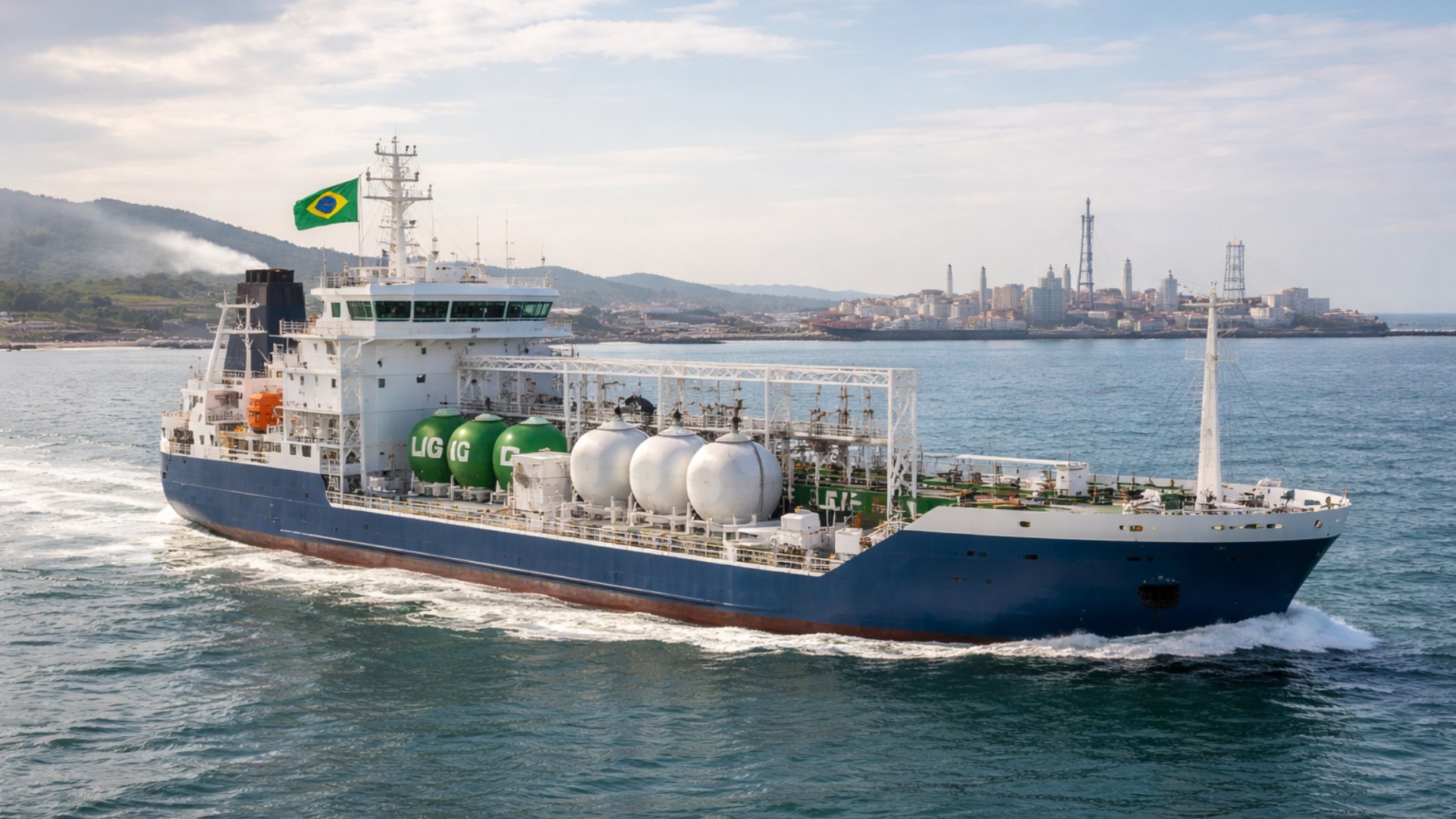
Public consultation proposes unique certification for sustainable ships in Brazil, with integrated environmental, social, and economic criteria, use of alternative fuels, and progressive decarbonization goals, creating regulatory advantages and stimulating innovation in national cabotage.
Brazil has put forward a public consultation proposal to certify cabotage vessels that adopt lower carbon intensity fuels, meet energy efficiency targets, and comply with social and operational criteria defined by the federal government as sustainable.
The measure was presented under the BR do Mar Program and created the Sustainable Vessel Requirements Assessment Matrix, M.A.R.E.S., which serves as the basis for a voluntary certification system that provides priority in chartering processes and public recognition for ships that meet the new requirements.
New M.A.R.E.S. matrix and certification in cabotage
The proposal was developed jointly by the Ministry of Ports and Airports and the Ministry of Development, Industry, Commerce, and Services to regulate the classification of sustainable vessels in Brazilian cabotage.
-
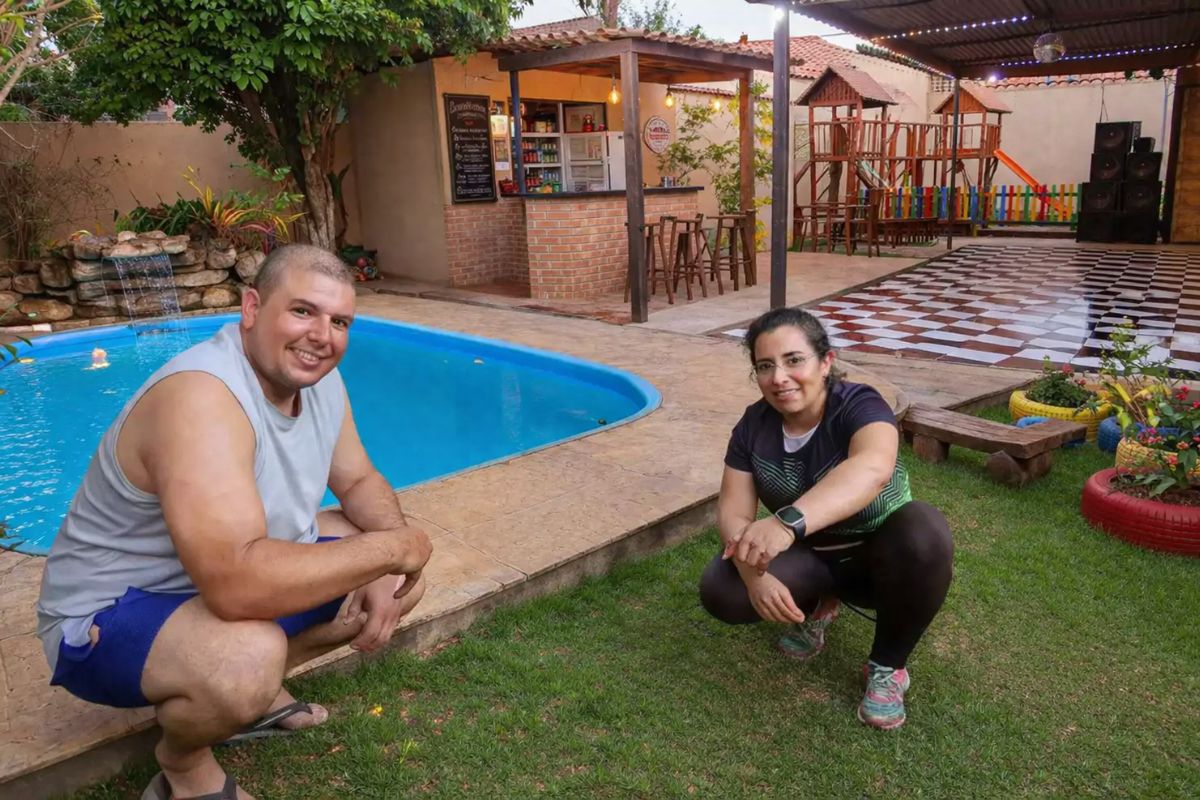
A couple who only has Sundays free has built a hand-dug pool, a hamburger joint, a dance hall, and a playground in their own home without hiring a mason, and even with breaks due to accidents and the pandemic, the work has never truly stopped.
-
Furniture made with aluminum and glass does not warp and has become an alternative to replace MDF in Brazil.

-
Finland, the happiest country in the world, wants to hire 140,000 technology professionals and is eyeing Brazilians: visas are issued in just two weeks and salaries with a 37-hour workweek are surprising.

-
Mr. Mário reveals the technique of the caipira papaya: he cuts the fruit in half, discards the seeds from the tip, and plants the ones from the back to increase the chance of a productive female tree.


In the official government communication, the parameters presented include the use of ethanol, biodiesel B24, HVO, green methanol, bio-LNG, ammonia, and green hydrogen, as well as internationally recognized indicators to measure energy performance and carbon intensity.
The draft was made available on the Participa + Brasil platform, and the process recorded 225 contributions before the public consultation ended.
Environmental, social, and governance criteria
According to the draft put forward for discussion, the classification does not depend solely on the fuel used.
The text establishes mandatory requirements and a minimum score in M.A.R.E.S., combining environmental, social, governance, and economic prosperity criteria.
Among the items analyzed are the mitigation of environmental impacts, the use of lower carbon intensity sources, the protection of marine biodiversity, the adoption of circular economy practices, and compliance with technical metrics provided in Annex VI of the MARPOL convention, such as EEDI, EEXI, and CII, in addition to demonstrating actions outlined in the ship’s energy efficiency plan, the SEEMP.
Alternative fuels and low-emission technologies
In the energy axis, the draft details different weights for fuels and technologies.
The use of a blend with at least 24% certified biodiesel appears among the scoreable criteria, as does the use of certified alternative marine biofuels, such as ethanol, e-methanol, Bio-LNG, and Bio-Gas.
In another section, the proposal also provides for scoring the use of low-emission sources such as green ammonia and low-carbon, low-sulfur hydrogen, in addition to including complementary technologies for greenhouse gas reduction and capture, and assisted propulsion solutions that reduce the vessel’s energy needs.
Progressive emission reduction targets
The M.A.R.E.S. was designed to become more stringent over time.
The proposal establishes that vessels transporting crude oil, natural gas, and petroleum derivatives would need to achieve a total of 80 points by 2025 and 150 points by 2050, while other vessels would start with 50 points and reach 100 points by the end of the period.
The text also includes progressive emission reduction targets compared to a 2025 baseline, with minimum cuts gradually advancing to achieve at least a 65% reduction by 2040.
Voluntary certification with regulatory impact
The certification provided by the government is voluntary, but the regulatory design gives concrete weight to the label.
According to the draft, the recognition of compliance with the criteria and the issuance of the certificate would be the responsibility of accredited classification and certification entities acting on behalf of the Brazilian government.
The document also stipulates that this recognition must be presented before the authorization or registration of the chartering, that Antaq must publicize the list of sustainable chartered vessels, and that inspections and surveys can be conducted in person or through digital verification, always with the possibility of rechecking during the vessel’s stay in the country.
Social requirements and working conditions on board
The social component also occupies a significant space in the proposal.
Among the priority criteria are the hiring of a captain, chief engineer, and at least two-thirds of the other crew members as Brazilians at each section and hierarchical level, the provision of leisure, social, and study spaces with free internet access for crew members, and the opening of onboard internship positions above the minimum required.
In additional criteria, the draft provides for scoring for medical facilities or telemedicine functionalities, current collective labor agreements, inclusion and gender equity policies, and incentives for the professional advancement of the crew.
Local content and industrial policy
The text also connects certification to industrial policy.
The matrix assigns points for national content in engineering, machinery, equipment, materials, construction, and assembly, in addition to providing for scoring for national contracts for the modernization, maintenance, or conversion of vessels.
There is also a provision for scoring for annual research and development commitments, as well as for management certifications and independent audits in sustainability and integrity practices.
In practice, the model does not only address fuel switching but attempts to create incentives to reorganize the naval chain, operation, and chartering under a logic of lower emissions and greater traceability.
Energy scenario and multiple technological routes
The Brazilian proposal advances at a time when the government itself recognizes that the maritime sector should not follow a single technological route.
In a technical note published by the Energy Research Company, EPE states that there is no prospect of a single commercial-scale solution for maritime transport and points out that biodiesel and HVO have energy densities similar to fossil fuels, which reduces the need for deep changes in engines and infrastructure.
In the same material, the company notes that methanol, ammonia, and hydrogen have lower energy densities, requiring adaptations in vessels and in the supply logistics.
This diagnosis helps explain why the Brazilian matrix was designed with multiple entry points.
In another study, EPE projects the start of biodiesel blending into bunker fuel for cabotage in 2026, with a goal of reaching 30% by 2038, and points out that new large vessels delivered from 2034 onwards may incorporate alternative fuels such as ethanol, methanol, ammonia, and hydrogen.
By transforming this diversity into certification criteria and regulatory advantages in chartering, the proposal places the discussion of naval decarbonization on a more concrete ground, where fuel, efficiency, onboard work, and local content are evaluated in the same package.







Seja o primeiro a reagir!