





 Portuguese
  English
  Spanish
  4 min of reading
  0 comments



Recent conflicts highlight gaps in the air defense of countries without integrated systems, while Brazil maintains dependence on short-range equipment and seeks to expand response capacity in the face of modern threats.
The air defense structure in operation in Brazil continues to be concentrated on low-altitude and short-range means, which keeps a significant gap open in the protection of airspace against threats that have come to dominate recent conflicts, such as attack drones, loitering munitions, and cruise missiles.
In an analysis published by DefesaNet, editor-in-chief Nelson During argues that this limitation exposes the country to a level of vulnerability incompatible with the need to protect strategic infrastructure, forces in transit, and sensitive areas of the national territory.
Air defense in Brazil and current limitations
The diagnosis starts from a point that is no longer treated solely in the doctrinal field.
-
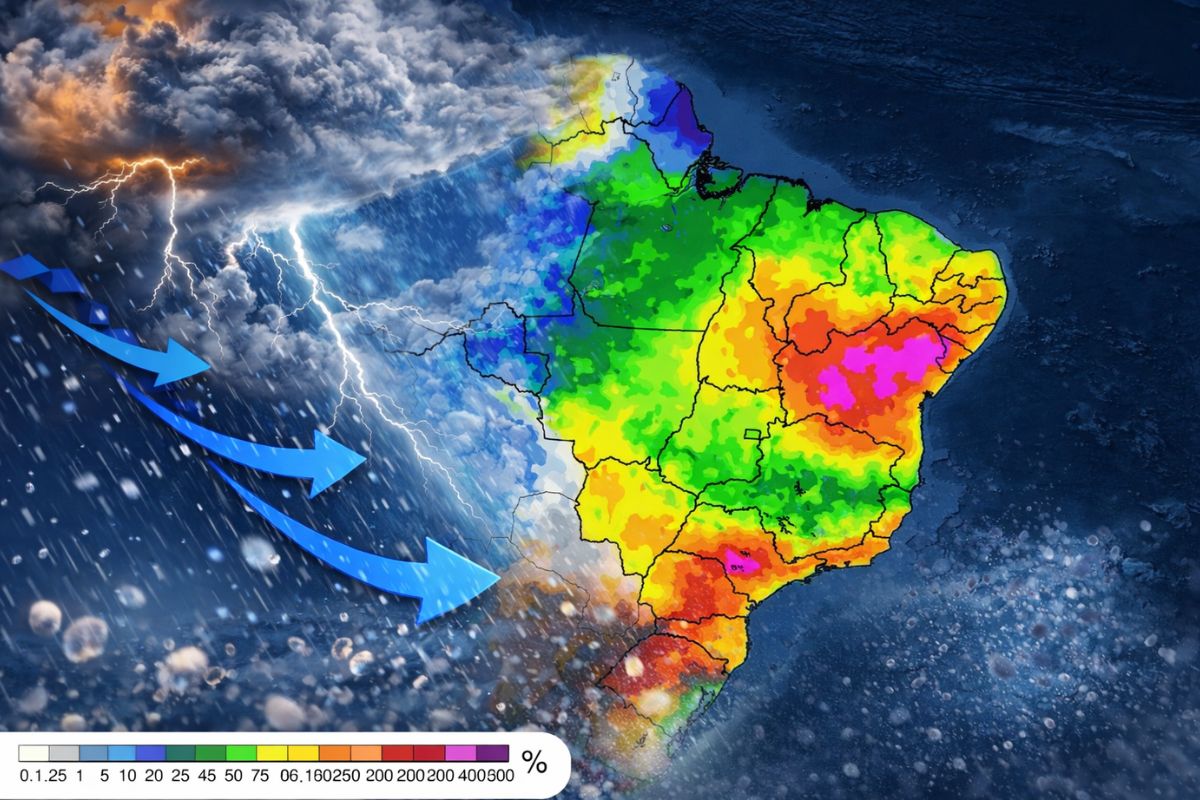
The truce after the last cyclone is over: a new cold front is hitting five states between Saturday and Sunday with up to 100 millimeters of rain, risk of hail, and wind gusts that could cause damage from Rio Grande do Sul to São Paulo.
-
Robots already operate oil rigs without humans, connect pipelines on their own, and inspect platforms in the dark, and the world’s largest drilling company plans to cut 75% of the crew at each well.

-
In China, a single person with artificial intelligence tools can already do the work of 50 to 100 employees: the new five-year plan bets on the one-person company model, and Suzhou is the laboratory for this revolution.

-
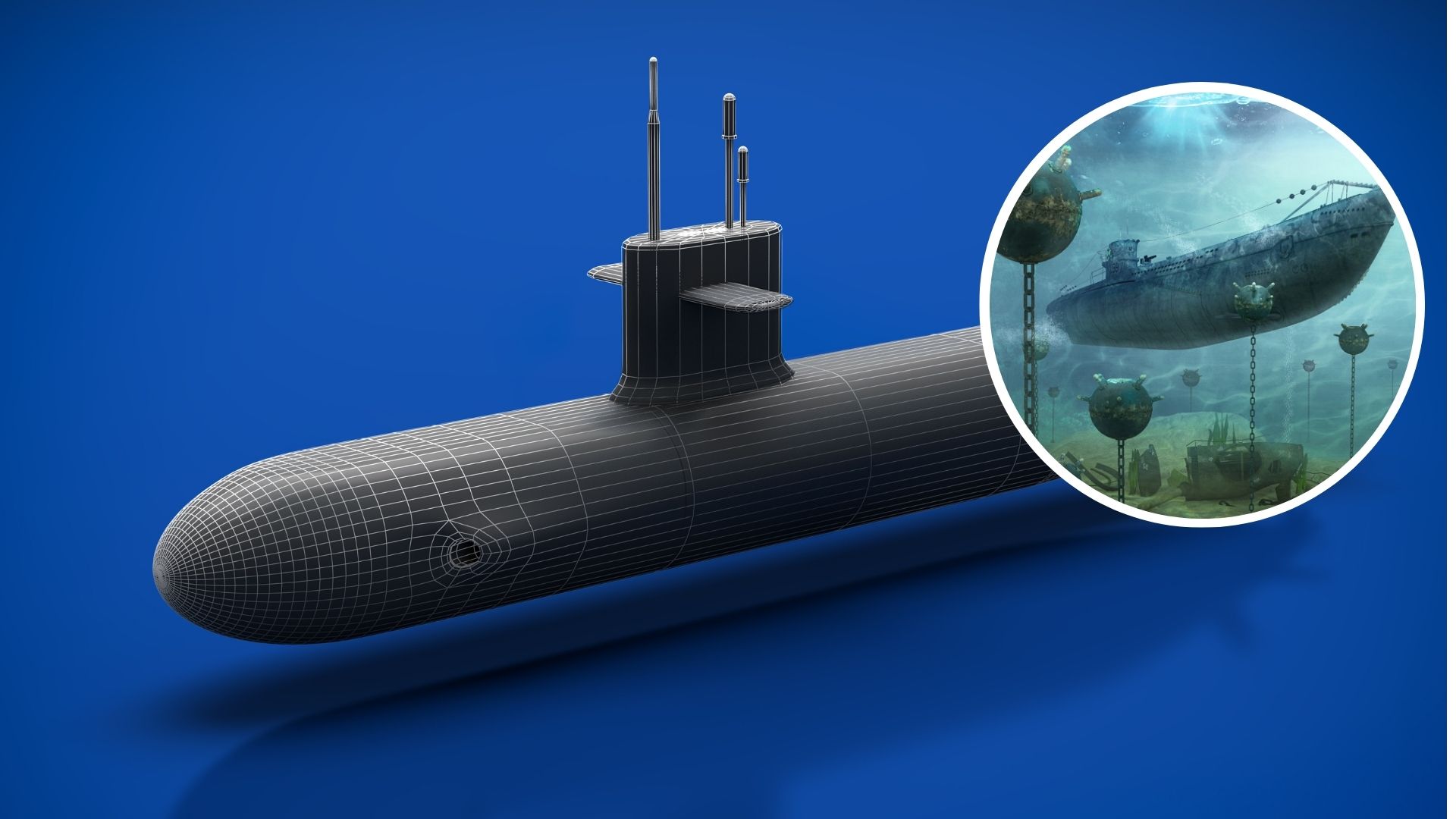
The USA accelerates the production of sensors launched into the ocean to hunt quieter submarines, and the new system promises to detect targets at greater distances in rough seas, shallow waters, and noisy areas, changing the game of anti-submarine warfare.
The war in Ukraine has consolidated the central role of layered air defense, with systems articulated for detection, command, and engagement at different altitudes.
In the Middle East, attacks with drones and missiles aimed at energy facilities have shown that relatively cheap vectors can produce immediate effects on supply chains, energy, and economic mobility.
In the Brazilian case, the means cited as the basis of ground air defense are the Gepard 1A2, the Igla-S, and the RBS 70, including more recent and earlier versions.
These are useful systems for point defense missions, troop protection, and coverage of specific installations, but they do not resolve, by themselves, the absence of a deeper and tiered coverage.
The Brazilian Army itself continues to employ IGLA and RBS-70 missiles in recent air defense exercises in Formosa, confirming that these equipment remain at the core of the currently available capability.
Lack of medium altitude defense increases vulnerability
The limitation is also technical.
In a recent publication from the Army Blog, the Gepard 1A2 is described with search and fire radars aimed at targets with a vertical range of up to 3,000 meters, illustrating its focus on low altitude.
This is a relevant system for protecting armored columns and point targets, but its employment envelope does not alone cover the ranges in which some of the more challenging vectors of the contemporary environment operate.
This gap becomes clear when the debate shifts to medium altitude.
An academic document from the Army library explicitly records that Brazil still does not possess this capability, and states that the Army has already initiated the process to acquire an anti-aircraft artillery system in this range.
In parallel, the National Defense Policy defines as an objective the acquisition of medium altitude capability, with an emphasis on protecting strategic infrastructures and strengthening interoperability among the Forces.
The official movement advanced even further in 2025.
Orders from the Army General Staff began to establish the acquisition of medium and high altitude air defense systems, indicating institutional recognition of the gap.
Ukraine and Middle East show impact of air attacks
The discussion gains weight when compared to what is seen outside the country.
On August 26, 2024, Russia launched more than 200 missiles and drones against Ukraine, hitting energy infrastructure and other critical targets in various regions.
The offensive demonstrated how a saturation-based air campaign can impose continuous wear even in the face of more robust defensive systems.
In the Gulf, the attack on September 14, 2019, on the Abqaiq and Khurais facilities in Saudi Arabia took 5.7 million barrels per day offline, directly affecting the global oil market.
The episode highlighted how relatively simple attacks can generate immediate strategic impact.
Brazilian infrastructure and strategic risks
These cases help to dimension the Brazilian problem without the need for extrapolation.
The country has hydroelectric plants, refineries, ports, air bases, industrial hubs, transmission networks, and command structures spread over large distances.
It also depends on the freedom of movement of its ground forces in times of crisis, which requires mobile and permanent air defense.
When this protection is restricted to low altitude and a limited set of systems, exposure increases to vectors that exploit precisely the uncovered intervals.
Nelson During’s analysis argues that possessing fighters and radars is not enough on its own to protect the territory.
The contemporary requirement is for an integrated architecture, capable of detecting, identifying, deciding, and intercepting in seconds.
This type of structure transforms dispersed equipment into effective defense, especially in the face of coordinated attacks.
In this scenario, Brazilian vulnerability does not stem from a total lack of means.
The country has operational systems and maintains continuous training, but still faces the gap between the need highlighted by recent conflicts and the available capacity at scale.
While this transition is not completed, the defense of low and medium altitude airspace remains one of the most sensitive points of the Brazilian military structure.








Seja o primeiro a reagir!