





 Portuguese
  English
  Spanish
  4 min of reading
  0 comments


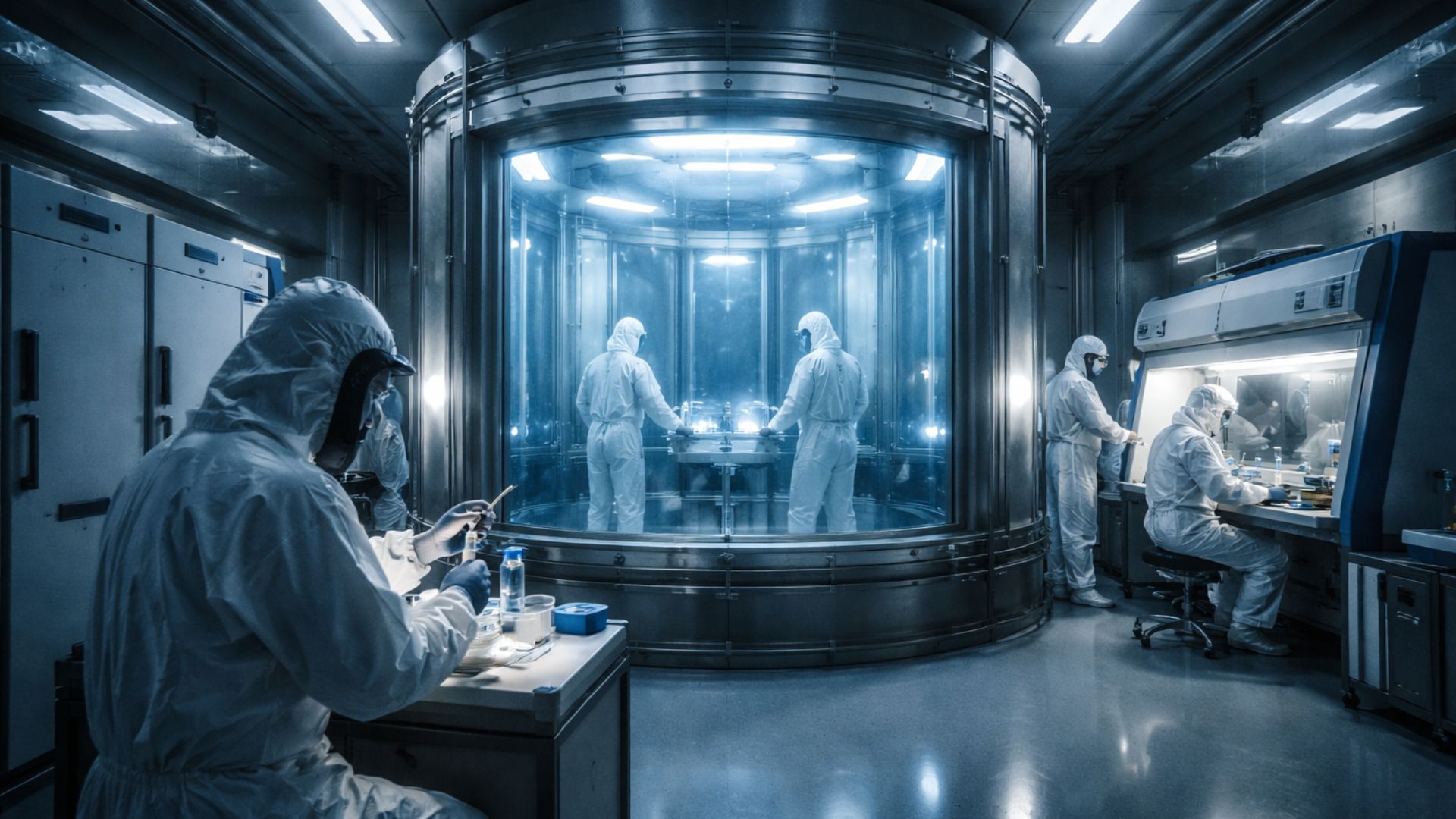
Maximum security in biological laboratories advances in Brazil while an episode at Unicamp exposes protocols, supervision gaps, and the strategic importance of these structures to face epidemics and future pandemics with rigorous control, advanced technology, and restricted access.
The theft of biological samples at the State University of Campinas, in a biosafety level 3 laboratory, has put the protection of facilities that handle high-risk infectious agents in the country at the center of the debate.
Although the case has increased public attention, experts and research centers maintain that these structures follow successive layers of containment, with controlled access, monitoring, and routines designed to prevent exposure of workers, the population, and the environment.
In Brazil, the NB-3 is currently the highest level in regular operation for research with human pathogens, while the first NB-4 complex in Latin America is under construction at the National Center for Research in Energy and Materials in Campinas.
-
Scientists use fungi to create plant flour with a meat-like smell from waste such as potato peels and açaí, a solvent-free technology from Unicamp that increases protein, generates vitamin D, and has a patent pending.
-
Artemis II photographs the Moon and shows an area never seen by human eyes: part of the Orientale Basin appears in the image, while Orion approaches the flyby this Monday (6) after passing the halfway point.

-
The global fuel crisis is doing what years of environmental campaigning could not convince consumers to switch from gasoline cars to electric ones, and in Thailand, reservations are skyrocketing with over a million people at the Auto Show.

-
Ukrainian refugees in Germany are assembling war drones in a factory near Munich to send back to their own country, aiming to produce 10,000 units by the end of 2026, and some have already returned to the front lines hundreds of times.

The Orion proposal brings together maximum biological containment laboratories linked to the Sirius accelerator, with public investment announced of R$ 1 billion and unprecedented character in the region.
How NB-3 laboratories work in Brazil
Laboratories classified as NB-3 are intended for work with microorganisms capable of causing severe diseases and that require additional containment barriers, especially when there is a risk of aerosol transmission.
International manuals treat this level as a reinforced control environment, with procedures defined based on risk assessment, use of biological safety cabinets, personal protective equipment, and directed airflow.
In practice, this means operating with restricted access doors, specific training, sterilization in autoclaves, and controlled waste disposal.
It is also common to store samples in ultrafreezers at very low temperatures, often in the range of -80 °C, in addition to using containers designed to prevent leaks.
Another central point is the ventilation system with negative pressure, which prevents contaminated air from escaping the internal environment to external areas.
These requirements help explain why the Unicamp episode produced immediate repercussions.
The university reported that as soon as it identified the occurrence, it alerted authorities and initiated an internal investigation, classifying the case as isolated and linked to atypical circumstances.
The episode also exposed a sensitive point.
Rigid protocols do not completely eliminate the risk when the suspicion involves someone authorized to access the structure.
In this scenario, mechanisms such as biometrics, sample traceability, access records, and internal audits gain importance, which enhance control over flows within the laboratory.
Lack of national coordination hinders control
Brazil does not have a single accreditation system for all high biological containment laboratories.
Supervision varies according to the purpose of the facility, with responsibilities distributed among different areas of public administration.
This fragmentation makes it difficult to build a consolidated national picture of how many NB-3 units are in operation.
Therefore, the estimate that the country has dozens of these facilities is not based on a unified official survey.
On a global scale, studies indicate thousands of NB-3 laboratories distributed across different countries, with a higher concentration in high-income nations.
Meanwhile, NB-4 laboratories, with maximum security, remain rare and concentrated in a few territories.
NB-4: the leap to the maximum biosafety level
The transition from NB-3 to NB-4 represents a significant increase in structural and operational requirements.
These facilities deal with agents of extremely high risk, often without available treatment or vaccine.
Therefore, they require total sealing, advanced air filtration, rigorous waste treatment, and absolute access control.
In many cases, researchers use pressurized suits with their own oxygen supply or work in completely isolated systems.
The Orion complex, under development in São Paulo’s interior, emerges as a strategic piece in this context.
The project envisions integration with synchrotron light technology, expanding the capacity for advanced precision analysis of biological structures.
The absence of an NB-4 structure in the country limits the study of maximum risk pathogens identified in the national territory.
An example is the Sabiá virus, associated with Brazilian hemorrhagic fever, whose analysis depends on maximum containment environments.
Recent records indicate rare cases of the disease in São Paulo, reinforcing the need for adequate infrastructure for scientific investigation.
At the same time, experts emphasize that high containment laboratories are not only for responding to already established crises.
These units also support activities such as epidemiological surveillance, vaccine development, and preparation for new health threats.
During the Covid-19 pandemic, NB-3 structures were essential for studies on the virus, including transmission analyses, genome studies, and control strategies.
In this scenario, the expansion of high-security laboratory capacity is seen as a relevant component for public health, science, and technology policies.






Seja o primeiro a reagir!