





 Portuguese
  English
  Spanish
  6 min of reading
  0 comments


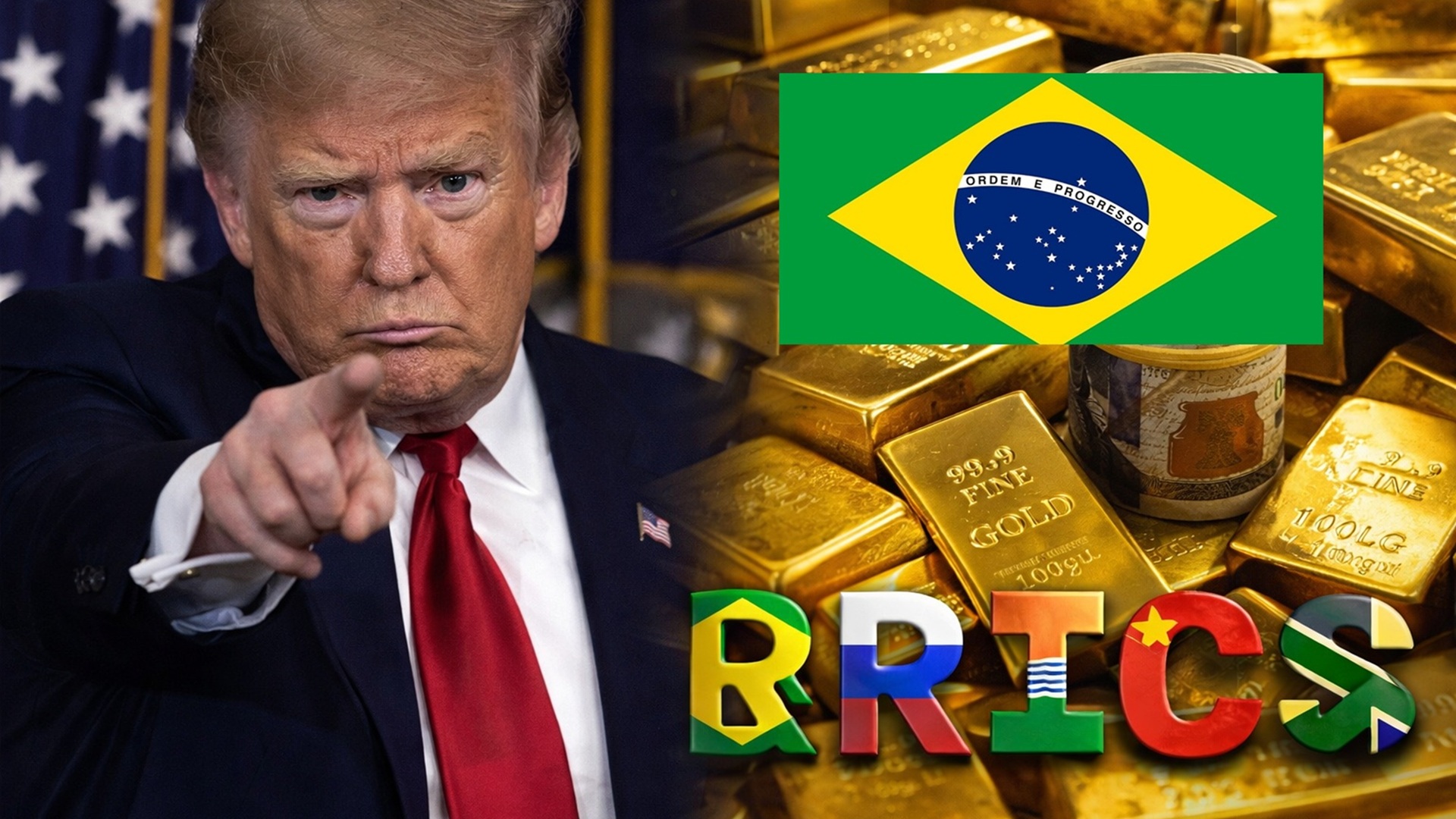
In his second term as president of the United States, Donald Trump made it clear that he does not accept any movement that reduces the dollar’s space in the international system, especially with the BRICS leading this movement.
The offensive gained new weight when the Central Bank of Brazil reported that, at the end of 2025, 72% of the country’s international reserves were in dollars, a still majority percentage, but lower than in the previous three years, while gold, euro, and renminbi advanced in the portfolio.
Trump’s statements show that he has begun to treat the issue as a central matter of trade and strategic policy. Trump’s focus has always been on the BRICS, a bloc that includes, among other countries, Brazil, Russia, India, China, and South Africa, and which has been discussing more transactions in local currencies and alternative payment mechanisms.
-
Havan buys historic football land in Blumenau for a million-dollar amount protected by a confidentiality clause and is already planning to change even the layout of streets to build a megastore in half-timbered style costing 80 million reais.

-
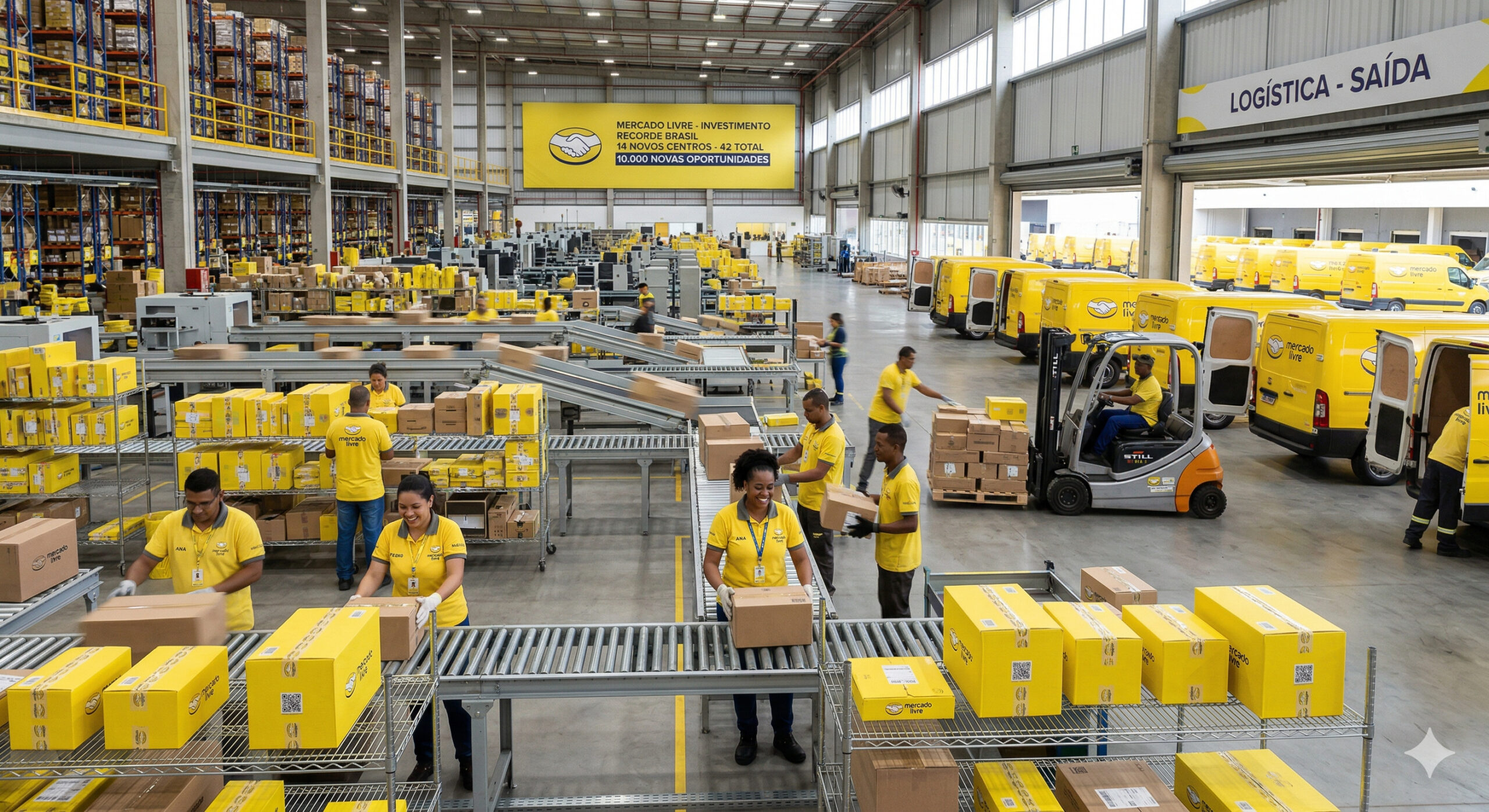
Mercado Livre “opens the vault” and announces a record investment of R$ 57 billion in Brazil in 2026, a value 50% higher than the previous year, with an expansion plan that includes 14 new logistics centers, totaling 42 units in the country and hiring an additional 10,000 employees.
-
How investment in technology can revolutionize the national economy and enhance industrial gains, according to a study that highlights the direct impact on productivity, innovation, and wealth retention within Brazil.

-
The largest food company on the planet, JBS, has just opened a 4,000 square meter laboratory in Florianópolis to develop customized proteins that modulate muscle mass gain, immune response, and metabolic performance.

On November 30, 2024, Trump published a message demanding that BRICS countries commit to not creating a new bloc currency or supporting another currency to replace the dollar.
In the same statement, he stated that if this occurred, the involved countries could face tariffs of 100% when exporting to the United States.
The warning was not limited to that moment. On January 30, 2025, already back in the presidency, Trump repeated the message and threatened with 100% tariffs any attempt by the BRICS to replace the dollar as a reserve or commercial reference currency.

The US needs countries to use the Dollar as a reserve
The importance of the United States in maintaining the dollar as the main international reserve currency is strategic and reflects its economic and geopolitical power.
The dollar is used in global transactions, especially in the trade of commodities such as oil and gold, which strengthens the US position in the global financial system. This allows the United States to benefit from lower interest rates and cheaper financing, due to the high demand for its currency in the global market.
Moreover, the dollar functions as a tool of geopolitical power. The US can use its currency to impose sanctions and exert influence over other countries by controlling access to the global financial system. By ensuring that the dollar remains dominant, the US can protect its commercial and international political positions.
The dollar’s participation in international reserves also guarantees an exorbitant privilege for the US. Other countries, such as Brazil, hold large amounts of US Treasury securities, which helps finance the country’s fiscal deficit.
This system allows the US to finance its debt more efficiently and at lower costs, as the dollar is widely accepted and used in international transactions.
The presence of the dollar as a reserve currency also offers economic stability. During financial crises, such as that of 2008, global demand for dollars increases, as investors see the American currency as a safe asset. This strengthens the US position, allowing the country to face economic turmoil with more resilience than other economies.
In summary, maintaining the dollar as the world’s reserve currency offers the US a series of economic and geopolitical advantages, ensuring its dominance in international trade, global financing, and foreign policy.
Brazil reduces the weight of the dollar and increases gold in reserves
In Brazil, the discussion gained practical dimension with the release of the Annual Report on International Reserves from the Central Bank, published on March 31, 2026, with data from the end of 2025. The document showed that 72% of Brazil’s international reserves were invested in dollars at the end of last year.
Although it remains the main component of the portfolio, the dollar lost share for the third consecutive year. The share was 80.42% in 2022, fell to 79.99% in 2023, decreased to 78.45% in 2024, and reached 72% in 2025.
During the same period, other assets grew. In December 2025, gold accounted for 7.19% of the reserves, the euro for 6.60%, and the renminbi for 5.94%, while the British pound, yen, Canadian dollar, Australian dollar, and South Korean won completed the composition.
The Central Bank stated in the report that, in 2025, it expanded the diversification of the reference portfolio in light of increasing economic and geopolitical uncertainties. The monetary authority reported that it included instruments denominated in South Korean won and increased positions in gold, euro, and renminbi, aiming to enhance security and liquidity.
The document also noted that, with the adopted allocation, full currency coverage of the sovereign external debt is achieved and currency protection of the gross external debt is sought. In the case of gold acquired to compose the international reserves, the Central Bank reported that the transactions occurred exclusively abroad.

Gold purchases reinforce Brazilian diversification
The most significant change in the Brazilian portfolio occurred precisely in gold. After four years without purchases, the Central Bank acquired 42.8 tons between September and November 2025, raising the total volume of the metal in reserves from 129.6 tons to 172.4 tons.
With this operation, the country’s gold stock increased by 33%. The metal became the second largest component of Brazil’s international reserves, behind only the dollar.
The data released by the Central Bank shows that the movement did not remove the leadership of the American currency, but changed the internal distribution of reserve assets. At the end of 2025, the dollar still concentrated the largest part of the portfolio, but with a lower share than observed in the immediately preceding years.
In this scenario, Brazil appears within a broader dynamic of the BRICS, but with a composition still strongly anchored in the US currency. The diversification of the portfolio occurred with growth in gold and other currencies, without losing the dominant position of the dollar in the country’s reserves.
The relationship between the two movements helps explain why Trump’s statements resonate strongly. The BRICS remains at the center of discussions about payments and local currencies, while one of its main members, Brazil, continues to gradually reduce the share of the dollar in its international reserves, even though the American currency remains widely dominant.
Dollar remains dominant, but the dispute has entered the center of the debate
Even with the changes observed in Brazil, the dollar continues to occupy a central position in the global reserve system. In a study released in July 2025, the Federal Reserve reported that the American currency represented 58% of the officially declared global reserves in 2024, maintaining a wide advantage over other currencies.
According to the same survey, the euro accounted for 20%, the yen for 6%, the British pound for 5%, and the renminbi for 2%. The Federal Reserve noted that the dollar’s share was once larger, but emphasized that the reduction did not lead to the emergence of a single competitor that has assumed the same role on a similar scale.
This international scenario helps to gauge the political significance of Trump’s remarks. The American president did not react to a definitive abandonment of the dollar by the BRICS, but to discussions and rearrangements that, although gradual, have expanded the debate on monetary alternatives and the use of local currencies in exchanges between countries in the bloc.
In the Brazilian case, the Central Bank’s numbers make this partial transition clear. The dollar closed 2025 with 72% of international reserves, gold advanced to 7.19%, the euro reached 6.60%, and the renminbi reached 5.94%, a composition that maintains the hegemony of the American currency while also recording a significant reduction in its recent share.
The succession of Trump’s statements, therefore, accompanied an environment in which the BRICS began to be observed as a space for seeking instruments less dependent on the dollar.
By repeating threats of tariffs and demanding explicit commitment from the countries in the group, the president of the United States made it clear at different times that he considers any advance by the BRICS towards alternatives that reduce the international weight of the American currency unacceptable.







Seja o primeiro a reagir!