





 Portuguese
  English
  Spanish
  5 min of reading
  0 comments


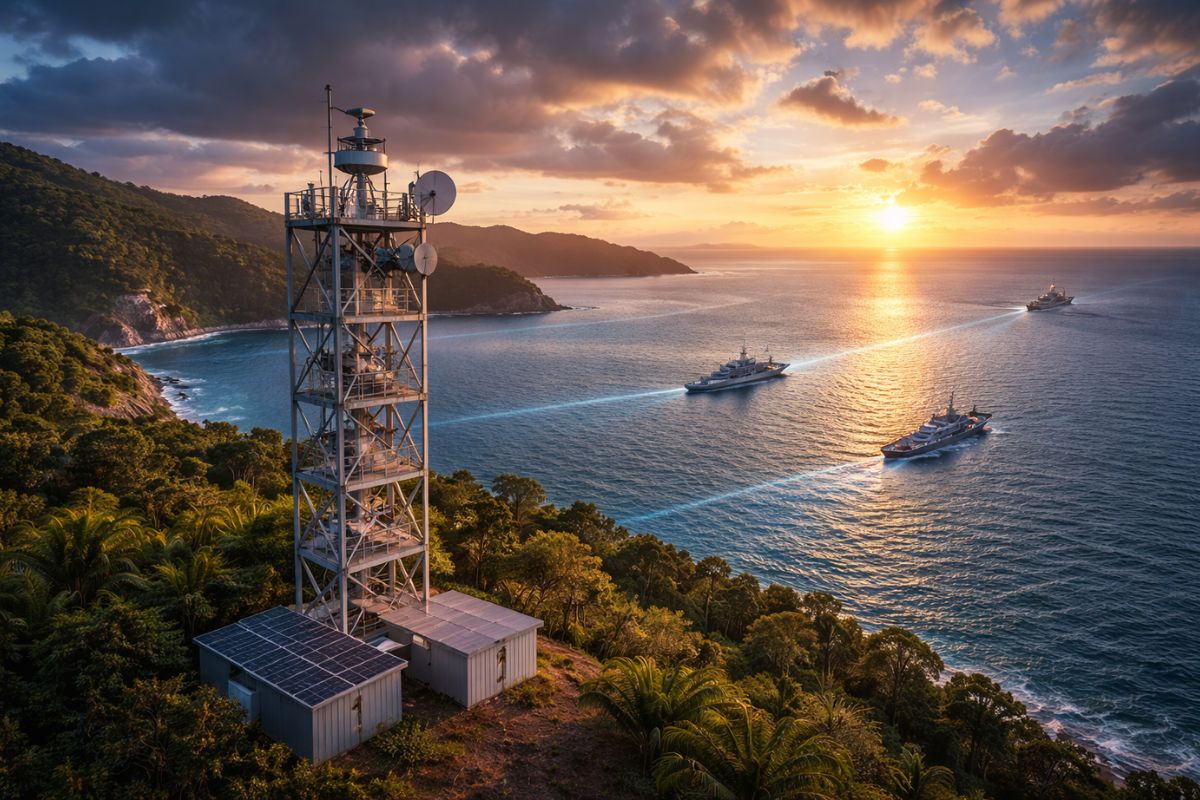
The largest coastal surveillance system in Brazil begins operation in the first half of 2026 with a unit installed at the Castelhanos Lighthouse in Ilha Grande, integrating long-range radars, optical and infrared cameras, and automatic vessel identification operating remotely and continuously
Brazil is just a few months away from activating the largest maritime surveillance system ever built in the country. The first Coastal Surveillance Unit of SisGAAz, the Blue Amazon Management System, is being installed in the Castelhanos Lighthouse region, in Ilha Grande, Angra dos Reis (RJ), with delivery expected in the first half of 2026. The equipment will operate autonomously and remotely, gathering sensors capable of detecting, identifying, and tracking vessels in real-time along the coast.
The project is part of a strategic program of the Brazilian Navy aimed at the continuous monitoring of Brazilian Jurisdictional Waters, a vast maritime area that the country calls the Blue Amazon. When it is in operation, the largest coastal surveillance system in the country will drastically increase the capacity to see what happens at sea, from commercial traffic to illicit activities, including search and rescue operations and protection of critical infrastructures such as ports and platforms.
What is SisGAAz and why does it represent the largest maritime surveillance system in Brazil

SisGAAz stands for Blue Amazon Management System, a strategic program of the Brazilian Navy that has existed on paper for years and is now starting to move from project to reality.
-
Archaeologists discover in China a 5,000-year-old tomb with over 350 artifacts, nearly 200 jades, and signs of intentional destruction, in a discovery that could be the gateway to a lost prehistoric kingdom.

-
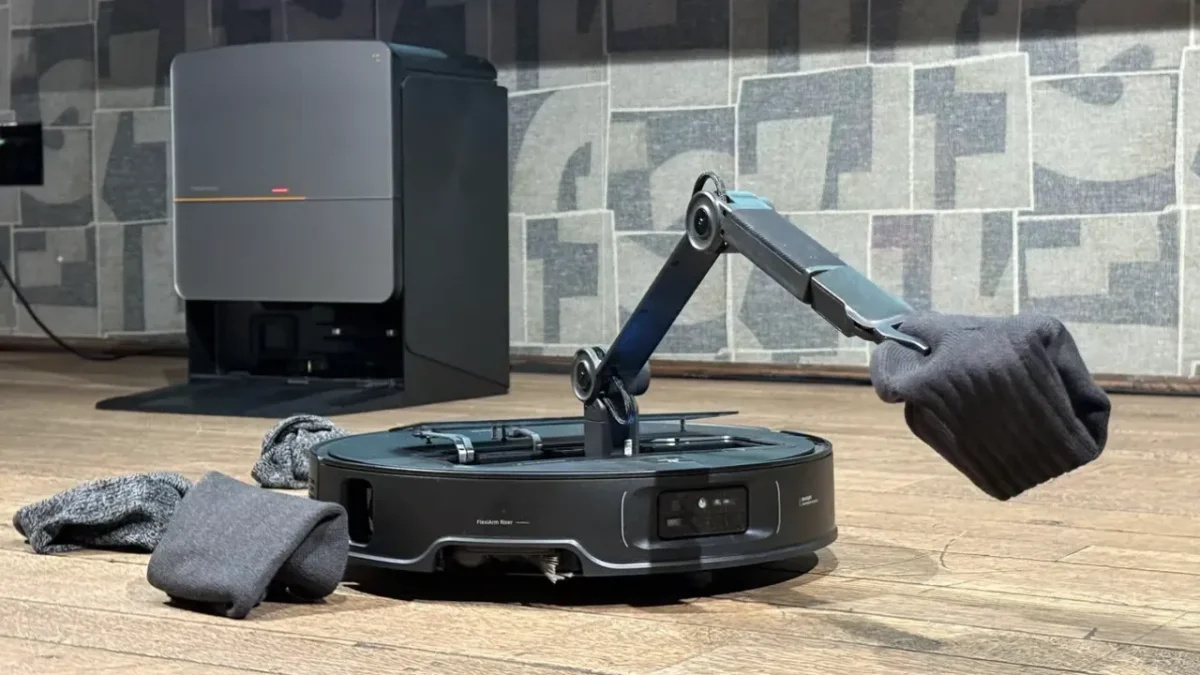
A vacuum robot with a five-axis mechanical arm capable of picking up objects from the floor, avoiding obstacles in real time, and continuing to clean on its own inaugurates a new generation of appliances that see, think, and act within the home.
-
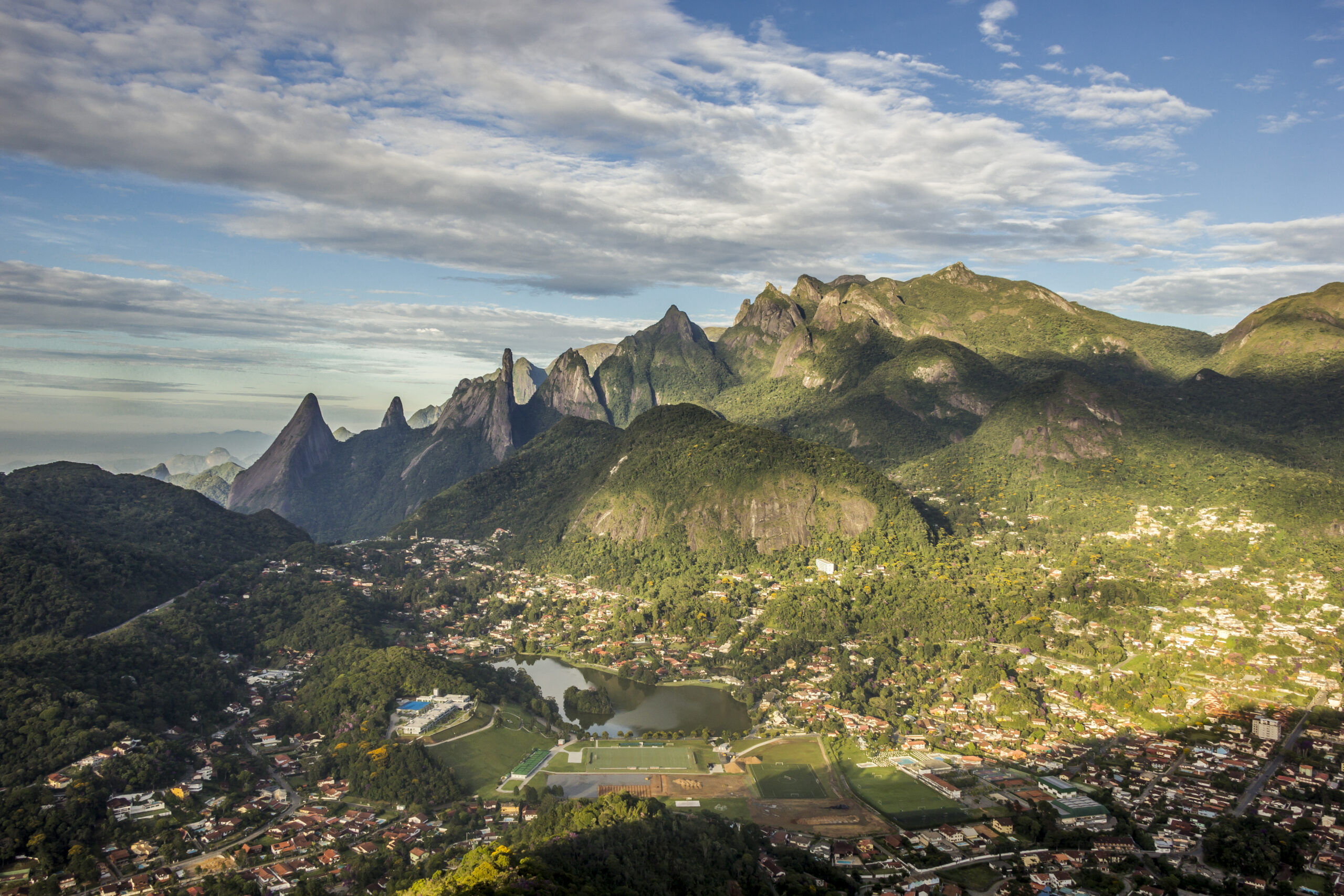
Geographers redefine the Brazilian relief and confirm the presence of mountains in 14 states with a new system that changes historical criteria and alters the way the territory is classified.
-
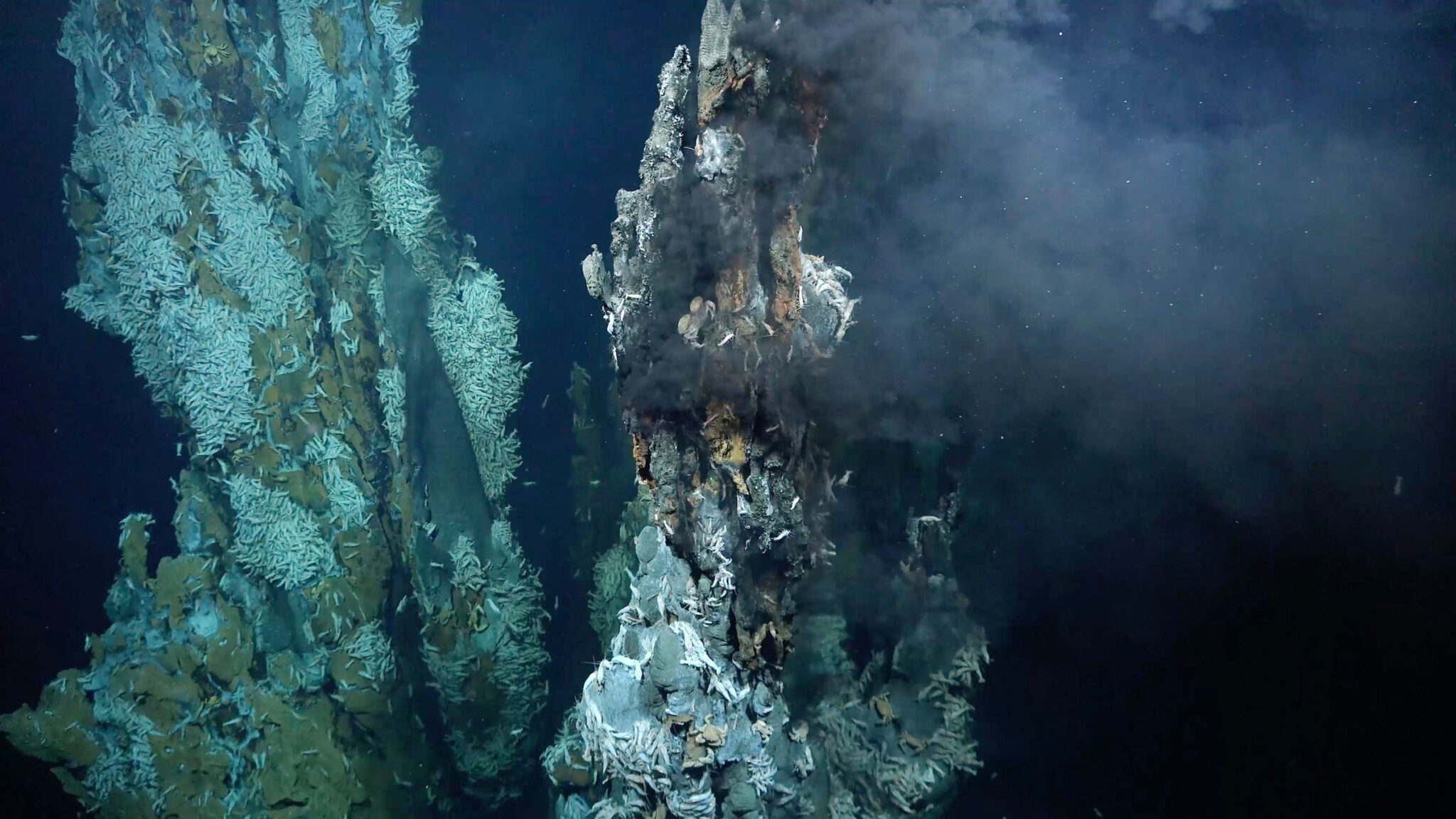
At a depth of 3,800 meters in the Atlantic, scientists have discovered a “lost city” with white towers up to 60 meters tall that has been active for over 120,000 years without relying on volcanoes.

The goal is to create an integrated network of sensors, communication systems, and command centers spread along the Brazilian coast, capable of monitoring all movement in real-time in the waters under the country’s jurisdiction.
The Blue Amazon encompasses a maritime area of approximately 5.7 million square kilometers, larger than the terrestrial Amazon. It is where commercial routes pass, oil platforms operate, and fishing, tourism, and transport vessels circulate.
The largest maritime surveillance system in the country arises precisely from the need to protect this immense territory, where today the monitoring capacity still depends on naval and aerial means with limited range. SisGAAz aims to change this with fixed, autonomous, and permanent technology.
What technology will the first unit in Ilha Grande have

The Coastal Surveillance Unit being set up at the Castelhanos Lighthouse is, in practice, a complete monitoring station operated remotely.
Among the installed equipment are maritime surveillance radars, high-resolution optical and infrared cameras, automatic vessel identification systems (AIS), and telecommunications and telemetry equipment.
Each sensor fulfills a specific function within the largest coastal surveillance system ever implemented in Brazil. The radars detect vessels at long distances, even in adverse weather conditions. The infrared cameras allow for nighttime visual identification.
The AIS system captures signals that ships are required to emit under international convention, allowing real-time knowledge of the identity, position, speed, and route of each vessel in the monitored area.
All this information is transmitted via data link to the Navy’s operational centers, where it is cross-referenced with other databases to create a complete picture of what is happening at sea.
Who is building the largest surveillance system and how does the operation work
The deployment of the first unit is the responsibility of the Miramar Consortium, formed by two Brazilian companies: SIATT and BEN.
The consortium brings together expertise in system integration, sensor development, and maritime and terrestrial infrastructure, a necessary combination to operate a remote station on an island that needs to function 24 hours a day without a permanent human presence.
On March 18, Navy officials visited the site to monitor the progress of the works. Vice Admiral Marcelo da Silva Gomes, Director of Program Management of the Navy, and Rear Admiral Luciano Calixto de Almeida Junior, Commander of Maritime Operations and Protection of the Blue Amazon, checked the installation of the physical infrastructure, energy systems, and telecommunications.
The visit confirmed that the largest maritime surveillance system in the country is in an advanced stage of deployment, with the base infrastructure already being assembled to receive the sensors and communication systems that will make the unit operational.
What is the practical use of monitoring the coast in real-time
The ability to see what happens at sea in real-time changes the game on several fronts. In maritime traffic control, the largest surveillance system allows tracking commercial routes and identifying suspicious behaviors such as vessels that turn off their transponder to avoid being tracked, a common practice in illegal fishing, smuggling, and trafficking activities.
In search and rescue operations, the response becomes faster because operational centers know exactly which vessels are in the area and can coordinate the rescue with precise information.
For the protection of critical infrastructures such as ports, oil terminals, and submarine cables, continuous surveillance acts as a digital shield that detects unauthorized approaches before they become real threats.
The integration of data with other Navy systems enhances what the military calls situational awareness, the ability to understand the complete scenario of what is happening in a given maritime area.
What comes after the first unit of the largest surveillance system
The delivery of the Coastal Surveillance Unit at the Castelhanos Lighthouse is just the beginning. SisGAAz plans to install multiple units at strategic points along the entire Brazilian coast, creating an integrated network that will cover from the northern coast to the southernmost tip of the country. Each unit added to the system expands the range and redundancy of monitoring.
The challenge is proportional to the ambition. Monitoring a coast of over 7,000 kilometers with autonomous sensors requires continuous investment in technology, maintenance, and training.
But the Navy treats the largest maritime surveillance system as a long-term strategic priority, arguing that the protection of the Blue Amazon is as important for Brazil as the protection of the terrestrial Amazon.
With the first unit expected by mid-2026, the country is taking the most concrete step so far to turn this vision into operational reality.
What do you think about the creation of this coastal surveillance system? Should Brazil have done this earlier? Leave your opinion in the comments.






Seja o primeiro a reagir!