





 English
  Francês
  Alemão
  Italiano
  Japonês
  Norueguês
  Portuguese
  Spanish
  5 min of reading
  0 comments


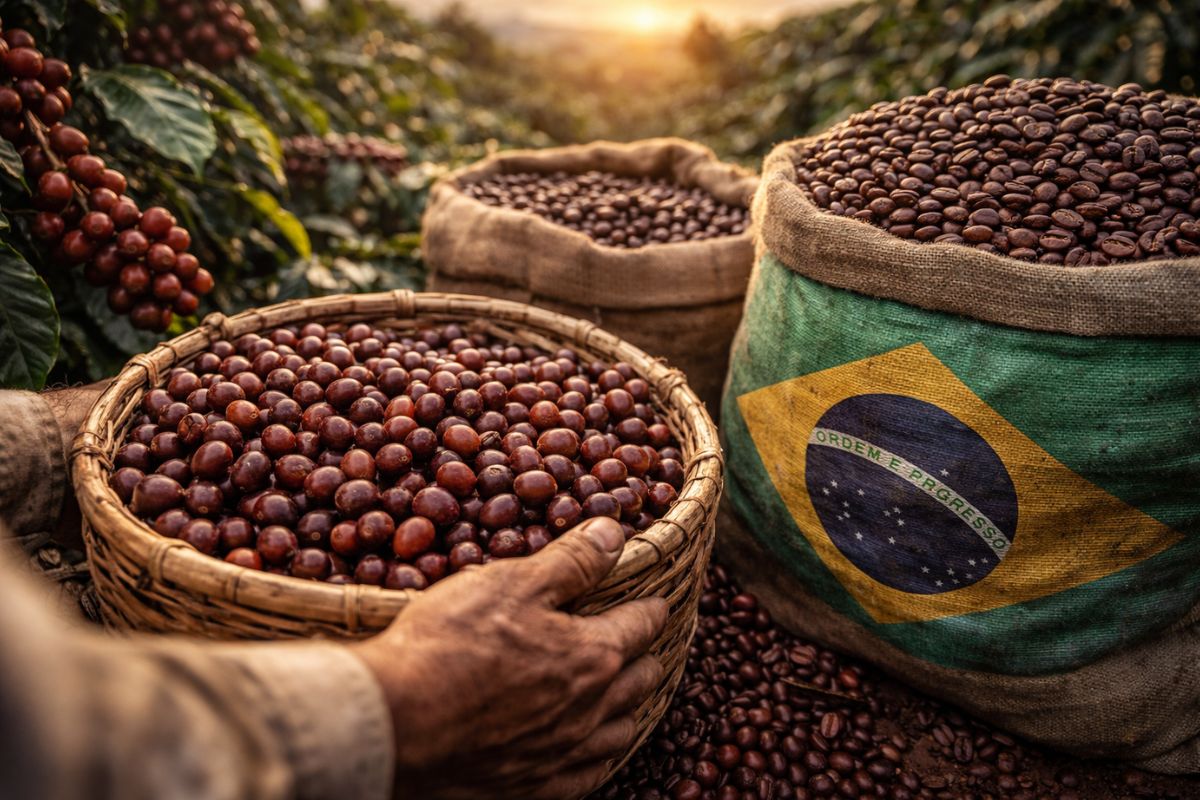
Brazil is the largest coffee producer in the world, but multinationals from the Netherlands, Germany, Switzerland, and Israel control 55.6% of the domestic market through popular brands like Pilão, 3 Corações, Melitta, and Nescafé, present in the kitchens of millions of Brazilians who are unaware of the origins of these companies
Brazil is the largest coffee producer in the world, harvesting beans on a scale that no other country can match and allocating about 22 million sacks per year for domestic consumption. Even so, the real beneficiaries of this billion-dollar market are companies based in the Netherlands, Germany, Switzerland, and Israel. Four multinationals control 55.6% of all coffee sold on Brazilian shelves, according to data from Nielsen compiled by the Brazilian Coffee Industry Association (Abic).
The brands that dominate the market are known to practically every Brazilian: Pilão, 3 Corações, Melitta, and Nescafé. What many people do not know is that none of them belong to a genuinely Brazilian company. Pilão is owned by the Dutch JDE Peet’s, acquired by the American Keurig Dr Pepper in August 2025. 3 Corações is a joint venture with Israeli capital. Melitta is German. And Nescafé is from the Swiss Nestlé. The coffee is Brazilian, but the market control is not.
Who are the foreign companies that control coffee in Brazil

The market leader is 3 Corações, a joint venture between Brazilian São Miguel Holding and Israeli Strauss Group, with a 50% stake for each side.
-
Expansion of Federal Institutes: 38 new campuses and R$ 200 million for public education; see the cities included.
-
Lula’s government changes rule in important benefit and thousands of Brazilians will no longer receive it; see what has changed.
-
New Gripen fighter makes Argentines surrender to Brazil, and the heavy reaction exposes envy, frustration, and shock at Brazil’s technological leap.

-
This discovered deposit near the Andes could change the future of Argentina, attract billions, and even shake up the global metals market.


The company controls brands such as 3 Corações, Café Brasileiro, Iguaçu, and Santa Clara, operates nine factories in the country, and holds the top position among roasters. Right behind is the Dutch JDE Peet’s, owner of Pilão, L’OR, Café do Ponto, Café Pelé, and Caboclo, with four manufacturing units in the national territory.
In third place is the German Melitta, which arrived in Brazil in 1968 as a filter manufacturer and only started selling coffee under its own brand in 1980. Today it operates four factories and is a reference in filtered coffee.
The fourth major player is the Swiss Nestlé, present in the country since 1921, which launched Nescafé in the 1950s and currently leads the capsule segment with Nespresso. Together, these four companies hold more than half of everything the largest coffee producer in the world consumes internally.
The four giants of the coffee market in Brazil
| Company | Country of Origin | Main Brands | Factories in Brazil |
| 3 Corações (Strauss/São Miguel) | Israel / Brazil | 3 Corações, Café Brasileiro, Iguaçu, Santa Clara | 9 |
| JDE Peet’s | Netherlands | Pilão, L’OR, Café do Ponto, Pelé, Caboclo | 4 |
| Melitta | Germany | Melitta | 4 |
| Nestlé | Switzerland | Nescafé, Nespresso | 1 |
How multinationals entered the market of the largest coffee producer in the world

The entry of multinationals into the Brazilian coffee market was gradual and occurred in different waves. Nestlé and Melitta, for example, were already operating in the country with other products before investing in coffee.
The Dutch JDE Peet’s arrived in the late 1990s by acquiring established brands like Café do Ponto and Pilão. The Israeli Strauss Group entered in 2000 by acquiring Café Três Corações and, five years later, joined forces with São Miguel Holding to form the 3 Corações group.
According to Celírio Inácio, executive director of Abic, the expansion of multinationals coincided with the arrival of large supermarket chains to the interior of the country in the 1990s and 2000s. Until then, the coffee market was regional and home-based.
With the structuring of the national retail sector, brands that previously circulated only in some regions began to be distributed throughout the territory. Foreign companies, with robust capital, saw the opportunity and invested heavily in the largest coffee producer in the world.
What attracts foreign capital to the Brazilian coffee market
Three factors explain the attraction of multinationals to the Brazilian domestic market. The first is the volume of consumption: Brazil is the second largest coffee consumer on the planet, behind only the United States.
About 22 million sacks are allocated annually to the domestic market, a revenue that justifies long-term investments.
The second factor is the ease of access to raw materials. Since Brazil is the largest coffee producer in the world, factories located here purchase beans directly from producers and cooperatives without relying on imports.
The third is the existing industrial structure. Instead of building from scratch, many multinationals simply bought Brazilian companies that already had factories, well-known brands, and established distribution networks.
Is the coffee sold in Brazil really Brazilian
Despite foreign control over the brands, 100% of the roasted and ground coffee sold in Brazil is produced with national beans, according to Abic.
The multinationals buy the raw materials from producers and cooperatives scattered across Minas Gerais, São Paulo, Espírito Santo, Bahia, and other coffee-producing states. The industrialization occurs in factories located within Brazilian territory.
As explained by Celírio Inácio, each brand seeks beans with specific flavor and quality profiles to maintain the consistency of their blends. Companies need to have multiple sources of purchase to ensure the standard of the coffee that will be produced.
This creates a complex supply chain that connects thousands of farms to the final consumer. The bean is Brazilian from planting to cup. The profit, however, largely crosses borders.
Are there national alternatives in the coffee market
Outside of the four major multinationals, the Brazilian Camil has a significant market share with the brands Bom Dia, Seleto, and União, operating a factory in Varginha, Minas Gerais.
In addition to it, dozens of regional roasters cater to consumers who prefer identified origin coffees and artisanal roasting. The specialty coffee movement has gained strength in recent years and opens up space for smaller brands that compete on quality, not volume.
Even in the largest coffee producer in the world, the market is still dominated by scale and distribution. Regional roasters face the challenge of competing with the logistical power and marketing investment of multinationals.
Still, the growth of conscious consumption and the appreciation of traceability are changing the profile of the Brazilian consumer, who increasingly asks where the coffee comes from before putting it in the cart.
Brazilian coffee, foreign profit: a debate that needs to leave the kitchen
The largest coffee producer in the world lives a paradox that few consumers notice in their daily lives.
The beans are grown in Brazilian soil, harvested by Brazilian hands, and roasted in national factories, but the best-selling brands in the country belong to multinationals that send their profits abroad.
It is a model that guarantees jobs and taxes locally, but concentrates the largest share of the generated value in foreign hands.
Did you know that the most popular coffee brands in Brazil belong to foreign companies? Do you think this is a problem or part of the global market game? Leave your opinion in the comments and share this article with those who drink coffee every day without knowing who is profiting from it.








Seja o primeiro a reagir!