





 Portuguese
  English
  Spanish
  5 min of reading
  0 comments


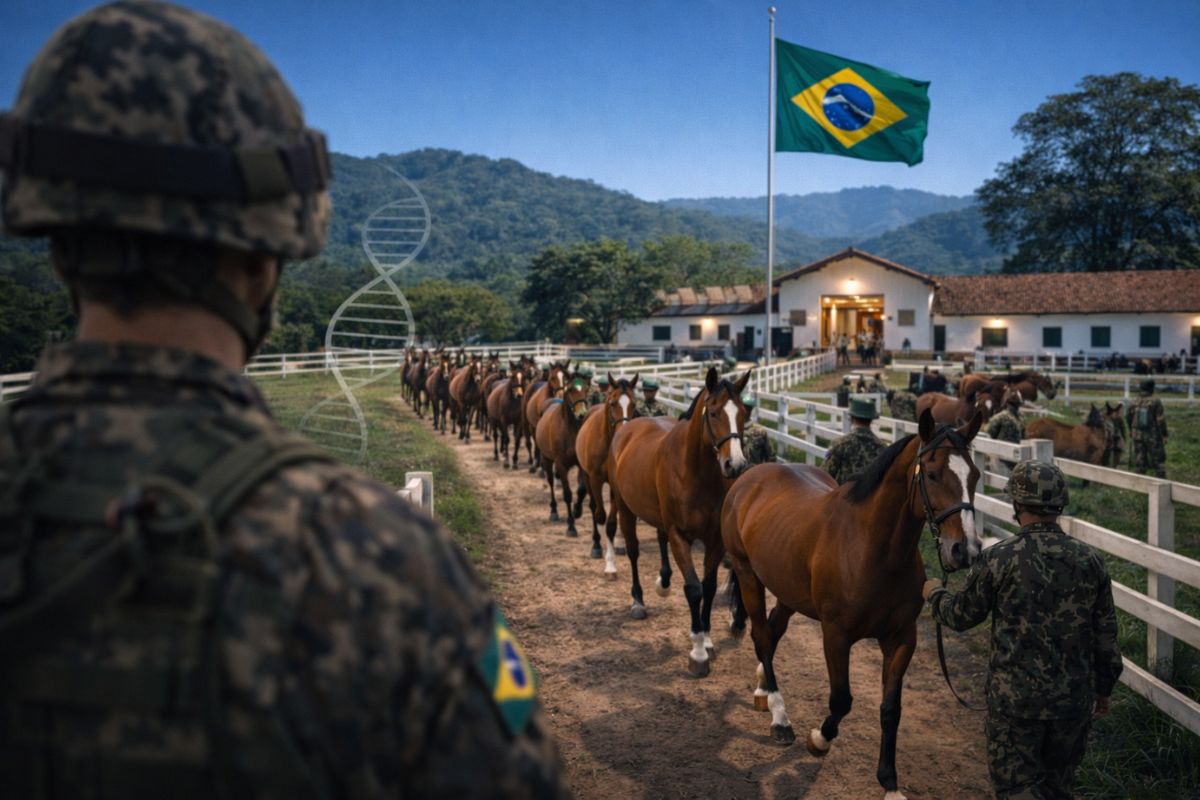
Located in São Borja, the Rincão Stud Farm is the military farm responsible for supplying between 150 and 170 horses per year to the Brazilian Army. The breeding process lasts up to five years, starting with selection by rigorous genetics and ending with training for ceremonial and patrol functions in high-profile units such as those in Brasília.
In the interior of Rio Grande do Sul, about 580 kilometers from Porto Alegre, there is a military farm that most Brazilians are unaware of. The Rincão Stud Farm, located in the municipality of São Borja, occupies 15 thousand hectares and has a very specific mission: to breed, select, and train horses that will be sent to the Brazilian Army. The facility supplies between 150 and 170 animals per year to the country’s armed forces. Each horse undergoes a preparation process that lasts up to five years, from birth until it is ready to serve in official ceremonies and patrol operations.
The military farm invests in rigorous genetic planning, behavioral selection, and progressive training. The horses are evaluated from the first months of life based on genetics, physical abilities, and temperament, and only those that meet all requirements advance in the process. The final destination for most of these animals is high-profile military units, with an emphasis on the garrisons in Brasília, where they participate in ceremonies with heads of state and patrol in strategic areas of the federal capital.
What is the Rincão Stud Farm and why does it exist

The Rincão Stud Farm is a unit of the Brazilian Army dedicated exclusively to the breeding and training of military horses. Located in São Borja, in the region of the Missions of Rio Grande do Sul, the military farm occupies an area equivalent to more than 15 thousand football fields.
-
Brazil became 18 square kilometers smaller in the new official update from IBGE, which redrew the boundaries of 784 municipalities in 13 states and even changed the names of cities that you might know, such as Açu, which is now called Assú.

-
Stephen Hawking said that the worst enemy of knowledge is not ignorance but the illusion of knowledge, and he dedicated his entire career to proving that science dies when people act as if they already have all the answers.

-
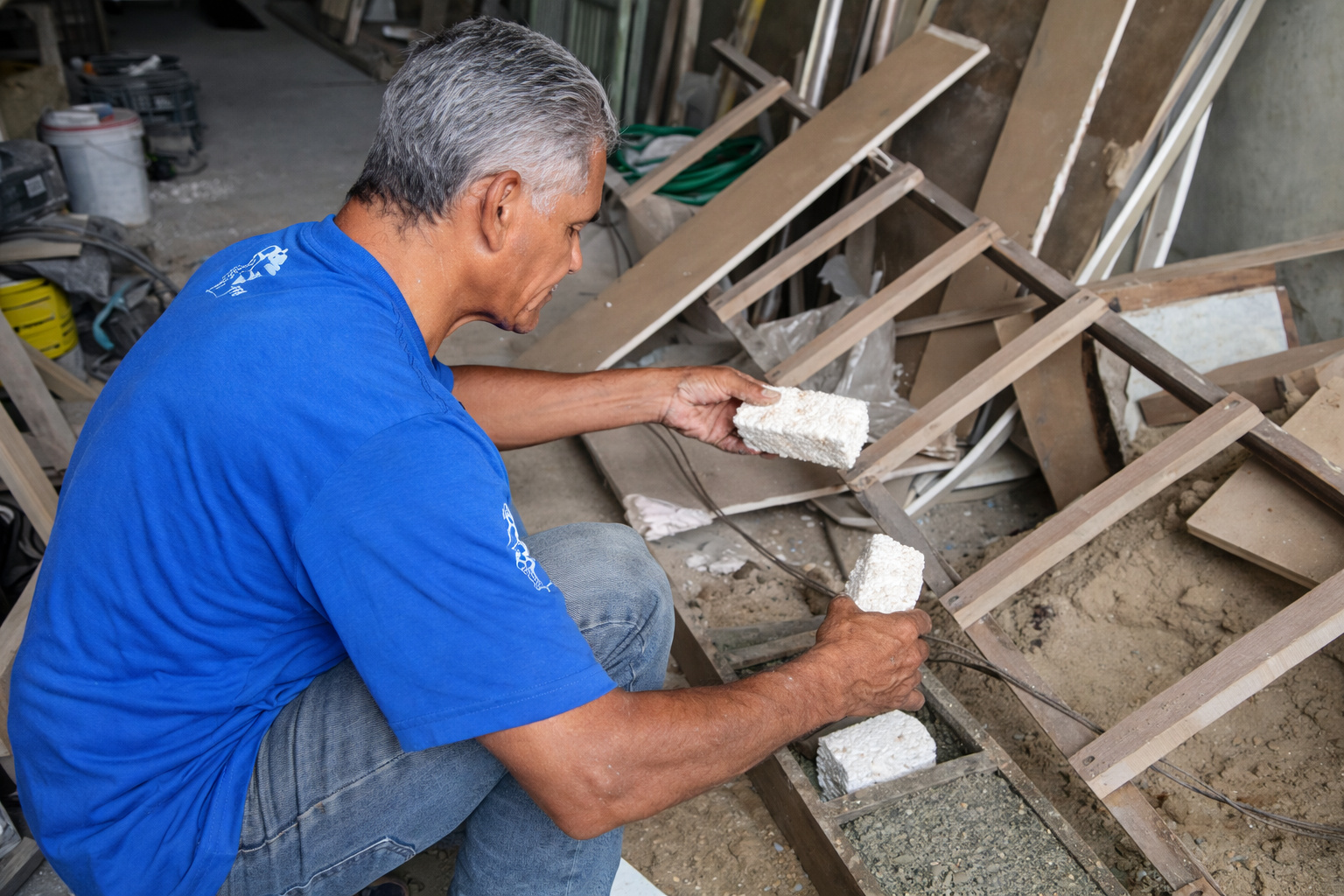
A man gathered Styrofoam, PET bottles, sand, and cement to build a recycled block using a mold made from an old board and a 50mm pipe to easily raise walls.
-
Man uses technique to save plaster with 20mm polystyrene panels, promises efficient thermal insulation and impresses with low cost in the construction.


The facility plays an essential role in the continuity of military operations in Brazil and in the preservation of equestrian traditions that date back to the formation of the Army itself. Despite its strategic importance, the stud farm is little known to the general public.
The use of horses by the Brazilian armed forces is not just symbolic. In Brasília, the animals trained at the military farm participate in presidential inauguration ceremonies, receptions for foreign heads of state, and official government events.
Additionally, they are employed in patrol operations in areas where motorized vehicles have limited access. The Rincão Stud Farm ensures that the Army always has animals prepared for these functions, without relying on external suppliers.
Genetic selection: how the military farm chooses horses from birth

The breeding process at the Rincão Stud Farm begins long before training. The military farm works with rigorous genetic planning, crossing selected stallions and mares based on lineage, physical build, and temperament.
The goal is to produce foals that possess the ideal characteristics for military service: physical endurance, emotional balance, and responsiveness to commands. Each crossbreeding is recorded and monitored by professionals who track the health and development of the foals from their first days.
Not all foals born at the stud farm proceed to military training. Throughout the first months of life, the animals undergo behavioral and physical evaluations that determine their suitability for service.
Horses that demonstrate excessive nervousness, joint problems, or lack of adaptability to human interaction are discarded from the program. This filter ensures that only the best animals advance to the next stage, where they begin to be prepared for the functions they will perform in the Army.
Five years of training: the path from foal to army horse
The complete training of a horse at the military farm lasts up to five years. In the first two years, the focus is on socialization and adaptation to the human environment. The foals learn to accept saddles, bridles, and basic riding commands.
From the third year onwards, training intensifies and the horses begin to be prepared for specific situations: ceremonial parades, urban patrols, crossing uneven terrain, and exposure to crowds and loud noises.
The final stage of the process includes simulations of ceremonies and real operations. The horses need to remain calm in the presence of fireworks, military bands, moving vehicles, and large crowds of people.
Only after passing all stages are the animals transferred to Army units in Brasília and other cities. The Rincão Stud Farm combines traditional riding techniques with modern animal conditioning methods, ensuring that each horse is prepared for years of active service.
Beyond borders: the military farm that exports genetics to Latin America
The Rincão Stud Farm does not only serve the Brazilian Army. The military farm also collaborates with armies from neighboring countries, such as Argentina, Chile, Uruguay, and Paraguay. These exchanges include the sharing of genetic material, sending animals, and sharing training techniques.
The partnership strengthens defense ties between the countries of the Southern Cone and positions the Brazilian stud farm as a regional reference in the breeding of military horses.
The international dimension of the Rincão Stud Farm reveals that this military farm goes far beyond a simple animal breeding unit. It functions as a strategic piece in military logistics and in Brazil’s defense relations with its neighbors.
The fact that foreign armies seek the genetics and knowledge developed in São Borja demonstrates the level of excellence achieved by the stud farm over decades of continuous work.
Tradition and technology: how the Rincão Stud Farm remains relevant
In the 21st century, maintaining a military farm dedicated to horse breeding may seem anachronistic. But reality shows the opposite. The Rincão Stud Farm combines traditional gaucho riding techniques with modern technology in assisted reproduction, genetic monitoring, and behavioral conditioning.
This combination allows the military farm to continue producing high-quality horses for various functions within the Army.
The Rincão Stud Farm is one of the oldest and least known institutions of the Brazilian Army. Its 15 thousand hectares in São Borja hold not only horses but also a tradition that connects the past of military horsemanship to the present of state ceremonies in Brasília.
For the armed forces, the military farm is not a relic of the past. It is a living mechanism that ensures the continuity of operations that directly depend on these animals.
Did you know about this military farm?





Seja o primeiro a reagir!