





 Portuguese
  English
  Spanish
  5 min of reading
  0 comments


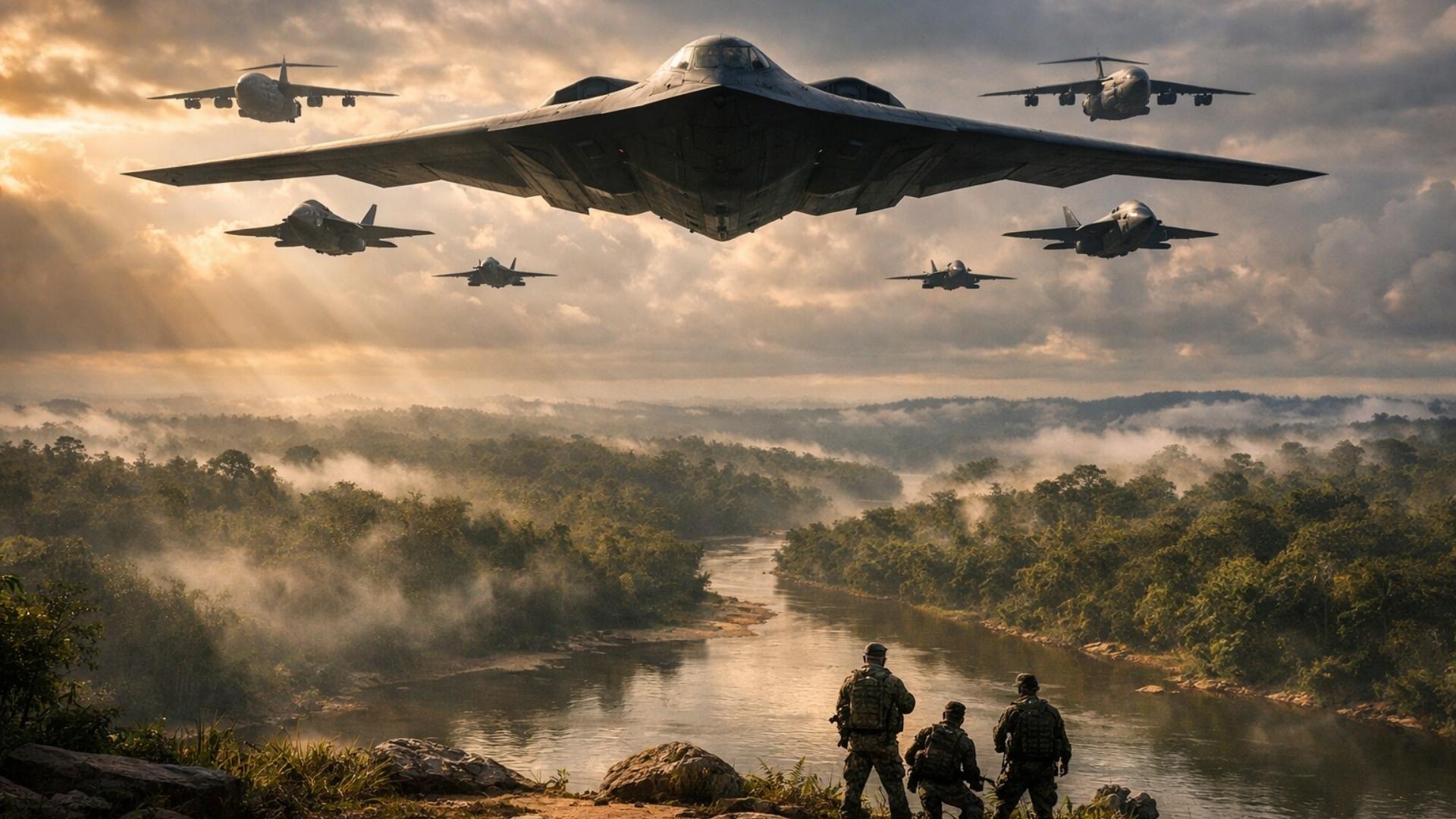
Continental territory, extreme logistical challenges, and global impact place Brazil as one of the most complex scenarios for any modern military operation, where factors beyond military power define real limits of occupation.
An eventual war between the United States and Brazil belongs to the realm of extreme hypothesis, but the discussion gains depth when it moves from the visual impact of arsenals to concrete factors such as territory, logistics, cost, operational environment, and political sustainability.
In this equation, the American military advantage is broad at the beginning of any conventional conflict, but that does not mean that an occupation of Brazil would be simple, quick, or manageable.
Geography of Brazil as a military challenge
The starting point is geographical.
-
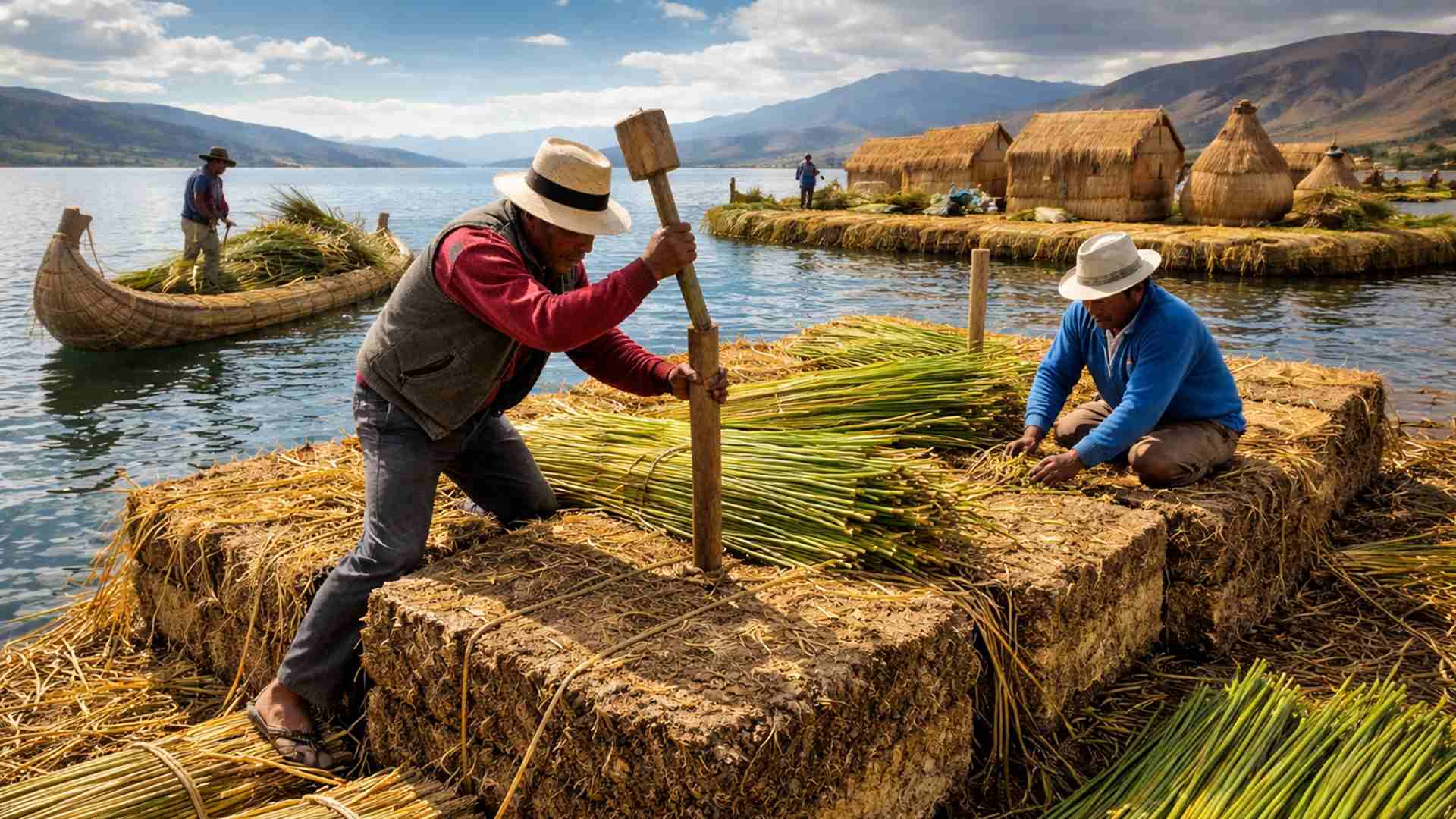
How to build a floating island from scratch with reeds, giant blocks, and stakes in the lake in a process that needs to be repeated almost every day.
-
A forgotten cord on the floor of a basement in Vienna leads a plumber to a box containing 30 kilograms of gold with Mozart’s face, hidden before World War II. The treasure, worth 2.3 million euros, was just centimeters away from a worker who ignored the sign a day earlier.

-
A couple buys an old chalet, breaks the kitchen floor for renovation, and finds over a thousand coins of gold and silver hidden since the English Civil War over 4 centuries ago.

-
Rigid bags with their days numbered: new trend prioritizes comfort in 2026.


Brazil has more than 8.5 million square kilometers, borders ten South American countries, and maintains 16,886 kilometers of land borders, in addition to an extensive coastal area facing the Atlantic.
On a territorial scale, this imposes a simultaneous challenge of surveillance, movement, supply, and control on the invader that cannot be resolved merely with air or naval superiority.
Difference in military power between the USA and Brazil
In the comparison of means, the United States remains far above Brazil.
The American military budget for the fiscal year 2025 was presented at around US$ 850 billion, while the US Navy maintains 11 aircraft carriers as the core of global force projection.
This volume of resources helps explain why Washington gathers unparalleled attack, transport, and refueling capabilities in the world.
Still, recent experience shows that winning the initial phase of combat does not equate to consolidating political and territorial dominance.
Studies from the Costs of War project at Brown University indicate expenditures exceeding US$ 2 trillion in the Afghanistan war and more than US$ 2.89 trillion in the conflicts in Iraq and Syria, even in theaters of operation that are territorially much smaller than Brazil.

Amazon and hostile operational environment
It is in this difference between destroying targets and controlling a country that the Brazilian case gains another scale.
Brazil does not concentrate its relevance in a single military or administrative pole and distributes infrastructure, urban centers, logistical routes, land borders, strategic rivers, and a vast maritime area across a continuous and heterogeneous space.
In a prolonged campaign, this dispersion tends to increase costs and multiply friction points.
The Legal Amazon alone accounts for about 58.9% of the national territory.
It is not just a forest, but a region marked by great distances, low road density in several stretches, strong river presence, and environmental conditions that hinder observation, maintenance of equipment, continuous mobility, and support for troops not adapted to the terrain.
Brazilian preparation in this environment is not improvised.
The Jungle Warfare Instruction Center in Manaus is described by the Army itself as a world reference in training combatants for operations in forests.
This does not negate the asymmetry of power but enhances the capacity for resistance in areas where technology and firepower do not always translate into effective control.
Brazilian cities and urban complexity
Another complicating factor would be the cities.
A military campaign in Brazilian territory would not involve only jungle, rivers, and remote areas, but also densely populated metropolitan regions, with critical infrastructure, intense circulation, and fragmented urban environments.
In any occupation scenario, managing metropolises, road corridors, ports, refineries, airports, and distribution centers would require a permanent contingent and a logistics chain of enormous robustness.
Current military capacity of Brazil
Although Brazil is far from the military level of the United States, the country does not start from a null position.
The Brazilian Air Force maintains the Gripen fighter program, which involves an order of 36 aircraft. The Navy develops PROSUB as its main strategic naval program.
In maritime denial operations, submarines and mobile means tend to weigh more than the raw comparison between fleets suggests.
The same logic applies to land systems and distributed defense.
In a continental country, means with high mobility, regional dispersion, and the possibility of rapid repositioning usually have greater strategic value than they appear in generic rankings.
Strategic resources and global interest
The international interest in Brazil does not arise solely from its size.
The country has large oil reserves in deep waters, a significant role in global food production, vast availability of fresh water, and a maritime area under jurisdiction estimated at about 5.7 million square kilometers.
In agribusiness, the country reached US$ 164.4 billion in exports in 2024, consolidating its position among the leading global food suppliers.
In a large-scale conflict, this would mean effects that would exceed the bilateral relationship and impact global supply chains.
Economic pressure as an alternative to war
This economic weight helps explain why, in the real world, disputes between powers and strategic countries do not always involve direct invasion.
Trade pressure, financial restrictions, sanctions, diplomatic isolation, and competition for influence tend to produce impact with lower political and military costs than a classic occupation.
The history of recent decades shows that economic and technological instruments often replace large-scale operations when the target is large, integrated into international trade, and difficult to control on the ground.
Real limits of a military occupation
When the analysis moves from the rhetorical field to the capacity for sustainability, the thesis of an occupation of Brazil loses strength.
The territory is too vast, the environmental diversity multiplies the challenges, the potential cost would be extraordinary, and recent precedents indicate that prolonged campaigns drain resources, wear down governments, and reduce internal support.
The decisive factor is not just who would win the initial attacks, but who would be able to manage the day after on a continental scale.
In this context, the discussion about sovereignty ceases to be merely military.
Defense today involves industry, energy, infrastructure, technology, and international insertion, elements that determine the real capacity of a country to sustain its autonomy in scenarios of external pressure.






Seja o primeiro a reagir!