





 Portuguese
  English
  Spanish
  6 min of reading
  0 comments


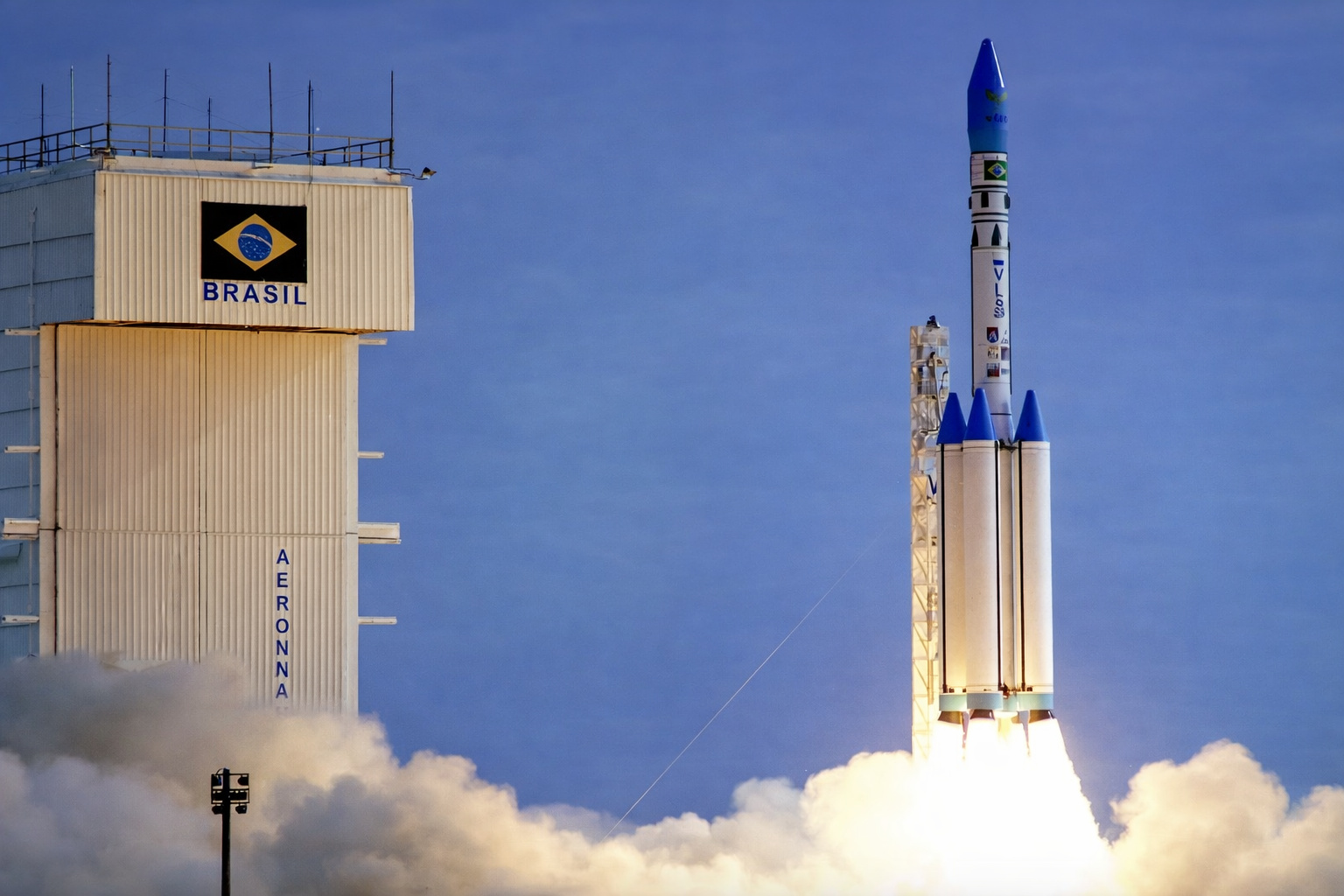
Alcântara, the best address in the world for rocket launches, gains strength with satellites, investments, and new missions helping to put Latin America back on the radar of the space race
Nasa has once again pushed space to the center of the news with the Artemis Program, and this movement helps to put Brazil on the radar of the space race in Latin America. In this scenario, Alcântara, the best address in the world for rocket launches, gains even more value by bringing together a rare geographical advantage and a real potential to attract operations, investments, and new businesses in a market that has started to accelerate again.
The Artemis II mission marks the first crewed flight of the program and reinforces the resumption of human presence around the Moon.
Following the lunar campaign, Artemis III is designed to take astronauts back to the lunar surface, while Artemis IV expands the infrastructure and operational capacity of this new phase of space exploration.
-
How a 100 m² rudder controls ships carrying 21 thousand containers and reveals the part that keeps the giants of the sea on course.

-
China is using colored laser lights on highways to prevent drivers from falling asleep at the wheel, and the technology acts as a silent alarm that is already reducing fatal accidents due to fatigue.

-
American couple renovates over 100-year-old castle in Texas and transforms historic building with Italian marble, mahogany panels, and eight fireplaces into a retreat that blends memory, grandeur, and comfort.

-
Japan is transforming used disposable chopsticks into an ambitious and surprising project that could forever change the way restaurants and offices handle one of the most common waste products of urban life.

At the center of this agenda are goals such as sample collection, technology testing, and preparing the way for future missions to Mars.
Nasa and the Artemis Program reignite a race that goes far beyond the Moon
The impact of this new phase is not limited to science. Nasa itself makes it clear that Artemis involves industry, landing systems, cargo, supplies, and infrastructure for future missions.
This changes the logic of the space sector because it amplifies the role of private companies and opens opportunities in areas such as launches, communications, data collection, connectivity, and remote sensing.
It is this shift that makes so many people start looking back at countries with concrete advantages, and Brazil appears on this map with arguments that can no longer be ignored.
CNI reminds us that the space industry generated about $400 billion in 2023 and that 71% of this revenue came from the satellite industry.
The entity also cites estimates from Morgan Stanley indicating that the sector could exceed $1 trillion by 2040.
When this market grows at such speed, having a competitive base and a technical chain capable of delivering solutions stops being a detail and becomes a strategic advantage.
Brazil on the radar of the space race with Alcântara at the forefront
The great Brazilian asset continues to be the Alcântara Launch Center in Maranhão. The base is located close to the Equator, which reduces fuel consumption and improves the efficiency of orbital insertions.
In official material, the Brazilian Air Force states that the center is in one of the most advantageous positions on the planet for launching space vehicles. This is precisely where Alcântara’s reputation as the best address in the world for rocket launches originates.
This location is very significant for any company that wants to launch more, spend less, and operate with greater competitiveness.
In a sector pressured by cost, cadence, and reliability, a few kilometers of geographical advantage make a difference in budget and payload capacity.
Therefore, the opening of commercial use of Alcântara increases international interest and creates space for Brazil to participate in a higher value-added production chain.
This process ceased to be just a promise when the country conducted, in December 2025, the first commercial orbital launch from Alcântara.
When announcing the operation, the MCTI emphasized that the mission marked Brazil’s entry into the global orbital launch market and reinforced the strategic role of the base in the international scenario.
The president of AEB, Marco Antonio Chamon, summarized the weight of this step by stating: “The launch of Hanbit-Nano is a historic milestone for the Brazilian Space Program.”
Latin America observes a rare asset in a growing market
In practice, the advancement of Alcântara helps the country attract attention throughout Latin America. The demand for launches of small satellites, global connectivity, and services based on spatial data is only increasing, and this favors those who can combine infrastructure, location, and technical capacity.
Brazil brings together this package and still has space to strengthen a national production chain linked to components, system integration, mission operations, and data applications.
At the same time, the bottleneck remains evident. According to CNI, Brazil had, in 2023, the second lowest space investment in the G20.
Still, the topic has entered the center of industrial policy with Mission 6 of the New Brazil Industry, which foresees R$ 112.9 billion in public and private resources to strengthen production chains of satellites, launch vehicles, and radars.
Satellites keep Brazil on the radar of the space race
The Brazilian strength is not only in the launch base. It also appears in the use of satellites to monitor deforestation, wildfires, and land use.
The CBERS Program, developed in partnership with China, consolidated the country’s capacity in remote sensing.
According to INPE, images from the CBERS family are used in controlling deforestation and wildfires in the Legal Amazon, monitoring water resources, agricultural areas, urban growth, and land occupation.
It was along this path that Amazonia-1 entered history as the first fully national Earth observation satellite.
The project was entirely designed, integrated, tested, and operated by Brazil. The satellite monitors Brazilian territory and provides essential data for environmental policies and sustainable development, with a direct impact on areas such as agribusiness, energy, water resources, and urban planning.
The Brazilian private industry has also begun to carve out space in this advancement. In 2023, Visiona launched VCUB1, presented as the first Earth observation and data collection satellite designed by the national industry.
The mission served to validate space technologies and applications related to agriculture and deforestation control.
Later, the project paved the way for SatVHR, a small, high-resolution Brazilian satellite designed to monitor forests, rivers, and seas, support city planning, and aid the advancement of digital agriculture.
Another important ongoing project is the Catarina Constellation, based on nanosatellites and focused on remote sensing of the territory and atmosphere.
The mission involves participation from the SENAI Institute of Innovation in Embedded Systems, UFSC, MCTI, Civil Defense, and technical support from INPE.
By officially adopting the initiative, AEB reinforced that it is a national priority focused on environmental monitoring, agriculture, and civil defense.
The potential is real, but the leap depends on continuity
Brazil already has a privileged geography, experience in satellites, and the capacity to generate strategic data.
What still hinders faster progress is the well-known combination of low investment, the need for continuous public policies, and external technological dependence.
If it can address these points, the country has real conditions to move from a promising position to a more relevant role in the new space economy.
Ultimately, the new phase led by Nasa with the Artemis Program helps to illuminate an opportunity that was already before Brazil. With Alcântara, an evolving industrial base, and consolidated experience in satellite monitoring, the country has more than just rhetoric: it has concrete assets to position itself in an expanding market. And this explains why Brazil has rightly returned to the radar of the space race.
Did you like the topic? Leave your comment and share this publication with those who follow technology, innovation, and the next steps of the Brazilian space industry.







Seja o primeiro a reagir!