





 Portuguese
  English
  Spanish
  5 min of reading
  0 comments


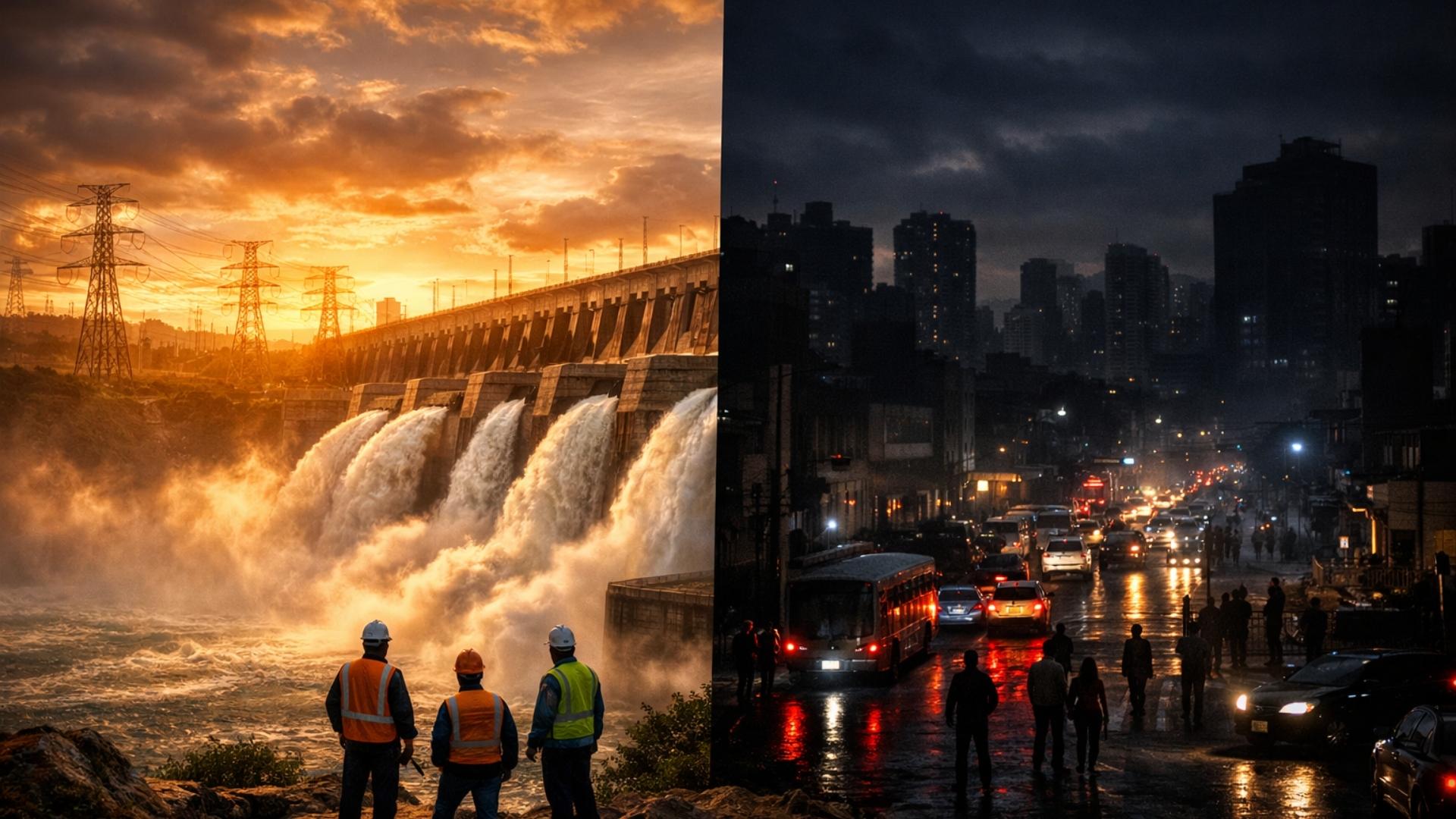
Expansion of generation and growing waste put the Brazilian electric system under pressure until 2035, with increased demand, frequent cuts in renewable energy, and an urgent need for more stable sources to ensure supply security.
The Brazilian electric system has entered a phase where growth of installed capacity no longer means, by itself, supply security.
Sector studies indicate that, to get through the next decade without increasing the risk of service failures during peak consumption times, the country may need to add about 35 gigawatts of dispatchable sources by 2035, a volume close to three times the capacity of Itaipu.
At the same time, the accelerated advancement of solar and wind generation has exposed a paradox: at various times, especially with low demand, part of the available energy must be curtailed to preserve the stability of the grid.
-
Renewable energy advances over protected areas in Brazil, and a survey by the Energy Transition Observatory reveals silent impacts that challenge environmental conservation and pressure sensitive traditional territories.

-
Rio Grande do Sul accelerates energy transition: State invests in renewable technologies and consolidates decarbonization strategies and pathways to attract billions in new industrial investments.

-
With 160,000 m² of collectors, an area larger than 20 football fields, Silkeborg, in Denmark, hosts a solar thermal plant that heats 19,500 homes and could become the largest solar heating plant in the world.

-
A study reveals the expansion of renewable energy procurement in Brazil and shows how companies are taking advantage of opportunities to reduce expenses, ensure energy efficiency, and strengthen strategic environmental commitments.


Growing demand and risk during peak hours
The pressure on the system appears precisely during the interval when solar energy loses strength and the load remains high.
In this scenario, sources capable of operating under the operator’s command, such as hydropower plants with reservoirs, thermoelectric plants, nuclear plants, and storage solutions, gain importance in the discussion about expansion.
The assessment that reached the National Electric Energy Agency (Aneel), prepared by the National Academy of Engineering and CIGRE-Brazil based on a survey by the Energy Research Company (EPE), reinforces that the challenge is not only to generate more energy but to ensure power and flexibility when the system needs it most.
The size of the power deficit in Brazil
The EPE projects that the total energy load in the National Interconnected System (SIN) should reach 115 MW average by 2035 in the reference scenario, with an average annual growth of 3.3%.
In a more dynamic scenario, also driven by new loads such as data centers and hydrogen projects through electrolysis, this volume could reach 138 MW average.
The integrated maximum demand, which expresses the highest hourly level to be met, could exceed 180 GWh/h in the plan’s horizon.
This increase in consumption explains why the discussion has shifted from being merely quantitative to involving the instantaneous response capacity of the generating park.
Today, although the country has already contracted a significant new round of reinforcement for supply security, the movement does not yet address the need indicated by the studies.
In March 2026, the government contracted 18.98 GW in a capacity reserve auction, with thermoelectric and hydropower projects, in the largest auction of its kind ever held in the country.
Still, the volume cited by sector studies for the next decade remains above this, which keeps the discussion about new investments in firm power and network infrastructure ongoing.
Excess energy and challenges of integrating renewables
The advancement of renewables helps explain the contrast.
Micro and mini distributed generation, driven mainly by solar systems on rooftops and small enterprises, has become one of the main fronts of expansion of the matrix.
According to the EPE, this modality accounted for 5.6% of the total electricity generation in Brazil in 2024 and about 13% of national captive consumption.
For 2035, the state-owned company’s reference scenario projects 78.1 GW of installed capacity in micro and mini distributed generation.
At the same time, the EPE itself estimates that self-production of electricity at the consumption site should represent approximately 11.6% of the total consumption of the country in 2025.
This pressures planning, transmission, distribution, and coordination mechanisms between the energy generated in a decentralized manner and the energy that needs to be dispatched centrally.
Curtailment and energy waste in the system
In practice, the operator needs to manage a system increasingly subject to strong variations throughout the day.
The ONS reports that changes in the operating conditions of the SIN have become more intense with the greater participation of variable renewable sources, in addition to climatic events such as heat waves.
In a technical note published in 2025, the operator highlighted that these transformations have increased the complexity of defining operational power reserves and require shorter evaluation horizons and closer integration between scheduling and real-time operation.
It is in this context that curtailment comes into play, a mechanism used to restrict production when generation exceeds the network’s outflow capacity or the need for consumption.
In other words, it is not a lack of energy, but an excess that the system cannot safely absorb.
Recent numbers show the extent of the imbalance.
Surveys released by the sector indicate that, on Mondays, the average cut due to excess supply is around 1,040 MW average.
On Sundays, when industrial activity and part of commerce decline and solar generation remains high, this volume can reach 5,135 MW average.
The difference between the days highlights the combination of two factors: an increasingly renewable matrix and an infrastructure that has not yet kept pace with the demands for storage, transmission, and rapid response.
High installed capacity does not eliminate risks
Even with the continuous expansion of supply, the system still faces operational limitations.
Data cited by sector publications based on the ONS indicate that the SIN reached 246,762 MW of installed capacity in the second half of 2025, while the maximum observed demand was around 104,732 MW.
The distance between the two numbers, seemingly comfortable at first glance, does not eliminate the risk because total capacity does not equate to power available in the right place, at the exact moment, and with the necessary flexibility to respond to load ramps.
In this environment, the expansion of the grid and the inclusion of storage cease to be peripheral topics.
The EPE’s report on micro and mini generation and batteries behind the meter emphasizes that incentive policies, financing, and participation of these systems in electricity markets will be decisive to enhance the economic viability of storage in Brazil.
Without this type of reinforcement, the country tends to simultaneously experience energy surplus at certain times and the need for additional power contracting for the nighttime period, especially in the late afternoon and early evening.
The warning sign, therefore, comes less from the structural scarcity of generation and more from the speed with which the matrix profile has changed.
Brazil continues to have a strong presence of renewables and maintains a favorable position in international comparison, but the transition is already demanding a more sophisticated response in planning, transmission, storage, and contracting sources that support the system during critical moments.
The open challenge for the sector is to transform this abundance into effectively usable energy, without wasting clean production or increasing exposure to blackouts during peak hours.









Seja o primeiro a reagir!