





 Portuguese
  English
  Spanish
  4 min of reading
  0 comments


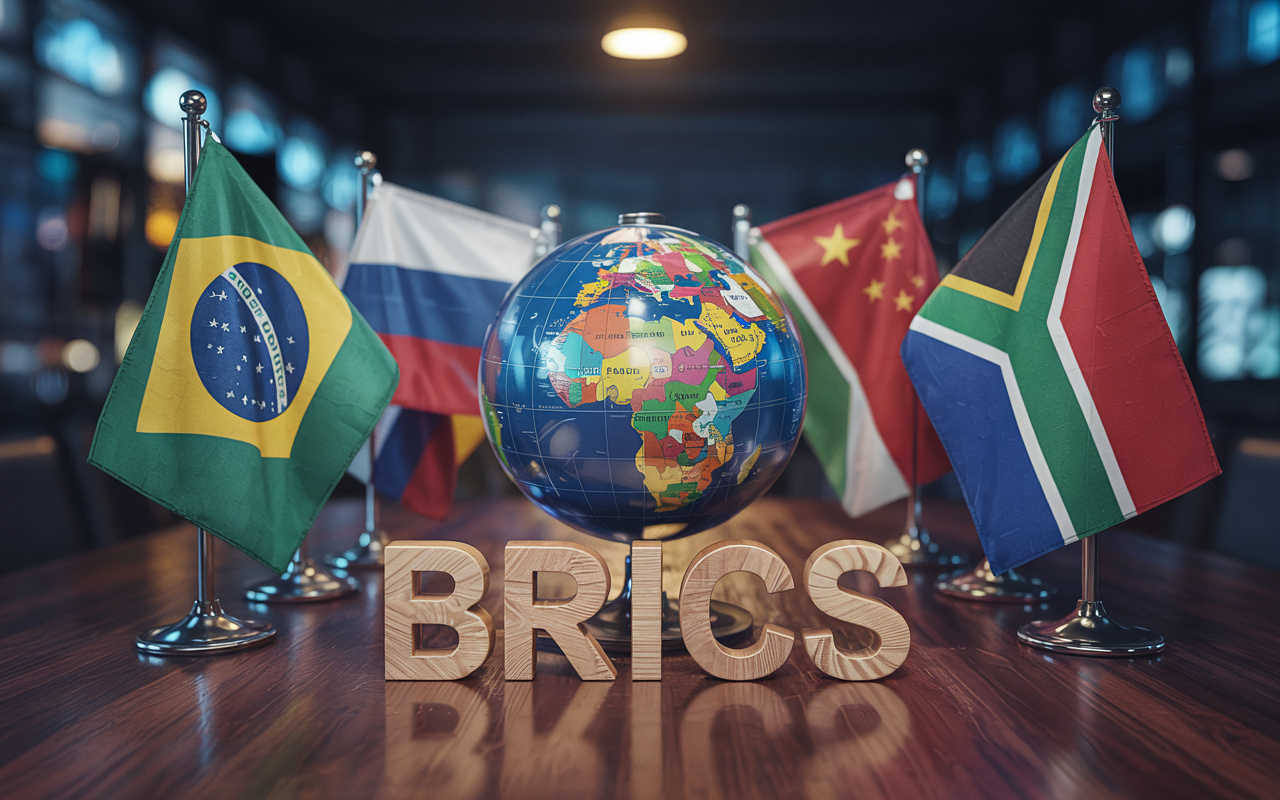
BRICS Expands With New Countries and Increases Its Political and Economic Weight, Potentially Redefining the Future of the Global Economy.
The BRICS — originally formed by Brazil, Russia, India, China, and South Africa — has just undergone its largest expansion since its inception, establishing itself as one of the most influential blocs on the global stage. In 2024 and 2025, the group opened its doors to five new countries: Egypt, Ethiopia, United Arab Emirates, Iran, and Indonesia. With this expansion, BRICS now encompasses economies that represent approximately 46% of the world’s population and more than 29% of the global GDP.
This expansion is not merely symbolic. With more members, the bloc increases its political weight, negotiating power in international forums, and influence over energy, food, and technology supply chains. In practice, BRICS now wields more power to push for reforms in institutions like the IMF and the World Bank, in addition to accelerating economic integration projects among emerging countries. Also, learn about BRICS Pay: the Global “Pix” Aiming to Reduce Dependency on the Dollar and Transform International Trade
Who Are the Members of BRICS and Their Role in the Bloc
BRICS was born in 2009 with Brazil, Russia, India, and China — South Africa joined in 2010. Each original member plays a strategic role:
-
The government requests the Federal Revenue Service for a new system to automate the income tax declaration, reducing errors, time, and bureaucracy for millions of Brazilians.

-
Pix in installments, international Pix, and contactless payment without internet: the Central Bank revealed the new features coming to the tool that is already used by almost every adult in Brazil.
-
Mercado Livre has just started selling medications with delivery in up to three hours to your door, and this move could completely change the way Brazilians buy medicines on a daily basis.

-
In Dubai, rising tensions from the war in the Middle East are causing super-rich individuals to leave the Gulf and direct their fortunes to a new financial refuge in Asia.

- Brazil: agricultural and energy power, major exporter of soybeans, meat, ores, and oil.
- Russia: energy and military giant, supplier of gas and oil to various markets.
- India: rapidly growing economy, technology and service hub.
- China: second largest economy in the world, main industrial engine of the bloc.
- South Africa: gateway for investments in Africa and exporter of strategic minerals.
Now, the new members further enhance the group’s diversity and capacity:
- Egypt: logistics and commercial hub in the Mediterranean and the Suez Canal.
- Ethiopia: emerging African market, with rapid growth and industrial potential.
- United Arab Emirates: financial powerhouse and oil exporter, connecting the Middle East and Asia.
- Iran: major oil and gas producer, seeking to expand markets despite Western sanctions.
- Indonesia: largest economy in Southeast Asia, rich in natural resources and with a huge consumer market.
What Motivates the Growth of BRICS
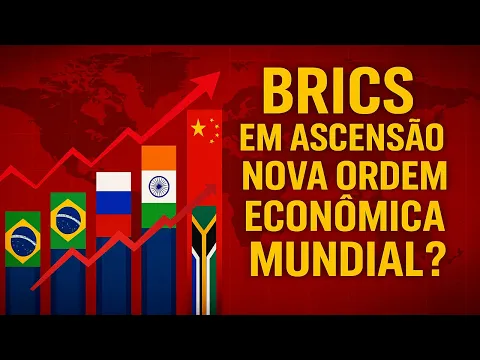

The expansion of BRICS is motivated by a clear goal: to increase cooperation among emerging economies, reduce dependence on Western countries and institutions, and create new routes for trade, investment, and technology.
The inclusion of strategic countries from different regions strengthens the bloc’s network of influence, creating a more integrated South-South economic axis.
Additionally, the global context favors this movement. With trade tensions, a sanctions war, and market instability, several countries seek alternatives to avoid vulnerability to the dollar and the political decisions of the United States or the European Union.
How This Union Can Change the Future of the Global Economy
The newly expanded BRICS has the potential to change the rules of the game in the global economy in several ways:
More Influence in International Trade
The entry of new exporters of energy, food, and technology increases BRICS’s weight in commercial and tariff negotiations.
Financial Alternatives to the Dollar
The bloc accelerates initiatives such as the use of local currencies in international transactions and the development of its own payment systems, like BRICS Pay, to reduce costs and avoid sanctions.
Integration in Infrastructure and Logistics
Countries like Egypt and the United Arab Emirates bring strategic trade routes, while Brazil, Indonesia, and India strengthen supply chains for food and industrial goods.
Cooperation in Technology and Clean Energy
BRICS is already investing in joint research projects, from satellites to renewable energies, which could enhance competitiveness against developed countries.
The Impact on Brazil
For Brazil, the expansion of BRICS opens up new opportunities. The country can increase its exports to markets that were previously less accessible, such as Iran and Ethiopia, in addition to strengthening trade ties with the United Arab Emirates and Indonesia.
In the energy sector, partnerships with Iran and Russia can generate investments in refining and infrastructure. In agribusiness, markets like Egypt and India are expected to increase demand for Brazilian food, especially grains and meats.
Another important point is the potential access to credit lines from the New Development Bank (NDB) of BRICS, which finances infrastructure projects without the strict requirements imposed by traditional financial institutions.
Challenges of a Bloc So Diverse
Despite the potential, the expanded BRICS also faces challenges. The political, cultural, and economic differences among members can hinder quick decision-making. There is also the risk of geopolitical tensions between countries that have different external alliances or compete for the same markets.
Furthermore, to truly change the global economy, the bloc will need to turn political agreements into concrete projects — something that is not always easy when so many distinct interests are at play.
A New Center of Economic Power?
The expansion of BRICS is a clear signal that the global economic axis is changing. By including new strategic members, the bloc positions itself as an alternative to models dominated by the West, increasing its capacity to influence trade, monetary, and development policies.
If it can maintain internal cohesion and advance on concrete projects, BRICS could, in the coming decades, establish itself as one of the main economic poles in the world, capable of directly competing with groups like the G7 and the European Union.









-

-

-

5 pessoas reagiram a isso.