





 Portuguese
  English
  Spanish
  5 min of reading
  0 comments


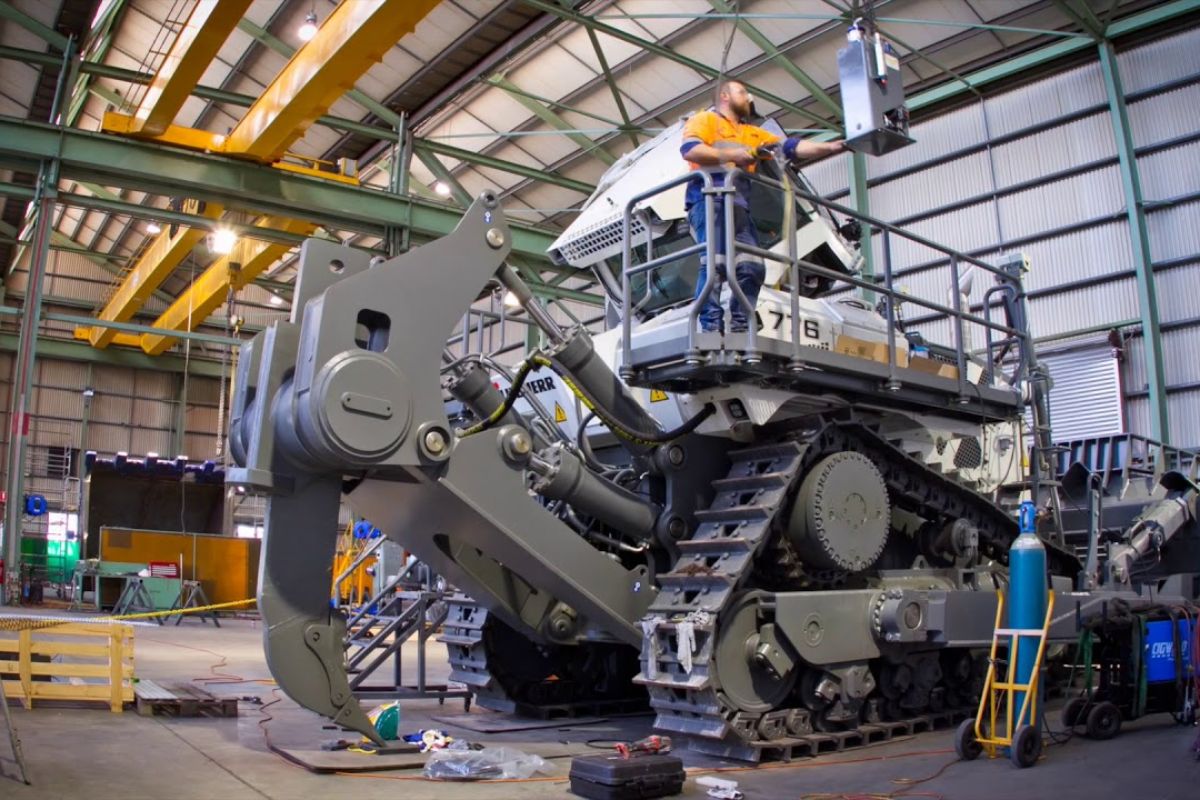
In The Telfs Factory In The Austrian Alps, The Liebherr Bulldozer Goes From Raw Steel To Painted Chassis, Receives Planetary Transmissions, An 870-Liter Tank, More Than Sixty Hydraulic Lines And Almost Two Kilometers Of Wiring To Face Tests And Embark The PR 776 With 73 Tons Before Delivery.
The Liebherr bulldozer shown on the Telfs line in Austria is built as a complete system: structure, cooling, hydraulics, electronics, undercarriage, and final validation. The focus is to understand who makes it, where it happens, and why the assembly sequence defines the outcome in the field.
What stands out is the combination of scale and tolerance. A machine that costs more than US$ 1 million is not ready by strength; it is ready by process, from abrasive blasting to the first start, with repeated inspections and torque marking on critical fasteners.
Telfs And The Beginning That Does Not Appear In The Photos
In Telfs, the journey of the Liebherr bulldozer begins with raw steel.
-
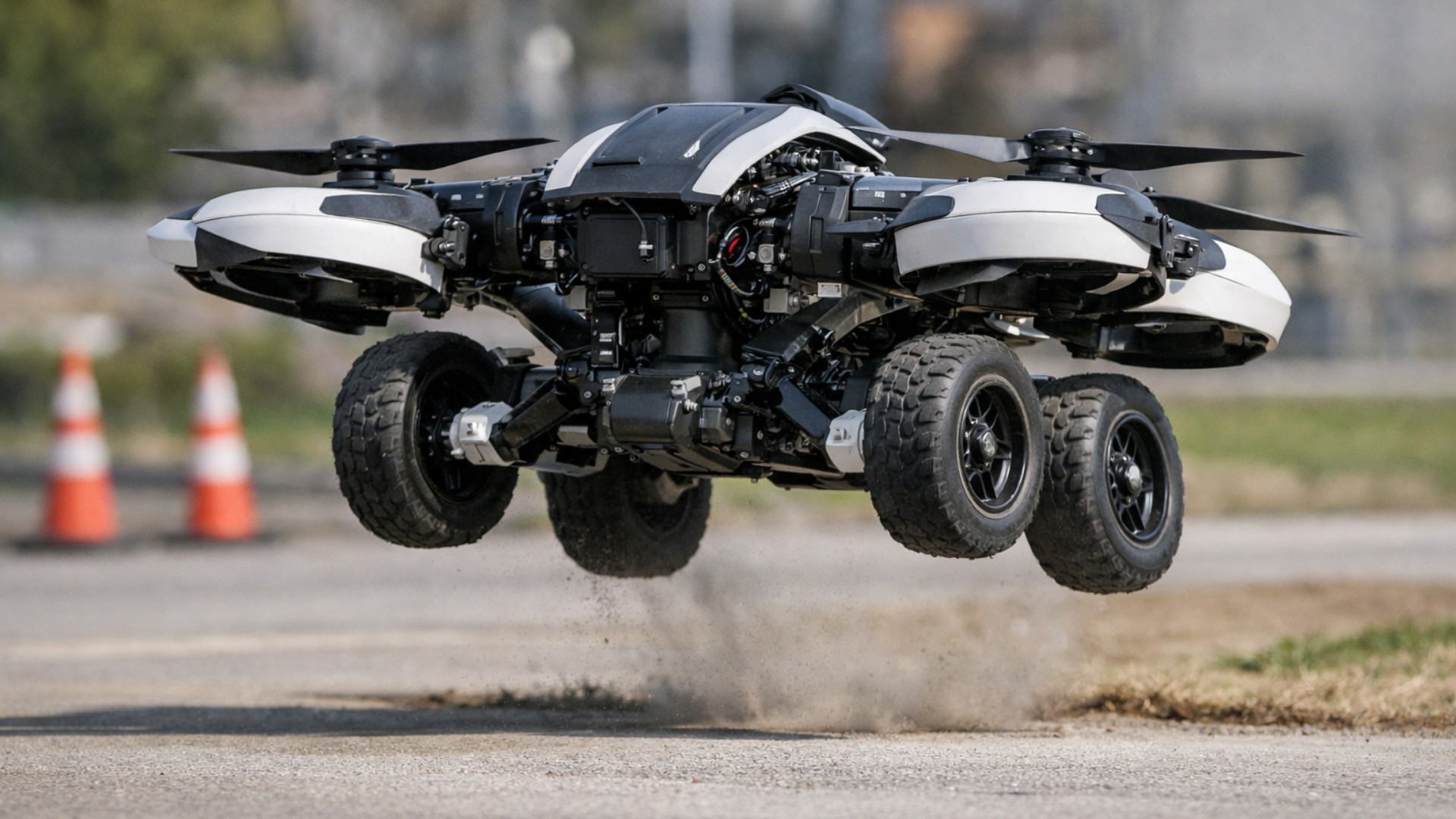
Researchers in the U.S. have created a flying robot that transforms into a land vehicle while still in the air. The technology, based on aerodynamic transition, converts landing into a scene worthy of Transformers and redefines mobility between sky and ground.
-
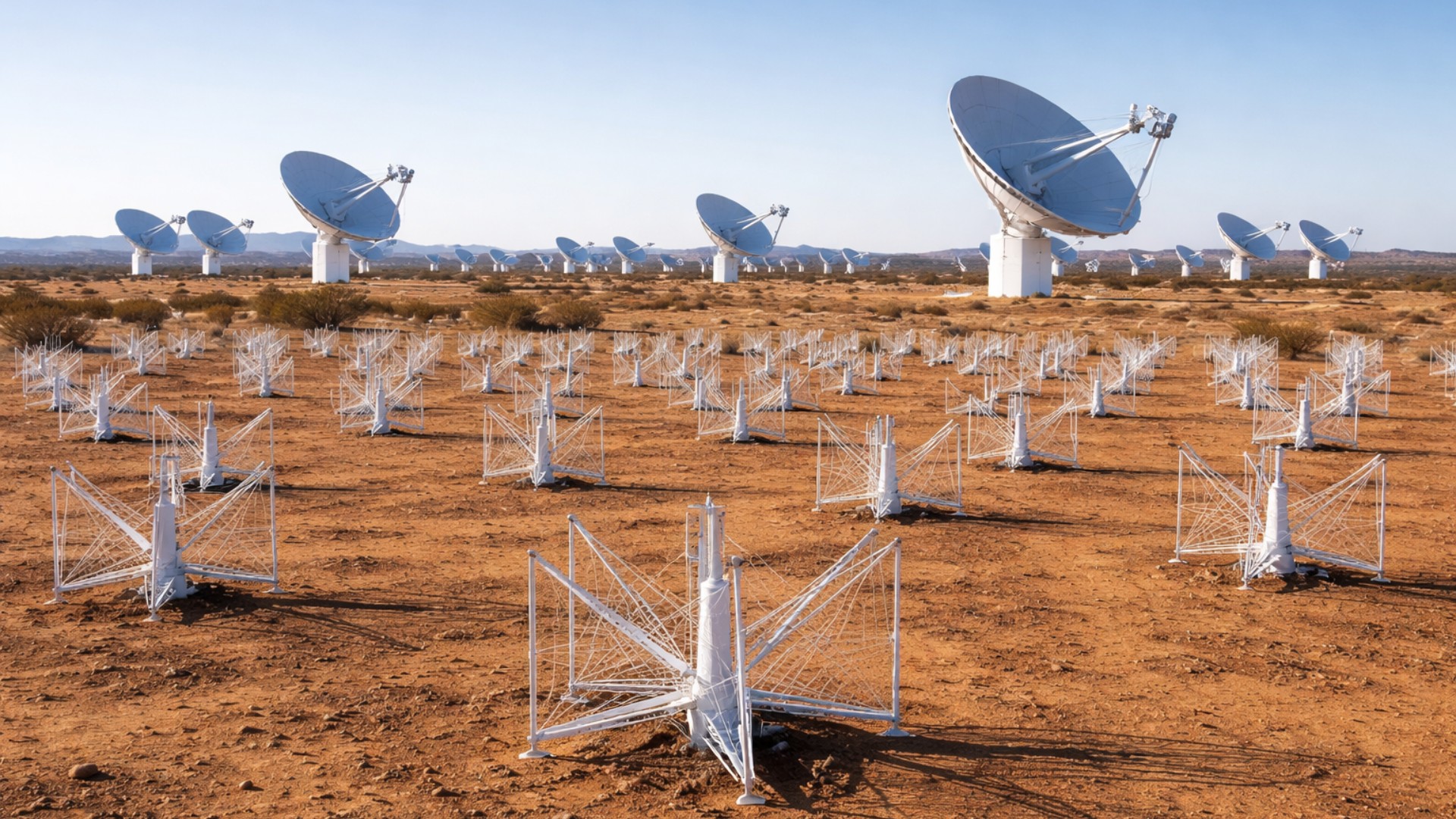
Spread across two continents, with 197 parabolic antennas in South Africa, 131,000 2-meter antennas in Australia, and a range of up to 150 km, the SKA begins to “listen” to the Universe on an unprecedented scale and accelerates the search for black holes, primitive galaxies, and nearly invisible radio signals.
-
Goodbye batteries: a new sensor created by Japanese scientists uses sweat as an energy source and points to a promising path for more sustainable devices, with greater autonomy and less need for frequent recharging.

-
The Brazilian Army inaugurated the assembly line for the Guaicurus armored vehicle with a contract for 420 units by 2033, and the same vehicle has already been tested in combat in Afghanistan and Lebanon by European armies.


Plates go for abrasive blasting, where the surface is cleaned and prepared before any cutting, reducing adhesion failures and corrosion points over the lifespan.
Next, the choice between laser and plasma depends on thickness.
Then, CNC milling machines remove excess material to achieve the geometries that will form the main structure, and the manual stage comes at the end to refine the edges.
It is a modest beginning, but it is here that the PR 776 gains precision to carry heavy loads without accumulated slack.
Welding, Structure And The Logic Of Withstanding Repeated Tons
In the welding shop, massive components are joined to form blades and structures.
A complete blade appears on a test platform designed for loads of up to 8 tons, indicating the type of effort that the piece needs to withstand without deformation.
The durability of the Liebherr bulldozer is addressed at the base: the undercarriage roller structure and the points that support lower rollers.
Each joint must withstand pressure and impact because each roller supports loads of several tons with every turn of the tracks, and this is repeated for thousands of work cycles.
Undercarriage, Tracks And Micrometric Alignment
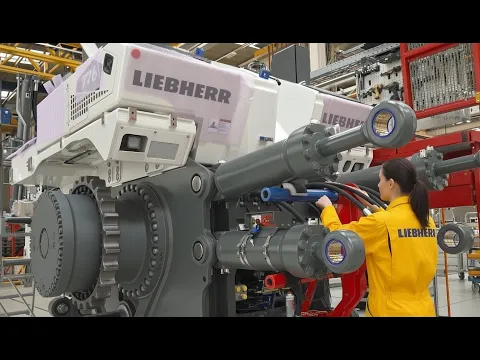

The assembly of the chassis includes guide wheels, recoil springs, and protective housings.
The declared objective is to maintain micrometric alignment, as any deviation alters the tension of the tracks and increases uneven pressure on the ground, affecting wear, stability, and consumption.
When the process reaches the PR 776, the scale changes. Each track weighs almost 4.5 tons, and the chain is guided link by link under the chassis with steel cable and motion control, until it engages the guide wheel and rollers.
The closing of the circuit depends on cleaning the ends, precise fitting, and marked torque, to signal any future movement.
Hydraulic Lines, Electronics And What Keeps Control Under Load
The Liebherr bulldozer receives an extensive hydraulic and electrical set.
The mentioned installation refers to more than sixty hydraulic lines, totaling between 120 and 200 meters of hoses, with pressures reaching 35 MPa, in addition to almost two kilometers of wiring routed in sealed channels to withstand dust, heat, and vibration.
This package communicates with cylinders and C-shaped structures, responsible for converting pressure into force.
A detailed example appears in the blade system: lifting actuators weighing over 300 kilograms, pressure of 260 bar, lifting close to 1.4 meters, and the ability to move more than 5 tons with precision measured in millimeters.
Here, the repetition of tightening and checking is what prevents leakage, slack, and slow response in operation.
Cooling, Radiator And Fuel When Autonomy Becomes A Variable
The radiator module serves as the central piece, with a capacity cited between 55 and 110 liters of fluid.
The report describes the use of a mixture with corrosion inhibitors and corrugated flexible hoses to absorb vibrations, in addition to mentioning maintenance intervals of between 1,200 and 1,500 hours, or up to five years, in heavy equipment.
In the same assembly, volumes appear that explain autonomy and logistics: a fuel tank of 870 liters in one model of the line and, in the PR 776, a tank of 1,100 liters.
When the Liebherr bulldozer works under dust and heat, cooling and fuel cease to be details and become operational limits, especially in long shifts and on terrain that requires constant torque.
Engines, Hydrostatic Transmission And The Force Delivered At The Right Pace
The Telfs line installs specific engines per model. A detailed example is the Liebherr D 946 A7, a 12-liter diesel with six inline cylinders, with 260 kW, 353 hp, and about 2,342 Nm of torque at 1,100 rpm, in addition to about 43 liters of oil before operation.
Another cited engine is the D934 EVO, a 7.0-liter four-cylinder, with 160 kW, 217 hp, and 880 Nm at 1,900 rpm, accompanied by 41 liters of cooling fluid.
At the top of the line, the PR 776 is described as hydrostatic, with an operational weight between 71,800 and 73,189 kg and a nominal power of 440 kW forward and 565 kW backward.
The hydrostatic transmission appears as the gear that delivers fine control, drives the tracks independently, and sustains high traction, cited at 955 kN at the work site.
Tests Under The Hohe Munde And The Embarkation That Closes The Cycle
After assembly and finishing, the Liebherr bulldozer goes for final checks and yard.
The report describes paint inspection in a illuminated chamber, application of labels, cleaning, installation of seals, and hydraulic response tests with the structure’s rise and fall, in addition to checks of final transmissions.
In the testing field, under the Hohe Munde, the PR 716 is described as compact, with a D924 A7 engine of four cylinders, 101 kW, and a weight over 13 tons, using a scarifier with three tines and a cited traction force of 190 kN.
Meanwhile, the PR 776 closes the narrative during transport: Nooteboom EURO-PX flatbed trailer, multi-axle steering, pendular suspension, height measurement, and double strapping with chains and straps, until the Volvo FH16 takes over the set and leaves Telfs with balanced weight.
What is seen in Telfs is that the birth of a Liebherr bulldozer does not depend on a single secret, but on linkage: prepared steel, controlled welding, protected hydraulic lines and electronics, sized cooling, validated hydrostatic transmission, tracks assembled with cleaning and marked torque, and repeated tests before the shipment of the PR 776.
Would you trust the control of the hydrostatic transmission more or the robustness of the tracks when the terrain alternates between stone and mud in the same shift, and what real situation made you think that way?






Seja o primeiro a reagir!