





 Portuguese
  English
  Spanish
  7 min of reading
  3 comments


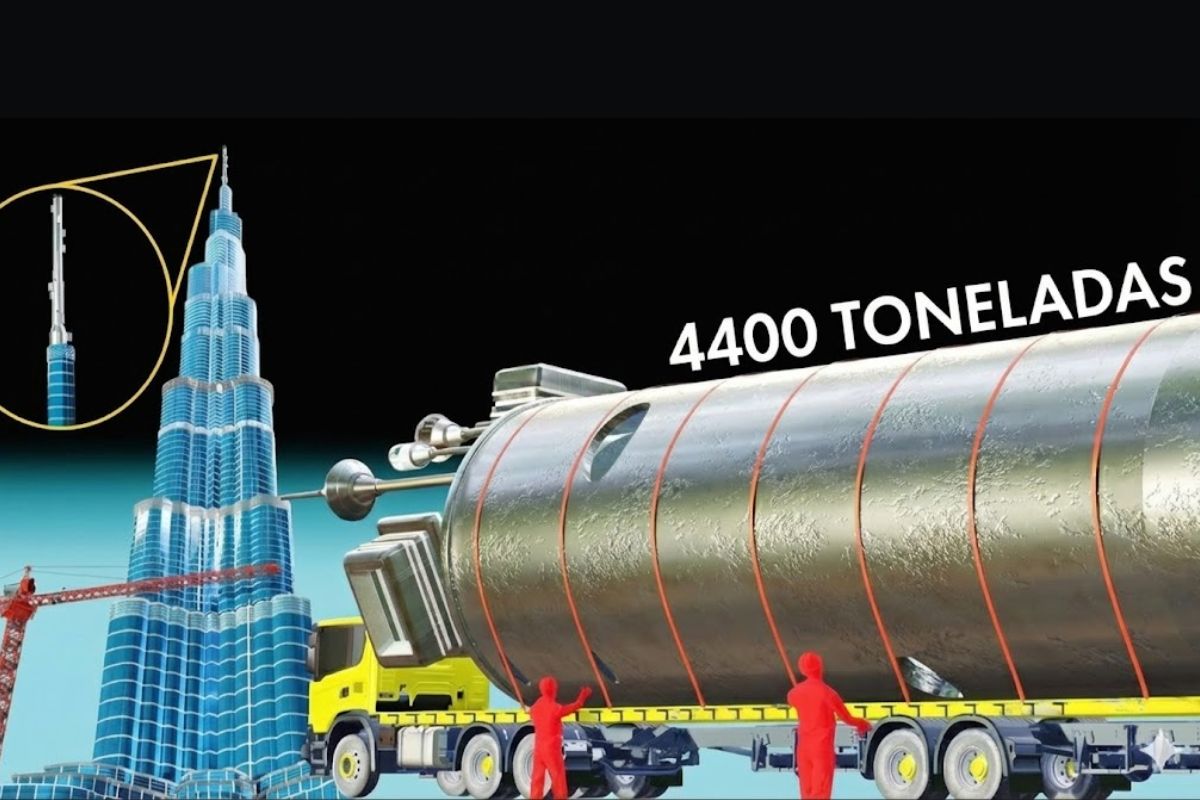


Burj Khalifa Crowned With 4,400-Ton Steel Spire Installed From Inside: Eight Elevations, Hydraulic Jacks, Side Guides, and Design That Withstood Wind and Height With Total Precise Control
Inside the Burj Khalifa, the 4,400-ton steel spire was assembled on the 156th floor, about 600 meters up, welded in sections, and raised with cable jacks. Roller guides, hydraulic jacks, and eight critical elevations prevented collapse and sealed the top in Dubai, with precision.
The Final Piece of the Burj Khalifa Comes Into Play

The Burj Khalifa did not become a global icon just for being tall. It became an icon because, at the end of the process, it needed to be crowned with a piece that seemed to challenge logic and gravity at the same time: a 4,400-ton steel spire, installed when everything was already too high for obvious solutions.
-
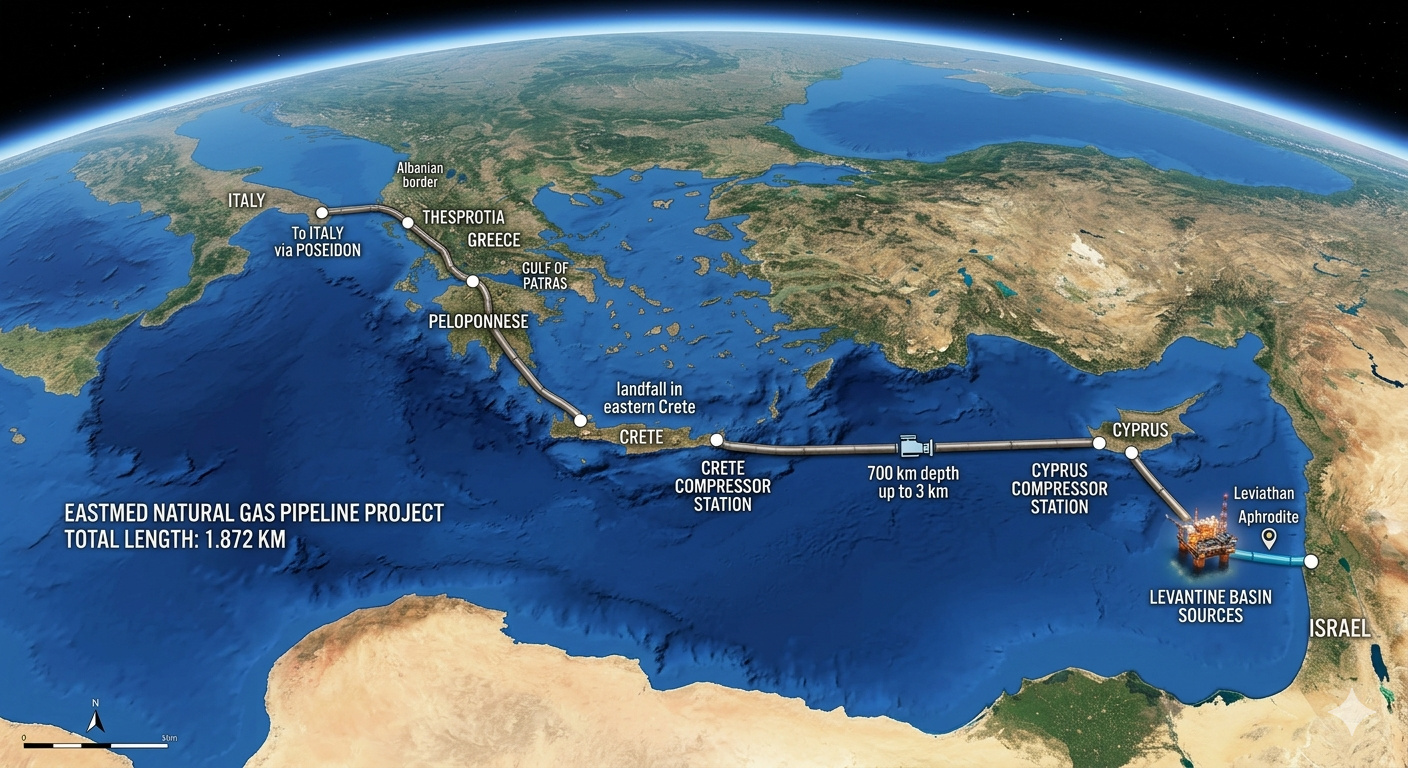
Israel, Greece, and Cyprus signed an agreement in 2020 to transport gas from the Mediterranean to Europe via a 1,872 km pipeline, but Turkey claimed sovereignty over part of the maritime route, and the project never materialized.
-
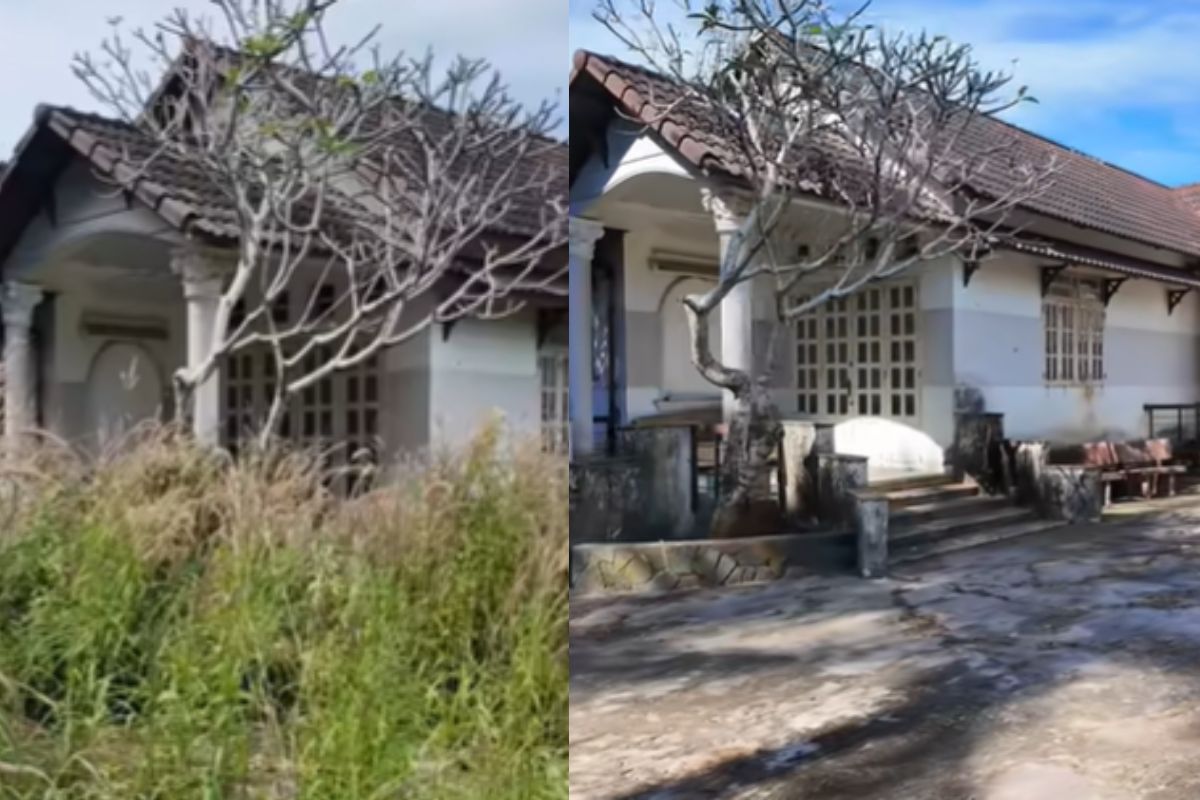
Abandoned house for 15 years disappears in the woods, shocks owner with unrecognizable scenery and is reborn in an intense transformation after almost 90 hours of work in just 10 days.
-
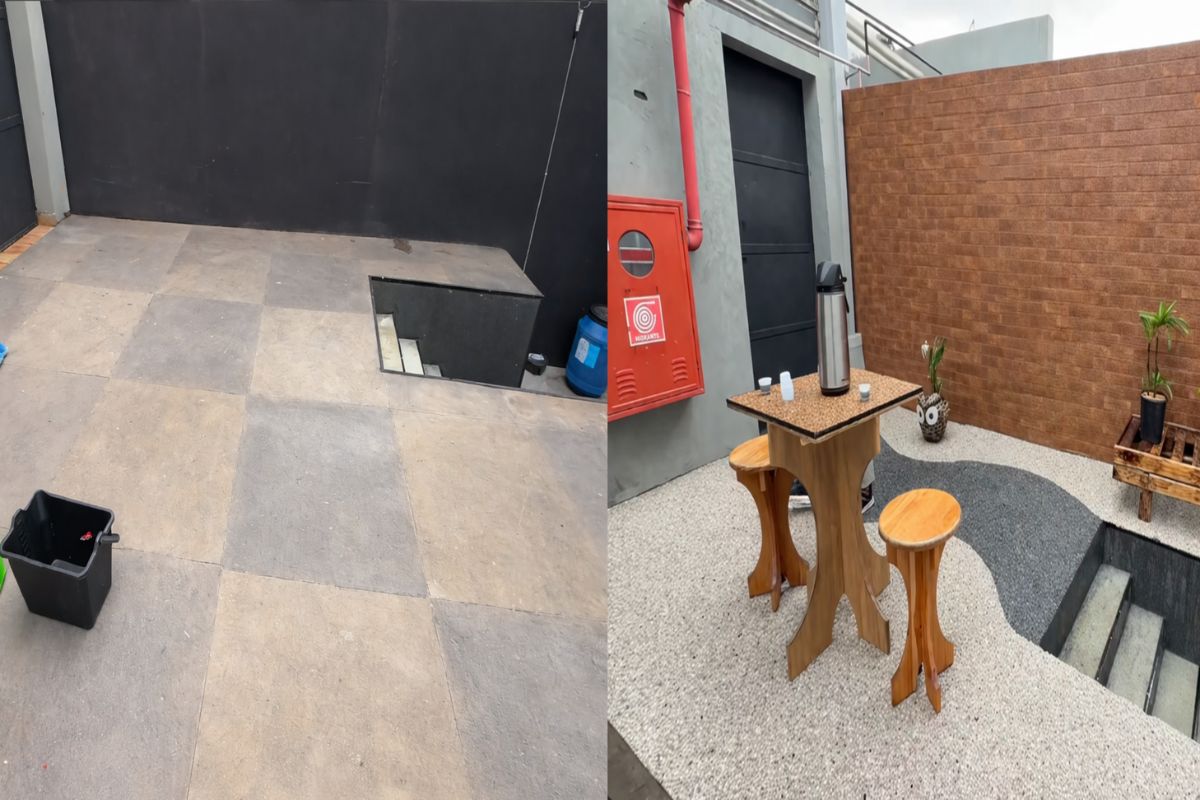
In just three hours, a natural stone floor transforms the entrance of the house with an organic effect, immediate drainage, and a sophisticated non-slip finish that doesn’t puddle water, dries quickly, and impresses with the final result.
-
‘Interlocking brick’ made of earth arrives in the construction industry with cost reductions of up to 40% on the project.

The final challenge of the Burj Khalifa was not to “raise one more component.” It was to make an elevation where the center of gravity of the spire was well above the lifting points, creating a scenario where any lateral oscillation could turn into a domino effect.
And it was precisely there that engineering stopped being theory and became total control, step by step.
The Main Elevation Problem Was Inevitable
The question guiding the entire operation was straightforward: what is the main problem in raising a spire of this size to the top of the Burj Khalifa?
The answer was also straightforward. The elevation was doomed to end in disaster if the system attempted to treat the spire as a “neutral” piece.
The center of gravity, far above the lifting points, creates a tendency for lateral instability.
In practical terms, this means that a small deviation can quickly grow because the mass “pulls” the structure out of alignment as the piece gains height and freedom.
Therefore, the mission was not just to elevate. It was to elevate and hold at the same time.
The big difference between a typical lifting and what happened at the Burj Khalifa is that here lateral stability was not a safety detail. It was the condition for the lift to exist.
Side Guides and Rollers to Keep the Spire in Line
To prevent lateral instability from becoming a collapse, engineers used roller guides.
The purpose of these guides was to keep the spire laterally stable during the ascent, as if the piece were “tracked” by the building itself, reducing shifts and dampening oscillation tendencies.
These guides were not an accessory. They were the difference between a spire that rises with a predictable trajectory and a spire that begins to behave like a vertical pendulum, accumulating lateral energy until the operation turns into a structural risk.
Eight Critical Elevations and Immediate Locking at the Top
The spire went through eight levels of elevation until it reached its final position on the Burj Khalifa.
The fact that there were eight stages already reveals what was behind the plan: instead of attempting a single large displacement, the operation was divided into critical phases, with corrections, checks, and intermediate stabilizations.
Each elevation was a compromise between two opposing needs.
On one side, going up. On the other, controlling the spire so it wouldn’t gain unwanted lateral movements. The gain in height had to come with the gain in predictability.
As soon as the spire reached its final position, the team immediately bolted the piece in place.
This reduced the window in which the system depended on the lift to maintain stability and transferred the effort to the definitive structural set.
Assembling the Spire From Inside Was the Possible Solution
One of the most revealing points of the operation is the choice of method: the spire was not simply “brought ready” to the top. The solution was to assemble the spire inside the Burj Khalifa.
The sections were 5 meters long and were brought up to the 156th floor, where the spire was meticulously assembled and welded.
In the end, the complete piece was 244 meters long.
The question then became inevitable: how to lift an entire, fully assembled spire when cranes cannot operate at that point?
Cable Jacks and Three Collection Points Below the Center of Gravity
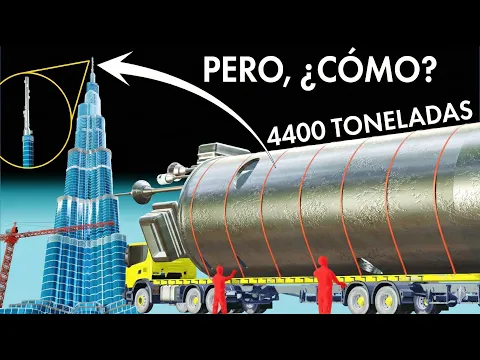

The answer of the Burj Khalifa was based on cable jacks. Three jacks marched as the engine of the ascent, with cables connected to three designated collection points on the spire.
The structural challenge was explicit: the connection points were far below the center of gravity. This increases the risk of rotation and lateral displacement.
Therefore, the system was treated as dynamic balance, with constant corrections along the way.
Hydraulic Jacks and Side Guides on Three Different Levels
In addition to the cable jacks, lateral control included side guides supported by hydraulic jacks on three different levels of the building.
Instead of holding the piece at a single point, the system distributed the containment, reducing lateral freedom and limiting oscillations.
Throughout the entire process, engineers adjusted the guidelines of the rollers, and by the end of the eight stages, the spire reached its destination.
Why the Burj Khalifa “Confused” Wind With Shape
The spire was the final challenge, but the wind was a constant challenge. The Burj Khalifa deals with this using petal-shaped design and spiral logic.
The fluid flow around an object generates vortex shedding, producing floating forces capable of making a building sway.
To break this effect, engineers incorporate a spiral into the tops of tall structures.
In the Burj Khalifa, the very shape of the building serves as a spiral, confusing the wind and reducing the chance of dangerous oscillation.
Central Core, Buttresses, and the Skeleton of the Burj Khalifa
The Burj Khalifa is described as having a central structural core supported by multiple buttresses.
The backbone of the building is this high-quality concrete core, reaching heights of up to 156 stories.
The glass cladding functions as a glass curtain, covering the reinforced skeleton that supports the entire structure.
Additionally, the petal shape design allows sunlight to reach the habitable spaces, as the core of the building does not receive direct light.
The Record Concrete Pumping to 606 Meters
Pumping concrete to extreme heights was a literal, concrete barrier.
The existing technology would not work beyond the 80th floor, so a new system was developed to break the vertical pumping record, reaching 606 meters.
The cited pump generates an output pressure of 200 bars, and the key component of the system is the S-shaped tube valve, coordinating pistons that alternately pump and draw concrete to maintain flow.
35 Minutes of Travel, Night Pumping, and Ice in the Mixture
After turning on the pump, it took about 35 minutes for the concrete to reach the final point.
To tackle the heat of Dubai, pumping was carried out at night.
To preserve functionality, ice cubes were added to the mixture. The team used three pumps to achieve the highest vertical pumping.
Special Mixture and Glenum Sky 504 to Keep the Concrete Malleable
The Burj Khalifa required a specific mixture, capable of reaching about 600 meters without segregation.
The mixture included the additive Glenum Sky 504, keeping the concrete malleable for up to 3 hours, enough time to mix, pump, and place.
Sliding Forms and the Hydraulic Cycle That Made the Core Rise
Sliding form technology appears as a system with mold, tracks, and hydraulics.
Two hydraulic systems coordinate the process: one separates and returns the form from the hardened concrete, and the other lifts the mold to the next level with a locking and unlocking mechanism.
The cycle repeats continuously until the final concrete height is reached, with the reuse of routes and gain of efficiency, reducing labor and saving thousands of work hours.
Self-Lifting Cranes and Material Transport at Height
Tower cranes were decisive in transporting materials, from rebar to glass panels.
They grew alongside the Burj Khalifa thanks to the self-lifting mechanism, keeping up with the building’s progress.
Glass Cladding, Delay, and the Special Layer That Changed the Interior
Without the cladding, working in enclosed spaces was unfeasible due to strong winds and high temperatures.
After delays, the prefabricated glass cladding was installed, described as coated with a layer of special titanium that blocked the wind and drastically reduced the internal temperature.
The panels were mostly 1.4 m by 3.3 m, and the mounting system depended on supports and interlocking between the sides, with fittings at the bottom.
500,000 Tons on Fragile Ground and the Solution With Piles
Without content, the Burj Khalifa weighs 500,000 tons.
The soil in Dubai is described as loose sand and weak sedimentary rock, and even after digging down to 140 meters, no strong bedrock was found.
The solution was to use increased friction with depth, incorporating multiple piles beneath the foundations.
Each pile sank to a depth equivalent to 10 floors of the Burj Khalifa.
Special Slurry, Steel Coating, and Two Years of Founding
During drilling, high levels of groundwater and vibrations could cause the pit walls to collapse.
The solution was to pump a special slurry to generate hydrostatic pressure and stabilize the pit. Then, a temporary hollow steel lining was inserted, and long rebar was placed.
As vibrators were impractical in deep pits, a special concrete that flowed like liquid was used, eliminating bubbles. The foundation work took 2 years.
Without the Spire, the Tower Would Not Be the Same
The spire is presented as the piece that completes the height. Without the steel spire, the height of the Burj Khalifa would be 685 meters.
In the Burj Khalifa, what impresses you more: raising the 4,400-ton steel spire in eight stages to 600 meters or pumping concrete to 606 meters to support the 156-story core?







4.400 Toneladas??? Não seria 4,4 toneladas?
This is undoubtedly the great engineering marvel in the world.I dont suppose no other building wiil be ever able to surpasse this engineering fete.Congratulations to His Majesty the King of Saudi Arabia-a great friend of Sri Lanka.I sincerely hope i would be rewarded in a suitable manner for commenting on this fete , as a token of friendship.
Suraweera,140,Whitewell Estate,Pattalagedera,Veyangoda,Sri Lanka.
12.01.2026
Texto muito legal, uma pena que não tenham colocado fotos os vídeos, para dar uma noção de como foi feito.