





 Portuguese
  English
  Spanish
  7 min of reading
  0 comments


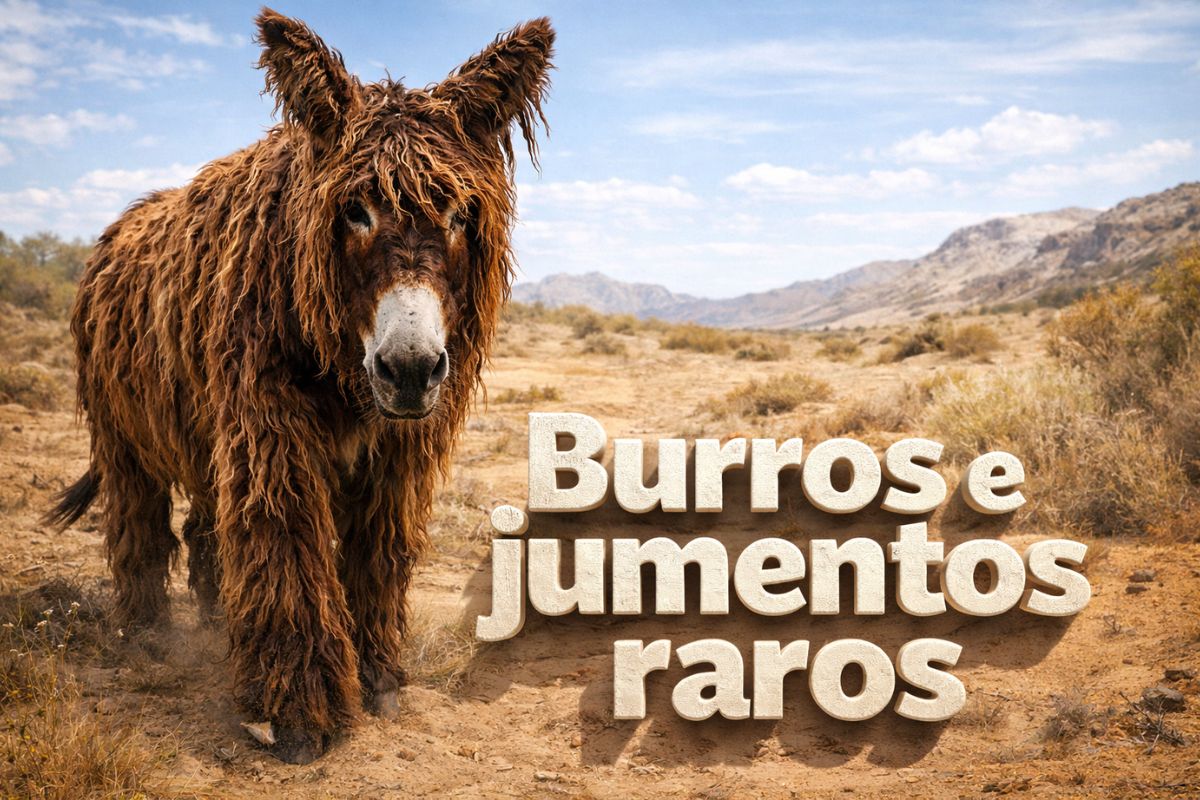
Rare Donkeys and Mules: The Breeds of Donkeys and Mules from the Poitou Donkey to the American Mammoth Jackstock and the African Wild Donkey.
While most people only know the “common donkey” from farms, there is a select group of breeds that have nearly disappeared and are now treated as living heritage. From the giant Poitou donkey to the endangered African wild donkey, these lineages tell a story of hard work, extreme adaptation, and now, urgent conservation.
Rare Donkeys and Mules that Almost No One Knows
The rare donkeys and mules are not just “different animals.” They were born out of very specific needs: to pull deep plows, cross dangerous trails, endure extreme cold, sweltering heat, or long journeys with little food.
Many of these breeds once played a central role in entire rural economies and, after agricultural mechanization, were simply sidelined.
-
He started running at 66 years old, broke records at 82, and is now a subject of study for having a metabolic age comparable to that of a 20-year-old, in a case that is intriguing scientists and inspiring the world.

-
Oldest tree on the planet reappears after 130 years of searches: Wattieza, 385 million years old, was 10 meters tall and had no leaves or seeds; Gilboa fossils in New York solved the mystery in 2007.

-
A 48-square-meter house assembled in hours with 4,000 bricks made of recycled plastic that does not absorb moisture, has natural thermal insulation, and costs less than 90,000 reais in a complete kit.

-
Luciano Hang revealed that Havan’s air fleet has already accumulated more than 20,000 landings, 10,000 flight hours, and 6 million kilometers traveled, and he says that without the planes, the company would never have grown so quickly.


Some have almost disappeared, leaving only a few specimens worldwide, making each individual even more valuable from a genetic and cultural standpoint.
Poitou Donkey: The Shaggy Giant of France

Among the rare donkeys and mules, the Poitou donkey is perhaps the easiest to recognize. Originating from the Poitou region in France, it impresses from a distance with its enormous size and long, thick, and tangled coat, which can exceed 30 centimeters in length.
At first glance, it looks like a wild animal from an old tale, but in reality, it is one of the most docile and manageable breeds that exists.
The goal of this breed has always been very clear: to produce large, strong, and resilient mules capable of pulling heavy loads and facing difficult terrains.
The Poitou donkey is heavy, weighing over 450 kilograms, with a strong build, thick legs, and a strength that impresses even those accustomed to working with equines.
Despite its imposing presence, its temperament is calm, patient, and obedient, which facilitated long working journeys on French farms.
With the arrival of tractors and agricultural machines, the breed nearly disappeared, dwindling to fewer than 50 specimens worldwide.
Today, the Poitou donkey is maintained in conservation programs and regarded as a true symbol of traditional animal traction in Europe.
American Mammoth Jackstock: The Colossus of the Americas

If the Poitou impresses in Europe, in the Americas, the title of giant goes to the American Mammoth Jackstock, another must-know name when we talk about rare donkeys and mules.
Developed in the United States from the crossbreeding of giant European donkeys, including the Poitou, with local breeds, the goal was simple yet ambitious: to create the largest and strongest donkey possible to produce giant mules.
An adult male can stand over 1.60 meters tall at the withers and weigh over 500 kilograms. It is a true colossus among donkeys.
Yet, it maintains a gentle, balanced, and cooperative temperament, which is essential in animals that deal daily with people and heavy loads.
During the 19th and 20th centuries, these giant mules were crucial for transporting large loads, deep plowing, and long-distance travel in rural areas.
The breed is known for its physical endurance, ability to work long hours with little food, and its muscular body designed for hard labor.
Today, the American Mammoth Jackstock is rare and preserved by specialized breeders and genetic associations, considered a treasure of rural history in the United States.
Irish Donkey: Small in Size, Giant in Endurance

Setting aside the giants, the Irish donkey shows that, among the rare donkeys and mules, size isn’t everything.
Of medium build, compact body, and firm musculature, it was developed to face one of the most challenging climates in Europe.
For centuries, these donkeys formed the backbone of rural transport in Ireland, carrying food, peat, firewood, and goods between villages.
They traversed cold, damp, muddy terrains with impressive endurance, often in conditions where other animals would struggle.
The coat is short and dense, in shades of gray, brown, or black, with strong legs and extremely durable hooves. Smaller size does not mean fragility.
On the contrary, the Irish donkey is known for its robustness, reliability, and capacity for continuous work.
Another highlight is its temperament: they are gentle, intelligent animals that bond closely with their caretakers. Today, beyond the field, the Irish donkey is used in educational projects, rural tourism, and even animal-assisted therapies, showing how these breeds can reinvent themselves.
Andalusian Donkey: Elegance and Strength in Southern Spain

The Andalusian donkey, native to the Andalusia region in southern Spain, is one of the most elegant rare donkeys and mules in the world.
It combines endurance, versatility, and an almost noble posture, the result of centuries of selection in agricultural and urban environments.
Of medium to large size, it has a well-proportioned body, strong legs, and a coat that ranges from dark gray to brown and black, often with lighter reflections on the muzzle and around the eyes.
It is an adaptable animal, capable of working in both hot, dry areas and mountainous zones.
Historically, the Andalusian donkey has been essential for small producers, assisting with everything from transport to heavier tasks in the field.
Its intelligence and learning ability dispel the unfair reputation of “stubbornness” associated with donkeys. When well managed, it forms a strong bond with the handler and responds very well to training.
Today, the Andalusian donkey is considered a genetic and cultural heritage of Spain. Although a reasonable number of animals still exist, changing traditional uses puts the breed on alert, increasing the importance of conservation projects, rural tourism, and environmental education.
Pyrenean Donkey: Specialist in Extreme Mountains

Among the rare donkeys and mules of mountainous regions, the Pyrenean donkey is a true specialist in extreme terrains.
Originating from the Pyrenees mountain range, on the border between France and Spain, it has been shaped by centuries of work on steep and narrow trails.
It is a large donkey, with a strong build, relatively short and very durable legs, perfect for maintaining stability on rugged soils. The coat is usually dark and dense, aiding in protection against the cold of the mountains.
Historically, the Pyrenean donkey transported food, goods, and equipment between isolated villages.
It reached locations where horses simply could not pass safely, becoming indispensable for the local economy for generations.
The temperament is firm and alert. They are cautious animals, which in the mountains is more of a virtue than a flaw. This prudence reduces the risk of accidents on dangerous trails and cliffs.
With the abandonment of traditional routes and the advancement of vehicles, the breed has declined. Today, it is rare, protected by conservation programs, and seen as a living symbol of rural life in European mountains.
African Wild Donkey: The Ancestral Threatened with Extinction

When we talk about rare donkeys and mules, the African wild donkey deserves a special place. It is a direct ancestor of nearly all domestic donkeys in the world, the genetic root of many animals that helped shape human history.
Originating from arid regions of northeastern Africa, it is one of the most resilient animals known. Adapted to extreme deserts, it can survive with very little water, endure intense heat during the day, and experience significant cold at night.
Its body is slim, muscular, and extremely efficient in energy use. The coat is light, usually grayish, with dark stripes on the legs and a well-defined dorsal stripe.
Large ears help with thermal regulation, while hard hooves allow for long walks over rock and sand.
Unlike domestic donkeys, the African wild donkey is skittish and independent, living in small groups that roam large areas in search of food. Its intelligence and spatial memory are impressive.
Unfortunately, this species is critically endangered due to hunting, habitat loss, and interbreeding with domestic animals.
Preserving the African wild donkey is preserving the origin of the donkeys that have accompanied humans on rural paths, cities, wars, and farms.
Why Preserving Rare Donkeys and Mules Matters So Much?
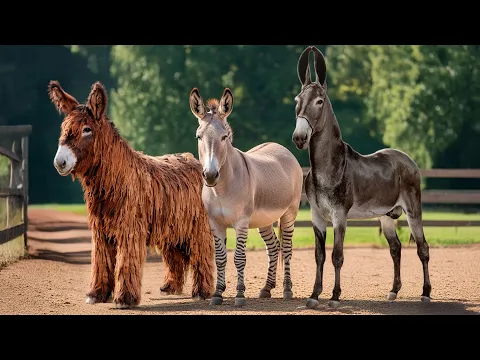

Looking at these rare donkeys and mules is looking at a forgotten part of our own history. Each breed carries a unique set of physical, behavioral, and genetic traits that cannot be easily reproduced if lost.
Beyond their importance for biodiversity, they represent entire rural cultures, ways of working, traditional knowledge, and ways of life that are disappearing.
When a breed disappears, it is not just an animal that ceases to exist; it is a piece of collective memory that fades away as well.
This is why conservation programs, dedicated breeders, and educational projects are so important. They not only keep these breeds alive but also help new generations understand the value of these animals beyond labor, seeing them as historical, biological, and cultural heritage.
And you, after learning these stories, which of these rare donkeys and mules would you like to see up close one day?








-

-

2 pessoas reagiram a isso.