





 Portuguese
  English
  Spanish
  5 min of reading
  0 comments


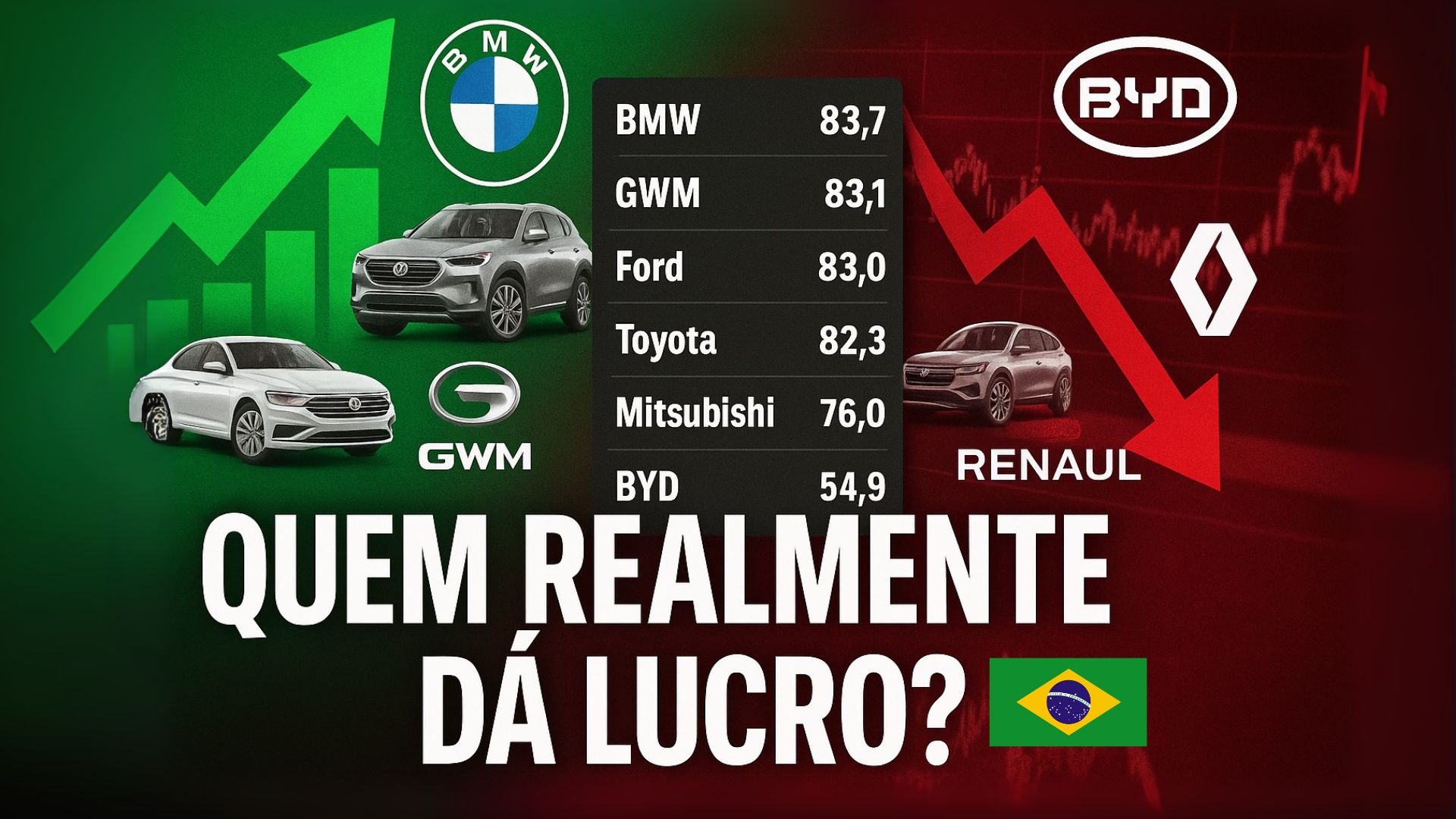
Fenabrave’s 2025 Survey Reveals Which Automakers Offer the Most Profitability and Value to Dealerships in Brazil, Highlighting Advances by Chinese Brands and Challenges for Traditional Manufacturers in Areas Such as After-Sales, Marketing, and Financial Support.
The 29th edition of the Fenabrave survey indicates that BMW and GWM lead in perceived profitability and value for dealership networks in Brazil.
Meanwhile, BYD and Renault rank among the lowest in areas that directly influence store profits.
The survey, titled “The Dealer’s Voice: When the Good Speak, the Truth Always Emerges!,” gathered feedback from owners and managers of retail outlets across the country and updated metrics on products, commercial partnerships, and economic sustainability of operations.
-
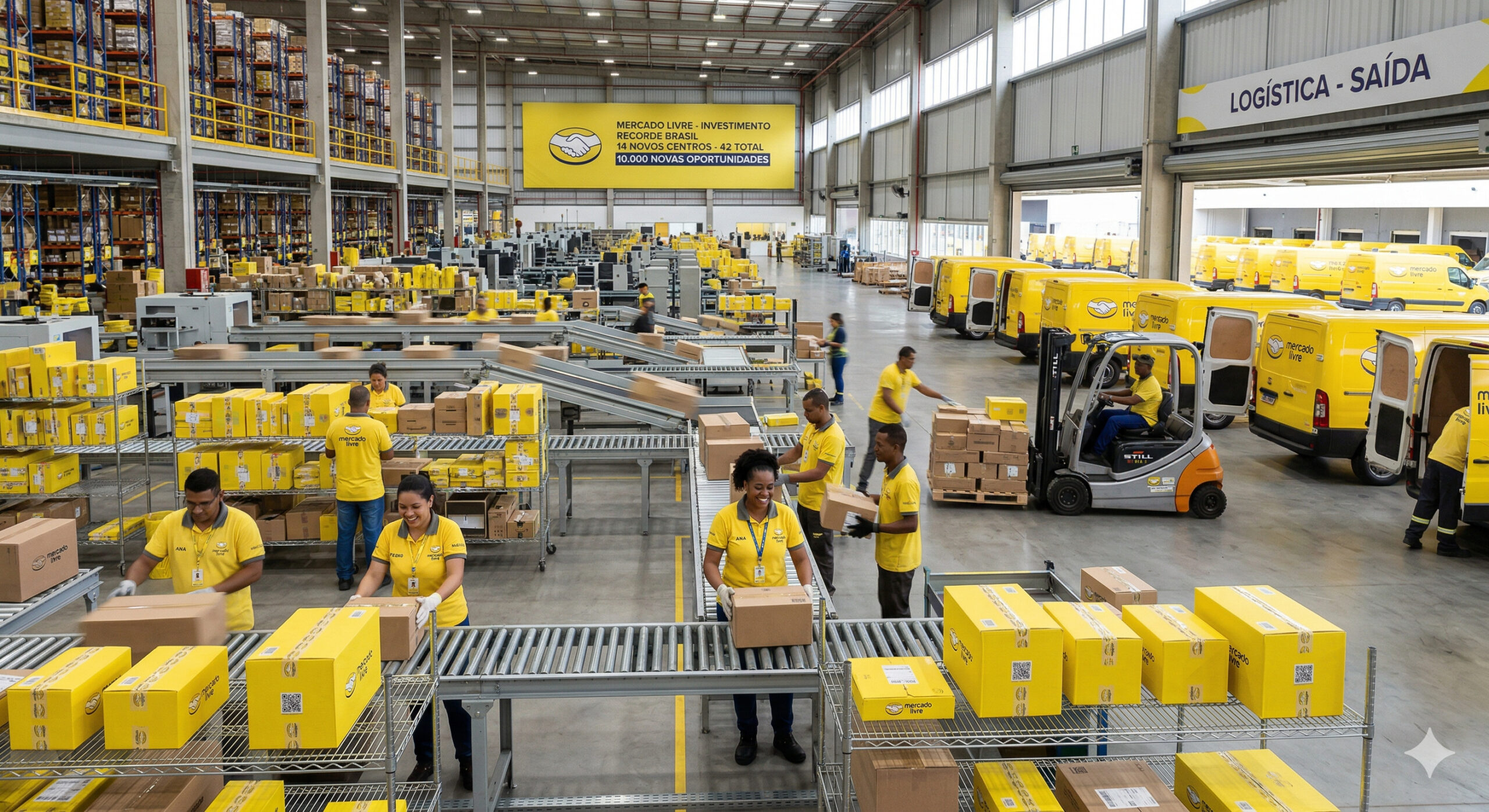
Mercado Livre “opens the vault” and announces a record investment of R$ 57 billion in Brazil in 2026, a value 50% higher than the previous year, with an expansion plan that includes 14 new logistics centers, totaling 42 units in the country and hiring an additional 10,000 employees.
-
How investment in technology can revolutionize the national economy and enhance industrial gains, according to a study that highlights the direct impact on productivity, innovation, and wealth retention within Brazil.
-
The largest food company on the planet, JBS, has just opened a 4,000 square meter laboratory in Florianópolis to develop customized proteins that modulate muscle mass gain, immune response, and metabolic performance.

-
After nearly 30 bids and competition among industry giants, a Spanish company purchases one of the largest airports in Brazil for almost R$ 3 billion and takes over the management of Galeão in a concession that will last until 2039.


At the beginning of the report, the federation explains that the objective is to measure the dealer’s satisfaction with the business and with the manufacturer with which they have a contract.
According to the Autoesporte website, in an article published this Tuesday (26), the questionnaire included broader questions and a revamped “Value Index,” incorporating items related to the economic life of the dealership, such as perceived profitability, brand value, and financial support.
How the Survey Was Conducted and What It Measures
Confidential in nature, the study collects responses directly from those responsible for store operations.
The consolidated scores make up indices that reflect the network’s views on their relationship with the automaker.
The “Value Index” summarizes overall satisfaction with the business, including profitability, financial support, and brand appreciation.
The “Commercial Partnership Index” assesses the quality of the automaker’s support in daily operations and customer loyalty.
Value Index: BMW on Top, GWM Surprises, and BYD Drops
| Position | Automaker | Points |
|---|---|---|
| 1st | BMW | 83.7 |
| 2nd | GWM (Great Wall) | 83.1 |
| 3rd | Ford | 82.3 |
| 4th | Toyota | 82.0 |
| 5th | Mitsubishi | 76.0 |
| 6th | Chery | 75.6 |
| 18th | BYD | 54.9 |
| 19th | Audi | 54.4 |
| 20th | GM | 50.5 |
| 21st | Renault | 50.5 |
| 22nd | Kia | 48.1 |
| 23rd | Jaguar Land Rover | 47.5 |
In the 2025 segment, BMW occupies the top position in the “Value Index” with 83.7 points.
GWM (Great Wall) follows closely behind with 83.1, followed by Ford (82.3) and Toyota (82.0). The group of the top five is completed by Mitsubishi (76.0), while Chery scores 75.6.
At the other end, BYD is at the bottom of the table with 54.9 points. The lowest scores were given to Jaguar Land Rover with 47.5 and Kia with 48.1. Renault and General Motors each recorded 50.5, while Audi received 54.4.
The result of BYD is linked to low evaluations in areas that impact dealership cash flow, particularly in compensation for labor in warranty services, where the brand ranked last with 40.1 points compared to 81.6 for the leader GWM.
In the item “concern of the automaker in ensuring adequate profitability for dealers,” the Chinese manufacturer also received the lowest score at 38.3 points, against 85.0 from BMW and 80.7 from GWM.
Commercial Partnership: BMW and Toyota Lead; Renault and BYD Lag Behind
| Position | Automaker | Points |
|---|---|---|
| 1st | BMW | 85.2 |
| 2nd | GWM | 83.7 |
| 3rd | Toyota | 82.6 |
| 4th | Ford | 82.1 |
| 5th | Mitsubishi | 79.8 |
| 18th | BYD | 61.0 |
| 19th | GM | 59.0 |
| 20th | Renault | 54.5 |
The “Commercial Partnership Index” repeats BMW‘s leadership with 85.2 points. GWM maintains its second place (83.7), followed by Toyota (82.6), Ford (82.1), and Mitsubishi (79.8).
Renault closes the list with 54.5 points, followed by GM (59.0) and BYD (61.0).
The French automaker received the lowest scores in the study for marketing (45.7), order delivery (50.9), and director involvement with dealers (56.0).
GM ranked the lowest in sales management (50.2) and in “the products from my automaker are what the customer wants” (38.0).
In the case of BYD, the lowest evaluations were on training (62.6), parts management (43.5), after-sales (41.3), policies for the network (46.5), and receptiveness to suggestions (46.5).
Marketing and Portfolio: Advancement of Chinese Brands
| Position | Automaker | Points |
|---|---|---|
| 1st | Chery | 93.2 |
| 2nd | GWM | 90.1 |
| 3rd | BYD | 88.6 |
| 4th | BMW | 88.3 |
| 5th | Ford | 85.7 |
| 21st | Renault | 48.1 |
| 22nd | Audi | 45.4 |
| 23rd | GM | 38.0 |
Despite operational issues, BYD stands out in marketing: it placed 2nd with 89.0 points, behind only Chery, which led with 91.1.
In the indicator “the products from my automaker are what the customer wants,” the podium is also dominated by Chinese brands. Chery comes in 1st (93.2), GWM in 2nd (90.1), and BYD in 3rd (88.6).
Among the lowest performers, traditional brands such as GM (38.0), Audi (45.4), and Renault (48.1) have registered weak performance.
As highlighted by Autoesporte, this segment demonstrates that while BYD still faces operational challenges, it has managed to position its products among the most desired by Brazilian customers.
After-Sales and Customer Satisfaction
| Position | Automaker | Points |
|---|---|---|
| 1st | Toyota | 88.4 |
| 2nd | GWM | 85.1 |
| 3rd | Hyundai | 82.7 |
| 4th | BMW | 81.7 |
| 5th | Ford | 81.2 |
| 20th | Renault | 59.9 |
| 21st | Citroën | 60.5 |
| 22nd | BYD | 41.3 |
In the after-sales component, which directly influences the perceived profitability of the network, Toyota leads with 88.4 points, followed by GWM (85.1) and Hyundai (82.7).
BYD is in last place in this regard, with 41.3, behind Renault (59.9) and Citroën (60.5).
In “the automaker’s system for measuring customer satisfaction at the dealership,” the best scores come from Toyota (86.9), GWM (84.1), and Ford (82.0). At the bottom of the list are Citroën (58.9), BYD (59.0), and Volkswagen (60.9).
These results help explain the relative positioning of the brands in the aggregated indicators and the final assessment of “value” for dealership operations.
What’s Behind BYD’s Profitability Issue
The issue that names this text emerges precisely from the aspects of profitability and perceived economic support within the network.
Although BYD has good product acceptance and investment in marketing, the low compensation for warranty services, coupled with the issues mentioned in after-sales, parts, and relationship policies, pressure the dealers’ margins and pull down the “Value Index.”
The contrast with BMW and GWM, which are highly rated in both profitability and partnership, highlights that the challenge lies less in the appeal of the vehicles and more in the management of the support ecosystem for dealerships.
Congress & ExpoFenabrave 2025
According to a statement made by Autoesporte, the survey is expected to guide meetings between brands and dealers this Tuesday (26) at the Congress & ExpoFenabrave 2025.
There is an expectation that the results will direct adjustments in processes, commercial policies, and service standards to enhance network satisfaction and, consequently, the profitability of operations.
Amid a competitive market and the rise of Chinese brands, the competition for value for the dealer is likely to intensify.
It is up to manufacturers to align product, marketing, and, most importantly, after-sales and financial support structure to convert consumer demand into sustainable results at the end.





-

2 pessoas reagiram a isso.