





 Portuguese
  English
  Spanish
 4 min of reading


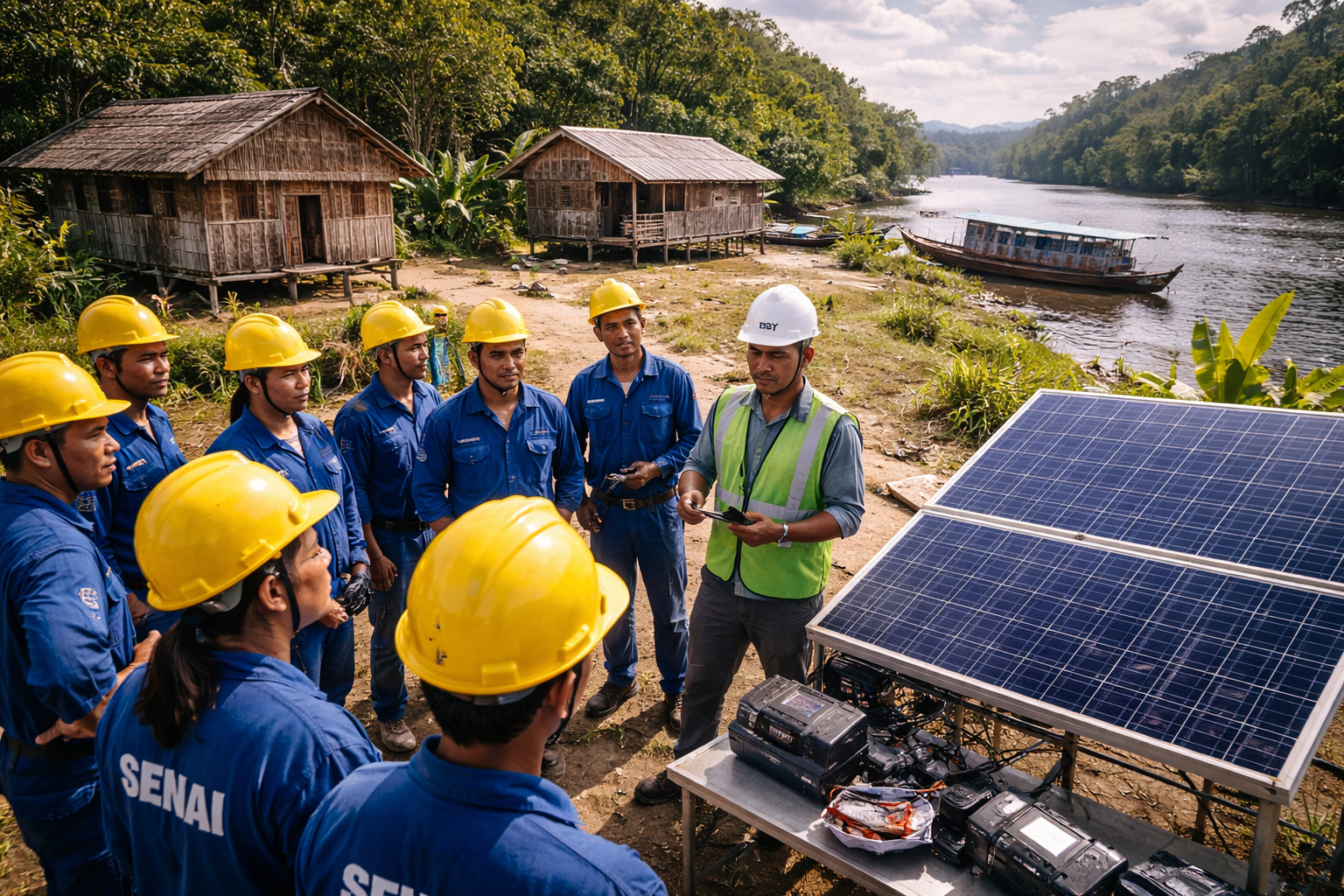
The Expansion of Solar Energy in Brazil Does Not Depend Only on Technology and Investment in Infrastructure. It Primarily Involves Training People Capable of Operating, Maintaining, and Expanding This Market.
The program, conducted in partnership with SENAI, with support from the International Center for Software Technology (CITS) and the Superintendency of the Free Trade Zone of Manaus (SUFRAMA), serves 320 students from riverside communities outside the metropolitan area of Manaus. The initiative directs resources toward Research, Development, and Innovation, with a direct focus on training local labor.
Historically, Amazonas has always faced specific challenges in accessing energy. The complex geography, the distance between communities, and the reliance on isolated systems have made electrical supply expensive and, often, unstable. In this scenario, solar energy emerges as a natural solution, capable of providing clean and decentralized electricity to previously excluded regions.
-
Maricá transforms Risca-Faca into Leonel Brizola Neighborhood with solar energy and promises to reduce costs for families while promoting dignity, urbanization, and social development in a historically vulnerable community.

-
The future of the electrical grid: How Virtual Power Plants (VPPs) are revolutionizing the monetization of solar energy and creating new income sources for consumers in 2026.

-
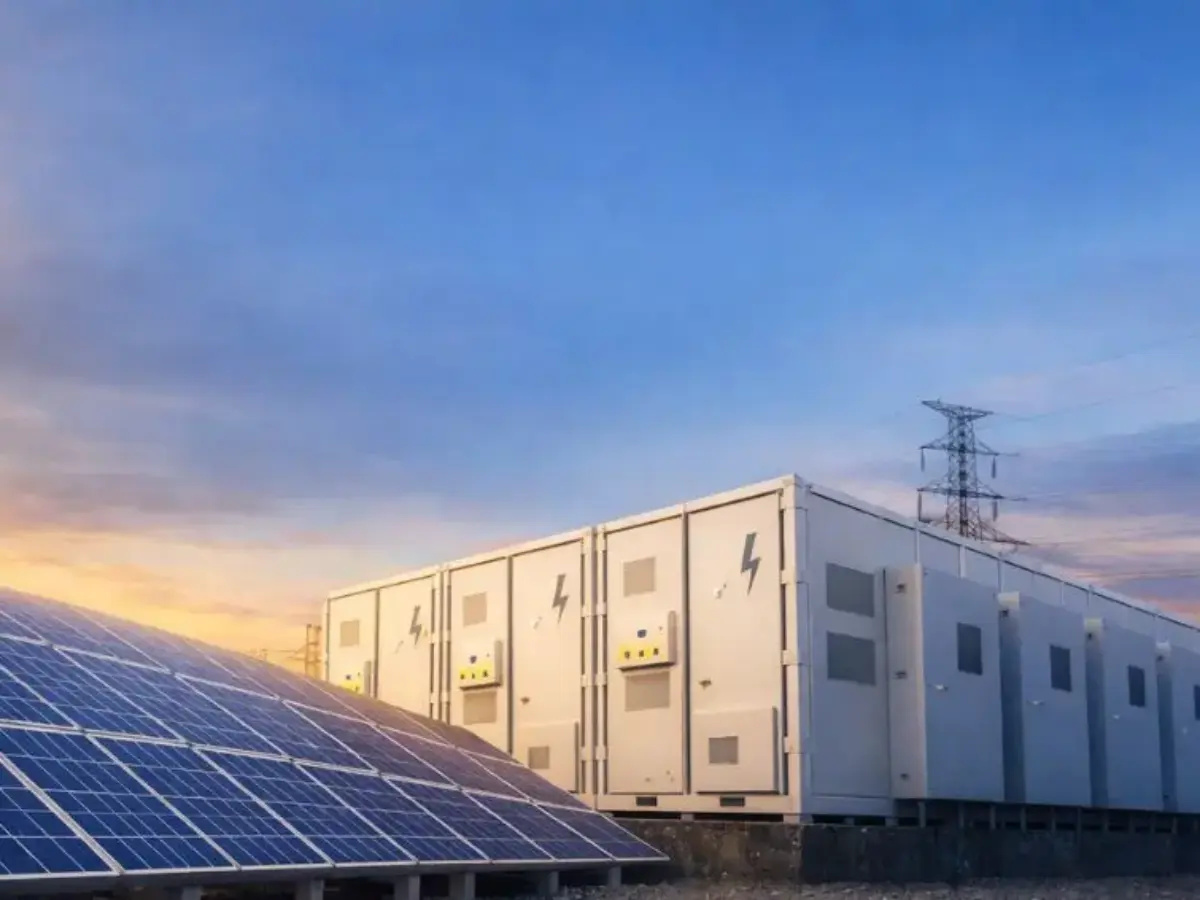
Revolution in the electric sector: ANEEL approves the operation of the first BESS project co-located with a solar plant in Brazil to stabilize the grid and optimize renewable generation in 2026.
-
Sustainable culture in motion: Cine Céu travels through Brazilian cities and promotes free and clean entertainment through the use of solar-powered cinema.



Solar Energy as a Tool for Inclusion and Development
Over the past two decades, solar energy has rapidly evolved in Brazil. According to data from the National Electric Energy Agency, distributed generation has grown rapidly since the regulations began in 2012. However, the expansion has not occurred uniformly across all regions of the country.
In the North, especially in riverside areas, the lack of qualified professionals has always been a bottleneck. Therefore, investing in local training is as strategic as installing solar panels. BYD’s initiative directly addresses this gap by bringing technical training to populations that have traditionally been excluded from major qualification centers.
Moreover, the adopted model reinforces the autonomy of communities. By training local professionals, the program reduces dependence on external technicians and creates income opportunities within the regions served. Thus, solar energy ceases to be just an energy solution and starts to act as a vector for economic development.
The Role of Institutional Partnerships
The partnership with SENAI provides technical robustness to the program. Historically, SENAI has acted as one of the main agents of professional training in Brazil, with a strong presence in industry and technological sectors. By integrating solar energy into its training curriculum, the institution reinforces alignment with future energy demands.
The support from CITS and SUFRAMA also plays a fundamental role. According to SUFRAMA, initiatives focused on innovation and training help diversify the region’s economy, traditionally concentrated in the industrial hub of Manaus. In this sense, solar energy presents itself as a complementary alternative, aligned with sustainability and the green economy.
Solar Energy, Corporate Strategy, and Long-Term Vision
For BYD, the investment in training goes beyond social responsibility. It is directly connected to the company’s global strategy, which strongly operates in renewable energy, electrification, and clean technologies. By strengthening the base of qualified professionals in Brazil, the company contributes to creating a more favorable environment for the sector’s expansion.
According to energy transition specialists cited in international reports, companies that invest simultaneously in technology and human capital tend to gain competitive advantages in the long run. The training of specialized labor reduces operational costs, accelerates the adoption of new solutions, and strengthens local supply chains.
In the Amazon context, this approach becomes even more relevant. Solar energy adapts efficiently to remote regions, where the expansion of large transmission networks faces environmental and economic limitations.
A Concrete Step for the Energy Transition in the North
By directing resources for training in solar energy outside the metropolitan area of Manaus, BYD helps reduce regional inequalities in access to technical training. At the same time, it strengthens a more inclusive energy transition model that considers local specificities.
According to data from energy sector institutions, the expansion of renewables in Brazil will increasingly depend on decentralized solutions and professionals prepared to act in different contexts. In this sense, initiatives like this help transform potential into reality.
Thus, the investment of R$ 1.1 million in training in Amazonas represents not just a financial contribution. It signals a future vision in which solar energy, technical education, and regional development walk together, creating a solid foundation for an energy transition that truly reaches all of Brazilian territory.






Seja o primeiro a reagir!