





 Portuguese
  English
  Spanish
  4 min of reading
  0 comments


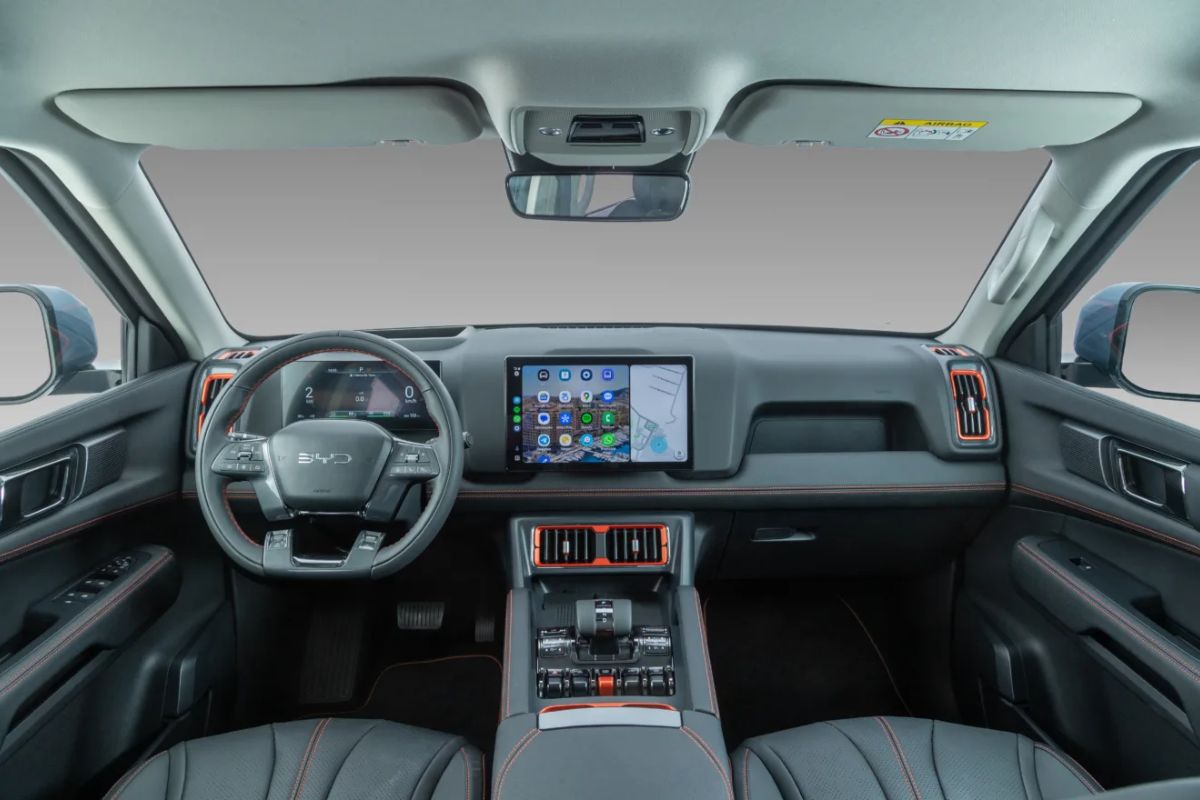
We Analyzed The Specifications, Differentials, And Value Proposition Of The Pickup That Promises To Be The Most Disruptive Launch Of The Year In Agribusiness And Leisure.
The Brazilian pickup market, traditionally dominated by the robustness and reliability of diesel engines, has just been shaken up by a new and powerful predator. BYD has officially launched its highly anticipated hybrid pickup in Brazil, the new BYD Shark 2026. The strategy of the Chinese giant is of unprecedented aggressiveness: to offer a pickup with supercar power, luxury car technology, and a revolutionary fuel economy proposition, all at a price that directly targets the top-of-the-line versions of the renowned Toyota Hilux and Ford Ranger.
The promise is tempting: to combine the best of both worlds, the strength for work and the performance for asphalt, in a single package. But the question consumers ask is whether the boldness of plug-in hybrid technology can really overcome decades of diesel tradition. We Analyzed Every Detail of the new Hybrid Pickup Brazil to understand if it has what it takes to win the hearts, minds, and garages of Brazilians.
How Much Does The New BYD Pickup Cost In Brazil?
BYD has positioned its new pickup strategically. The Shark comes in a unique, fully equipped version, with a BYD Shark price set at R$ 339,800 for the initial launch batch. This price puts it in direct competition with the top-of-the-line versions of its rivals, such as the Toyota Hilux GR-Sport and the Ford Ranger Limited, which fall within the same price range.
-
5 cheapest used cars than a Honda CG 160 Titan 0 km, with options starting at R$ 13,000 for those who want to trade their motorcycle for a car and escape the rain, sun, and risks of riding.
-
Around R$ 24,000: 4 used Ford SUVs with up to 253 hp, V6 engine, all-wheel drive, 7 airbags, panoramic sunroof, and a complete package that surprises with its price and performance in Brazil.
-
A brand new car starts at around R$ 75,000 in Brazil, but what stands out the most is seeing streets filled with SUVs and expensive sedans in a country where millions remain in debt.

-
For R$ 32,000, a brand new Hyundai car is a rival to the Kwid with a 1.2 engine producing 82 hp, 6 airbags as standard, multimedia with wireless Android Auto, up to 391 liters in the trunk, and a refreshed look for 2026 in India.

The big differential, however, is the package that this value delivers. While competitors offer different versions and optional packages, the Shark comes with all the technology and comfort items as standard, including a panoramic sunroof, a 360° camera system, a 12.8-inch rotating multimedia screen, and an extensive driving assistance package.
Is The BYD Shark Stronger Than The Hilux?

When it comes to brute strength and performance, the numbers of the BYD Shark impress and easily surpass those of diesel competitors. The hybrid DM-i system of the pickup combines a 1.5 turbo gasoline engine with two electric motors (one on each axle), delivering a combined output of 430 horsepower and 650 Nm of torque.
In a BYD Shark vs Hilux comparison, the difference is striking. The most powerful version of the Hilux, the GR-Sport, offers 224 hp and 550 Nm of torque. The acceleration of the Shark is also that of a sports car: it goes from 0 to 100 km/h in just 5.7 seconds, a much lower time than the more than 10 seconds of its rivals. In terms of power and acceleration, the Shark is not just stronger; it is in a different league.
What Is The Real Consumption Of The Hybrid Pickup?
The consumption of the BYD Shark is another pillar of its disruptive proposition. Thanks to the hybrid system, which prioritizes the use of electric motors, fuel consumption is drastically reduced. According to official data (from the NEDC testing cycle), the pickup can achieve an average of 13.3 km/l. The total range, combining the gasoline tank and charged battery, is 840 kilometers.
In addition, the nearly 30 kWh battery allows for a purely electric range of 100 km (NEDC). This means that, for daily use in the city or on short trips to the farm, it is possible to drive for days without using a single drop of gasoline, recharging the pickup at the outlet, like a cellphone.
Can It Handle Heavy Work In The Field?

This is the fundamental question for the medium pickup consumer. Despite its performance on asphalt, a pickup needs to prove its worth in the field. On the numbers, the BYD Shark shows competence, but with important caveats in comparison to diesel rivals. Its bed load capacity is 835 kg, and its towing capacity is 2,500 kg.
For reference, the Toyota Hilux has a load capacity of 1,000 kg and the Ford Ranger can tow up to 3,500 kg. This means that for heavy work and the transport of very bulky loads or towing larger trailers, diesel pickups still have the advantage. The Shark positions itself as an extremely capable pickup for most leisure and work situations, but those seeking the limits of load and towing may find traditional competitors to be a more robust solution.
Would you, a rural producer or pickup enthusiast, trade the reliability of a diesel Hilux for the technology and performance of the new hybrid BYD Shark? Share your thoughts!








-

-

4 pessoas reagiram a isso.