





 Portuguese
  English
  Spanish
  9 min of reading
  0 comments


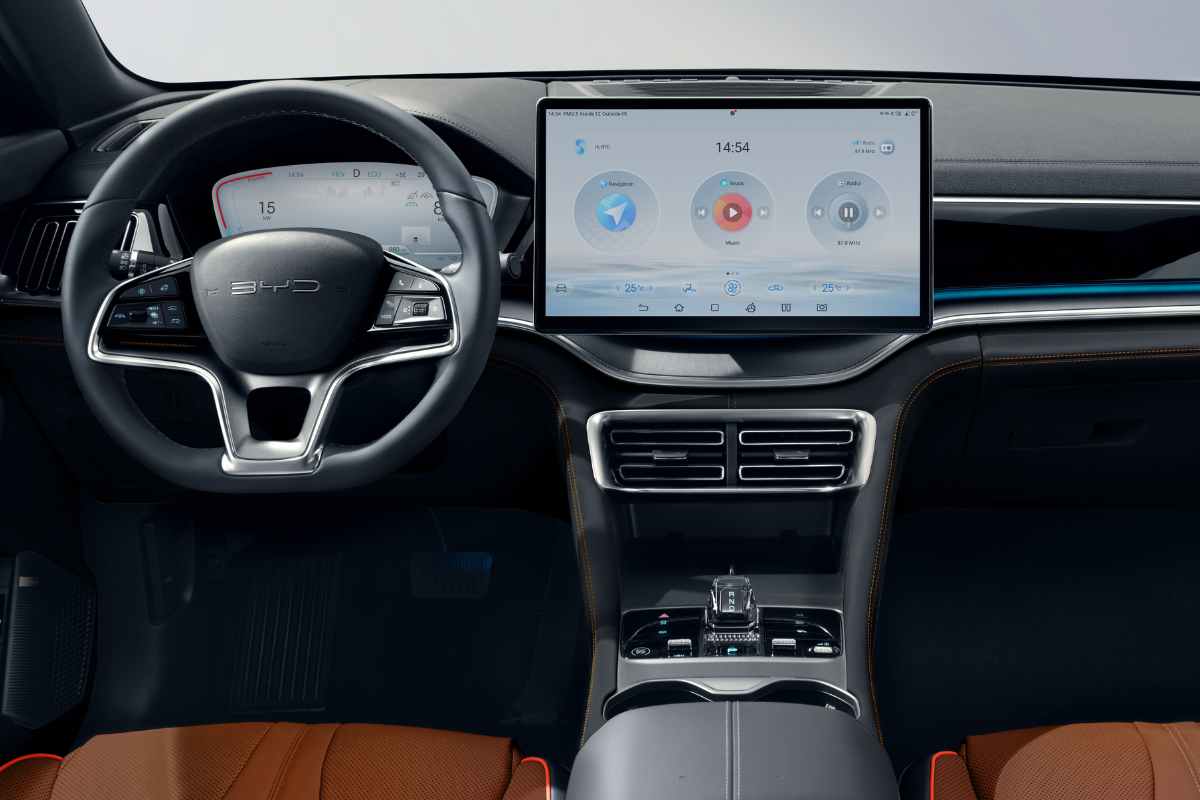
With A Combined Range Close To 1000 Km, A Compact 1.0-Level Consumption, And A Look Of An Expensive SUV, The BYD Song Plus 2026 Arrives More Equipped, More Expensive, And Pressured By Direct Rivals Such As Plug-In Hybrids And Medium Turbo SUVs In The Price Range Of 200 To 250 Thousand Reais In The Brazilian Market.
The BYD Song Plus 2026 returns to the center of discussion about plug-in hybrid SUVs in Brazil with a combination that, in practice, is hard to ignore: over 20 km/l in the city, around 16 km/l on the highway, and a real range exceeding the 1000 km mark with a full tank and charged battery. At the same time, the model has become more expensive, acquired the look of a higher segment SUV, and needs to convince buyers that it still delivers more than it costs.
Behind the numbers is a project that evolved quickly. The Song began as a thermal model, with a 1.5 turbo engine and dual-clutch transmission, migrated to the DMI hybrid system, and now, in the BYD Song Plus 2026, refines the setup with adjustments to the combustion engine, electric motor, and energy management. The promise is clear: to maintain the consumption of a 1.0 car in an SUV weighing almost 1.8 tons, without giving up solid performance and the typical comfort of larger models.
Positioning Of The BYD Song Plus 2026 In The Brazilian Market

The BYD Song Plus 2026 is currently the most emblematic plug-in hybrid SUV of the brand in Brazil.
-
A brand new car starts at around R$ 75,000 in Brazil, but what stands out the most is seeing streets filled with SUVs and expensive sedans in a country where millions remain in debt.

-
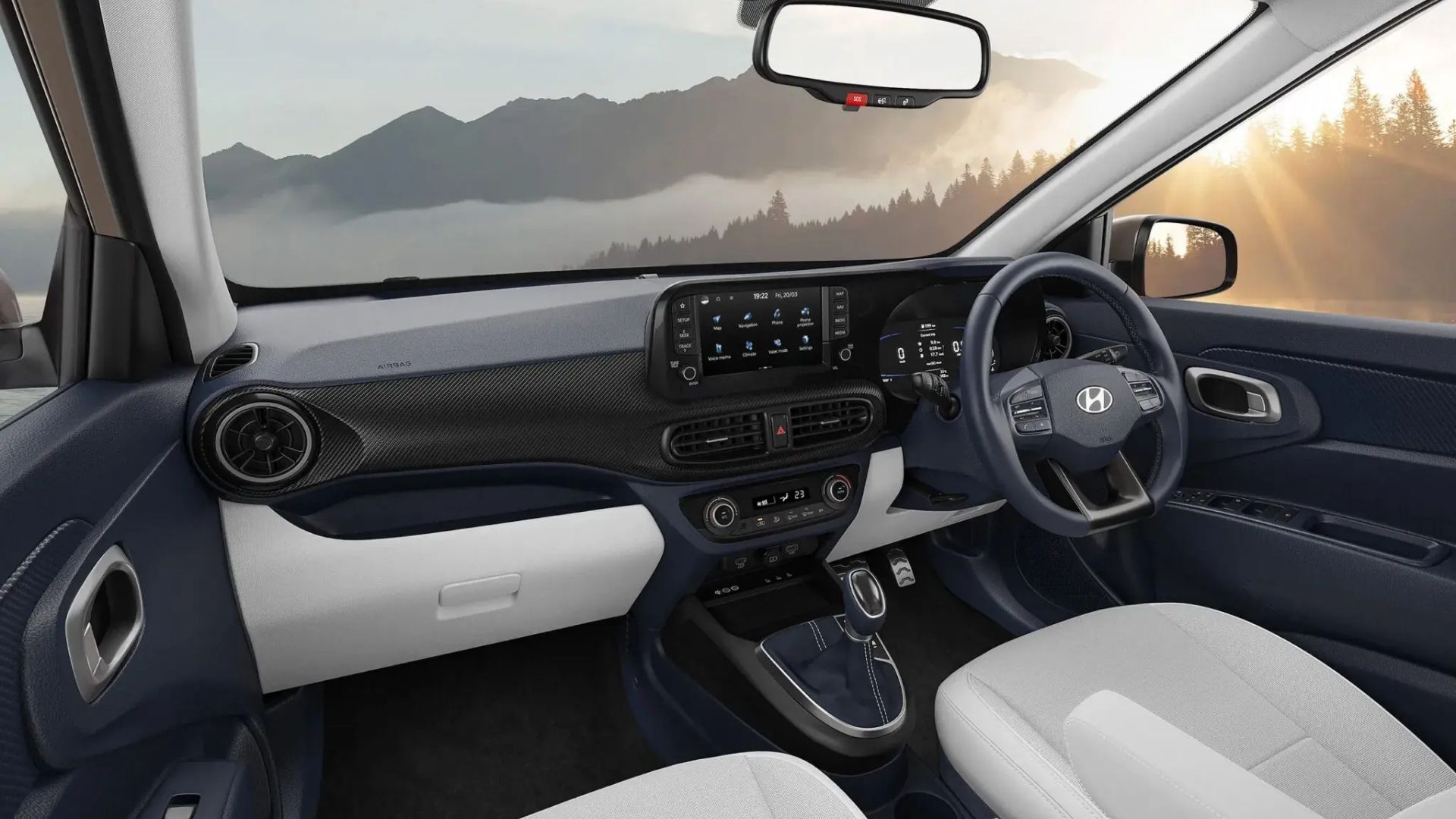
For R$ 32,000, a brand new Hyundai car is a rival to the Kwid with a 1.2 engine producing 82 hp, 6 airbags as standard, multimedia with wireless Android Auto, up to 391 liters in the trunk, and a refreshed look for 2026 in India.
-
He bought a new car in 1983, locked it in the barn in 1988, and no one opened the door for 38 years until the family discovered what was stored inside and realized it looked like something out of a movie.
-
A 250cc motorcycle that can reach 560 km with a 14-liter tank, features disc brakes on both wheels and is among the most well-known in Brazil.

It occupies the space between more affordable electric vehicles and larger or more powerful SUVs, serving as a showcase for DMI technology and an entry point for those wanting electrification without giving up gasoline.
Since its arrival in the country, the Song Plus has changed the perception of medium-sized Chinese SUVs.
With the 2026 line, the model takes on an even more strategic role: justifying the increase in the list price from 244,900 to 249,900 reais, while maintaining the argument of the lowest cost per kilometer in the segment.
The challenge is straightforward: compete for customers with plug-in hybrid rivals, traditional medium turbo SUVs, and even models from established brands that still rely on pure combustion engines.
BYD itself admits that the buyer of the BYD Song Plus 2026 is closely examining the price range between 200 and 250 thousand reais and that the competition exists both inside and outside this range: the cheaper Song Pro, SUVs like Haval H6, and even hybrids from Japanese brands are on the comparison radar.
Design Of An Expensive SUV And Visual Approach To The Brand’s Premium Models

The design of the BYD Song Plus 2026 follows the brand’s global strategy.
The front abandons the visual of the old “Dynasty line” and incorporates the “Ocean line” language, practically inheriting the same identity as the electric Song Premium and models sold in Europe under different names.
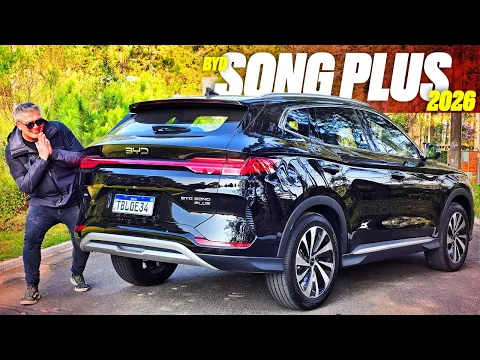
Sharp full LED headlights, a striking daytime signature, and a more horizontal grille create the impression of a wider and more expensive SUV.
At the rear, the LED taillights in “drop” shape and the horizontally illuminated bar directly reference premium European SUVs, reinforcing the perception of a higher category.
The rear inscription has been simplified: instead of the extensive “Build Your Dreams,” the BYD logo dominates the tailgate, aligning the Song Plus with the brand’s latest line.
On the side, the slightly sloping roofline and the 19-inch wheels with a “propeller” design enhance the sporty tone.
The visual result is that of a higher-end SUV, which helps support the repositioning of the BYD Song Plus 2026‘s price, but also brings its appearance closer to the more expensive and more powerful Premium version, something that might confuse those who see the car on the street.
Mechanical Set: Less Power In The Combustion Engine, More Efficiency In The Electric

The most noticeable evolution of the BYD Song Plus 2026 is under the hood and in the floor.
The naturally aspirated 1.5 combustion engine has lost power: it dropped from 105 hp to 98 hp, with torque around 13.8 kgfm.
This reduction is not a setback in engineering but a requirement of Proconve L8 emissions, which necessitated adjustments to keep the model homologated.
To compensate, BYD refined the front electric motor: the unit increased from 194 hp to 197 hp, with torque close to 33.1 kgfm.
The combined power remains at 235 hp, with 40.8 kgfm of torque, preserving the stamina that has always distinguished the Song Plus from medium SUVs solely powered by combustion.
In practice, the BYD Song Plus 2026 maintains convincing performance for a family SUV weighing 1,790 kg.
Track measurements indicate an acceleration from 0 to 100 km/h in about 8.5 seconds, a level that surpasses most medium flex and diesel SUVs in the price range.
The transmission continues to operate on the typical logic of the DMI system, prioritizing the use of the electric motor and engaging the combustion engine mainly as an energy generator, coming into play more directly in traction only when power demand increases.
Battery, Consumption And Range: The Ace Up The Sleeve Of The BYD Song Plus 2026
It is in the chapter of efficiency that the BYD Song Plus 2026 concentrates its main asset.
The Blade lithium iron phosphate battery, with about 18 kWh, works in conjunction with the 57-liter tank to deliver figures that, in practice, make the model behave like a long-distance hybrid.
In urban use, it recorded 20.1 km/l of gasoline, a figure comparable to or higher than many naturally aspirated compact 1.0 vehicles.
On the highway, the SUV reached around 16.1 km/l, still very above the average for medium SUVs powered by combustion.
Adding the range of the tank to the battery charge, the system projects over 1000 km of combined range, which is quite rare in models of this size.
The energy management of the BYD Song Plus 2026 allows configuring the minimum battery charge level, usually between 25% and 70%.
Below this level, the combustion engine starts with greater intensity as a generator, recovering energy and preventing the driver from being “stuck” with only the 98 hp of thermal power.
In practice, it is very hard to drive the Song Plus without some electric assistance, which preserves both consumption and performance.
Dynamics, Comfort And Behavior In Real Use
At the wheel, the BYD Song Plus 2026 prioritizes comfort and smoothness.
The McPherson front suspension and multi-link rear axle effectively filter irregularities, with no annoying structural noises, even on bumps and rough roads.
The setup conveys the sensation of a heavier SUV, but not uncomfortable, clearly tuned for stability in a straight line and family use.
The electric steering is not sporty, but it is progressive enough to convey security in road curves.
The transition between electric mode and combustion engine operation is generally discrete, especially in urban use, when mechanical noise is hardly noticeable.
In strong accelerations, the combined action of both engines is noticeable, but without jolts or abrupt changes in behavior.
During braking, the driver feels the typical “two stages” of hybrid vehicles with regeneration: first the energy recovery, then the conventional hydraulic brake.
After some adaptation, the system becomes predictable and contributes both to recharging the battery and reducing component wear.
Interior Space, Trunk And Family Comfort
One of the constant differentiators of the BYD Song Plus 2026 is its interior space.
The generous wheelbase allows an adult over 1.90 m to sit behind themselves with ample knee and foot room, something still uncommon in traditional medium SUVs.
The relatively flat floor and the well-angled rear seat backrest enhance comfort for those traveling in the back.
In the trunk, the model offers a volume exceeding 570 liters in official factory measurements, reaching over 550 liters even in more conservative evaluations.
It is a large SUV trunk, capable of accommodating family luggage, a stroller, and long trip baggage without major sacrifices.
The electric tailgate with automatic opening and closing adds convenience to daily use.
The interior finish combines good-textured plastics with leather on seats and panels, along with details in glossy black and soft surfaces in areas most exposed to sunlight.
The panoramic glass roof reinforces the perception of refinement and expands the sense of space, even though the light brown/two-tone shade may not please everyone, and there is evident demand for a fully black interior option.
Technology, Multimedia And Driver Assistance Packages
In the dashboard, the BYD Song Plus 2026 retains the 15-inch multimedia central display, with quick response and full integration of the main vehicle functions.
The screen remains sensitive to touch marks, but it is one of the elements that most reinforces the technological impression of the SUV.
The digital instrument panel provides clear information on energy, consumption, and power flow, reinforcing the educational nature of the hybrid system.
Among the equipment, the model offers induction cellphone charger in two points, digital air conditioning, head-up display, and a sound system signed by Infinity, with good definition and cabin filling.
In the latest versions, the SUV also began to feature a digital key via NFC, allowing the car to be unlocked by bringing the cellphone close to the external rearview mirror.
In active safety, the BYD Song Plus 2026 maintains a complete package of assistance, with an ADAS system, electronic cruise control, risk alerts, and 360-degree cameras for maneuvers.
The four-wheel disc brakes and multiple airbags complete the package, aligned with what is expected from a hybrid SUV in this price range.
Maintenance, Reviews And Insurance: Long-Term Cost Of Use
In post-sale, the BYD Song Plus 2026 reveals a mixed scenario.
Reviews are scheduled every 12,000 kilometers, with fixed values ranging from about 800 reais for basic inspections to over 2,500 reais for more comprehensive reviews, such as 48,000 and 96,000 kilometers.
Summing the package up to 120,000 kilometers, the owner does not encounter unrealistic values for an SUV in this category, but the intermediaries’ higher costs stand out compared to the first visits to the dealership, requiring financial planning for high mileage users.
In compensation, the model offers a vehicle warranty for up to six years and a battery warranty for eight years, reducing the risk of major structural expenses during this period.
For insurance, recent simulations for an experienced driver profile, with intermediate bonus and mixed urban/highway use, indicate policies around 6,000 reais with traditional insurers, with more aggressive quotes in the 3,800 to 4,200 reais range in companies with a more flexible risk profile.
For a hybrid SUV of nearly 250 thousand reais, it is not cheap insurance, but it also does not escape the reality of the segment.
Price, Direct Rivals And The “BYD Song Pro” Effect
The list price of the BYD Song Plus 2026, now at 249,900 reais, is one of the most sensitive points of the equation.
While on one hand the plug-in hybrid engine package, 1.0 car consumption, 1000 km autonomy, and technological content justify much of the value, on the other hand, BYD has placed a direct internal competitor into play: the Song Pro, with the same DMI setup in versions under 200 thousand reais.
Outside the brand, the Song Plus competes for space with hybrid SUVs from competing manufacturers and traditional turbo medium SUVs.
In performance and consumption, the BYD Song Plus 2026 usually has the advantage, especially in urban use and long highway routines, where the combined range is a significant factor for those who do not want to depend on public charging infrastructure.
The problem is psychological and financial: the price difference between the Song Pro and the BYD Song Plus 2026 is large enough to drive many customers to the cheaper model, accepting less space and slightly inferior finish in exchange for saving 50 thousand reais or more on the check.
Is The BYD Song Plus 2026 Worth It?
In the overall balance, the BYD Song Plus 2026 remains one of the most coherent plug-in hybrid SUVs in the Brazilian market in terms of efficiency, interior space, and technological package.
Real consumption above 20 km/l in the city, total autonomy exceeding 1000 km, and riding comfort make the model a rational choice for those who drive a lot and want to reduce fuel costs without giving up performance.
On the other hand, the price increase, the higher intermediate reviews, and the presence of competitive alternatives both inside and outside BYD require that buyers calculate carefully.
Between 200 and 250 thousand reais, the Song Plus is no longer the obvious choice, but it remains one of the most technical and well-justified options for those prioritizing efficiency and comfort in a medium plug-in hybrid SUV.
And you, would you put the BYD Song Plus 2026 in your garage or do you think that, for this price, it would make more sense to choose a plug-in hybrid rival or a traditional medium turbo SUV?










-

-

-

-

-

9 pessoas reagiram a isso.