





 Portuguese
  English
  Spanish
  3 min of reading
  0 comments


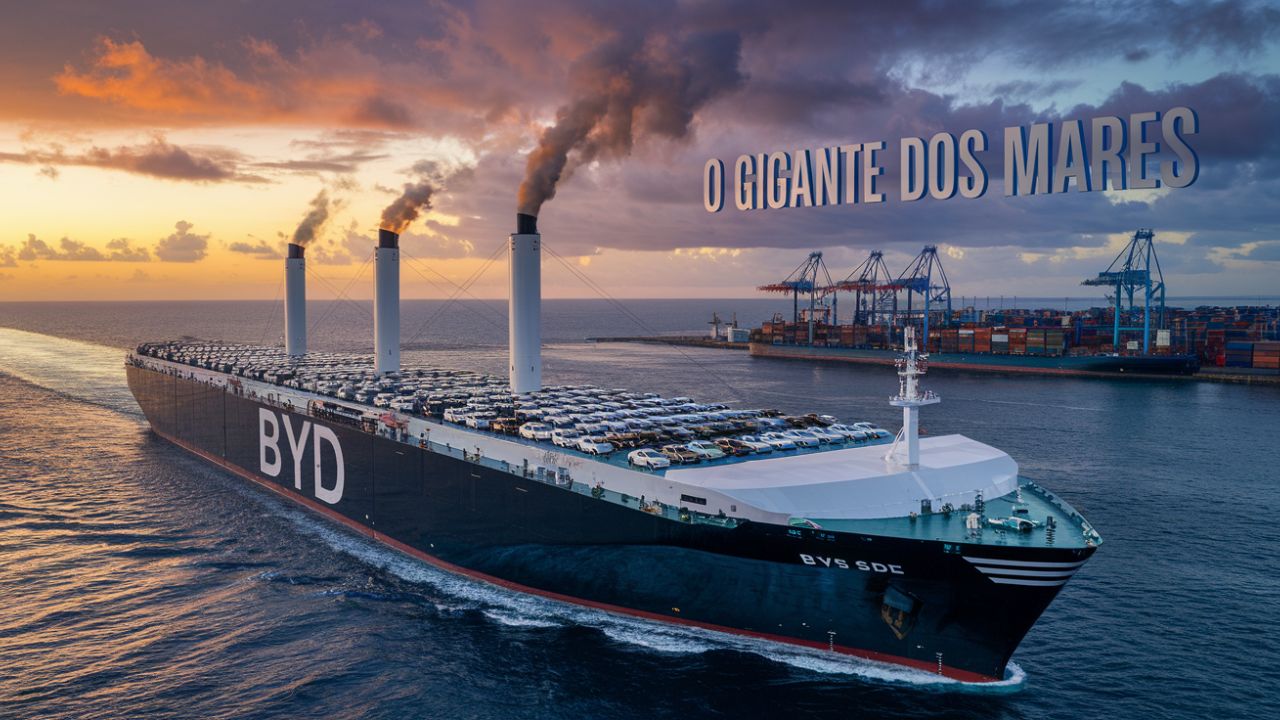
With 219 Meters in Length, Dual Fuel LNG Technology, and the Capacity to Transport 9,200 Vehicles, the BYD Shenzhen Solidifies BYD from China as a Global Leader in the Automotive Industry and Accelerates the Expansion of Electric Vehicles to More Than 100 Countries.
How does an automotive giant transport thousands of cars to the other side of the world? BYD from China, one of the global leaders in electric vehicles (EVs), has unveiled the BYD Shenzhen, the largest vehicle carrier in the world. With a capacity of 9,200 vehicles, this true “whale of the seas” is a milestone in the company’s aggressive global expansion strategy.
The Giant of the Seas: BYD Shenzhen
With an impressive 219 meters in length and 37.7 meters in width, the BYD Shenzhen is a colossus of the oceans. Sailing at speeds of up to 18.5 knots, it is designed to meet the growing global demand for electric vehicles, embarking directly from the port of Yangzhou, China.
It’s not just about size. This ship incorporates cutting-edge sustainability technologies, including a dual fuel system (LNG and traditional marine fuel) and energy-saving devices. BYD Box stationary batteries allow it to operate efficiently even in low emission zones. A combination of brute strength and environmental consciousness.
-
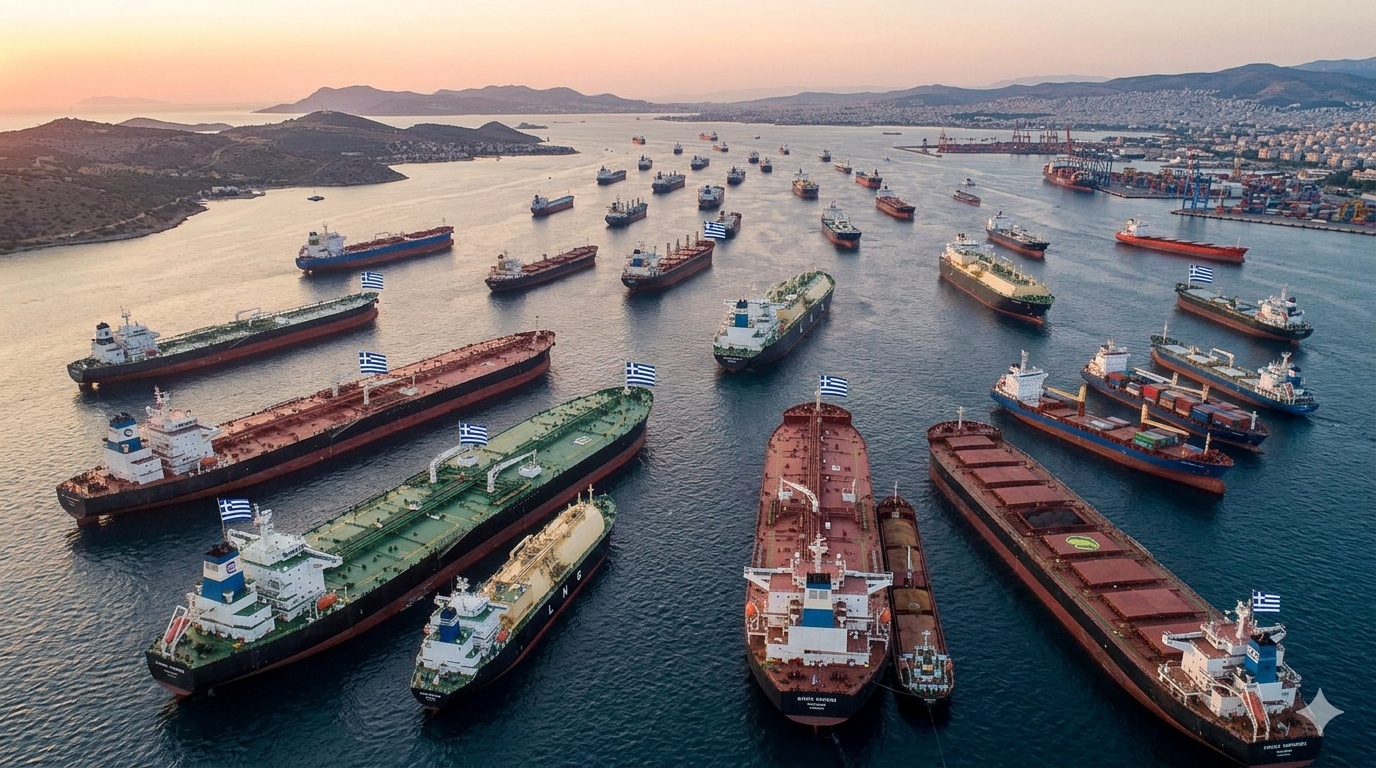
Neither the USA nor China: a small European nation has become one of the largest maritime powers on the planet, controlling one of the largest merchant fleets in the world with thousands of ships and dominating the global transportation of oil and strategic cargo.
-
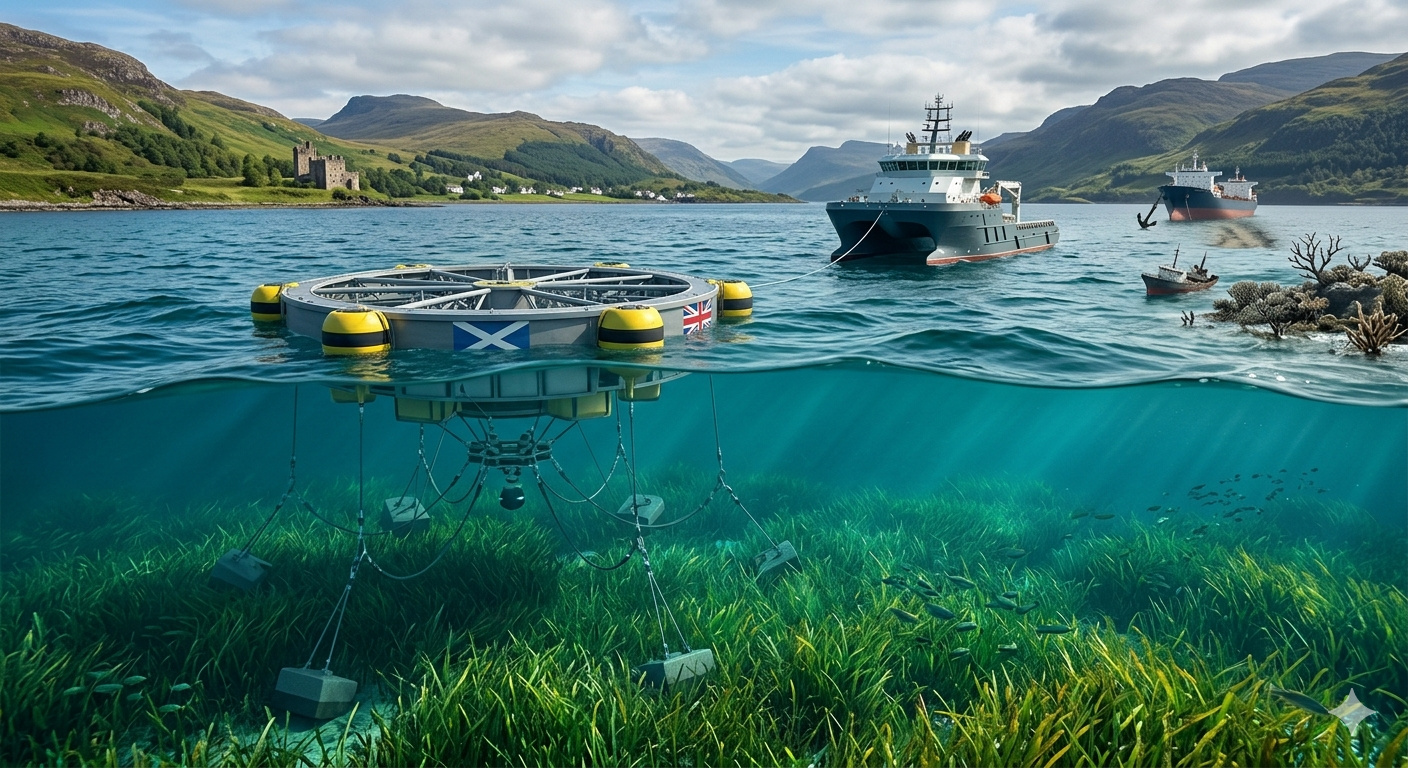
Scotland and the United Kingdom have created a new anchoring system that floats in the water without touching the seabed, after discovering that the current from a conventional anchor destroys up to 50 m² of seagrass meadow per event and that ship-damaged reefs showed no signs of recovery even ten years later.
-
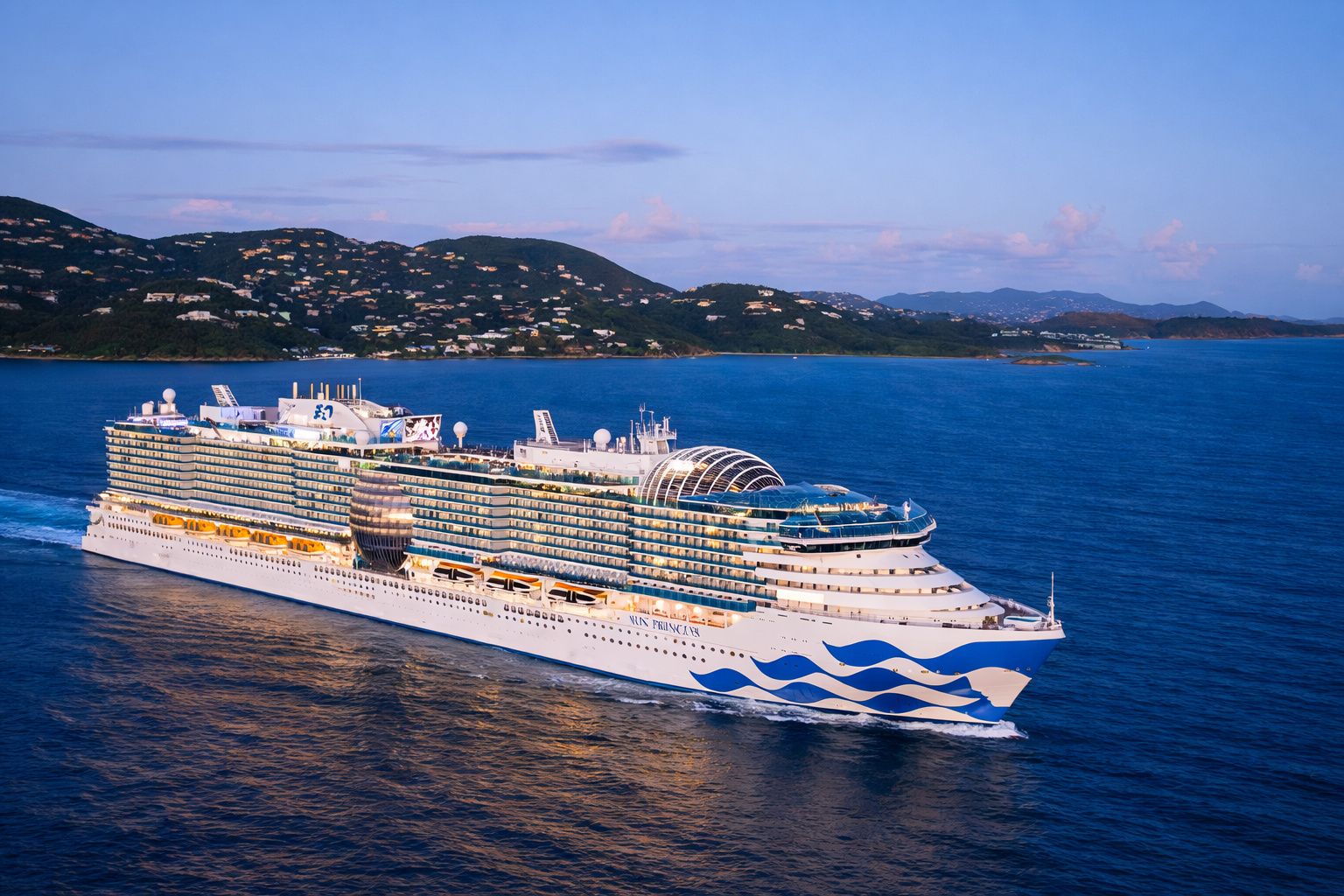
Weighing 175,500 Tons, Measuring 345 Meters Long, and With Capacity for Over 4,300 Passengers, the Sun Princess Becomes the Largest Ship Ever Built by Princess Cruises and Attracts Global Attention for Its Huge Glass Dome Inspired by Santorini’s Architecture Installed on Top of the Vessel
-
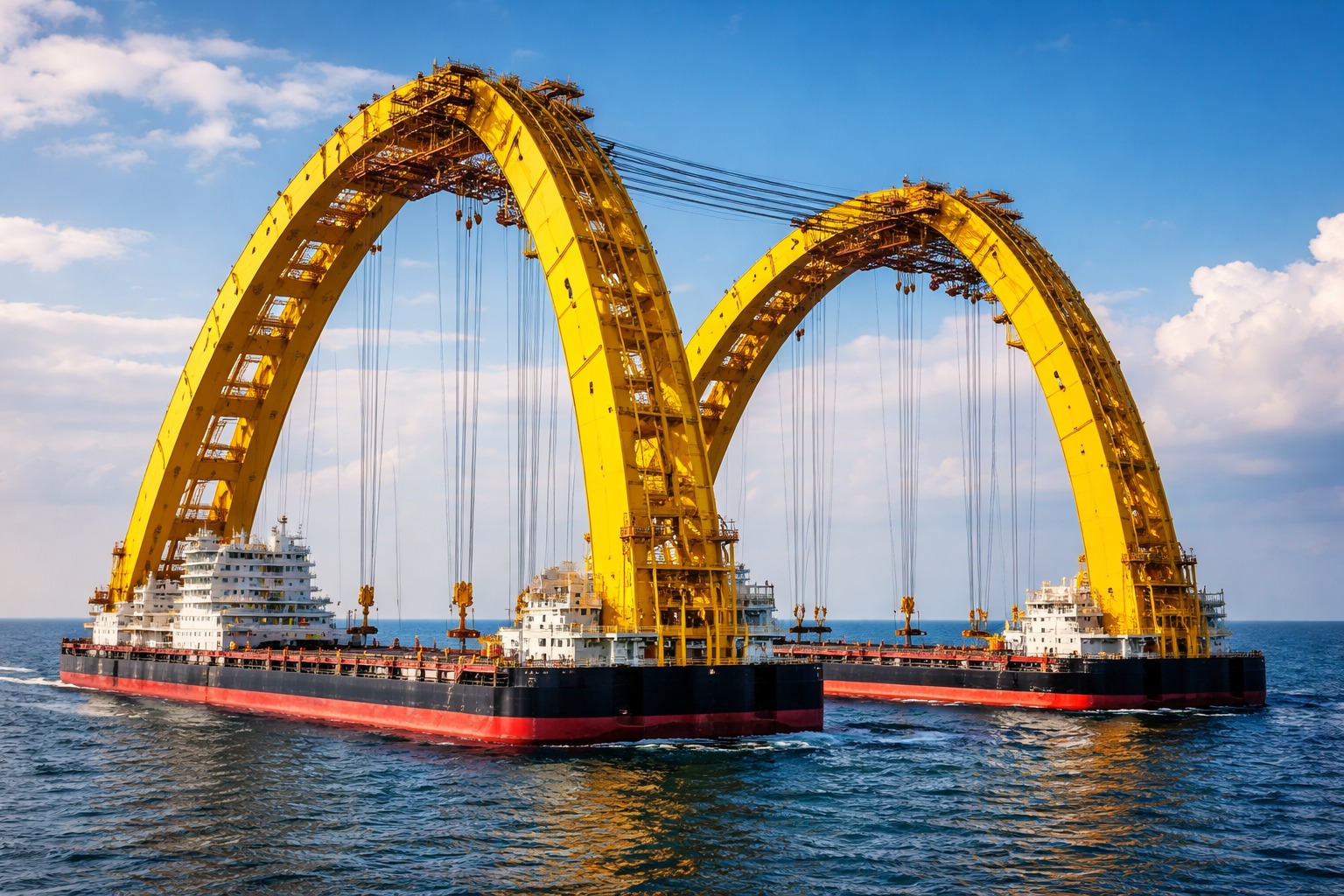
TX-10, The Colossus of The Sea: Largest Lifter Ship in The U.S., With Two Giant Barges, 73-Meter Tall Structure, and Strength to Raise 7,500 Tons of Sunken Oil Rigs
A Year of Achievements: Fourth Ro-Ro Ship from BYD

The BYD Shenzhen is the fourth vehicle transport launch by the company in less than a year. It follows in the footsteps of its “siblings” BYD Explorer No 1, BYD Changzhou, and BYD Hefei, which have already crossed the seas carrying up to 7,000 cars each. This fleet is not just a demonstration of strength, but a symbol of BYD’s global ambition.
With trips already made to Europe, Brazil, and now heading to South Korea and Thailand, BYD proves that there are no limits to the reach of its electric vehicles. With each vessel that sets sail, the company reaffirms its position as a leader in the global transition to clean energy.
The Global Strategy of BYD from China
Last year, BYD surpassed Tesla by producing 1.77 million vehicles compared to 1.76 million of its competitor. This victory symbolizes more than just numbers: it reflects the advancement of Chinese technology and BYD’s market strength.
After conquering Japan, the company now faces local giants in South Korea, offering vehicles starting from US$ 20,000, challenging Hyundai and Kia in their own domains. Meanwhile, in Thailand, Japanese automakers’ market share has decreased from 90% to 76%, thanks to BYD’s aggressive expansion.
Impacts of BYD on the Global Electric Vehicle Market
By combining cutting-edge technology and sustainable practices, BYD is not just delivering products. It is redefining what it means to be a global leader in clean mobility.
BYD is not just a brand; it is a movement. Its actions are shaping the future of mobility, with impacts that go far beyond the automotive market, influencing policies, economies, and the environment.









-

Uma pessoa reagiu a isso.