





 Portuguese
  English
  Spanish
  7 min of reading
  0 comments


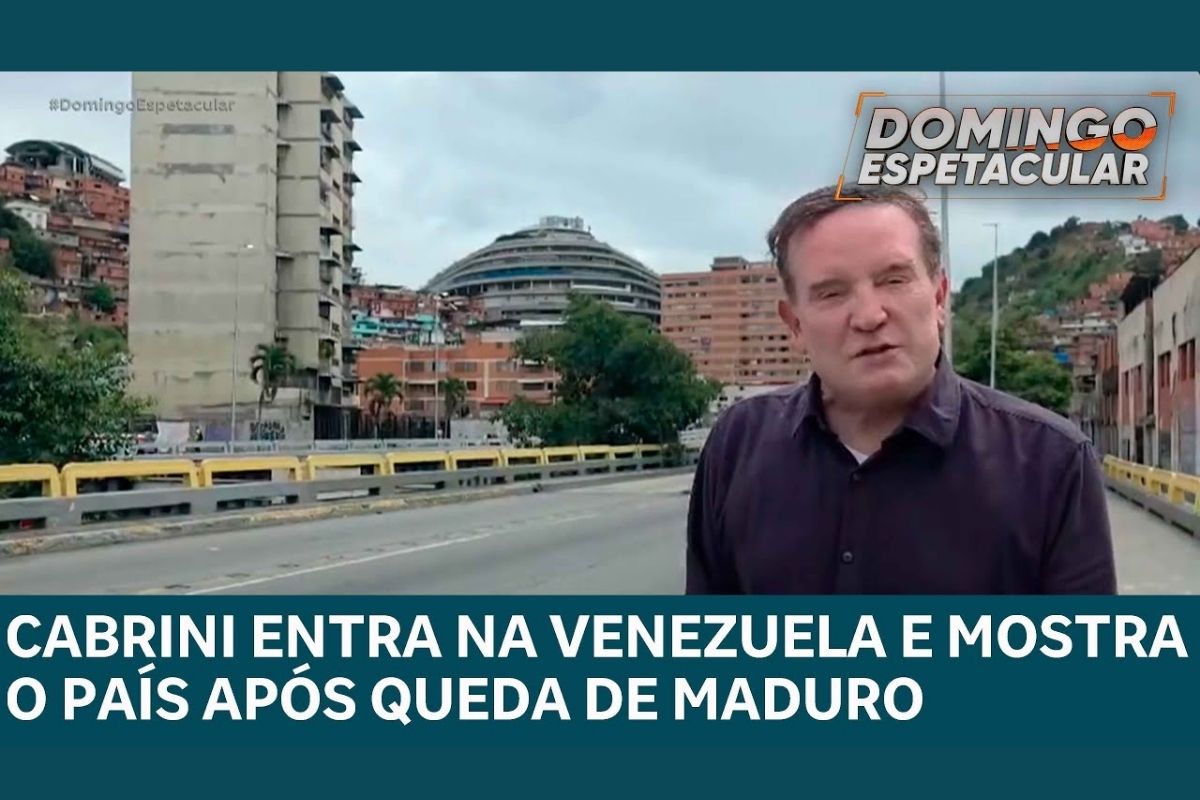
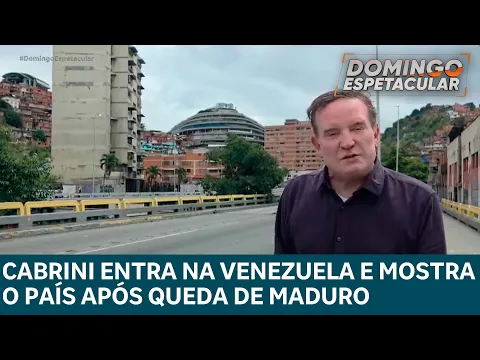
In Venezuela, Roberto Cabrini reports four days of incursion, leaving Cúcuta, crossing to San Antonio del Táchira and flying to Caracas to register marks of January 3rd, targets hit, pro-government demonstrations, opposition forbidden, military barriers, political prisoners, and a country filled with fear in the streets of the center.
The report shows Roberto Cabrini describing a tense entry into Venezuela, with calculated movements, quick recordings, and constant care not to remain in the same spot. The proposal, according to the account, was to answer practical questions about Caracas after January 3rd: how is the supply, power, security, who still supports the power, and what is the real space for opposition action.
The coverage is presented as a mission of risk and operational resistance. The reporter claims to have been the only Brazilian journalist to enter Venezuela at that moment, while foreign professionals faced barriers, deportations and arrests, and a routine in which filming, leaving, and changing routes became the norm to continue working.
Why Enter Venezuela When Almost Nobody Can

The starting point of the report is straightforward: there were “questions that need to be answered” and, as described, only the presence on site could separate the distant narrative from what was “faithfully documented.”
-
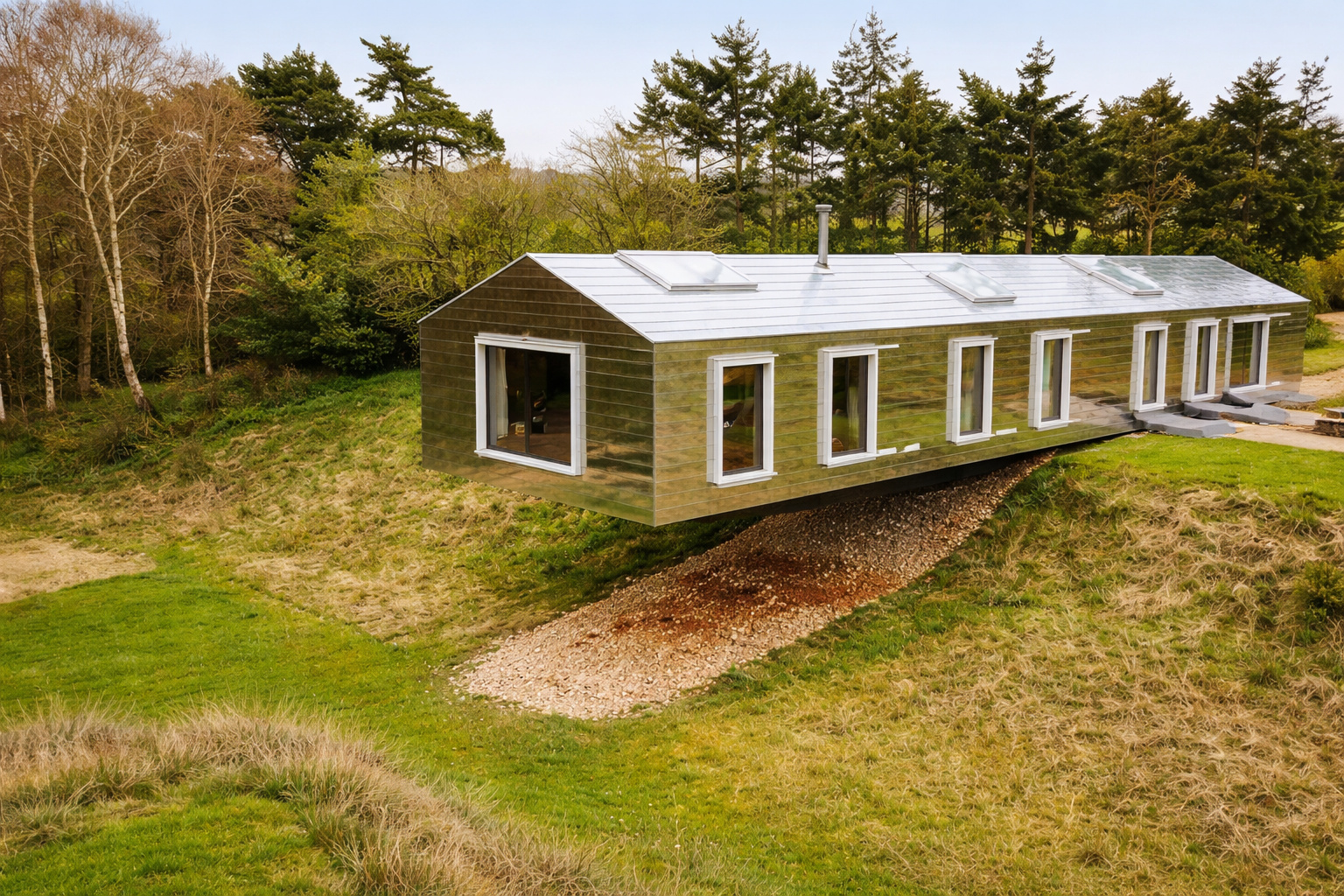
With 30 meters in length, a house in England appears to float in the air and surprises engineers and architects around the world due to its visual effect and construction method suspended over sloped terrain.
-
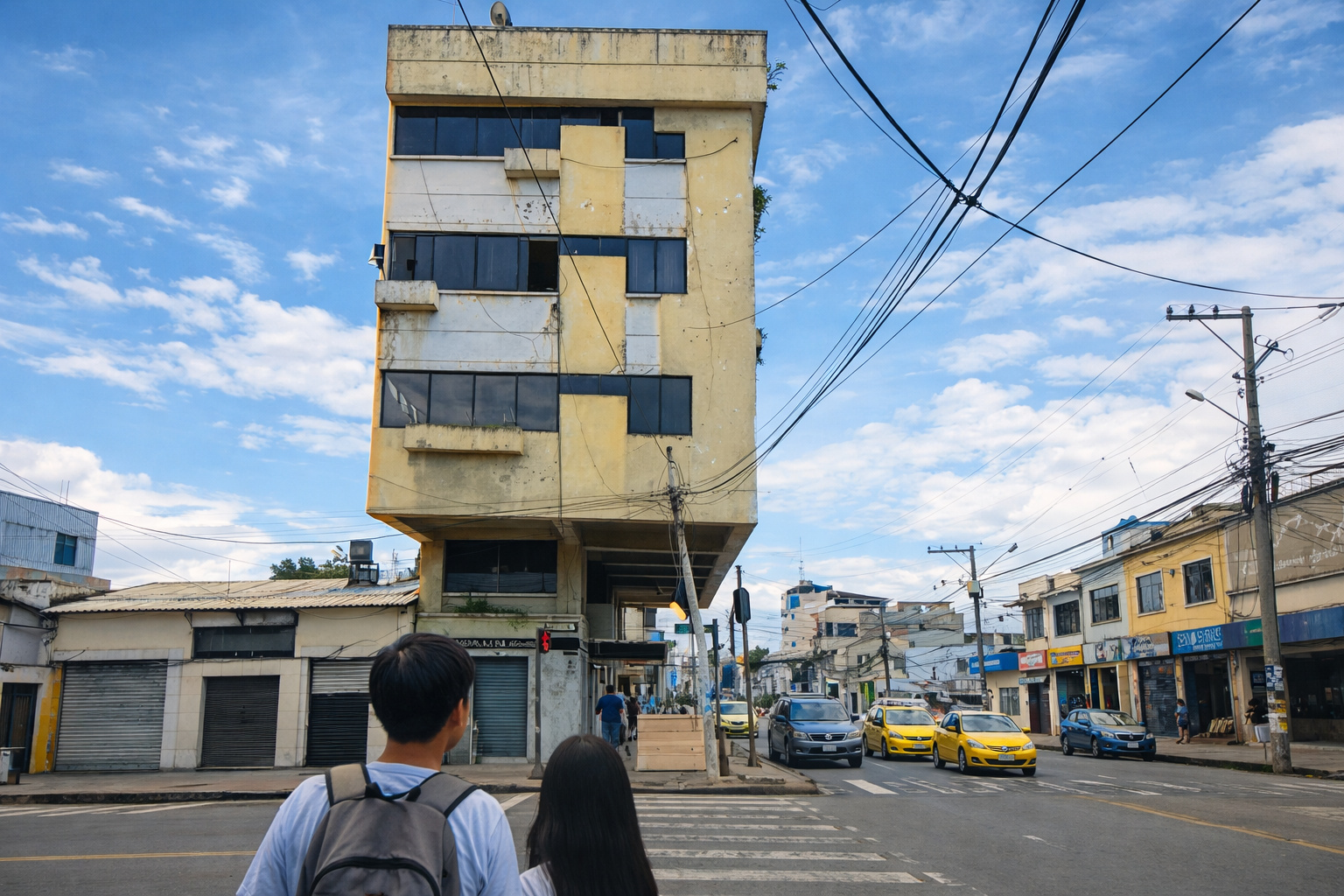
Called El Inmortal, the building that survived earthquakes in Ecuador seems to balance, defies the laws of physics, and impresses with its bold construction structure.
-
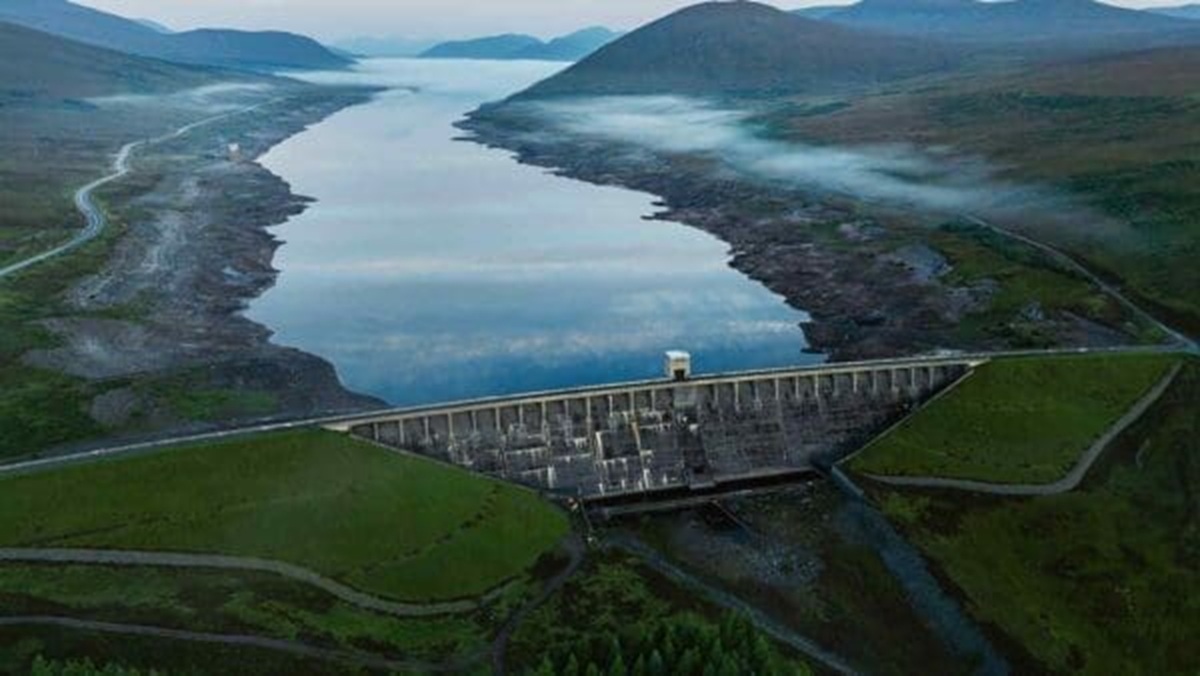
A gigantic dam project in the Himalayas could solve one crisis but silently create another for millions of people.
-
Nikola Tesla said that intelligent people tend to have fewer friends, and now science partially confirms this: a study with over 15,000 people showed that for the more intelligent, socializing too much can even reduce life satisfaction.


Among the questions listed in the narration are: what is the situation of the opposition in Venezuela, if it can express itself, what role it still has, and who continues to support Nicolás Maduro and the political structure associated with him.
The report also places January 3rd as a central milestone.
The reporter mentions “the military targets in the American operation of January 3rd” and the “consequences for the civilian population,” insisting that the work sought to map collateral effects and what changed in everyday life.
Within this logic, the coverage builds as a visual verification of hit locations, circulation through the streets of Caracas, and conversations with individuals identified as witnesses.
The Border Under Pressure and the Rule of Filming and Leaving

The narrated path begins with a continental crossing to Cúcuta, on the Colombian side of the border with Venezuela.
The described scene is one of saturation: “hundreds of journalists” from various parts of the world trying to enter, but limited to watching events from afar.
The frustration is treated as an environment, not a detail because it provides context for the risks assumed subsequently.
The entry is narrated as having been obtained after contacts and negotiations, with the decision to follow “counting only on our cell phones.”
There is a wait of six hours, with interviews and questioning, until the “green light” to cross.
On the other side, the first images are situated in San Antonio del Táchira, described as the first city after the border of Venezuela, on a Wednesday night marked by silence, bar music, and conversations late into the night where “the fall of Maduro” emerges as the dominant topic.
From the Flight to Caracas to the Visual Shock of a Capital in Tension

The account states that at dawn, the destination is the small airport of San Antonio del Táchira to secure seats on the highly sought-after flight to the capital.
The arrival is described with an aerial image: Caracas appearing “in a narrow valley, surrounded by the coastal mountain range,” as the Venezuelan metropolis that reveals itself after the “most dramatic chapter” of the country.
In the presented reading, Caracas emerges as a city of “3 million inhabitants,” with neighborhoods “stacked” on the slopes, skyscrapers in the center, and shantytowns spread across the hills.
The report includes a passage through a central market and the observation of a period of threatened scarcity immediately after the American bombardment, followed by gradual normalization.
The word used to define the atmosphere is recurring: nervousness, with “fear of new attacks” still present even when the streets seek “possible normalcy.”
Hit Locations and Traces of January 3rd on the Route
The coverage, as narrated, is organized by points.
One of them is the airbase of La Carlota, presented as “one of the main targets hit,” with references to violent explosions, destruction of structures, and columns of visible smoke.
The reporter describes the site as vital for Venezuelan defenses and highlights material signs of attack, including a destroyed bus inside the base.
Another focus is La Guaira, identified as a port area and scene of early morning explosions, interpreted as the port having been struck initially as a “distraction tactic.”
The report includes conversations with witnesses and the phrase that guides the reporting logic: “an attack like this always provokes collateral effects”.
In the same region, the report describes a popular building hit on a local street, with the information that 50 people lived there, with eight apartments reduced to rubble, one death registered, the resident Rosa Gonzales, 80 years old, and another resident seriously injured.
The third focus mentioned is Fuerte Tiuna, treated as a military complex and the most restricted area of the country.
The account states that American special forces captured Nicolás Maduro and his wife, Cilia Flores, and describes the region as a bombing scene with wounded taken to the local military hospital.
There is mention of a protection of “32 Cuban soldiers” during the attack, with the assertion that “they all died.”
The narrative follows with the idea of extraction by helicopter to a ship in the Caribbean and then transfer to the United States, culminating in the mention of the Metropolitan Detention Center in Brooklyn.
Propaganda, Full Streets and Opposition Silenced in Caracas
The political tension appears in two opposite movements in the very narration. On one side, a large concentration is described in the Plaza Venezuela, “in the heart of Caracas,” with “thousands of people” protesting, banners supporting Nicolás Maduro and demonstrations against the American operation.
The report emphasizes that it is a march “organized by the very” government apparatus, suggesting coordination and control.
On the other side, the reporter claims that “the marches against the government do not exist,” because they would be forbidden and could lead to the arrest of participants.
The presence of Maduro is described as “omnipresent” in posters and symbols, “as if nothing had happened.”
The coverage also highlights the care of working under surveillance, with constant attention to the possibility of the arrival of agents and police “seeking foreign journalists.”
Social Contrasts and the Map of Territorial Control
The report expands the picture of Caracas with a portrait of social abyss.
One side is described by luxury stores, expensive cars, and sophisticated restaurants, passing through neighborhoods such as Las Mercedes and Lagunita, where the report speaks of mansions “inhabited by businesspeople friendly to the regime,” some valued at up to 50 million dollars.
The presented reading is that in these pockets, “with or without Maduro, there is no crisis, much less scarcity.”
In contrast, the entrance to the neighborhood 23 de Janeiro emerges, pointed out as the main base of paramilitary groups, the “collectives,” with explicit reference to a group identified locally.
The narrative describes modest homes, sympathy cultivated by social programs, and the use of threats as a recurring tactic.
The transition of power also appears as a calculation: the report mentions a “new government” associated with Delcy Rodriguez, previously vice, and poses the challenge of balancing external interests, paramilitary forces, and the persistence of political influence from chavismo.
Political Prisoners, State of Commotion and the City That Empties at 5 PM
The material also inserts the theme of political prisoners.
A prison in Caracas is cited with “more than 800 political prisoners,” with indications of partial releases described as “a little over 10,” and the criticism that it would be a ridiculous number according to international human rights entities, as mentioned in the report.
The routine of restrictions is summarized in a formula used by the report itself: in the Venezuela found, the “state of emergency” is called a “state of commotion.”
This includes prohibition of opposition demonstrations and also demonstrations of support for the American attack.
The fear is described as an element that changes the urban rhythm: as night approaches, around 5 PM, Caracas “changes its face”, residents disappear, streets become empty, and police remain circulating, “imposing presence where there used to be life.”
Early Exit and What the Mission Aims to Record
The operational conclusion of the report is the early exit from Caracas and Venezuela on Sunday morning, presented as a security measure.
The coverage, as described, is made with calculated movements and schedules defined by tension, within a logic of short stay, quick recording, and immediate withdrawal when police presence approached.
Overall, the record constructs a Venezuela divided, with public demonstrations of support for the government in central points, opposition described as forbidden, strong military presence, and physical marks from January 3rd in facilities and popular areas.
The mission is presented as an attempt to show what cannot be seen from a distance, with images and testimonies collected under restrictions.
In your view, does entering Venezuela under these conditions to show Caracas from the inside justify the risk, or does this type of coverage only further fuel fear and control?




-

-

2 pessoas reagiram a isso.