





 Portuguese
  English
  Spanish
  4 min of reading
  0 comments


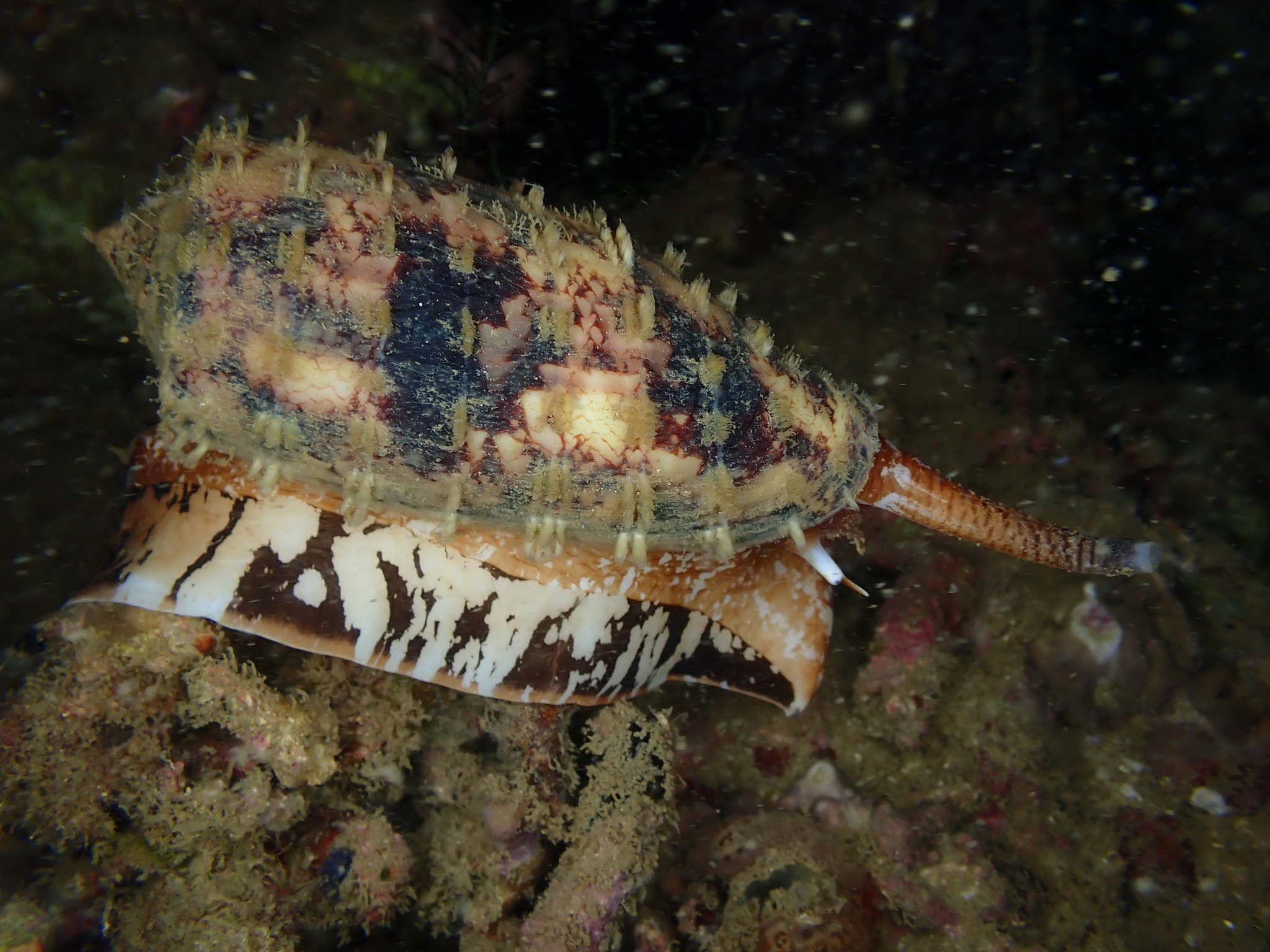
Cone Snail Paralyses Fish in Seconds with a Venomous “Harpoon” and Has Already Killed Humans. One of the Most Dangerous and Discreet Predators of the Ocean.
The ocean often hides its most efficient predators under harmless appearances. Among them is Conus geographus, popularly known as the cone snail, a discreet-looking marine mollusk but equipped with a hunting system so sophisticated that it involves neurotoxins, ambushes, and a true biological harpoon capable of taking down fish in just a few seconds. Over the past few decades, medical records have confirmed fatal poisoning cases involving divers and collectors who underestimated this animal.
A Small Predator That Hunts Like a Underwater Sniper
Conus geographus lives in the coral reefs of the Indo-Pacific, where it takes advantage of marine vegetation, rocks, and crevices to surprise small prey. Unlike other mollusks, it does not rely on fast movement or active pursuit.


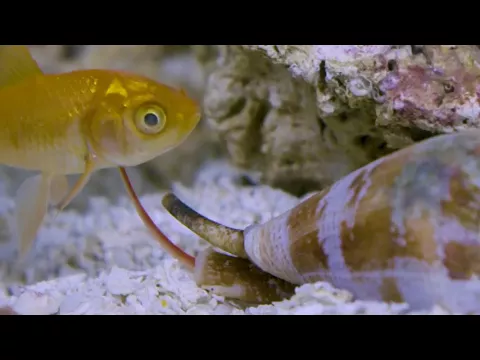
Its strategy is patience. When detecting a fish approaching, it projects a modified tooth called a radula, connected to a highly specialized venom gland. This tooth acts like a microscopic harpoon, fired in fractions of a second, piercing the victim’s tissue.
-
With a cost per shot close to zero, the DragonFire laser could change naval warfare in 2027 and provide British ships with nearly unlimited defense against drones.

-
A British startup creates tires that generate electricity in electric vehicles when passing over potholes, speed bumps, and cracks.

-
Scientists have created robots made with living cells that have their own nervous system, swim on their own, explore the environment, and self-organize without any genetic engineering, and now they want to do the same with human cells.

-
Students create a solar-powered ambulance that operates without a plug, without fuel, and still keeps medical equipment running in remote areas.


The shot initiates the paralysis process. Within seconds, the fish cannot swim, stops responding, and experiences muscle collapse, becoming an easy prey for a predator that, technically, barely moves.
The Venom That Attacks the Nervous System and Paralyzes in Seconds
The secret behind this efficiency is the cocktail of neurotoxins known as conotoxins. These molecules can block ion channels associated with nerve transmission.
The consequence is brutal: instant loss of motor control, respiratory failure, and complete incapacitation of the prey. Studies published in journals like Marine Drugs and Nature classify Conus geographus as one of the most venomous animals in the ocean, not for the amount of venom, but for the biochemical precision involved.
The mechanism is so advanced that some research groups study these toxins to develop analgesics and neurological medications, due to their unique ability to act directly on specific synapses without causing the inflammation common to other compounds.
What Makes This Snail a Risk to Humans
Although there are no records of deliberate attacks against humans, accidents occur when the snail is handled.
In several cases, divers and shell collectors pick the animal up from the sand or reefs without knowing it is alive. The defensive behavior is the same as the hunting: a shot of poisoned radula.
Human poisoning often causes symptoms such as numbness, muscle paralysis, respiratory difficulty, and circulatory collapse. The severity depends on the amount of toxin injected and the physical condition of the victim.
There is no specific antidote, which is why documented cases of death have generated strong interest from tropical medicine in countries like Australia and the Philippines. The medical literature classifies poisoning from Conus geographus as potentially lethal and requires immediate hospital support.
An Evolving Bioengineering That Is Almost Invisible
The modest appearance of the animal contrasts with its internal complexity. Its venom system functions like a modular factory, producing dozens of different types of conotoxins to target a wide variety of neuronal channels. They are highly selective toxins, refined over millions of years of evolution, capable of targeting sodium, potassium, and calcium in specific receptors.
This selectivity, instead of a generalist venom, explains the speed of neural collapse observed in fish. The combination of precision, speed, and lethality is considered one of the most impressive in the field of marine biochemistry.
A Mollusk That Redefines the Concept of a Marine Predator
Even without teeth, lacking powerful jaws, and not swimming fast, Conus geographus has all the elements to be considered an elite predator.
It hunts from a distance, paralyzing its prey, utilizing advanced neuropharmacology, and mastering the environment with energy efficiency.

For marine biologists, this contrast is what impresses the most: the idea that a slow and seemingly fragile mollusk can outsmart agile fish using highly specialized neurotoxins.
This discreet predator has changed how scientists interpret ecological niches in coral reefs and opened new fronts for pharmacological research. The same toxin that takes down a fish in seconds is being studied in laboratories as a therapeutic tool for neuromuscular diseases, intractable pain, and even investigations into synaptic plasticity.
A Reminder of What the Ocean Still Hides
In popular imagination, marine danger is associated with sharks, giant jellyfish, and sea snakes. However, some of the most underestimated risks come from silent, slow, and tiny animals.
Conus geographus serves as a reminder that the ocean remains largely unknown and that mechanisms of extremely sophisticated survival can arise from creatures that never appear in documentaries.
The ability to kill a fish in seconds, paralyze an adult human, and still provide promising molecules for medicine places this snail among the most fascinating and contradictory animals of the modern ocean.







-

2 pessoas reagiram a isso.