





 Portuguese
  English
  Spanish
  5 min of reading
  0 comments


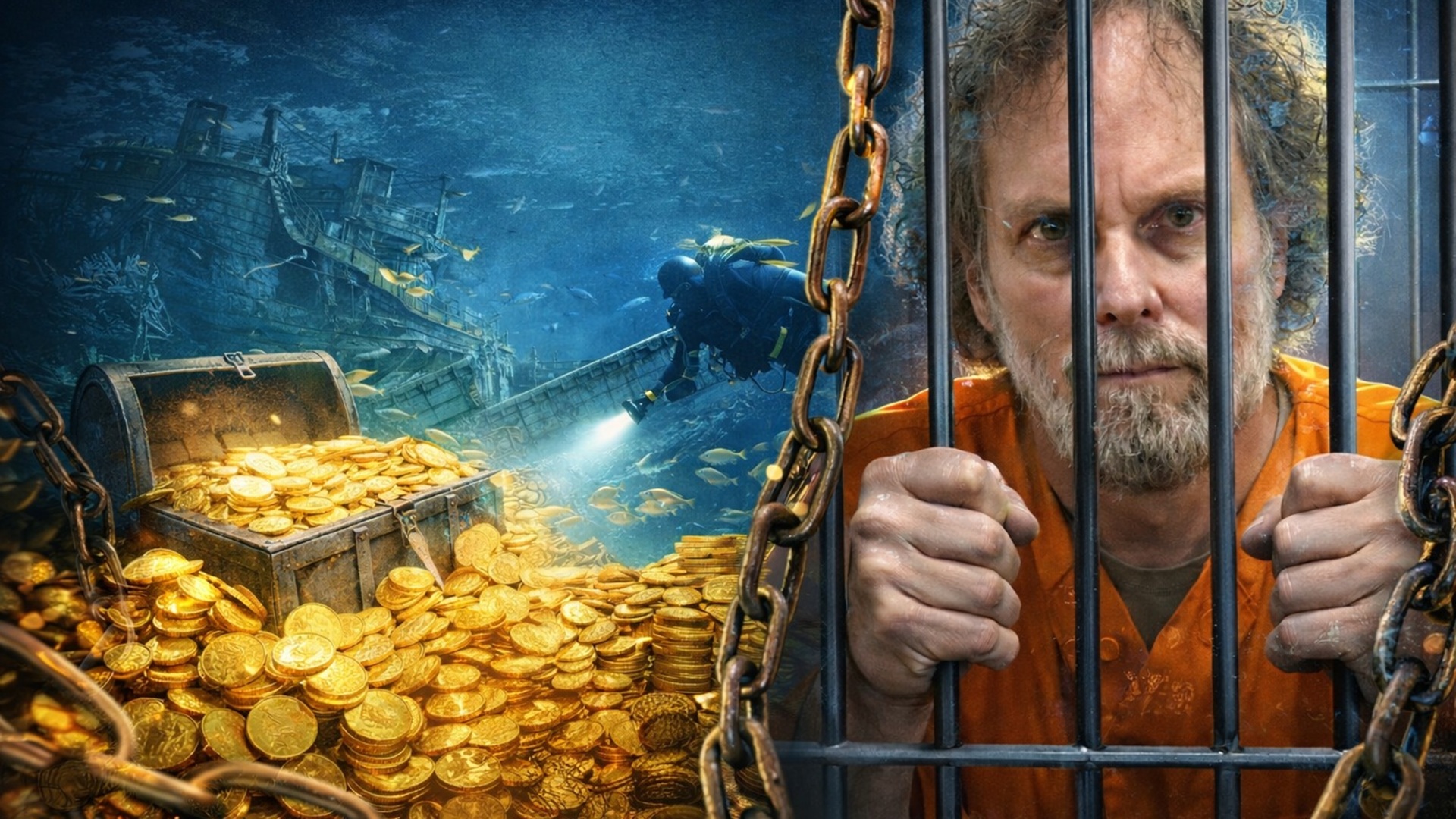
The Release of Scientist and Treasure Hunter Tommy Thompson Ends One of the Most Unusual Legal Cases Related to Gold Coins Recovered from a Historic Shipwreck, Involving Million-Dollar Disputes, Investors, 500 Missing Coins, and a Treasure Retrieved from 7,000 Feet Depth in the Atlantic After More Than 150 Years
A former treasure hunter responsible for discovering a historic ship loaded with gold coins in the Atlantic was released after spending about a decade in prison for refusing to reveal the whereabouts of some of the missing coins.
Tommy Thompson, a research scientist from the U.S. state of Ohio, was freed last Wednesday, according to federal records from the Federal Bureau of Prisons reviewed by the Associated Press. He became known for locating the wreck of the S.S. Central America in 1988, dubbed the “Ship of Gold.”
The vessel became famous for carrying thousands of pounds of gold that remained on the ocean floor for more than 150 years.
-
A collector bought a black stone in Morocco in 2011 without knowing that he had in his hands a Martian meteorite 4.45 billion years old with ten times more water than any other fragment of Mars ever found on Earth.

-
European cities are building public climate refuges to cope with extreme heat.

-
Excavations for a highway uncovered an intact Celtic city with gold, jewelry, and ancient production structures.

-
Every pineapple you eat is actually up to 200 different fruits fused into one: discover the fascinating process in which each flower opens for just one day and produces the pieces that form the whole fruit over the course of 3 weeks.


The discovery placed Thompson at the center of one of the most significant gold coin finds in American maritime history.
Discovery of the Ship with Gold Coins on the Ocean Floor
The S.S. Central America sank in September of 1857 after facing a hurricane in the Atlantic. The vessel carried 425 passengers and crew, along with about 30,000 pounds (around 13.6 tons) of federal gold from the newly established San Francisco Mint.
This cargo had been sent to create financial reserves for banks in the eastern United States. When the ship sank, thousands of kilograms of gold disappeared into the depths of the ocean, contributing to an economic panic at the time.
More than a century later, in 1988, Thompson and his team located the wreck at over 7,000 feet depth off the coast of South Carolina. The site became known as one of the largest deposits of gold coins ever found in a sunken ship.
The discovery transformed Thompson into a celebrated figure in the field of maritime exploration. The ship carried a large volume of gold from the California Gold Rush, as well as bars and coins that had remained on the sea floor for more than 150 years.
Dispute with Investors and the Disappearance of Gold Coins
In the decades following the discovery, Thompson faced a lengthy legal battle with investors who funded the expedition. They claimed they had not received any payment from the sale of part of the recovered treasure.
In 2005, the investors filed a lawsuit claiming they had yet to receive money from the sale of over 500 gold bars and thousands of coins. The sold lot was said to have generated about 50 million dollars.
At the center of the conflict were about 500 gold coins minted from the gold recovered from the wreck. The coins went missing, and their whereabouts became the main point of contention in court.
Thompson asserted that these coins were transferred to a trust fund in Belize. According to him, most of the money gained from the initial sale of the gold went towards legal fees and bank loans.

Escape, Arrest, and Years of Silence About the Treasure
As the lawsuit progressed, Thompson went into hiding and eventually became a fugitive. A federal judge in Ohio issued a warrant for his arrest in 2012 after he failed to appear for a court hearing.
Three years later, authorities located Thompson in a hotel in Florida where he was living under a false name. After being detained, the judge ordered him jailed for contempt of court at the end of 2015.
The ruling came because Thompson repeatedly refused to answer questions about the whereabouts of the missing gold coins. He stated that he did not know where the gold was and claimed he had no control over the situation.
During a video hearing in 2020, federal judge Algenon Marbley again asked about the fate of the treasure. Thompson replied that he did not know where the gold was and expressed that he felt he did not have “the keys to his freedom.”
Long Stay in Jail and Final Decision of Justice
Although federal law generally limits civil contempt sentences to about 18 months, Thompson remained imprisoned for much longer. In 2019, a federal appeals court ruled that this limitation did not apply to his case.
The court determined that his refusal to answer questions violated the conditions of a previous court agreement. As a result, he stayed detained while the deadlock over the gold coins remained unresolved.
Just over a year ago, Judge Marbley decided to end the sentence related to civil contempt. He stated that he was no longer convinced that keeping Thompson in jail would yield information about the missing gold.
The magistrate then ordered that Thompson immediately begin serving a two-year sentence related to having missed the court hearing in 2012. After completing this step, he was finally released.
Historical Value of the S.S. Central America Treasure
Even after decades, the treasure recovered from the S.S. Central America continues to fetch high values at auction. Gold bars and coins from the ship are considered historical artifacts of great interest.
In 2022, one of the largest ingots ever offered from the wreck, weighing 866.19 ounces, known as the Justh & Hunter ingot, was sold for 2.16 million dollars by Heritage Auctions, based in Dallas.
Other items from the wreck also recorded significant sales. In 2019, various recovered artifacts brought in more than 11 million dollars at auction.
Years earlier, in 2001, an 80-pound ingot from the ship was purchased by a private collector for a record price of 8 million dollars.










Seja o primeiro a reagir!