





 Portuguese
  English
  Spanish
  3 min of reading
  1 comment


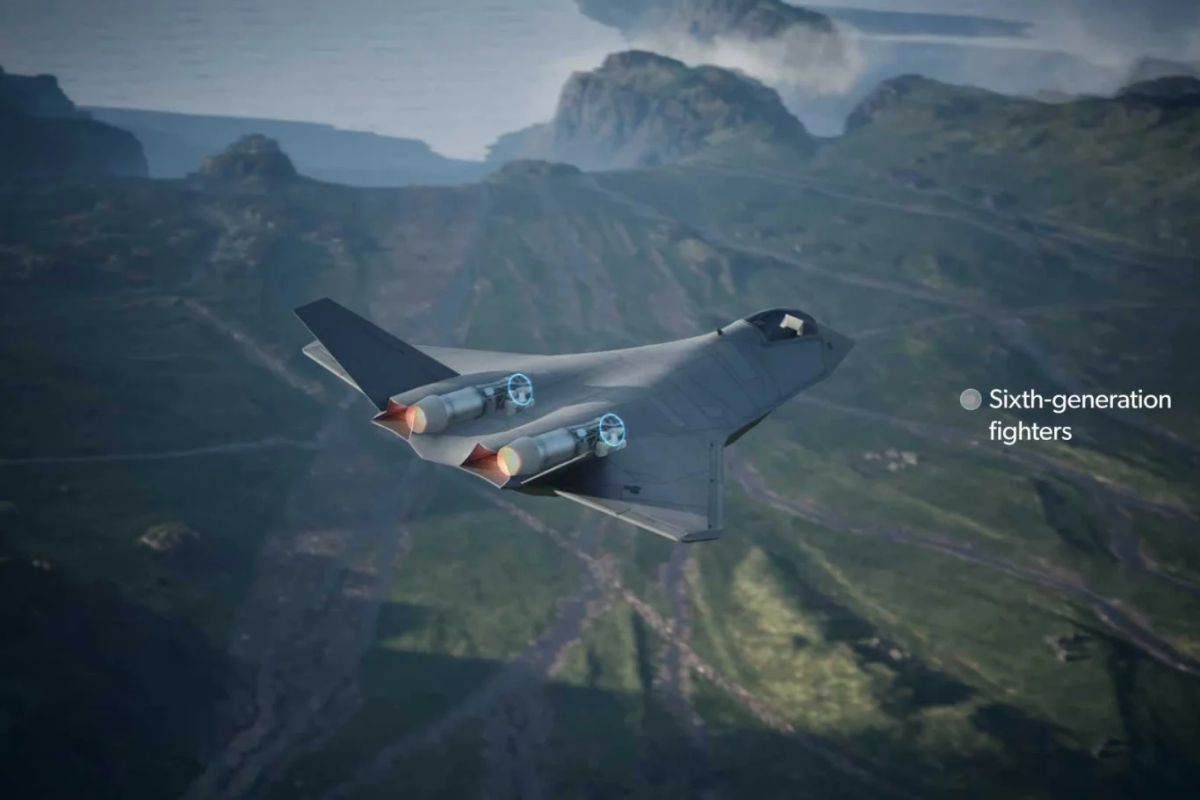

With Artificial Intelligence, Ability to Control Drones and Laser Weapons, the Next Generation of Combat Aircraft Seems to Have Leapt from Science Fiction.
While fifth-generation fighters like the F-22 Raptor and F-35 still represent the pinnacle of military technology in operation, the world’s major powers are already developing their successors. The sixth-generation fighters promise a revolution in aerial combat, incorporating concepts that go far beyond mere speed and stealth.
The new era of combat aviation will be defined by artificial intelligence, by human-machine integration, and by a network of connected systems that will transform the pilot into a true commander of the aerial battlefield.
What Defines a Generation of Fighters?
Before looking to the future, it is necessary to understand the past. The classification of fighters into “generations” is not official but rather a way to group aircraft by significant technological leaps.
-
Chaos On Airplane Could Be Expensive: Proposal Aims To Prevent Disruptive Passengers From Flying For Up To 1 Year In Brazil And Face Fines Of Up To R$17,500

-
Man Arrested After Halting Takeoff of Fire Department Helicopter During Child Rescue in Guaratuba

-
With 37 Tons of Cargo, Over 8,000 km Range, and Ability to Land on Unpaved Runways, the Airbus A400M Demonstrates How Europe Created a Military Giant That Transports Armored Vehicles, Aerially Refuels Fighters, and Operates in Conflict Zones and Humanitarian Missions Worldwide
-
Emergency Landing in Campos Amarais After Bird Strike on Small Plane

- 1st to 3rd Generation: Marked the transition from propeller engines to jets, supersonic flight, and the introduction of missiles and radars.
- 4th Generation (Ex: F-16, Mirage 2000): Brought enhanced maneuverability with fly-by-wire systems and multi-role capability (air combat and ground attack).
- 5th Generation (Ex: F-22, F-35): Is defined by stealth technology, sensor fusion (which gives the pilot a complete situational awareness), and the ability to fly at supersonic speeds without using afterburner (supercruise).
Characteristics of Sixth-Generation Fighters
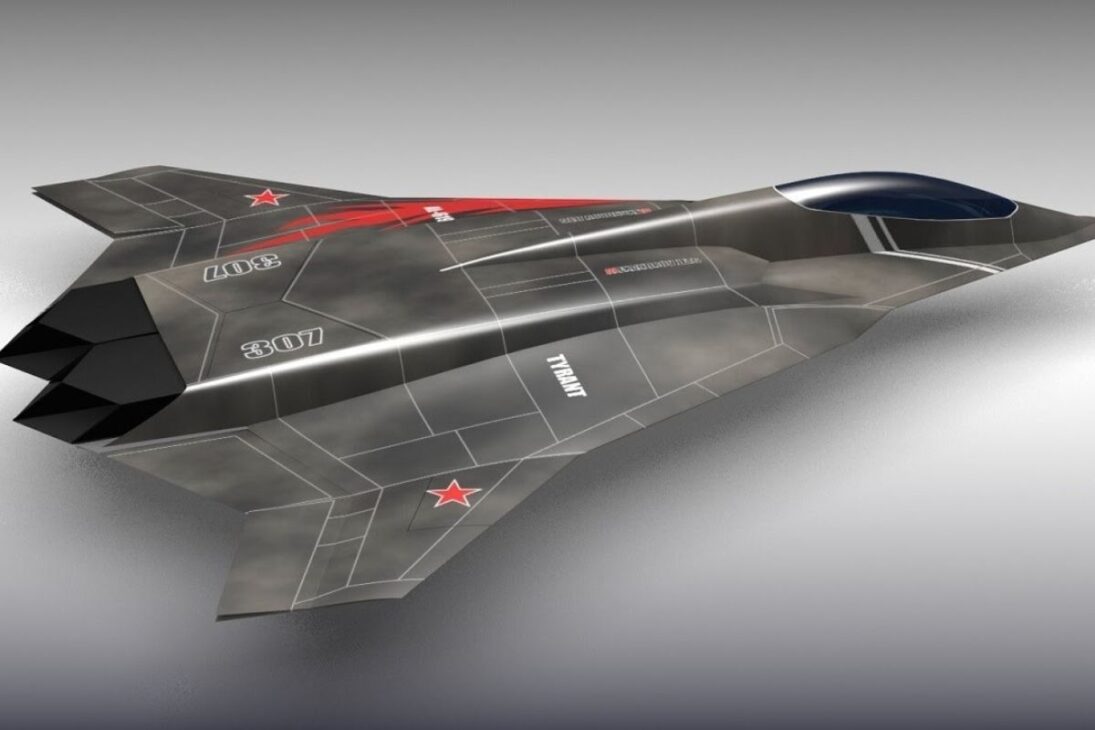
The sixth generation will not just be an improvement of the fifth, but a fundamental shift in the philosophy of aerial combat. The main expected technologies include:
- Artificial Intelligence and Drone Command: This is perhaps the biggest revolution. The sixth-generation fighter will operate as a mother ship, with the pilot commanding a swarm of unmanned aircraft (“loyal wingman” drones). These drones will be able to perform reconnaissance, attack, or electronic warfare missions, increasing the pilot’s range and safety.
- Optionally Manned: The aircraft will be designed to fly with or without a pilot on board, depending on the mission, offering maximum strategic flexibility.
- Advanced Stealth: The ability to be invisible to radars will be further enhanced, with new materials and designs making detection extremely difficult.
- Directed Energy Weapons: Laser cannons are in advanced development. These weapons could be used to shoot down enemy missiles or drones with unmatched precision and speed, changing the dynamics of air defense.
- Adaptive Cycle Engines: New engines will be able to adapt to different flight regimes, functioning as a turbojet for maximum speed or as a turbofan for maximum efficiency and range, optimizing performance in any situation.
- “Smart Cockpit” and Data Fusion: The pilot will have a 360-degree view of the battlefield projected onto their helmet, with AI helping to process a massive amount of information from sensors, drones, and satellites in real time.
Who is in the Race for Sixth Generation?


Several projects are already underway around the world, in a technological race worth billions of dollars:
- United States: Lead with two main programs, the NGAD (Next Generation Air Dominance) for the Air Force and the F/A-XX for the Navy.
- Europe: France, Germany, and Spain are collaborating on the FCAS (Future Combat Air System).
- United Kingdom, Italy, and Japan: Are united in the GCAP (Global Combat Air Programme).
- Russia and China: Also have their own development programs, but details are kept under extreme secrecy.
The future of aerial combat is being written now, and it will be waged not only by aircraft but by smart networks of flying systems.
What do you find most impressive about future fighters? The artificial intelligence or the laser weapons? Share your opinion in the comments!









The Russian 6th generation projects have been delayed seriously because of financial boycots, despite that they work on a series of types like the Mig-41 interceptor and the Sukhoi T-60 stealth bomber.
The PLAAF of China is maybe the most active developing new Stealth aircraft and has at least 6 different prototypes already flying, the J-20b, JH-26, J-35, J-36, J-50 and the secret J-28 fighter is reported seen too. Next to these the west awaits the coming Heavy strategic Stealth bomber H-20 and a brand New VTOL fighter is being developed which is dubbed the J-18.
India is an upcoming superpower too and develops 2 major 6th gen Stealth types too : the AMCA for the Airforce, the ORCA , next there is a 3rd project for the Navy called TEDBF which is shipboard compatible.
Other countries like Turkey scores well with the brand new TF-X KAAN, the South-Koreans built the KF21 Boromae and Also Indonesia and Malaysia are working on indigenous Stealth projects.
Maybe the most advanced type of 6th gen stealth aircraft with hypersonic like performance will come from Sweden in a few years.