





 Portuguese
  English
  Spanish
  4 min of reading
  0 comments



Study By Klavi Reveals: 42% Of Brazilians Spend Their Entire Salary In Up To 36 Hours; 18% In Just 24h. Reality Exposes Debts And Lack Of Savings.
One statistic stands out and highlights the financial fragility of millions of workers: 42.2% of Brazilians spend their entire salary in up to 36 hours after it is deposited. The study, conducted by the fintech Klavi based on real data from the Open Finance system, shows that the money intended to last the entire month disappears at a frantic pace, revealing a scenario of indebtedness and unprecedented vulnerability.
Even more striking is the breakdown: 18.2% of wage earners consume everything in less than 24 hours, practically on the same day as payment. After this period, more than half — 56% — are left with less than R$ 100 available balance.
The Burden Of Debts And Fixed Accounts
It is not just about immediate consumption in purchases. The survey shows that a significant part of this rapid disappearance of the salary is linked to paying debts, overdue bills, and fixed expenses such as rent, water, electricity, and transport.
-
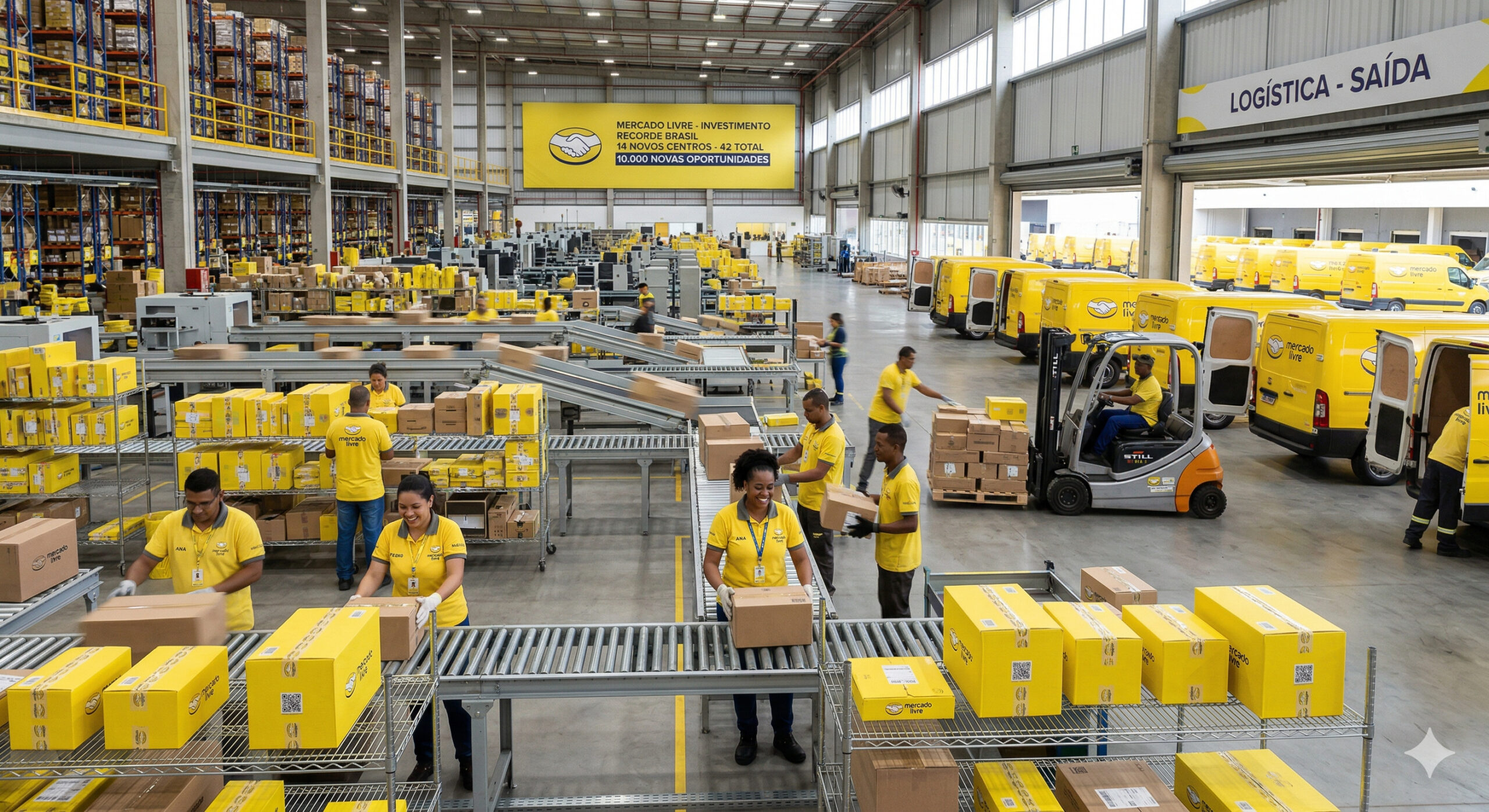
Mercado Livre “opens the vault” and announces a record investment of R$ 57 billion in Brazil in 2026, a value 50% higher than the previous year, with an expansion plan that includes 14 new logistics centers, totaling 42 units in the country and hiring an additional 10,000 employees.
-
How investment in technology can revolutionize the national economy and enhance industrial gains, according to a study that highlights the direct impact on productivity, innovation, and wealth retention within Brazil.

-
The largest food company on the planet, JBS, has just opened a 4,000 square meter laboratory in Florianópolis to develop customized proteins that modulate muscle mass gain, immune response, and metabolic performance.

-
After nearly 30 bids and competition among industry giants, a Spanish company purchases one of the largest airports in Brazil for almost R$ 3 billion and takes over the management of Galeão in a concession that will last until 2039.


Many families reach the end of the month already in the red and rely on the next salary to restore their balance, pay bills, and settle installments.
This logic creates a dangerous cycle: the worker never truly sees the money because it is already committed. Thus, instead of planning, they only have to scramble to make up for their losses, month after month.
The Race Against Time: 36 Hours To Survive
The statistic of 36 hours has a symbolic impact. It shows that money is not only insufficient but also that financial planning is becoming increasingly unfeasible. Those who get paid on the weekend, for example, may find themselves on Monday with no salary available for the rest of the month.
Experts warn that this dynamic increases the risk of resorting to short-term solutions, such as overdrafts and emergency loans, which carry exorbitant interest rates.
The result is a deepening of indebtedness, with millions of Brazilians trapped in a spiral of commitments that consume their entire budget.
The Social Impact Of Accelerated Consumption
This reality also exposes a serious social side: Brazil has one of the highest rates of household indebtedness ever recorded. More than 70% of households have outstanding debts, according to official data.
The salary that evaporates in 36 hours is just the tip of the iceberg of a larger problem — the inability of income to keep pace with the cost of living.
Inflation, high-interest rates, and stagnant wages amplify the sense of suffocation. When there is little or nothing left, savings become impossible, the capacity to invest is null, and long-term planning becomes a luxury reserved for a few.
The Trap Of Short Income And Long Obligations
The Klavi study shows that the situation is not just about low financial education, but also about a structural framework. Brazilians spend quickly because they need to. The minimum wage alone does not cover the cost of a basic food basket in several capitals. The average worker’s income barely keeps up with the inflation of food and services.
Meanwhile, fixed expenses such as rent, energy, and transport consume the largest part of the budget, leaving little room for consumption. Thus, when the money hits the account, it already has a certain destination, leaving only a symbolic balance.
The Risk Of The Future Without Savings
The phenomenon of salaries disappearing in hours creates a dangerous consequence: the total lack of emergency savings. Without savings, any unexpected event — job loss, health issue, or unforeseen expense — can throw entire families into default.
Brazil, in this sense, is experiencing a kind of “financial red alert.” Every month, millions of workers start over from scratch, with no accumulated wealth, no safety cushion, and increasingly vulnerable to economic shocks.
Possible Solutions: From Financial Education To Public Policies
Experts point out that it is necessary to tackle the problem on two fronts. The first is individual: improve financial education, encourage the conscious use of credit, and teach budgeting control strategies. Tools such as management apps and debt renegotiation can help.
The second is structural: without a real increase in income and without public policies that alleviate the burden of interest rates and the cost of living, it is unlikely that the situation will change.
Countries that have managed to reverse cycles of massive indebtedness invested in national debt renegotiation programs, subsidized credit, and strengthening minimum income.
Conclusion: A Country In Countdown
The statistic that 2 out of 5 Brazilians spend their entire salary in up to 36 hours is more than a curious statistic. It is a cruel portrait of the country’s economic reality. It shows that most live on the edge, with no room to plan for the future, and that the money meant to ensure a month of survival barely lasts two days.
At the end of each month, when the payment is made, millions of Brazilians already know the fate of their income before even seeing it.
It is as if the clock starts counting against them: in 36 hours, everything has disappeared. A survival cycle that reinforces inequality and makes it clear that, in Brazil, the greatest luxury is not buying consumer goods, but simply having money to get through the month.








-

-

-

3 pessoas reagiram a isso.