





 Portuguese
  English
  Spanish
  6 min of reading
  0 comments


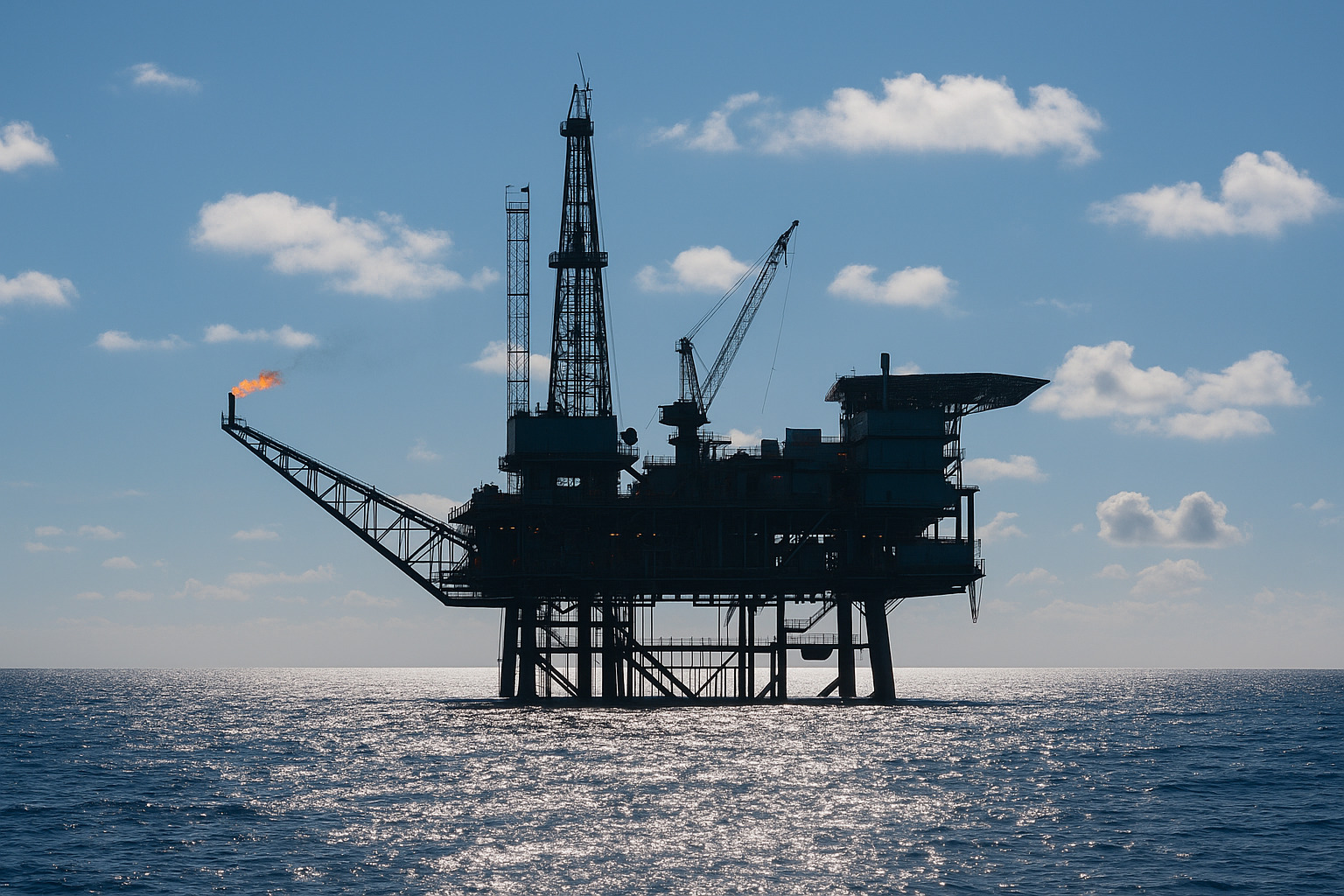
Bill Approved by the Chamber Opens the Way for Oil Exploration in the Amazon by Easing Environmental Regulations, Generating Criticism from Environmentalists and Scientists.
The Chamber of Deputies approved a bill that significantly alters the rules of environmental licensing in Brazil. The proposal, dubbed by environmentalists as the “Devastation Bill”, reignites old debates about the balance between economic development and environmental preservation.
One of the most controversial points is the possible opening for oil exploration in the Amazon, an activity that not only is complex but also carries far-reaching environmental, political, and social implications.
From the outset, the project faced opposition from experts and scientific institutions. However, after years of deliberation in the National Congress, the proposal received approval, particularly with the support of the governing coalition.
-
The rise in oil prices could ensure an extra revenue of R$ 100 billion for the Federal Government, indicates a recent economic study.

-
Naturgy begins an investment of R$ 1.6 million to expand the gas network in Niterói and benefit thousands of new residences and businesses.
-
A major turn in the Justice system suspends tax increases and directly impacts oil and gas companies in Brazil by affecting costs, contracts, and financial planning, leaving uncertain what could happen to the sector if these costs had increased.

-
Brava Energia begins drilling in Papa-Terra and Atlanta and could change the game by reducing costs in oil while increasing production and strengthening competitiveness in the offshore market.


The rapporteur of the text, Deputy Zé Vitor (PL-MG), stated that the measure aims to streamline processes and boost economic growth, especially in the agricultural and energy sectors.
Despite this argument, environmentalists and scientists warn of the risks. Eliminating steps in licensing compromises the state’s ability to protect fragile ecosystems.
When it comes to the Amazon, the effects of these decisions go beyond Brazilian borders and affect the planet’s climate, due to the forest’s crucial role in regulating natural cycles.
Special Environmental License and Strategic Interests
Furthermore, scientists, environmentalists, and representatives of civil society express strong concern over the approved changes. The creation of the Special Environmental License, proposed by the Senate and maintained by the Chamber, intensified the debate over environmental control.
This new mechanism allows the Government Council, by political decision, to expedite the authorization of works or enterprises, even when they present significant environmental risks.
Consequently, this change opens the door for controversial projects, such as the oil exploration in the Mouth of the Amazon, to proceed without the necessary technical rigor.
This region, although little known to most of the population, contains rich biodiversity and fragile ecosystems. The new licensing model, therefore, may weaken the role of technical opinions and science in public decision-making.
In this context, there are growing fears that the new legislation will serve as a precedent to further reduce the role of environmental agencies. After all, by turning licensing into a politically controlled process, there is a risk of devaluing technical knowledge.
As a result, high-impact projects could be approved based on momentary interests, rather than for the common good.
A History of Advances and Setbacks in Environmental Policies
To understand what is at stake, it is necessary to revisit the history of environmental licensing in Brazil. After the 1988 Constitution, the country recognized the right to a healthy environment as essential to quality of life.
From then on, licensing consolidated itself as an important tool to assess risks before approving potentially harmful projects.
During the 2000s, Brazil received international recognition for its environmental efforts. The strengthening of agencies like Ibama, the use of monitoring technologies, and the creation of conservation units allowed for the reduction of deforestation and progress in protecting the Amazon.
However, in recent years, political and economic pressures have begun to demand easements in the name of “progress”.
In this sense, proponents of the proposal argue that bureaucracy deters investments. However, this argument disregards the fact that environmental sustainability is also a condition for lasting development.
Countries that have invested in ecological solutions show that it is possible to grow economically with responsibility.
Therefore, by yielding to momentary pressures, Brazil risks its environmental leadership. Instead of leading a green transition, the country could become an example of setback, especially if it insists on prioritizing the exploration of oil in the Amazon.
Risks to Biodiversity and Climate
The Mouth of the Amazon region, located between Amapá and Pará, holds ecological secrets still in the process of discovery. Several studies indicate that there are unique coral reef formations and rare marine species present there.
However, the oil exploration in the region may put all of this at risk. If a spill occurs, as seen in other parts of the world, the damages would be incalculable.
On the other hand, it is important to remember that oil accidents are common, even in countries with advanced technology. The 2010 Gulf of Mexico disaster remains a global warning.
In the case of the Amazon, where access is more difficult and the response capacity is lower, the consequences would be even more severe.
Meanwhile, experts emphasize that the Amazon rainforest is not only a national heritage but also a global climate regulator of significant importance.
Therefore, decisions impacting this ecosystem must be made based on science, not on short-term interests.
Adhesion and Commitment License: Less Oversight
Another controversial point of the project is the introduction of the Adhesion and Commitment License (LAC). In this modality, the entrepreneur merely declares compliance with environmental regulations, without prior oversight.
Thus, control agencies only act if there is a complaint or subsequent oversight, which makes the process fragile and vulnerable to fraud.
Additionally, entities such as the SBPC (Brazilian Society for the Progress of Science) have spoken out against the proposal. According to the organization, the project contradicts environmental commitments made by Brazil and ignores the climate emergency that the world is facing.
As experts warn, biomes like the Cerrado, Pantanal, Caatinga, and Amazon are dangerously close to the so-called tipping points.
If these areas collapse, there will be irreparable losses in biodiversity, climate stability, and water security for the country.
Consequently, any initiative that reduces environmental oversight poses a risk not only to ecosystems but also to public health, food production, and economic stability.
Amazon as a Symbol of Innovation, Not Extraction
Instead of insisting on oil extraction, Brazil can position the Amazon as a symbol of sustainable innovation. The region has the potential to lead projects in bioeconomy, eco-tourism, scientific research, and clean energy generation.
These alternatives offer economic returns while preserving ecosystems for future generations.
Meanwhile, governments and companies worldwide already recognize that quick profits from the fossil industry do not offset the damages caused.
Thus, investing in renewable energies and sustainable production chains is the safest, most ethical, and profitable path in the long run.
Therefore, the choice between exploring oil or betting on innovation is, in practice, a choice between the past and the future. Brazil can — and should — choose a path that values science, the environment, and the well-being of local populations.
A Debate That Affects All of Brazil
Although the focus is on the Amazon, the consequences of oil exploration in the region affect all of Brazil. After all, the collapse of Amazonian ecosystems interferes with rainfall in the Southeast, agricultural production in the Midwest, and even water supply in large cities.
Moreover, the effects of global warming, such as severe droughts, flooding, and heatwaves, have already become a reality in people’s daily lives.
For this reason, it is urgent to rethink how the country handles its natural resources and environmental licensing.
Consequently, Brazil has an opportunity to reverse this trajectory. By strengthening public policies based on science, expanding the use of renewable energies, and listening to civil society, the country can become a reference in sustainability.
Finally, the challenge is to choose between the logic of depletion and the logic of preservation. The Amazon demands courageous, sensible decisions committed to the future of all.










-

Uma pessoa reagiu a isso.