





 Portuguese
  English
  Spanish
 4 min of reading
  1 comment


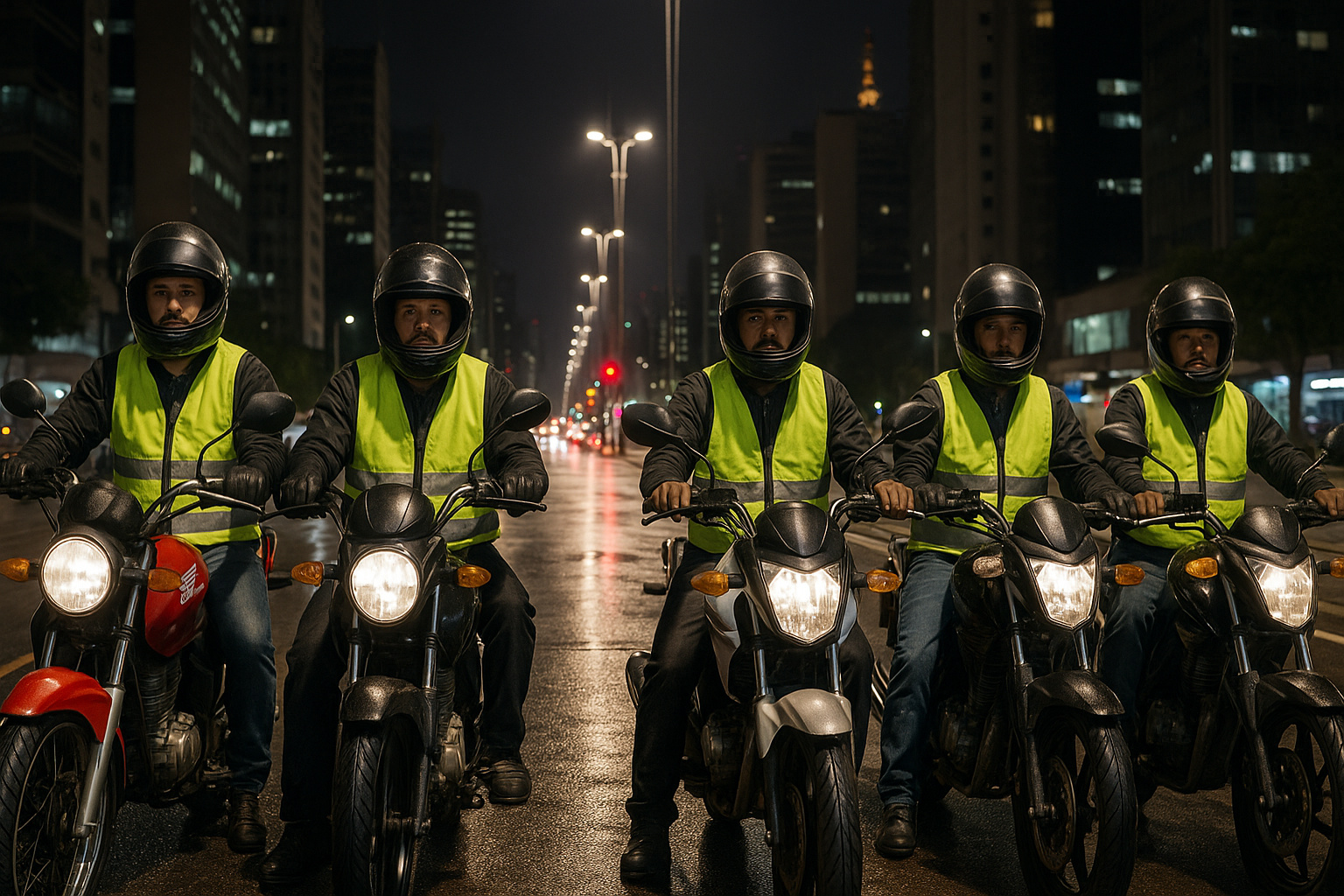


The New Legislation Brings Unprecedented Requirements for Companies and Drivers, Redefines Circulation Limits and Imposes Mandatory Registration, Profoundly Altering the Scenario of Individual Transport on Two Wheels in the Country’s Largest Urban Center
The São Paulo City Council approved, on the night of this Monday (8), the definitive regulation of the mototaxi service via app in the capital, ending a legal battle that had been ongoing since early 2025. The text passed in 2nd round, with 32 votes in favor, 16 against, and one abstention, and now goes to the mayor Ricardo Nunes (MDB) for sanction. As initially reported by the press, the approval marks one of the year’s most heated debates in the urban mobility sector.
The information was reported by the CNN Brazil, which detailed the content of the project reported by councilor Paulo Frange (MDB). According to the outlet, the proposal establishes a wide set of norms to organize the service, imposing requirements on both technology platforms and motorcyclists who wish to operate legally.
Strict Rules for Drivers and Platforms: What Changes After Approval
According to the approved project, various minimum requirements will become mandatory. Among them is the registration of the vehicle in the rental category, the famous red plate, in addition to the need for specialized training courses for all motorcyclists transporting passengers through apps.
-
The government puts R$ 8.6 billion on the table to change the highway (BR) with 50 overpasses, 28 bridges, 4 tunnels, and 40 km of bike lanes in 180 km of historic duplication.

-
BRL 20.1 Million Bridge Project Kicks Off: 200-Meter Construction to Improve Access in Three Cities in Minas Gerais

-
‘Endless Road’ In Brazil Is One of The Largest In The World: 145 Km Stretch On An Important Highway (BR) Crosses The West Of Bahia And Had 135.9 Km Revitalized With R$ 35.3 Million
-
Engineer From ITA Who Worked at Embraer Leads Free Flow Expansion With National Artificial Intelligence and Technology for Toll Without Barriers in Brazil


Moreover, drivers will be required to complete a pre-registration on a city platform, a process that will require the submission of documents and payment of a fee — an amount that should be collected by the app companies themselves. The municipal administration will have up to 60 days to analyze each request and, only after this registration, will professionals be able to register on digital platforms.
Another crucial point is the prohibition of minors under 18 from using the service, the prohibition of bonuses that encourage high speed, the requirement for reflective vests for passengers and drivers, and the suspension of operations during intense storms, reducing the risk of severe accidents.
Restricted Areas and Severe Circulation Limitations in São Paulo
The new regulation also imposes clear limits on where mototaxistas can operate. Among the prohibitions established, the following stand out:
- Bus lanes and exclusive bus corridors
- During adverse weather events, such as heavy rain, strong winds, low visibility, and flooding
- High-speed roads, including the Tietê and Pinheiros margins
- Areas of the Minianel Viário, known as the Expanded Center
- Regions of the ZMRC (Maximum Circulation Restriction Zone) for trucks
In addition to the traffic restrictions, drivers will also need to meet strict criteria of the Brazilian Traffic Code (CTB). To be accredited, it will be necessary to:
- Minimum age of 21 years
- CNH category A or AB, with at least 2 years since issuance and EAR annotation
- Approval in a specialized training course for passenger transport
- Absence of serious infractions in the last 12 months
- No convictions for crimes such as homicide, robbery, rape, corruption of minors, or violence against women
- Commitment to operate only for authorized legal entities
- Regular registration with the INSS
- Toxicological examination with a detection window of 90 days
- Mandatory use of a reflective vest
Motorcyclists will still be responsible for providing the passenger with a helmet in good condition, according to Inmetro standards, as well as a disposable cap.
Million-Dollar Fines, New Disputes, and Tight Deadlines to Regulate the Service
The motorcycles used must have between 150 and 400 cc, possess a vehicle safety certificate, and maintain mandatory equipment such as handles, line cutter, leg and engine protector, in addition to meeting sound emission and conservation standards. Noncompliance with the regulations could result in fines ranging from R$ 4,000 to R$ 1.5 million for companies, while drivers may be warned, fined, or even have their registration revoked.
According to the project, enforcement will also include the seizure of irregular vehicles.
The vote also comes just before the deadline given to the municipality. In September, the STF suspended the municipal law that prohibited the service in the city, and shortly thereafter the TJ-SP declared any attempt to prevent the mototaxi unconstitutional. The justice system determined that the municipality would have 90 days to regulate the activity — a deadline that ends this Thursday (11).
Thus, the City Council’s decision represents not only a new phase for individual transport in the capital but also the conclusion of a dispute that has stirred businesses, motorcyclists, and authorities since early 2025.









O pessoal do STF e do ministério público, não utiliza o transporte por isso querem liberar, o índice de mortes no trânsito agora vai aumentar, uma pessoa com bom senso jamais utilizariam esse meio de transporte altamente insalubre.