





 Portuguese
  English
  Spanish
  3 min of reading
  0 comments


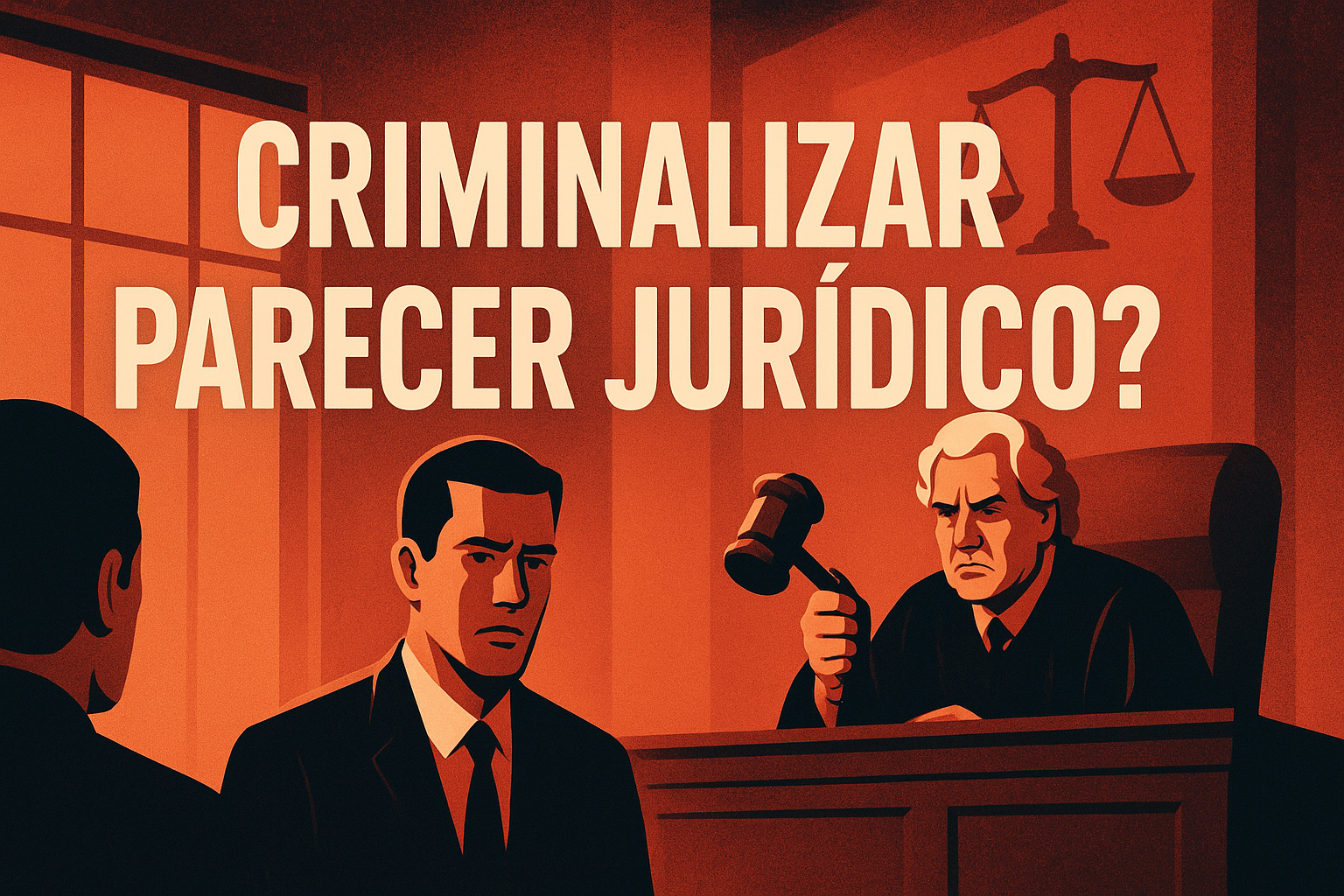
Criminalize Legal Opinions? Chamber of Deputies Reignites Controversy in Brazil and Exposes Flaws in Legislation Affecting Advocacy.
Criminalization of Legal Opinions on the Agenda in Congress
The Chamber of Deputies held a public hearing on Thursday (18) to discuss the possible criminalization of legal opinions.
The debate, held in the Committee on Constitution and Justice and Citizenship (CCJ), was scheduled for 10 a.m. in Plenary 1 at the request of Deputy Hildo Rocha (MDB-MA).
The topic, referred to by experts as “hermeneutic crime,” raises questions about how Brazilian legislation should protect the free exercise of public and private advocacy.
-
The noise law will no longer be in effect at 10 PM starting in June with a new rule valid during the 2026 World Cup.

-
The Chamber opens a debate on driver’s licenses at 16 years old as part of a reform that includes around 270 proposals to change the Brazilian Traffic Code and may redesign rules for licensing, enforcement, and circulation in the country.

-
The new Civil Code could revolutionize marriages in Brazil with “express divorce” and changes that could exclude spouses from inheritance.
-
Banco do Brasil sues famous influencer for million-dollar debt and intensifies debate on delinquency, risks of seizure, and direct impact on Gkay’s credibility.


The case gained traction after the suspension of the Attorney General of Maranhão, Valdênio Nogueira Caminha, accused due to an opinion issued in a process involving the dismissal of the president of a state-owned company.
Chamber of Deputies and the Impact on Legal Debate
According to Deputy Hildo Rocha, the hearing aims to broaden the dialogue about the role of state attorneys in legal disputes, especially in cases that reach higher courts.
For him, the current legislation does not provide sufficient guarantees in the face of increasing pressure on members of public advocacy.
The situation, in the parliamentarian’s view, threatens the independence of professionals who interpret the Constitution and the laws of Brazil.
What Is at Stake with the Criminalization of Legal Opinions
Hildo Rocha emphasized that “the legal opinion is a technical manifestation, a result of the public prosecutor’s conviction, interpreting the legislation and the Constitution based on legitimate legal grounds.”
The deputy also highlighted that differences of understanding between prosecutors and ministers of higher courts are normal.
However, when such differences become targets of criminalization processes, a serious risk opens up for the Democratic Rule of Law.
Legislation Under Scrutiny and the So-Called “Hermeneutic Crime”
The term “hermeneutic crime” has been used to criticize the attempt to hold prosecutors and lawyers accountable for legal interpretations that do not coincide with superior rulings.
This practice, according to experts invited to the hearing, can create an intimidation effect. Prosecutors might avoid issuing firm opinions to avoid punishments, weakening the role of public advocacy and legal security in Brazil.
Why the Chamber of Deputies Reignites This Debate
The case of Valdênio Caminha acted as a trigger. His suspension led parliamentarians and jurists to reinforce the need to discuss changes in legislation that ensure greater clarity on the limits and responsibilities of legal opinions.
According to Hildo Rocha, criminalizing legal interpretation is akin to stifling the free exercise of public function.
“It is natural that such understandings do not always coincide with the views of ministers of higher courts, but within a Democratic Rule of Law, these divergences must be respected, not repressed”
The parliamentarian concluded.
Criminalization and Its Impact on the Future of Advocacy
The public hearing provided a space for civil society, jurists, and parliamentarians. Thus, everyone was able to express their views. In addition, there was a discussion on how to balance the responsibility of prosecutors and professional autonomy.
In this way, the debate in the Chamber shows that the criminalization of legal opinions goes beyond an isolated case. At the same time, it reveals itself as a structural problem involving the entire justice system.
Therefore, the issue puts the future of legislation at stake. More than that, it touches on the very democracy in Brazil. This is because it directly impacts the work of those who defend the public interest.
Source: Agência Câmara de Notícias










Seja o primeiro a reagir!