





 Portuguese
  English
  Spanish
  5 min of reading
  0 comments



The Technology of Automatic Transmissions Has Evolved Significantly in Recent Years, Changing Old Concepts and Requiring Specific Care to Ensure Durability, Performance, and Avoid High Costs, Transforming the Way Drivers View This Popular System.
The automatic transmission dominates more than 60% of zero-kilometer vehicles licensed in Brazil in 2025, especially in segments like SUVs, where adoption exceeds 80%.
Despite this, an old myth still surrounds this system: “An automatic transmission car always has problems”. Is this reputation justified?
With the technological advancement of transmissions, experts assure that there is no need to fear the automatic transmission, but it is essential to maintain a rigorous preventive maintenance to avoid failures and unexpected costs.
-
One of the most important lakes in the United States for birds, the balance of nature, and the climate has dried to historic levels, leaving boats stranded, revealing salt flats, and showing how the lack of water can transform an entire landscape.

-
It’s not Cristiano Ronaldo or Messi: the richest football player in the world is only 27 years old, has a fortune of 100 billion reais, and is the nephew of a sultan from an Asian country that few people know about.

-
Honda performs miracles in fuel consumption with a hatch that marks 13.2 km/l in the city and 15 km/l on the highway, leaving Polo, HB20, 208, and Onix behind and becoming a reference among compact cars without resorting to turbo or hybrid systems.

-
At 77, the king of one of the most famous and powerful crowns on the planet is said to be under pressure to leave the throne, while behind the scenes there are already talks of a new coronation that could cost R$ 260 million.


Technological Evolution and the Importance of Preventive Maintenance
In recent years, the evolution of automatic systems has brought significant gains in comfort and fuel efficiency.
However, this modernization demands that the owner closely monitors the necessary care, mainly related to the transmission fluid, which acts as the blood of the automatic gearbox.
According to Toshio Matsui, a mechatronics and transmission specialist, in an article published by the Quatro Rodas portal, “the technology has advanced to improve efficiency, but repairs now require constant preventive maintenance”.
Transmission Oil Change: Essential Care
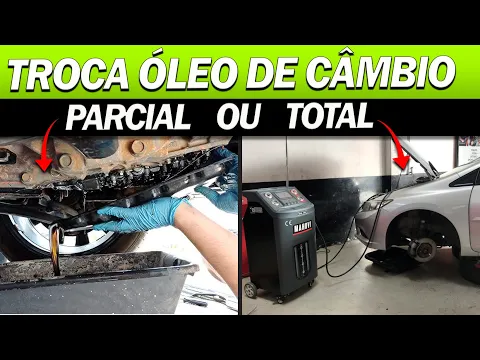
One of the most important points in maintaining the automatic transmission is the periodic oil change.
While in the past some models indicated long intervals, today the recommendation varies between 30,000 and 50,000 kilometers or between two to three years, depending on the manufacturer and model of the vehicle.
Engineer Almiro Moraes, a member of the Technical Commission of Transmissions of SAE Brazil, warns that there are transmissions that still indicate changes every 100,000 kilometers or even oil with “infinite” durability, but these recommendations may not consider adverse climatic conditions in Brazil.
“High temperatures and humidity in various Brazilian regions accelerate the degradation of transmission oil, which generally does not have an efficient cooling system”, explains Moraes.
This fluid wear can cause serious problems in the automatic gearbox.
When the oil becomes contaminated with debris resulting from the wear of the transmission itself, it loses its lubricating properties and begins to generate excessive friction in the internal gears.
Consequences of Contaminated Oil for the Transmission
Toshio compares this process to the act of chewing gelatin and encountering solid pieces: “This is what the transmission experiences with contaminated oil circulating non-stop, accelerating the premature wear of the assembly”.
When the fluid is deteriorated, the transmission operates at higher temperatures, resulting in failures, jolts, loss of power, and even increased fuel consumption — an effect that incurs financial losses and premature wear of the vehicle.

Use of the Correct Oil and Specific Care for Each Type of Transmission
Another important detail to avoid problems is to use the correct oil for each type of transmission.
In CVT systems (continuously variable transmission), for example, the oil needs to be specially formulated to lubricate without creating friction on the belt and pulleys, which are sensitive to wear.
“The CVT requires an oil that transmits torque without friction on the belt, which is much more demanding than in a conventional automatic transmission”, details Almiro Moraes.
Costs and Accessibility of Maintenance
The good news is that, unlike the high costs of the past, maintenance for automatic transmissions is becoming more accessible.
The greater supply of quality parts and market competition have reduced prices, including repairs for modern CVTs.
Additionally, the expectation is that this technology will gain even more space in the coming years due to its ability to offer infinite gear ratios, generating savings and comfort for the driver.
Automatic Systems That Require More Care
However, not all automatic systems have such simple maintenance.
Dual-clutch automated transmissions, for example, are more sensitive in the clutches, which can be dry or wet, and typically require more expensive repairs.
Even so, the fluid used in these systems generally does not differ much from other types of transmissions.
Signs of Wear and How to Drive to Avoid Problems
To avoid problems with the automatic transmission, it is essential to pay attention to signs that indicate wear, such as jolts during gear shifts, a sensation of slipping, loss of power, and increased fuel consumption.
Moreover, the way the driver operates the vehicle directly impacts the durability of the gearbox.
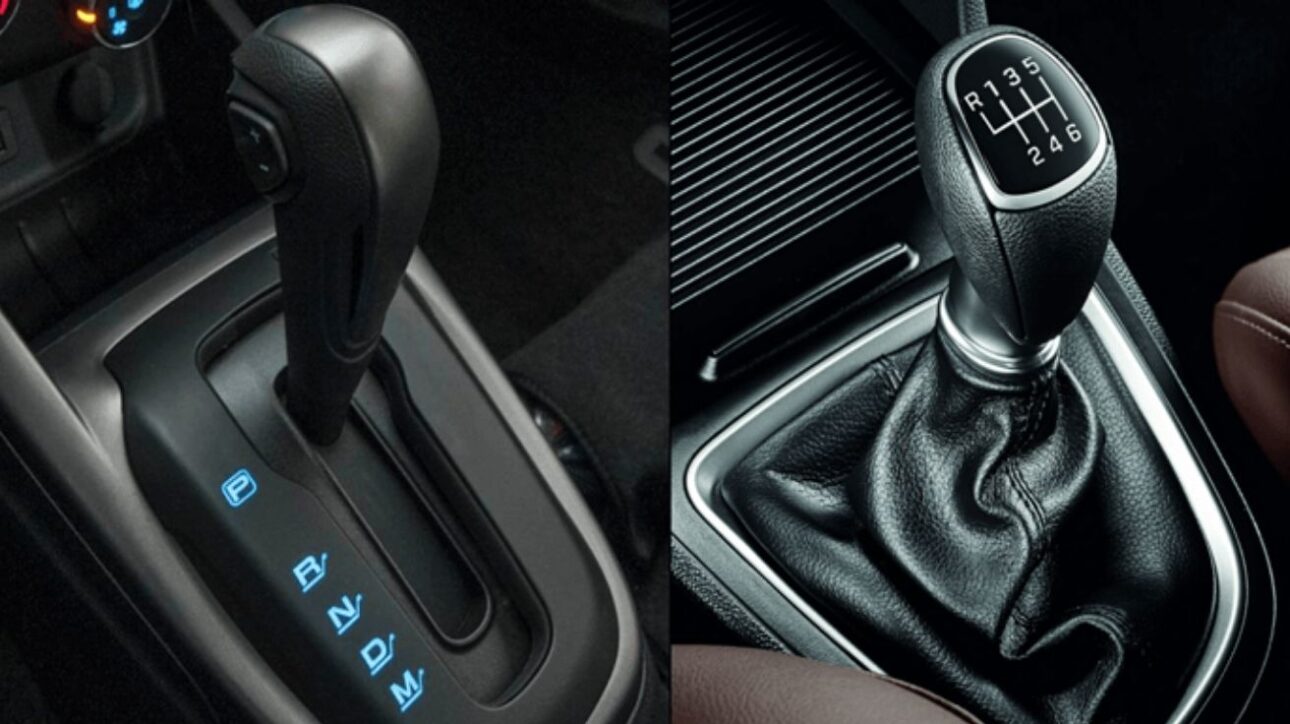
Shifting gears while the car is in motion, resting a hand on the lever, or repeatedly switching between “D” and “N” during short stops, such as at traffic lights, accelerates the wear of the internal clutches and compromises the transmission.
Another important care is not to exceed the vehicle’s load limit.
Excessive weight not only harms brakes and shock absorbers but also overloads the transmission, increasing the chances of failures.

Practical Tips for Preserving the Automatic Transmission
For the proper use of the automatic transmission, experts recommend some practices that help preserve the system:
When starting, always engage the gear before releasing the parking brake.
When parking, first engage the handbrake and then shift the lever to “P”.
Avoid resting your hand on the lever knob, as this can cause premature wear.
Make gear shifts smoothly and gradually, without abrupt movements.
Use the “N” position only when the vehicle really needs to be idle, avoiding abuses that wear out the system.
When going downhill, using engine brake helps to preserve the transmission.
If the automatic transmission has a sequential mode, it’s ideal to use these options to control speed with the engine, avoiding overheating of the gearbox.
Numbered positions like “3”, “2”, “1”, or “L” can also be used for this purpose, increasing safety and reducing the strain on the transmission.
The Evolution Demystifies the Prejudice Against the Automatic Transmission
Given so many advancements and care, the idea that automatic transmission is synonymous with problems can no longer hold.
The technology has evolved to offer more comfort, efficiency, and durability, provided that the owner follows maintenance and driving recommendations.
Do you usually pay attention to the care of your car’s automatic transmission? What tips have you applied to avoid problems with the transmission? Share your experience!




Seja o primeiro a reagir!