





 English
  Francês
  Alemão
  Italiano
  Japonês
  Norueguês
  Portuguese
  Spanish
  2 min of reading
  0 comments


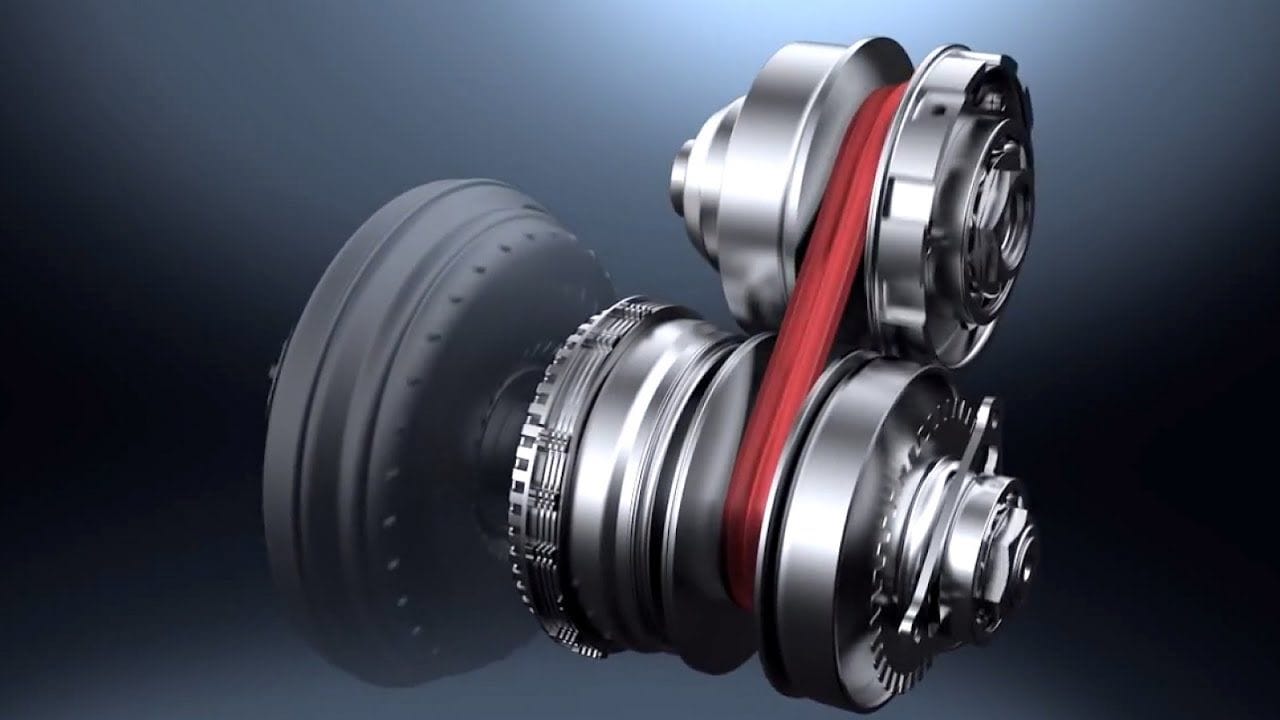
CVT Transmission, An Innovation That Changed The Way We Drive, It All Started Back In 1490 With A Sketch By Leonardo Da Vinci. But It Was Milton Reeves In 1879 Who Got His Hands Dirty And Created A System Of Adjustable Pulleys, Revolutionizing The Industry.
The CVT, or continuously variable transmission, is that type of gearbox that makes driving smoother than butter on hot bread. It uses pulleys and a belt to create a feeling of “infinite gears,” without the jolts of conventional gear shifts. And it’s not just in cars, you know? Modern scooters also use this technology.
The Evolution Of The CVT And Its Challenges
In the 1950s, the Dutch company DAF put the CVT in cars with the Variomatic system. It was simple, but the belts were a headache. It wasn’t until the 1980s that things got serious, with the invention of more durable belts, and the Subaru Justy was one of the pioneers to use the modern CVT.


The CVT of today is an efficient piece of machinery and helps save fuel, but not everyone likes it. Some people find driving with a CVT somewhat boring, and some automakers even simulate gear shifts to liven things up.
-
After launching the new GS3 with a 1.5 turbo engine producing 170 hp, GAC partners with Flamengo, enters the field with the largest fan base in Brazil, and accelerates an ambitious offensive to gain scale and confidence in the national market.

-
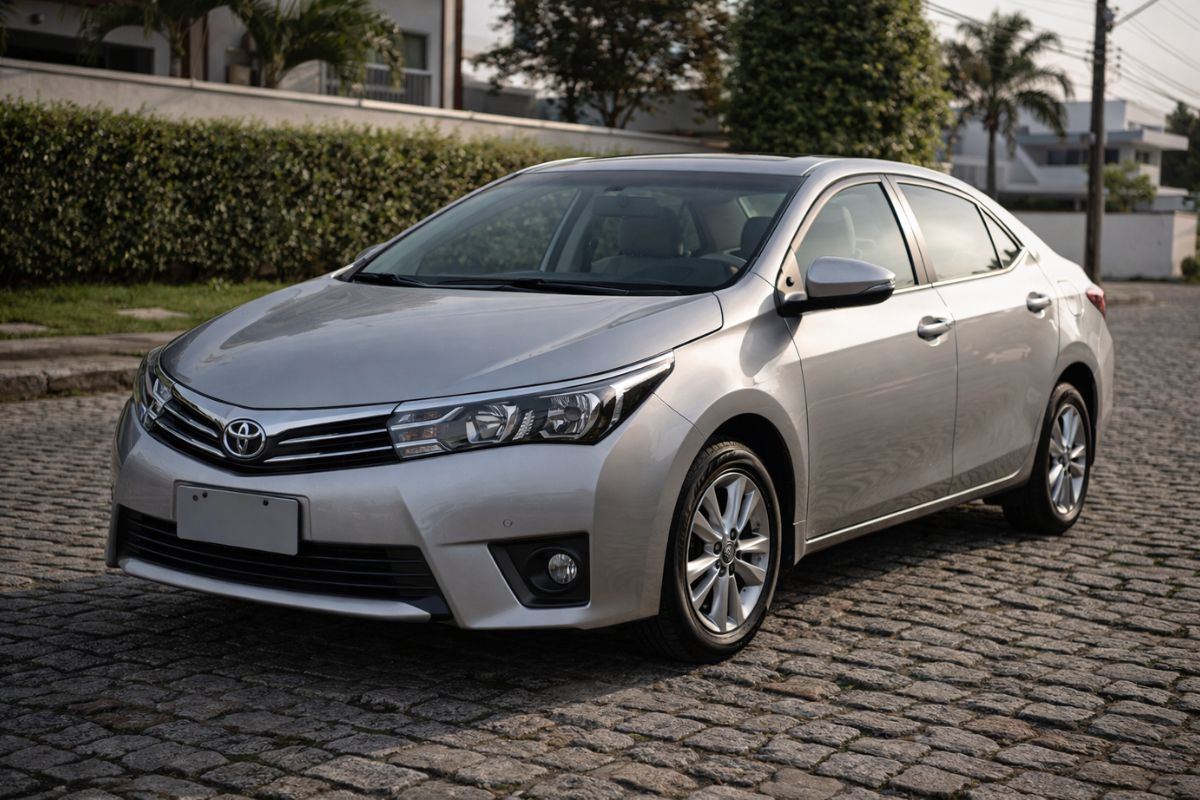
The Corolla from 2015 to 2019 depreciates so little that a 10-year-old model is still worth over 76 thousand reais, and owners treat this sedan as a safe investment thanks to its reputation for durability that no competitor has been able to match.
-
Is it worth considering a financed 2025 HB20 Comfort? A simulation with R$ 50,000 in the bank shows installments ranging from R$ 5,687 to R$ 2,365.

-
Road surveillance in Rio de Janeiro enters a new phase with the installation of more than 140 speed cameras on highways RJ-106 and RJ-104, and DER-RJ expands speed control in high-traffic areas.


Variable Transmissions In Heavy Industry
In heavy industry, the CVT also makes an appearance, but in a different way. We have the hydrostatic transmission, used in machines like harvesters, and electric traction, common in trains and ships. These systems are more robust and can handle the strain of heavier work.
In the world of tractors, variable transmission is also a success. The German company Fendt, for example, created a system that combines hydraulics with gears, showing that the CVT can be strong and resilient.









Seja o primeiro a reagir!