





 Portuguese
  English
  Spanish
  3 min of reading
  5 comments


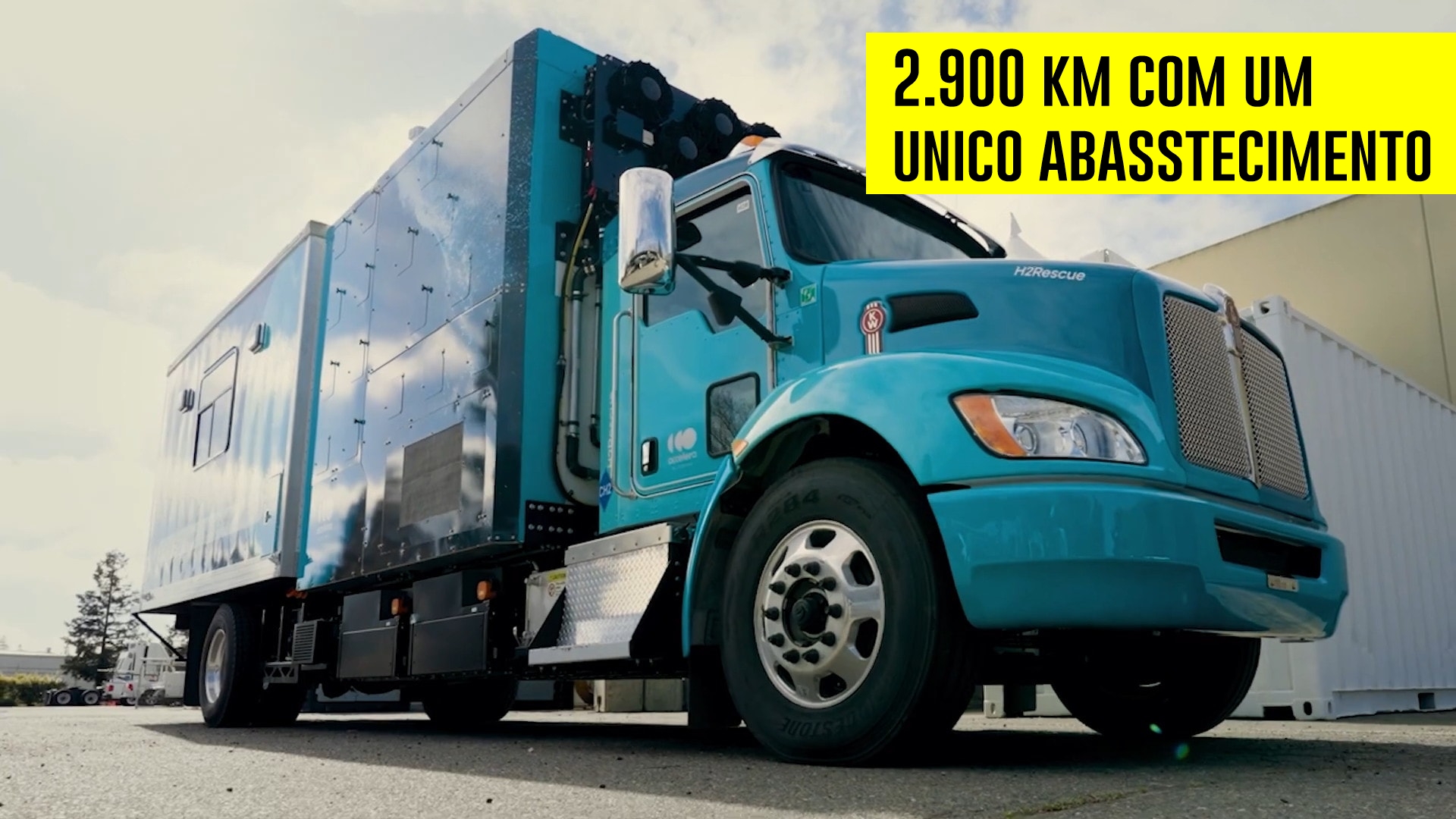


An Innovative Truck Traveled an Impressive 2,906 Kilometers on a Single Fuel Fill, Challenging the Limits of Current Technology.
In a scenario where batteries dominate sustainable alternatives, an incredible feat has brought more attention to discussions about hydrogen as a fuel. An experimental truck, named H2Rescue, managed to cover 1,806 miles (2,906 km), the equivalent of the distance between Rio Grande do Sul and Pará, with a single fill of hydrogen.
The announcement came from the U.S. Department of Energy (DOE) in December, marking an important milestone in automotive technology.

A Project That Unites Forces
The H2Rescue is not an ordinary truck. It is a prototype developed in partnership between the DOE, the U.S. Army, FEMA (Federal Emergency Management Agency), the Department of Homeland Security, and Accelera by Cummins.
-
In a flooded well, archaeologists found a 1,700-year-old Roman egg that still contains clear and yolk intact inside the very thin shell.

-
Something is happening around the Earth: Inside the huge explosion of fireballs in 2026

-
A hot air bubble coming from Argentina expands over Brazil, causing thermometers to exceed 38 degrees with a thermal sensation of 40 degrees in late March, affecting 6 states at once.

-
The radish leaf that almost everyone throws away has more polyphenols, flavonoids, and fiber than the consumed root, and a 2025 study showed that the leaf contains compounds that protect the intestine, combat inflammation, and may inhibit the growth of cancer cells.


Designed to operate in emergency situations, military operations, and public service, the truck uses a Cummins Accelera fuel cell attached to a 250-kilowatt traction motor.
The goal is clear: to replace fossil fuels with hydrogen in critical scenarios where efficiency and sustainability are indispensable.

Challenges of Traveling with the Truck
In November, the prototype underwent a rigorous test on the roads of California. With tanks filled with 386 pounds (175 kg) of hydrogen, the truck faced real conditions: heavy traffic during rush hours, average speeds between 50 and 53 mph, and temperatures ranging from 61 °F to 81 °F.
The distance covered was not only a technical achievement. Representatives from Guinness World Records monitored the entire journey to certify the feat.
At the end of nearly 2,000 miles, surprisingly, there were still 15 pounds (7 kg) of hydrogen left in the tanks.
Zero Emissions, Maximum Impact
One of H2Rescue’s greatest assets was traveling the entire distance without emitting carbon dioxide (CO2). In comparison, a conventional fossil fuel truck would have released 301 kg of CO2 to cover the same distance.
The data presented by the DOE goes further: if this technology were applied to government fleets, the annual savings would be 1,800 gallons of fuel, reducing emissions by 2.5 metric tons of CO2. These numbers reinforce hydrogen’s potential to transform sustainable mobility.
Hydrogen vs. Batteries
Despite the success, hydrogen still faces challenges in competing with batteries in the automotive market.
The industry has prioritized electric vehicles, leaving hydrogen restricted to specific niches. However, for applications like those of H2Rescue, it proves superior, particularly in range and environmental impact.
For example, battery-powered trucks face limitations regarding battery weight and recharge time. Hydrogen, on the other hand, offers greater range and significantly shorter refueling times, critical factors in emergencies or long-duration operations.
What’s Next?
Although H2Rescue’s record is impressive, there are still no guarantees that research will yield commercial solutions in the short term. However, the DOE hopes that the armed forces and government agencies will lead the adoption of the technology, especially in fleets requiring high performance and sustainability.
This milestone reinforces that hydrogen should not be dismissed as an option for sustainable mobility. Its efficiency, combined with environmental benefits, positions it as a promising alternative, especially for specific segments.
The H2Rescue has not only set a world record but has also shown that hydrogen can be a viable tool in the fight against climate change.
With every mile traveled, it leaves a clear message: the transition to a greener future can and should include hydrogen as a protagonist.
With 1,806 miles traveled and an environmental impact close to zero, the H2Rescue is not just a technological feat but a reminder that sustainable alternatives already exist and can be implemented at scale. The question now is: who will have the courage to invest in this path?








Criatividade espetacular que seja bem vindo ao futuro com ar mais limpo.
Mesmo que tenha que gastar energia elétrica para produzir o hidrogênio, ainda o meio ambiente sai na vantagem, pois o diesel, gasta energia elétrica para ser produzido e ainda lança CO2 e outras substâncias na atmosfera, agora se usar energia fotovoltaica ou eólica para produzir o hidrogênio, então ficaria um combustível 100% limpo.
Só esqueceram de contar um pequeno detalhe: quanta energia foi usada para se produzir o hidrogênio utilizado pelo caminhão?
Certo, 1kg de hidrogênio é gasto 55kwh para ser produzido e pelas contas deles 1kg de hidrogênio faz 16,5km, já o diesel é gasto 10kwh… Porém não dá pra saber a média que o diesel faria nessa viagem…