





 Portuguese
  English
  Spanish
  7 min of reading
  1 comment


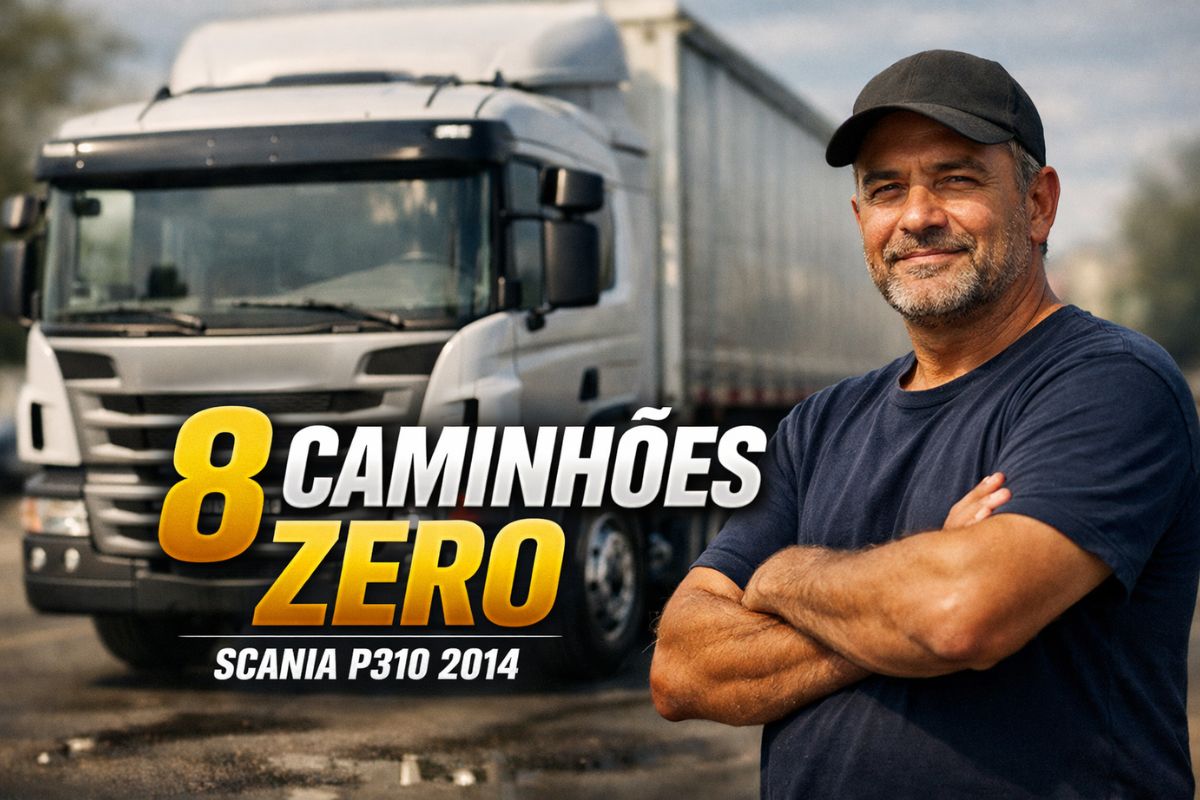


From 1994 To 2019, Autonomous Truck Driver Luiz Transformed His Father’s Old Truck Into Eight New Trucks, With The Help Of A Bank Manager Who Approved The First Financing, Driving Day And Night, Living On Little And Saving Part Of Each Freight In A Separate Account To Avoid Failing To Make Payments
In 1994, when the country was transitioning to the real and financing a new truck still depended on the goodwill of a manager and the approval of FINAME, autonomous truck driver Luiz decided to move away from his father’s old truck and take on the debt of the first zero kilometer truck himself. Without an account at Banco do Brasil and with little financial history, he went to the Rolim de Moura branch in Rondônia to request financing that many said was impossible to obtain.
In the following decades, he would buy new trucks in 1998, 2001, again in 2001, 2008, 2010, 2014, and 2019, totaling eight new trucks over about 25 years between the first and the last. In all transactions, he repeated the same formula: sell the used truck, make a down payment, negotiate with a manager or seller willing to fight for credit, finance for 36 or 60 months, and drive day and night so the truck would “pay for itself” before considering replacing it again.
From Father’s Old Truck To The First Financed Zero

Before appearing with an automated Scania and a fleet distributed among family members, Luiz started with a used truck bought from his father.
-
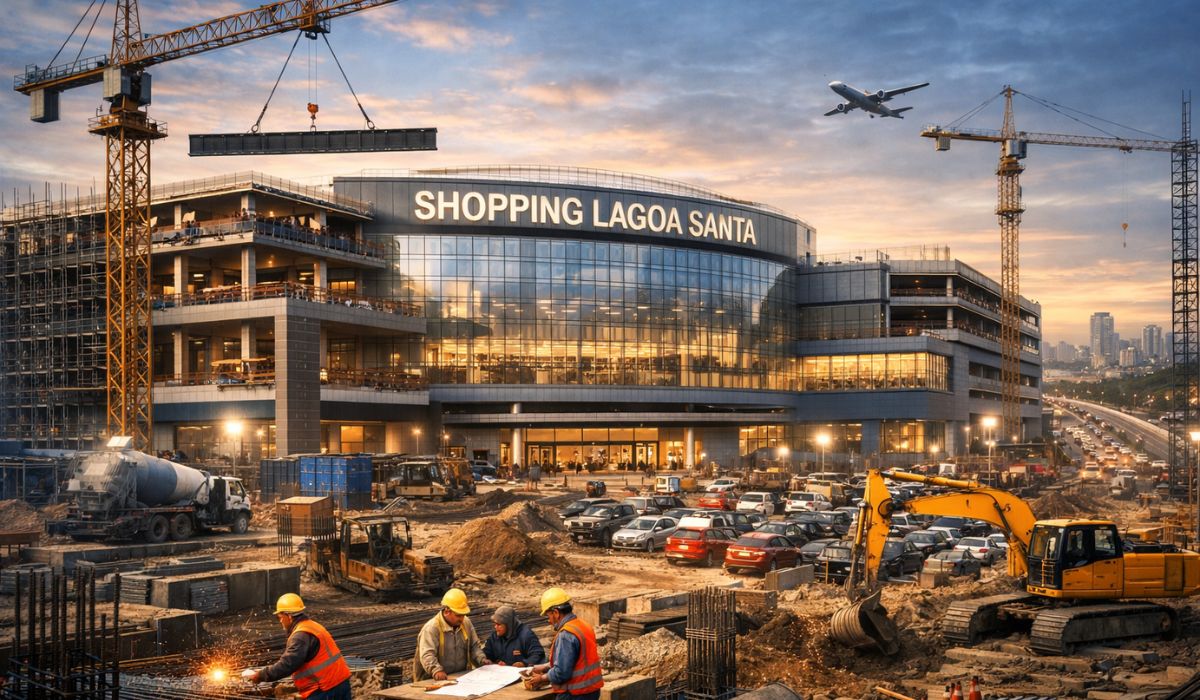
A new Brazilian shopping center worth R$ 400 million will be built in an area equivalent to more than 4 football fields, featuring 90 stores, 5 cinemas, a supermarket, a college, and parking for 1,700 cars, potentially generating 3,000 jobs.
-
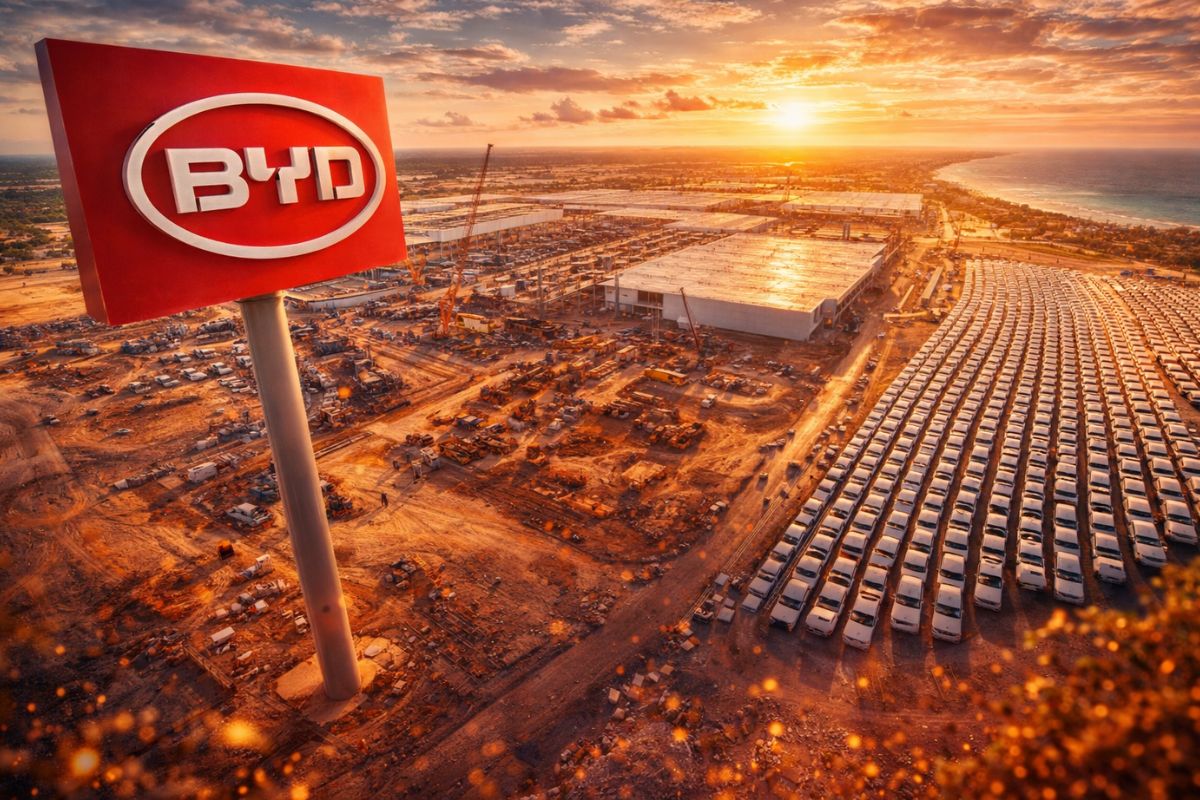
Larger than entire cities in Brazil: BYD is building a 4.6 km² complex in Bahia with a capacity for 600,000 vehicles per year, but the discovery of 163 workers in conditions analogous to slavery has shaken the entire project.
-
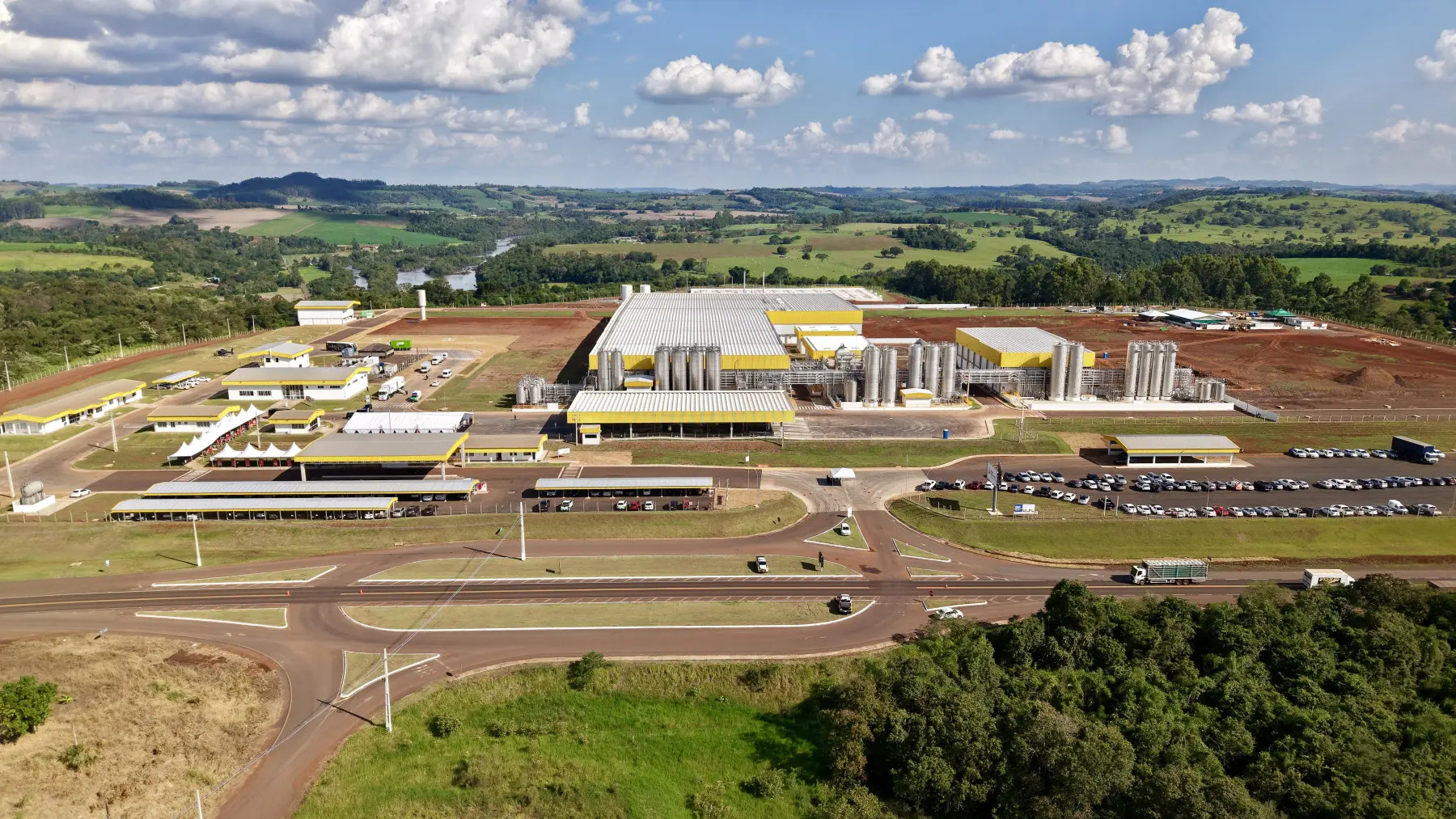
With an investment of R$ 612 million, a capacity to process 1.2 million liters of milk per day, Piracanjuba inaugurates a mega cheese factory that increases national production, reduces dependence on imports, and repositions Brazil on the global dairy map.
-
Brazilian city gains industrial hub for 85 companies that is equivalent to 55 football fields.
This old truck was what guaranteed the down payment for the first new truck, when he decided to sell the vehicle and use the entire amount for the new financing.
The logic was simple and rigid. Instead of setting aside a fixed salary for himself, the autonomous truck driver organized his finances so that all the money left over from the truck, after fuel and travel expenses, was used for the installment.
To live, he took only the minimum for food and basic needs.
In the first financing, in 1994, the term was 36 months, with six months of grace.
His personal rule, however, was clear: the truck needed to “defend itself” financially, that is, generate enough cash to pay for its own installment, without relying on external income from the family.
The Deciding Role Of The Banco Do Brasil Manager In 1994
The turning point came when the autonomous truck driver, still without a bank account, decided to seek a manager at Banco do Brasil in Rolim de Moura.
He himself states that the institution found it difficult to release credit for a new truck at that time, especially for those who had no robust history or formal guarantees.
The initial suggestion was to put the financing in his father’s name, who already had an account and land at the bank.
However, the manager rejected this alternative and insisted on financing in Luiz’s name, arguing that he was the one who would be working with the truck.
The manager set up the operation, took on the risk, and even guaranteed that, if FINAME did not approve, Banco do Brasil would pay the manufacturer for the truck.
The new vehicle, from a Mercedes manufacturer, was initially intended for another client who would pay in cash, but that deal did not go through.
With the manager’s intervention, the autonomous truck driver managed to get the truck that would have gone to another buyer, in the midst of the currency transition to the real. This first approval paved the way for all subsequent financings.
From Sequence Of Purchases To A Total Of Eight New Trucks
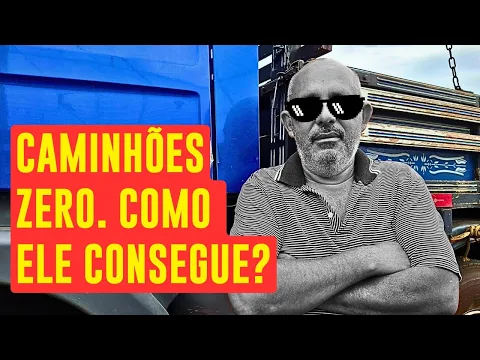

After the first new truck in 1994, Luiz entered a planned sequence of exchanges. According to him, the second new truck came in 1998.
In 2001, the pace accelerated, and two trucks were purchased in the same year, expanding the work structure.
In 2008, another new truck joined the fleet. In 2010, another one, following the same discipline of making a down payment with a used truck and long-term financing.
In 2014, he bought the Scania P310 shown in the interview, already with a fourth axle and automated transmission, financed over 60 months.
In 2019, he acquired another Scania, model 320, which is now driven by his son.
Adding all the transactions, the autonomous truck driver counts eight new trucks throughout his career.
The majority of the previous vehicles were from the same traditional brand; the shift to Scania only occurred in the most recent phase, when a seller managed to approve the credit directly at the manufacturer’s bank after several failed attempts.
Financial Discipline: Living On Little And Saving Each Freight
When asked why some drivers can’t buy a new truck while he has accumulated eight, Luiz sums up the difference in two points: the right help at the beginning and extreme control of money.
On the control side, his strategy was to not pay himself a formal salary while there was a financed truck.
All the revenue from freight was centralized.
He paid for diesel, maintenance, and travel expenses, and whatever was left went directly into a separate account for the truck installment and future vehicle needs.
This approach meant living on little for years, minimizing personal withdrawals.
For the autonomous truck driver, the main goal was to ensure that the installment was paid on time, preserving a positive history with banks and financing programs like FINAME and, later, the lines geared towards the sector, known in the market as pro-truck driver.
FINAME, Pro-Truck Driver, And The Need To Open A Business
As the fleet grew, technical limits of the financing programs arose. At one point, Luiz already owed one truck and wanted to finance another.
The rules did not allow him to have two simultaneous financings as an individual.
The solution was to open a company to facilitate the purchase of the second truck, separating operations under CNPJ and expanding credit capacity.
He reports that he initially used FINAME and later lines known as pro-truck driver to expand the fleet, always with help from managers and sellers who were willing to set up the process correctly.
This combination of relationships with the bank, proper documentation, and a good payment history was crucial for the approval of new financings in sequence, even during periods when other truck drivers reported difficulties accessing the same programs.
Working Day And Night, Few Stops, And Roads Different From Today
To make the installments fit the budget, Luiz recalls a routine of intense trips.
On routes between Rondônia and São Paulo, he says he could arrive in about two days, something he considers unfeasible today.
The context was different: fewer radars, fewer speedbumps, fewer vehicles on the roads, and trucks with fewer time restrictions.
He claims that he drove practically day and night, with few stops, to ensure that the truck could cover the installment and his own expenses.
Regarding the use of stimulants to keep up the pace, the autonomous truck driver admits that, at that time, some drivers resorted to substances to stay awake, but he insists that, in his case, it was “very little” throughout his career.
His central message today is that schedule discipline, route planning, and proper maintenance are more important than trying to compensate for fatigue with dangerous shortcuts.
Comfort And Technology In The Scania P310 Purchased In 2014
The truck highlighted in the interview is a Scania P310, year 2014, with a fourth axle and automated transmission.
Luiz explains that it was his first automated truck and that the adjustment was quick, precisely because the comfort and reduction of physical effort are significant compared to previous models.
According to him, the P310 averages around 3.3 kilometers per liter on the roads of São Paulo, Rondônia, and Mato Grosso, performance that he considers adequate for the type of operation he conducts.
The cabin, with air suspension and a more comfortable configuration, reduces fatigue by the end of the day and improves the working conditions for the autonomous truck driver on long trips.
Today, his son works in a Scania 320, year 2019, also bought new.
With this, the family maintains two state-of-the-art trucks in operation, a direct result of decades of discipline built around the same financial model: strong down payment, negotiated financing, freight directed towards the installment, and controlled personal consumption.
Why He Decided Not To Change The Truck Again Now
Even with a history of successive exchanges, Luiz reports that, about a year before the interview, he did negotiate a new swap of the 2014 Scania for a more current model.
He spoke with a representative of the manufacturer, discussed prices, but gave up when he did the final calculations.
According to him, the price difference became too high in relation to the available freight in the market, leading to the conclusion that trading at that moment would not be financially viable under the same conditions as before.
Thus, he preferred to stick with the current, fully paid truck, reducing financial risk and preserving the balance of the operation.
In light of the story of an autonomous truck driver who moved from his father’s old truck, bought eight new trucks, and only advanced when the numbers added up, do you think it is still worthwhile to take on heavy truck financing today, or is it better to focus first on savings and guaranteed freight before entering into debt?







Também comprei um em 2014, muito bom o caminhão.