





 Portuguese
  English
  Spanish
  5 min of reading
  0 comments


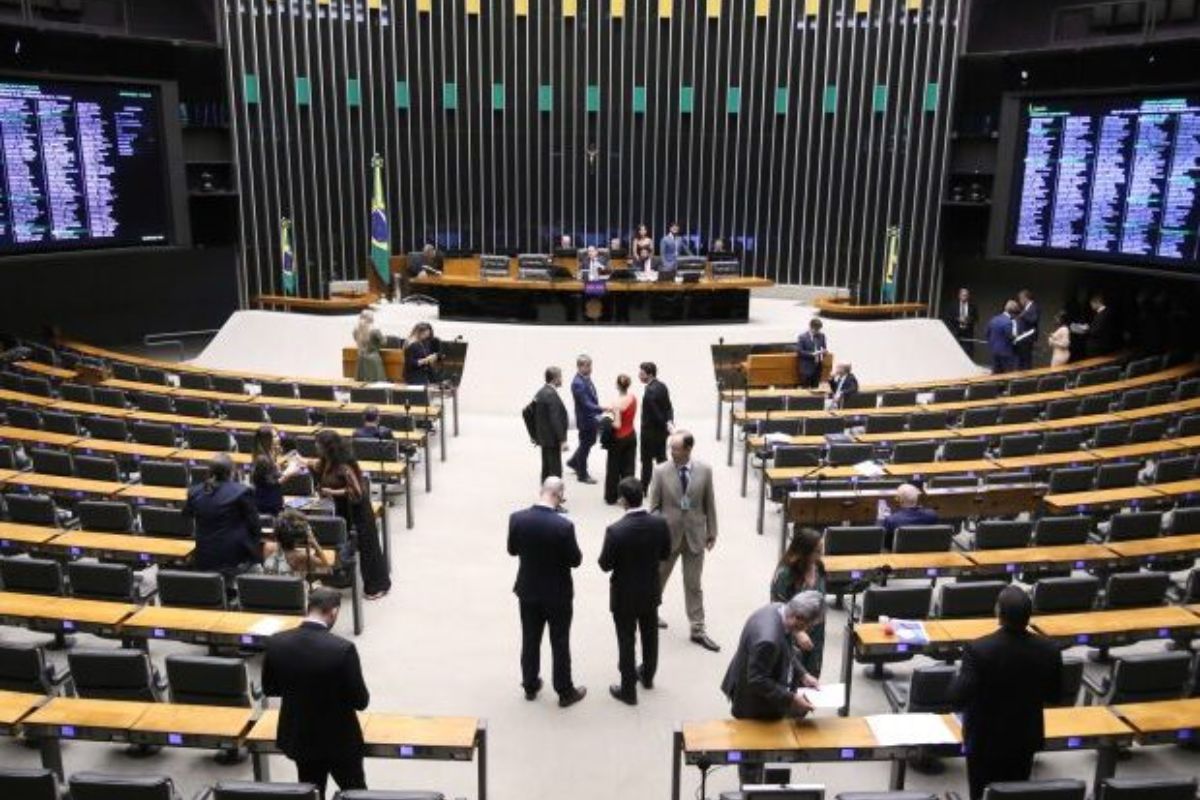
The Chamber of Deputies Approved, In Symbolic Vote, A Package That Restructures Careers, Creates Positions, And Revises Executive Servers, As Well As Opening Space For New Grants. The Estimated Impact Is 4.3 Billion In 2026 And 11 Billion Until 2028, With Texts Going To The Senate, After Agreement With The Government.
The Chamber of Deputies Approved This Tuesday (3) A Set Of Bills That, In Practice, Rearranges Careers In The Executive, Authorizes Adjustments For Servers, And Creates New Structures In The Federal Government, With An Estimated Impact Of 4.3 Billion In 2026.
The package was voted on symbolically, without counting votes, after four proposals were attached into a single text to expedite the processing. The approved measure now goes to the Federal Senate, where the proposals still need to be approved by the senators.
Why The Package Advanced So Quickly And What Was Voted On At Once
The concentrated vote did not happen by chance. Four projects were gathered into one after an agreement between the Chamber and the government, shortening the path to approve adjustments and reorganizations that were under negotiation. When different proposals enter the same “package,” the plenary decides more quickly, but the debate tends to be less granular.
-
The largest food company on the planet, JBS, has just opened a 4,000 square meter laboratory in Florianópolis to develop customized proteins that modulate muscle mass gain, immune response, and metabolic performance.

-
After nearly 30 bids and competition among industry giants, a Spanish company purchases one of the largest airports in Brazil for almost R$ 3 billion and takes over the management of Galeão in a concession that will last until 2039.

-
The Federal Revenue Service now automatically cross-references everything you declare with data from banks, credit cards, brokerage firms, and insurance companies, and any discrepancy between your income and your expenses triggers an alert in seconds.

-
Amid global tensions, Brazil blocks the United States’ proposal at the WTO and paves the way for a trade crisis and possible retaliations.


The chosen process also stands out: symbolic voting, without a nominal scoreboard. This does not mean the absence of impact, just a method of deliberation in which there is no individual record of each vote. In practice, the Chamber of Deputies assumed the political cost of consolidating distinct themes in the same movement, leaving the Senate to discuss adjustments and potential resistances.
The Public Account: 4.3 Billion In 2026 And 11 Billion Until 2028
The reported impact for 2026 is 4.3 billion, with a projection of 11 billion until 2028. Members of the Ministry of Management indicated that values formulated in 2025, when the projects were presented, apply to the current year. This detail is crucial because it changes the understanding of “when” the spending materializes.
Within the same set, one of the projects also included a forecast for a reduction of 8.1 billion in expenses. This is data that often turns into a narrative dispute: on one side, the immediate cost; on the other, the attempt to show compensations. In the end, what matters to the taxpayer is how expenses and savings behave over time, especially when part of the adjustments and restructurings have continued effects.
Who Receives An Adjustment And Which Careers Are In The Restructuring
Among the most sensitive points are adjustments and changes in Executive careers. The package mentions alterations for the Tax and Customs Careers of the Federal Revenue and for the Labor Fiscal Audit, in addition to doctors and veterinarians of the Career Plan for Technical-Administrative Positions in Education.
The political justification often revolves around salary repositioning and functional reorganization, but the practical effect is one: changing remuneration and career design impacts the budget and also the expectations of other categories.
In the summary of what was approved, it appears that Revenue servers could reach a basic salary of up to 32.5 thousand, which raises the temperature of the debate over ceilings, additional benefits, and equality.
Positions And Vacancies: MEC, MGI, Anvisa And ANS In The Same Package
Another heavy block of the package approved in the Chamber of Deputies is the creation of vacancies and positions, focusing on education and regulation. The creation of 16,000 positions in the Ministry of Education and in MGI was foreseen, in addition to the creation of a special position plan within the Education framework.
The detailed division includes 9,587 teaching positions for federal education institutions, 2,490 positions for education analysts, and 4,286 for technicians.
There are also 750 higher-level positions for a technical analyst in Socioeconomic Development and another 750 for a technical analyst in Justice and Defense. In parallel, positions are being created at Anvisa and new vacancies for ANS. The design mixes workforce expansion with administrative reorganization, which extends the package’s scope beyond just adjustments.
Grants, RSC And Compensatory Leave: Where The Controversy Lies
The package also opens space for specific grants in positions that cannot be classified within the support career and for recognition of knowledge and skills (RSC) in the technical-administrative education plan. These are items that, in the daily routine of the public service, alter incentives, progression, and effective remuneration, often more than the “dry” adjustment.
Additionally, a new grant for Legislative servers and the creation of a compensatory leave described as an additional benefit that can allow salaries to exceed the constitutional ceiling is presented.
This type of provision tends to divide the debate into two axes: the argument for compensation for functions and job requirements, and the criticism that the sum of additional benefits undermines the idea of a remuneration limit.
Federal Institute Of The Sertão Paraibano: Patos, Rectory And Resources Of The New PAC
In the midst of the package, the Chamber of Deputies also approved the creation of the Federal Institute of Sertão Paraibano, in Patos, considered an electoral stronghold of the House president, Hugo Motta. The political component appears in the timing: the proposal would have expedited the vote, and in the plenary there was gratitude to Luiz Inácio Lula da Silva for the Executive’s authorship.
The city already had a campus of IFPB, but the new institute foresees an independent rectory. The text mentions an investment of 10 million included in the criteria of the New PAC and 2.9 million in 2026 for the operating expenses of the new rectory. In practice, this transforms a local structure into a regional decision-making center, with its own budget and management.
“Promised Modernization”: Special Journeys And Expertise Via Telemedicine
In addition to salaries and positions, the package included measures described as modernization. Among them, the establishment of special work schedules and the possibility of medical expertise via telemedicine or document analysis. This type of change generally aims at productivity, reduction of waiting lines and standardization of procedures, but it also raises questions about control, transparency, and quality of assessment.
When this set enters the same package as adjustments and the creation of positions, the discussion becomes more complex.
It’s Not Just “Spending More” Or “Spending Less”: It’s Redesigning How The State Contracts, Remunerates, Evaluates And Operates, With Reflections On Service Provision And The Permanent Cost Of The Public Machine.
The Chamber of Deputies Condensed, In A Single Vote, Decisions That Affect Salaries, Careers, Remuneration Ceiling, Vacancy Expansion And The Creation Of A New Federal Institute, With An Immediate Impact Of 4.3 Billion In 2026 And A Projection Of 11 Billion Until 2028.
The package goes to the Senate, where the dispute tends to focus on the balance between administrative necessity, fiscal cost, and public perception of remuneration justice.










Seja o primeiro a reagir!