





 Portuguese
  English
  Spanish
  3 min of reading
  0 comments


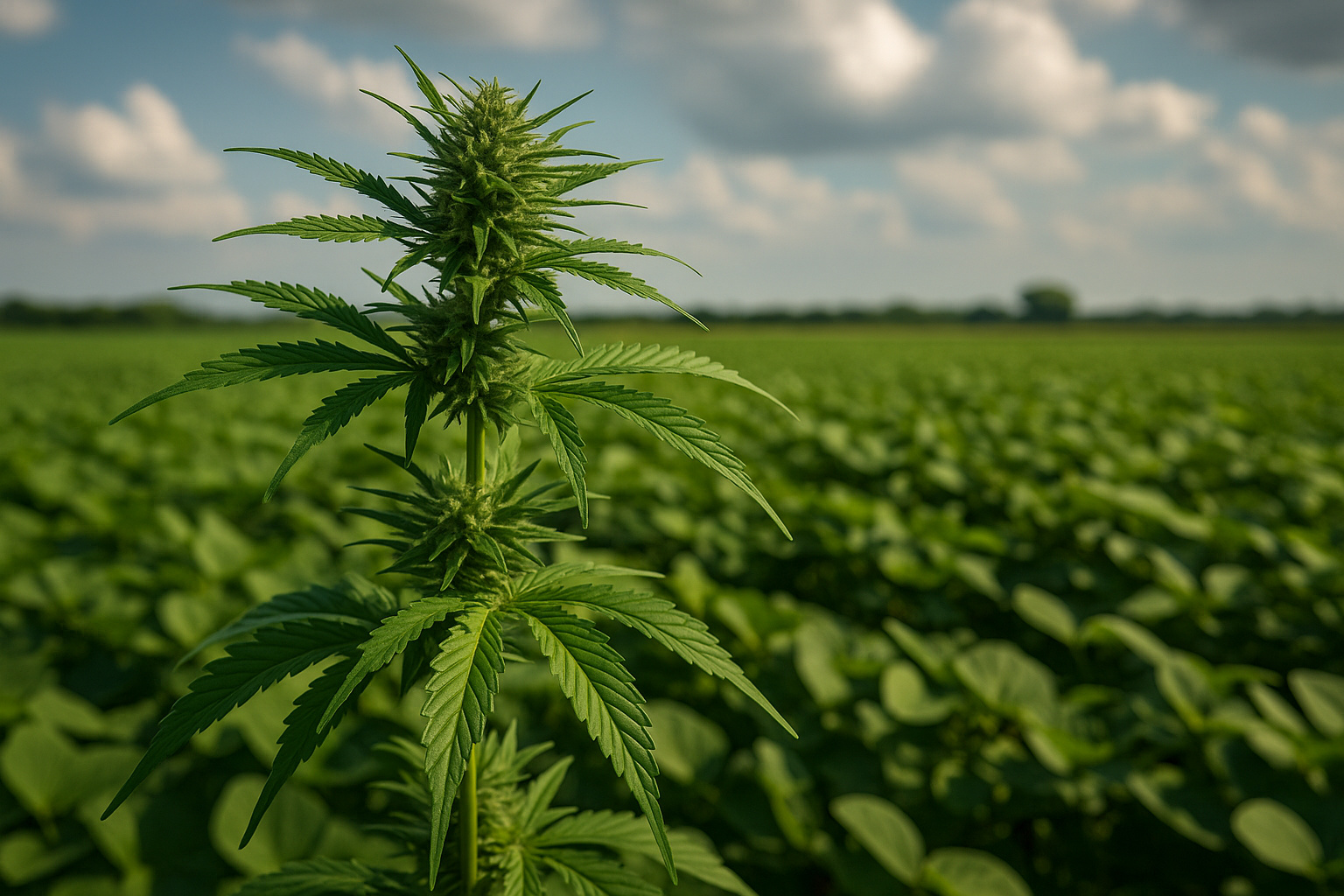
Research Shows That Industrial Hemp Cultivation Offers Returns Much Higher Than Soy and Can Generate Jobs and Innovation in the Fields
The industrial hemp, a plant of the variety “Cannabis sativa” with less than 0.3% THC — thus without psychoactive effect —, has stood out as a profitable and sustainable alternative for Brazilian agribusiness.
According to a study released by Kaya Mind, cultivation can guarantee a net return up to 11 times greater than that of soy.
The research reinforces the potential of the crop as one of the most promising in the country.
Profitability and Comparison with Other Crops
According to the survey, hemp cultivation for flowers (CBD) can reach R$ 23,306.80 per hectare.
Soy generates about R$ 2,053.34 per hectare and corn R$ 3,398.34 per hectare.
These numbers highlight the high profit potential of hemp and the competitive advantage over other traditional agricultural crops.
Furthermore, hemp can be integrated into existing agricultural systems, utilizing adaptable machinery and reducing production costs.
The cultivation also contributes to soil recovery, as it favors crop rotation and improves the environmental quality of productive areas.
Job Creation and Social Impact
Beyond high profitability, the research highlights that hemp has a strong capacity for job creation.
In Colombia, for example, it is estimated that 17.3 jobs are created per cultivated hectare.
These data reinforce the role of hemp as a tool for rural development and diversification of agricultural production.
In Brazil, the adoption of this crop could boost the local economy and strengthen rural communities.
This movement would be especially relevant in regions dependent on soy and corn, diversifying the productive base of the fields.
-
The water that almost everyone throws away after cooking potatoes carries nutrients released during the preparation and can be reused to help in the development of plants when used correctly at the base of gardens and pots, at no additional cost and without changing the routine.

-
The sea water temperature rose from 28 to 34 degrees in Santa Catarina and killed up to 90% of the oysters: producers who planted over 1 million seeds lost practically everything and say that if it happens again, production is doomed to end.

-
An Indian tree that grows in the Brazilian Northeast produces an oil capable of acting against more than 200 species of pests and interrupting the insect cycle, gaining ground as a natural alternative in soybean, cotton, and vegetable crops.
-
The rise in oil prices in the Middle East is already affecting Brazilian sugar: mills in the Central-South are seeing their margins shrink just as ethanol gains strength.

Industrial Potential and Applications
During a public hearing, researcher Daniela Bittencourt from Embrapa Genetic Resources and Biotechnology emphasized the enormous potential of hemp.
According to her, hemp can be used in more than 25,000 products.
Its uses range from textile fibers and bioplastics to cosmetics and building materials.
This versatility makes the plant a strategic raw material for the bioeconomy.
Hemp also reduces dependence on petrochemical inputs and stimulates sustainable industrial sectors that are growing in the country.
Regulation and Legal Challenges
Currently, the National Health Surveillance Agency (Anvisa) is working to comply with a decision from the Superior Court of Justice (STJ).
The decision recognized the right to import industrial hemp seeds, in addition to authorizing cultivation and commercialization for medicinal and pharmaceutical purposes.
Despite the progress, the main regulatory challenge lies in the definition of the allowed THC limit.
According to Thiago Campos, the director-reporter on the subject, this point must be analyzed with caution to avoid hindering research progress.
The expert emphasizes that it is necessary to balance regulatory control and incentives for pharmaceutical innovation.
Future Perspectives
With regulation underway and growing international interest, hemp is consolidating as a highly profitable and sustainable option.
Its large-scale introduction can strengthen the national bio-industry and stimulate the environmental recovery of degraded areas.
Moreover, cultivation can generate thousands of jobs in the fields, promoting social inclusion and regional economic growth.
The report from Kaya Mind indicates that, with clear rules and incentives for production, industrial hemp can revolutionize Brazilian agribusiness.
The crop offers expressive profits, environmental sustainability, and technological innovation.










Seja o primeiro a reagir!