





 Portuguese
  English
  Spanish
  3 min of reading
  0 comments


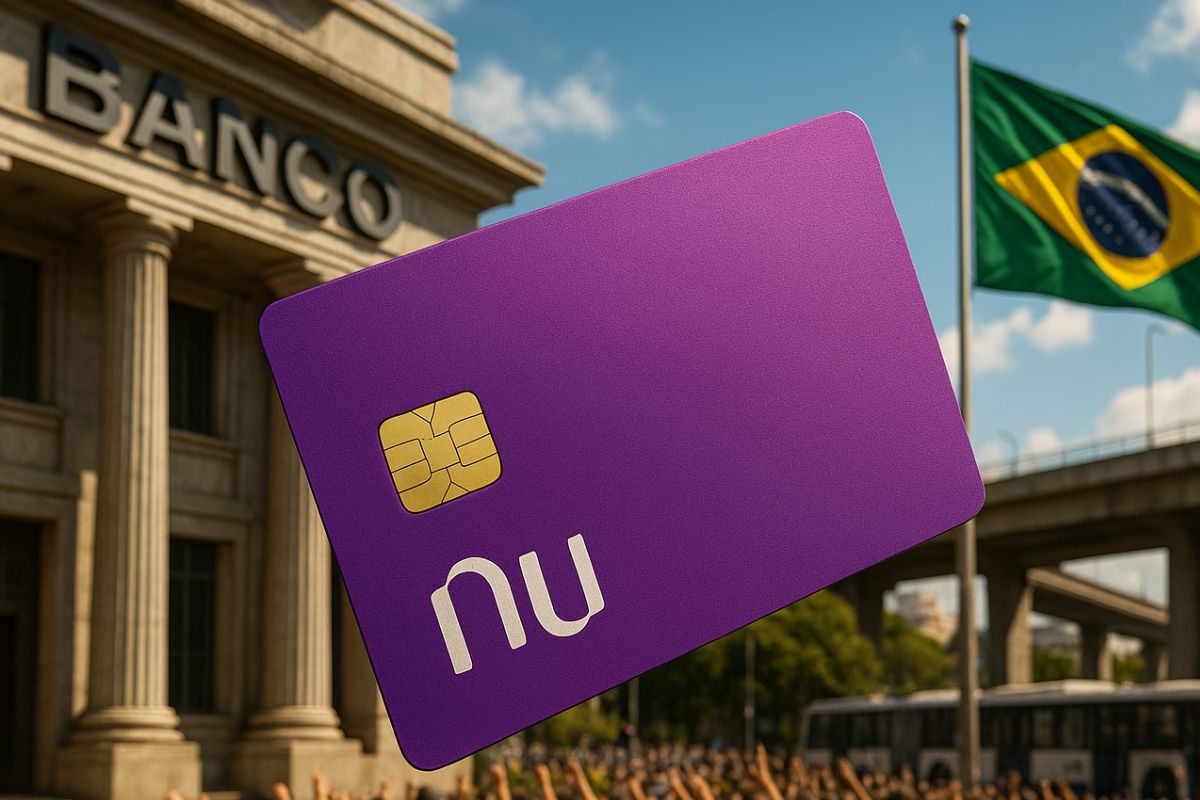
How A Purple Credit Card And A Mobile App, Nubank, Capitalized On Popular Dissatisfaction To Build An Empire And Force A Transformation In The Entire Brazilian Financial Sector.
The Rise Of Nubank Is More Than A Business Story; It Is A Social Phenomenon That Redefined The Relationship Of Millions Of Brazilians With Money. The Fintech Emerged In A Scenario Dominated By A Few Institutions, Marked By High Interest Rates, Poor Customer Service, And Complex Processes. The Company Proved That It Was Possible To Offer Financial Services Without Physical Branches, Without Bureaucracy, And, Most Importantly, Without The Fees That Frustrated Consumers. The No-Fee Credit Card, Managed By An Intuitive App, Was The Gateway To A Model That Would Change The Rules Of The Game.
The Company’s Remarkable Success Tapped Into A Deep And Long-Standing Public Resentment Against The Traditional Banking System.
By Offering Autonomy, Transparency, And A User-Focused Experience, Nubank Not Only Won A Legion Of Loyal Followers But Also Catalyzed The Growth Of A Fintech Ecosystem, Forcing Established Banks To Respond In Unprecedented Ways.
-
Brazil produces too much clean energy and doesn’t know what to do with it: over 20% of solar and wind capacity was wasted in 2025 while investors flee and 509 renewable generation projects were abandoned in the last year.

-
Piauí will produce a new fuel that replaces diesel without needing to change anything in the truck’s engine and reduces pollutant gas emissions by half: truck drivers from all over the Northeast are already celebrating the news that will arrive later this decade.

-
A new Brazilian shopping center worth R$ 400 million will be built in an area equivalent to more than 4 football fields, featuring 90 stores, 5 cinemas, a supermarket, a college, and parking for 1,700 cars, potentially generating 3,000 jobs.

-
Larger than entire cities in Brazil: BYD is building a 4.6 km² complex in Bahia with a capacity for 600,000 vehicles per year, but the discovery of 163 workers in conditions analogous to slavery has shaken the entire project.


This Competition Resulted In Direct Benefits For Consumers, Who Now Have More Options, Lower Rates, And More Efficient Services Throughout The Market.
The Revolution In Practice: How Nubank Works
The Big Difference Of Nubank Lies In The User Experience, Designed To Be Fully Digital, Simple, And Autonomous.
The Account Opening Process, For Example, Eliminated The Need To Go To A Branch, Present Copies Of Documents, And Speak With A Manager.
Everything Is Done Via The App, With The Submission Of Photos Of Documents And A Selfie, And The Credit Analysis, Based On Algorithms, Usually Takes Just Minutes Or Hours.
This Stands In Sharp Contrast To The Days Of Waiting And The Paperwork Required By Traditional Banks.
On A Daily Basis, The App Functions As A Complete And Intuitive Financial Control Center.
Every Purchase On The Credit Card Appears Instantly On The Statement, Allowing Real-Time Tracking That Prevents Surprises At The End Of The Month.
The Money Sitting In The Account Earns Automatically At 100% Of The CDI, A Huge Advantage Over Traditional Savings.
Even Security Issues, Such As Blocking A Lost Card Or Creating A Virtual Card For Online Purchases, Are Resolved Immediately By The User Himself, Without The Need To Call A Customer Service Center And Navigate Through Endless Menus.
The Impact On The System And The Reaction Of The Giants
The Exponential Growth Of Nubank Did Not Go Unnoticed And Sent Shockwaves Throughout The Sector.
The Disruption Caused By The Fintech Forced Traditional Banks To Step Out Of Their Comfort Zones.
In An Attempt To Compete And Retain Customers, Especially Younger And More Digitized Ones, Market Giants Launched Their Own Digital Platforms, Such As Next (From Bradesco) And Superdigital (From Santander).
This Movement Was A Tacit Admission That The Old Model, With Its High Cost Structure And Focus On Profit Over Service, Was Outdated.
In Addition To Pressuring The Big Players To Innovate, The Success Of Nubank Validated The Business Model Of Fintechs In Brazil, Encouraging The Emergence Of A Vibrant Ecosystem With Companies Focused On Specific Niches, Such As Financial Management, Investments, And Secured Loans.
Although This New Dynamic Has Generated Regulatory Battles, The Final Balance Was Positive For Consumers.
The Intense Competition Increased Financial Inclusion And Started To Put The Customer At The Center Of Attention In A Sector Historically Criticized For Poor Service And High Costs.
Nubank Proved That A Customer-Centric Business Model Leveraged By Technology Could Not Only Compete But Also Challenge A Powerful Oligarchy.
Its Most Important Legacy May Be The Empowerment Of The Consumer.
The Change It Initiated Continues To Shape The Future Of The Financial Sector In The Country, Showing That Dissatisfaction Can Indeed Be The Driving Force Behind A Revolution.
Did You Switch From A Traditional Bank To Nubank Or Another Fintech? Did The Experience Really Turn Out To Be Better And Cheaper? Leave Your Opinion In The Comments — We Want To Hear From Those Who Have Lived This Transformation In Practice.










-

-

-

10 pessoas reagiram a isso.