





 Portuguese
  English
  Spanish
  4 min of reading
  1 comment


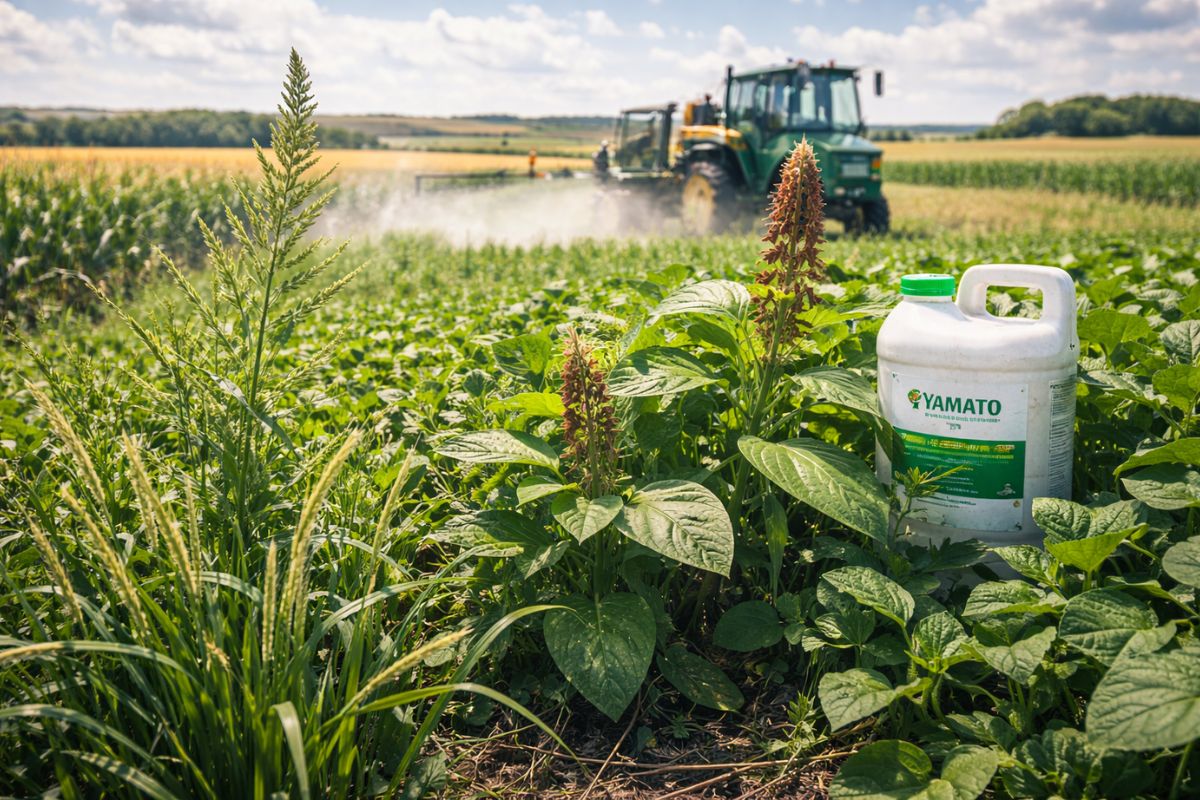


The Grass That Grows in the Corners of the Field Can Compete for Water, Light, and Fertilizer, Causing Estimated Losses of Up to 15% Worldwide and Requiring Pre-Emergence to Protect Soy, Corn, and Profit
The grass that many people see as weeds by the roadside can be an expensive and persistent problem for farmers. At the base, names like caruru, buva, and amargoso appear as “monsters” of the fields, but the focus is on one specific enemy: the chicken-foot grass, known for its resistance and for coming back when it finds a corner without control.
The central point is simple and heavy on the wallet: when grass and other weeds compete with crops like soy and corn, they fight for water, light, space, and nutrients and can lower the final yield. If productivity drops, the cost appears throughout the entire chain, from producer to consumer.
Why Grass, Caruru, and Amargoso Become a Real Problem in the Fields
The base explains that these plants do not “bother just by existing.” The problem is the competition with the main crop. When grass grows alongside soy or corn, it enters the competition early and can shade the crop, draw fertilizer and water, and, in the worst-case scenario, cover and weaken the field.
-
The sugar-energy sector advances with agricultural technology, but agricultural productivity still raises concerns.

-
The eggshell that almost everyone throws away is made up of about 95% calcium carbonate and can help enrich the soil when crushed, slowly releasing nutrients and being reused in home gardens and vegetable patches.

-
This farm in the United States does not use sunlight, does not use soil, and produces 500 times more food per square meter than traditional agriculture: the secret lies in 42,000 LEDs, hydroponics, and a system that recycles even the heat from the lamps.

-
The water that almost everyone throws away after cooking potatoes carries nutrients released during the preparation and can be reused to help in the development of plants when used correctly at the base of gardens and pots, at no additional cost and without changing the routine.

This type of grass also tends to concentrate in areas where the sprayer does not reach well, such as corners, edges, lanes, and around pivots. The grass takes advantage of small gaps and turns them into reinfestation hotspots because it spreads afterwards.
Chicken-Foot Grass: The Resilient “Weed” That Challenges Herbicides

Among the mentioned plants, chicken-foot grass is regarded as one of the most difficult. It appears to be resistant to several herbicides and, therefore, requires a more precise strategy.
The explanation at the base is straightforward: many post-emergence tools can no longer effectively control this type of grass and other resistant weeds.
Moreover, when the grass escapes control and starts producing seeds, the problem grows larger. The base mentions that one plant can produce between 100,000 and 1 million seeds, which helps to understand why the focus needs to be reduced before it becomes a “seed nursery.”
How Grass Affects Soy and Corn in Practice
The reasoning presented at the base is very didactic: the producer invests in seeds, fertilizer, irrigation, and energy for the main crop, but the grass uses exactly the same resources. What would be food for the soy and corn becomes an advantage for the weed.
The grass also acts on light. The crop does not grow large immediately. It grows. And, during this initial period, the grass can shade and delay development. When the grass gets ahead, it seizes space and time, and recovering later is costly.
Loss That Becomes Price: When Grass Impacts Everyone’s Pocket
The base emphasizes a point that connects fields and cities: losses in soy do not stay just on the farm. If the farmer loses productivity due to grass and other pests, the cost reflects in prices throughout the chain. Soy is part of direct food and also in the feed for chicken, pig, cattle, and fish.
Therefore, controlling grass is not a luxury. It is part of the cost of producing food with predictability. When the field loses, the bill tends to appear later on the shelf.
Yamato as a Selective Defense and the Focus on Pre-Emergence
At the base, the technology mentioned to deal with resistant plants is Yamato, presented as a selective defense.
The point of selectivity is important: to control grass and other hard-to-control plants without “harming” the crop, especially when applied at the right moment.
The described approach is pre-emergent, meaning before the weed becomes a large and difficult plant. The idea is to manage the problem at the initial phase, reducing the chance of grass competing with soy and corn. The goal is to prevent grass from entering the game, because afterwards the correction cost is higher.
Edges, Corners, and Pivots: Where Grass Often Escapes
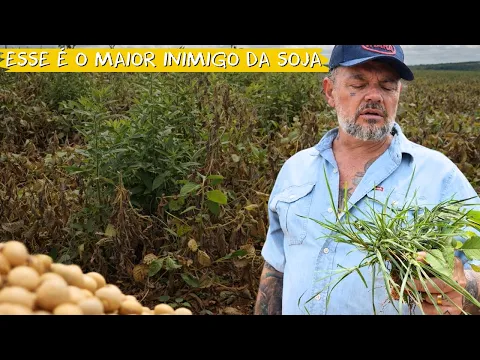

The base shows that many focus points start in “difficult” areas where the sprayer does not reach with the same efficiency.
It is at this point that manual work comes into play, and the insistence on not allowing grass to proliferate, precisely to prevent it from releasing seeds and returning to the rest of the area.
This detail is crucial: controlling only the “nice” part of the crop and forgetting corners and edges creates a factory for reinfestation. Grass does not need much to return; it just needs a gap.
What This Story Teaches About Grass and Intelligent Management
The lesson is very clear at the base: without management, resistant weeds gain ground. And, with resistance, post-emergence solutions do not always work. Therefore, pre-emergent and selectivity appear as strategies to protect productivity and investment.
It also sends a message of productive sustainability: if control fails and productivity drops, the tendency is to seek compensation by opening more area.
The base uses this logic to show why defenses and management can reduce pressure for expansion. Controlling grass precisely can prevent wastage of area and resources.
In your opinion, is the biggest challenge in controlling grass in the field resistance to herbicides, the corners where the sprayer does not reach, or the correct timing of the pre-emergent?








Timing pre emergente