





 Portuguese
  English
  Spanish
  5 min of reading
  0 comments



Capital Now Requires Mandatory Seal for Tourist Vehicles, with Specific Fees and New Rules for Circulation, Operation, and Waste Disposal.
All buses, minibuses, and vans entering Florianópolis are now required to display the Legal Tourism Seal, a digital authorization issued by the City Hall that can cost up to R$ 225 per vehicle.
This requirement, already anticipated since the beginning of 2025, will see increased enforcement starting this Monday (24), focusing mainly on the upcoming summer season when the flow of tours increases in the capital of Santa Catarina.
The seal is issued exclusively online, in a system designed to register each trip, specify where these vehicles can circulate, in which areas they can park, and where they must dispose of waste generated on board.
-
The government requests the Federal Revenue Service for a new system to automate the income tax declaration, reducing errors, time, and bureaucracy for millions of Brazilians.

-
Pix in installments, international Pix, and contactless payment without internet: the Central Bank revealed the new features coming to the tool that is already used by almost every adult in Brazil.

-
Mercado Livre has just started selling medications with delivery in up to three hours to your door, and this move could completely change the way Brazilians buy medicines on a daily basis.

-
In Dubai, rising tensions from the war in the Middle East are causing super-rich individuals to leave the Gulf and direct their fortunes to a new financial refuge in Asia.


According to the municipal administration, the intention is to prevent irregular stops on busy streets, reduce environmental impacts, and organize road tourism without hindering the arrival of visitors.
Rules for Issuing the Legal Tourism Seal
To obtain the Legal Tourism Seal, the vehicle owner must access the City Hall’s electronic system, register, and provide information such as plate number, type of vehicle, number of passengers, and length of stay in the city.
After filling out the information, a payment guide for the corresponding fee is generated.
With the financial compensation, the seal is issued digitally and must be affixed in a visible location on the vehicle to facilitate inspection during municipal agents’ checks.
The requirement applies to tourist passenger transport vehicles registered outside of Florianópolis.
Tourism companies already licensed in the municipality remain subject to local transportation rules but do not need to adopt the specific seal created for visitors, according to previous regulations that led to the establishment of the system.
Vehicle Inspection and Penalties
During inspections conducted at strategic points in the city, such as access to the island and areas with higher tour traffic, city teams will check if the vehicle is compliant.
If the bus, minibus, or tourist van does not have the definitive seal at the time of inspection, the system allows for the issuance of a temporary authorization, valid for 72 hours, for the company to complete the regularization within that timeframe.
Those who do not comply with the requirements will be subject to penalties that vary according to the type of infringement and the category of the vehicle.
Fee Amounts for Buses, Minibuses, and Vans
The fees charged for the Legal Tourism Seal vary according to the size of the vehicle and the type of visit.
For tours without overnight stays, the fee reaches a maximum of R$ 225 for buses, with lower amounts for minibuses and vans.
When the group stays in the city for up to seven days, the fees are reduced: in the case of buses, the cost drops to R$ 105, with proportional reductions for other vehicles.
The fee structure is regulated by a municipal decree that defines prices per visit and per length of stay.
Routes, Circulation, and Operational Restrictions
The electronic system linked to the seal also includes the approved routes for tourist vehicles and indicates sensitive areas where circulation is more restricted.
The proposal aims to prevent large buses and vans from accessing narrow streets or residential areas lacking the infrastructure for such traffic, which often leads to congestion, conflicts with residents, and interference in services like garbage collection or public transportation.
Waste Disposal Points and Authorized Parking
Another important aspect of the new regulations is related to the disposal of waste from onboard bathrooms.
On the same portal where the seal is issued, the City Hall displays specific locations designated for the emptying and proper treatment of these waste materials.
Currently, there are four disposal points distributed across three neighborhoods: one in Canasvieiras, one in Ingleses do Rio Vermelho, and two in Lagoa da Conceição.
The guidance is that disposal should only occur at these locations, under penalty of a citation in the event of illegal disposal in public roads or drainage systems.
Similarly, the system indicates regulated parking areas for tourist buses, equipped to accommodate large vehicles.
Currently, there are three areas registered as official points: two in Canasvieiras and one in the Carianos neighborhood, near the Florianópolis International Airport.
The municipal administration states that the expansion of this parking network is part of a broader package of measures for the high tourist season.
Monitoring the Flow of Visitors
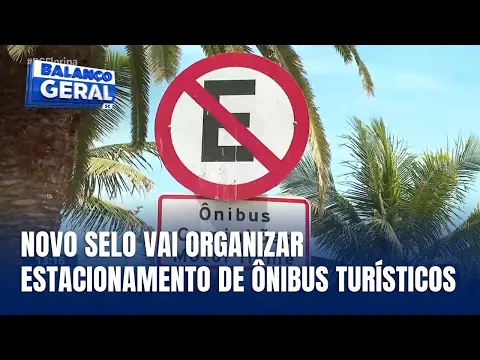

The Legal Tourism Seal has been presented by the City Hall as a tool for control and, at the same time, for improving the quality of the tourism activity.
By identifying and registering each vehicle, the municipality gains information about the origin of the tours, the number of passengers transported, the duration of stays, and the most used routes by groups.
This data will inform future decisions on mobility, infrastructure, and regulation in different regions of the city.
According to the Department of Tourism, Economic Development, and Innovation, the goal is to “monitor the flow of visitors, enhance safety, and improve the organization of road tourism in Florianópolis”.
The department states that the seal helps to balance the increase in the number of tourists with the preservation of residents’ quality of life and protection of natural areas, especially in coastal neighborhoods that concentrate a large volume of tours during the high season.
With the collection of fees, the definition of specific routes, the indication of exclusive parking, and the creation of official points for waste disposal, tourism companies and drivers will need to adapt their operations to continue bringing groups to the capital of Santa Catarina.
In this new scenario of stricter rules, how will tour organizers and visitors adjust their routes and procedures to continue circulating through the city without risk of penalties?








Seja o primeiro a reagir!