





 Portuguese
  English
  Spanish
  5 min of reading
  1 comment


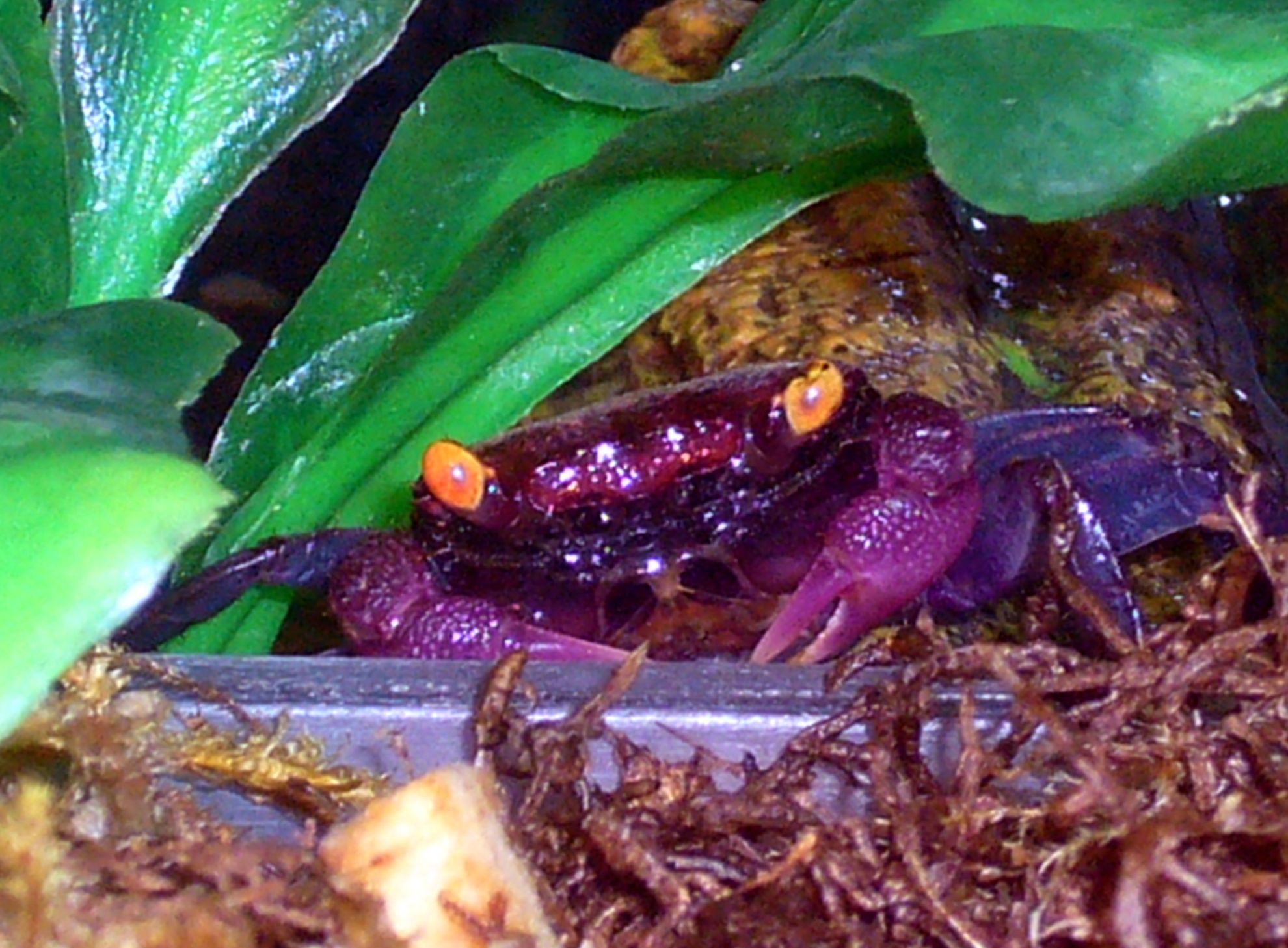


Known As The Vampire Crab, The Geosesarma Lives Outside Water In Forests Of Indonesia, Has Bright Eyes, Vivid Colors And Unique Nocturnal Habits.
Few people imagine, but there is a crab that does not live in the sea, hardly enters the water, and spends a good part of its life walking on the forest floor of dense tropical forests. Commonly known as the vampire crab, the genus Geosesarma includes small, extremely colorful species with bright eyes that catch attention even in low-light environments. The nickname may sound exaggerated, but it arises from a real set of biological characteristics that challenge what one expects from a crustacean.
These crabs are not an aquarium curiosity invented by the internet. They exist in nature, have been scientifically described, have a restricted distribution in Southeast Asia, and represent one of the clearest examples of evolutionary transition between aquatic and terrestrial life among modern crustaceans.
What Is The Vampire Crab And Where Does It Live
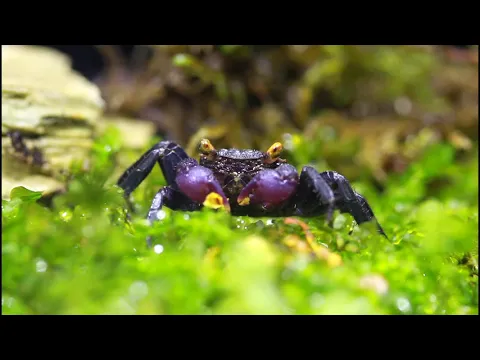

The vampire crab belongs to the genus Geosesarma, which includes dozens of described species, many of them discovered only in recent decades. The most well-known, such as Geosesarma dennerle and Geosesarma hagen, are endemic to Indonesia, especially on the islands of Java, Sumatra, and nearby regions.
-
Oldest tree on the planet reappears after 130 years of searches: Wattieza, 385 million years old, was 10 meters tall and had no leaves or seeds; Gilboa fossils in New York solved the mystery in 2007.

-
A 48-square-meter house assembled in hours with 4,000 bricks made of recycled plastic that does not absorb moisture, has natural thermal insulation, and costs less than 90,000 reais in a complete kit.

-
Luciano Hang revealed that Havan’s air fleet has already accumulated more than 20,000 landings, 10,000 flight hours, and 6 million kilometers traveled, and he says that without the planes, the company would never have grown so quickly.

-
A historical discovery in the Andes Mountains reveals a gold deposit valued at 770 billion reais hidden over 4,000 meters above sea level on the border between Chile and Argentina, and the whole world is watching.


The typical habitat of these animals is moist tropical forests, close to shallow streams, swampy areas, and permanently moist soils. Unlike marine crabs, they do not depend on the ocean or large bodies of water. In practice, they spend most of their time on solid ground, hidden under leaves, logs, roots, and stones.
This choice of habitat is crucial to understanding why they appear so “out of the ordinary.”
Why Is It Called The Vampire Crab
The nickname “vampire” has no relation to blood or parasitism. It arose from a combination of visual and behavioral factors that cause immediate strangeness.
The first of these is the eyes. In several species of Geosesarma, the eyes exhibit an extremely intense yellow or orange color, contrasting with dark shells in shades of purple, burgundy, black, or deep red. In the shaded environments of the forest, these eyes attract attention in an almost hypnotic way.
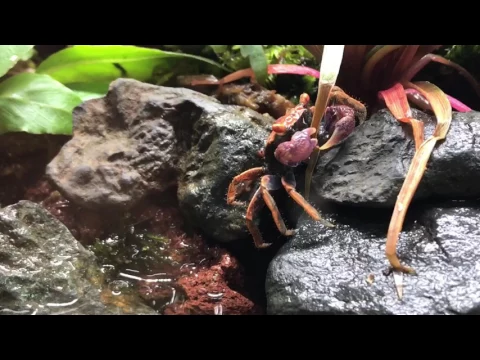
The second factor is nocturnal behavior. The vampire crab is primarily active at night. During the day, it remains hidden in shallow burrows or under the leaf litter. At night, it quietly comes out to feed, reinforcing the association with stealthy creatures and “living shadows” of the forest.
Finally, there’s the psychological factor: a crab that lives outside water, with vibrant colors and bright eyes, completely breaks the common imagination associated with crustaceans. The name “vampire” arose precisely from that sensation of something real, but that seems like it should not exist.
Life Outside Water And Adapted Breathing
One of the most fascinating aspects of the Geosesarma is its adaptation to semi-terrestrial life. Although it still depends on humid environments, it does not live submerged. Its gills are adapted to function in contact with air, as long as they remain moist.
This means that the vampire crab can walk long distances on land, climb on roots, and explore the forest floor without the immediate risk of asphyxiation. Water is necessary, but not as a permanent means of life.
This characteristic places the Geosesarma in a relatively small group of crustaceans that represent a clear evolutionary transition between aquatic and terrestrial environments, something comparable, on a different scale, to what occurred with the first vertebrates that left the water millions of years ago.
Feeding And Ecological Behavior
Despite its dramatic appearance, the vampire crab is not an aggressive predator. It is an opportunistic omnivore. In nature, it feeds on small insects, larvae, plant debris, decomposing fruits, and organic matter available in the forest soil.
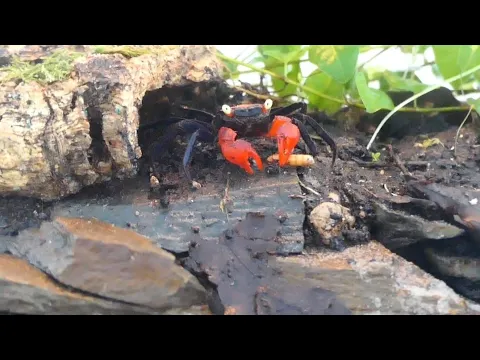
This feeding behavior makes it an important part of nutrient recycling in the ecosystem. By consuming detritus and small invertebrates, it contributes to soil balance and the decomposition of organic matter, functioning as a small “invisible ecological engineer”.
In terms of social interaction, many species are territorial, especially males, who may display defensive behaviors in restricted areas. Still, they pose no risk to humans.
Direct Reproduction And “Miniature” Offspring
Another point that differentiates the vampire crab from many crustaceans is its mode of reproduction. Instead of releasing microscopic larvae into the water, as marine crabs do, the Geosesarma exhibits direct development.
The female carries the eggs under her abdomen until the offspring are fully formed. When they are born, they emerge as small versions of the adult, ready to live on solid ground. This eliminates the need for an aquatic larval stage and reinforces the adaptation to the terrestrial environment.
This reproductive strategy is rare among crabs and explains why these species can remain away from large bodies of water.
Why It Became A Symbol Of Extreme Adaptation
The vampire crab has become popular not only for its exotic appearance but because it represents a real example of how evolution can explore unlikely paths. It shows that crustaceans are not bound to the sea and that life can reinvent basic functions like respiration, reproduction, and behavior when pressed by specific environments.
For science, the Geosesarma is valuable because it helps to understand ecological transition processes, physiological adaptation, and evolutionary diversification in highly specialized tropical environments.
In the end, the vampire crab is neither a monster nor a legend. It is a small real animal that lives hidden in the forests of Indonesia and proves that nature is often more creative and surprising than any fiction.








Eu já ouvi falar que se uma criatura é muito colorida é melhor manter distância. Esse aí não é tão colorido, mas por precaução….