





 Portuguese
  English
  Spanish
  6 min of reading
  3 comments


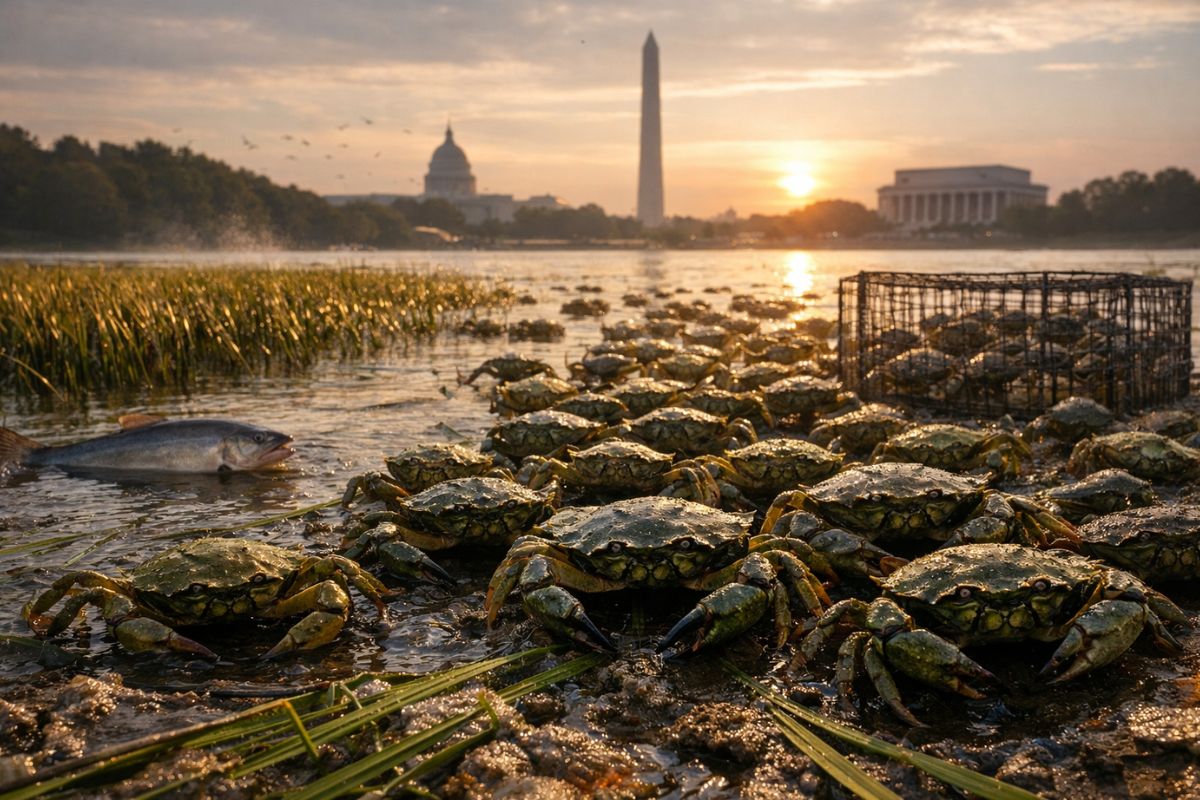


In Northwest Washington, European Green Crabs Threaten North America’s Pacific Coast Eelgrass Meadow. There Are 8,000 Acres That Store Carbon. In Padilla Bay, Volunteers Search for Sprouts and Teams Set Traps to Prevent the Invasion. The Area Protects Salmon, Herring, Dungeness Crabs, and Food for the Samish Nation.
The invasive green crabs have caught the attention of scientists and volunteers in Northwest Washington because they can threaten one of the region’s most valuable ecosystems: 8,000 acres of eelgrass in Padilla Bay, a meadow that supports commercial species and traditional foods for Indigenous communities.
On a cloudy Friday morning, volunteers gathered at the edge of the Padilla Bay National Estuarine Research Reserve to search for sprouts, the shells left after molting. The goal was simple and urgent: detect the presence of green crabs early and prevent the population from establishing.
The Sprout Hunt That Reveals the Presence of Green Crabs

At the reserve, the screening work gained an experienced guide. Angelica Lucchetto, an expert in invasive species, showed how to identify a green crab sprout: five marginal teeth and spines along the front, usually greenish in appearance with spots.
-
While the world looks at oil, the war with Iran is already disrupting helium supply from Qatar, affecting car and iPhone chips, threatening AI expansion, and putting pressure on aluminum packaging at the highest value in four years.

-
Global warming will expose a treasure hidden under the ice of Antarctica and may spark an international dispute over gold and valuable minerals.

-
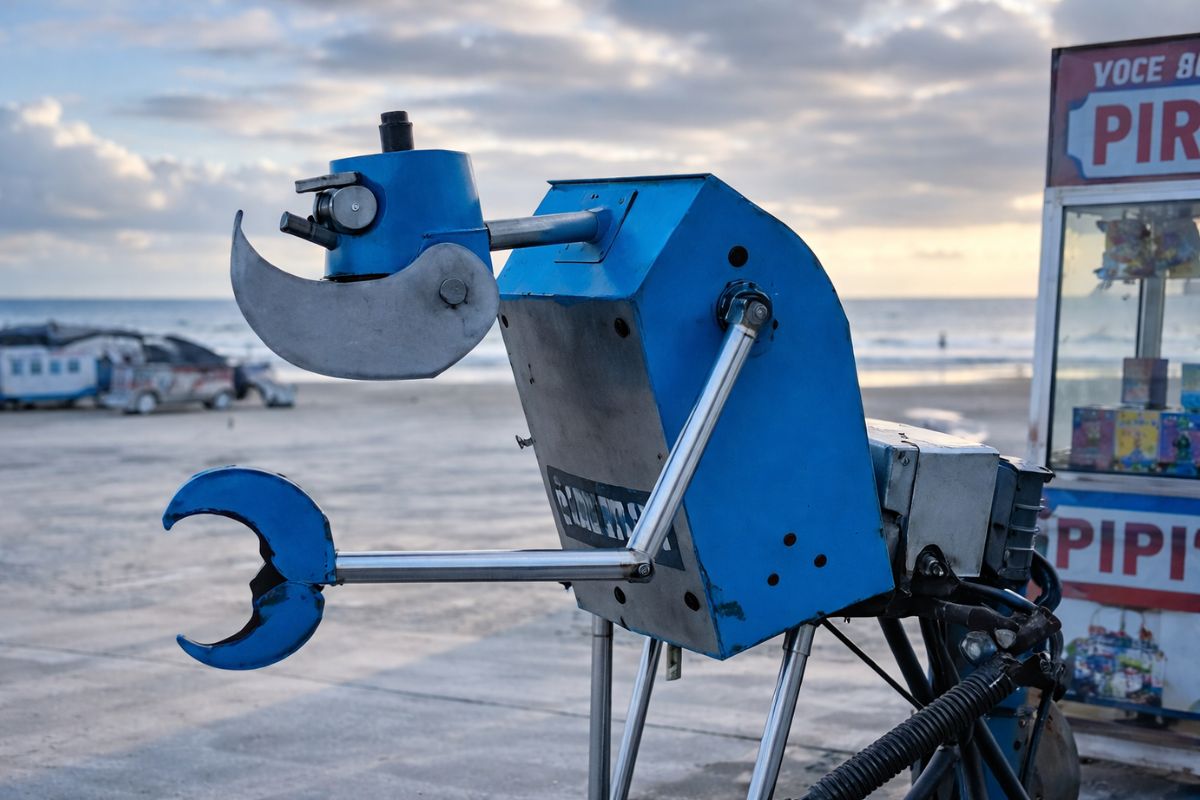
A street vendor from Praia Grande built a robot made of scrap from scooters and washing machines that pulls his popcorn cart on the beach, emits sounds, and interacts with customers, becoming an attraction on the coast of São Paulo.
-
The specifications of the Xiaomi 18 Pro Max have been leaked, and the highlight is a dual 200 MP camera with a new 22-nanometer technology that promises to consume less energy and capture details in shadows and bright areas using LOFIC HDR.


The local search connected to a larger effort: similar groups gathered throughout the Salish Sea region in a “Sprout Blitz,” trying to find signs of the invasive European green crab before the invasion becomes commonplace.
Why Padilla Bay Needs to Protect 8,000 Acres of Eelgrass

According to the portal washingtonstatestandard, the concern over invasive crabs exists throughout Puget Sound, but Padilla Bay has a rare ecological heritage: a giant eelgrass meadow, described as the second largest on the North American Pacific coast.
Jude Apple, research coordinator for the reserve, argues that this area deserves maximum protection because it serves as a nursery and habitat.
Juvenile Dungeness crabs, herring, and salmon rely on this habitat, along with many other organisms.
Traditional Food and Culture: What’s at Stake for the Samish Nation
Beyond the environmental value, there is the cultural value. Sophia Ammons, program manager of GIS at the Samish Indian Nation’s Department of Natural Resources, highlighted that many of the species that use eelgrass are culturally significant and traditional foods.
Maintaining this habitat intact is a way to ensure that species important to the Samish and other coastal tribes continue to exist stably, especially as the pressure from invaders like green crabs increases.
The Superpowers of Eelgrass That Many People Don’t See at Low Tide
At low tide, Padilla Bay becomes a muddy expanse, and the soaked eelgrass may appear as just “strips” spread out on the ground. However, the meadow does silent work that sustains the entire system.
Eelgrass keeps sediment on the bay floor, reduces coastal erosion, and decreases flood risk.
Studies also show that landscapes like Padilla Bay capture and store much carbon dioxide, more than a forest of the same size, helping to slow climate change and reducing water acidification, which harms organisms like shellfish.
A 2024 study added another benefit: eelgrass may eliminate pathogens that could end up on seafood.
The authors observed that mussels near eelgrass had up to 65% fewer harmful bacteria than mussels far from it, suggesting the use of this habitat as a food safety tool.
How Green Crabs Can Destroy the Meadow from Below and Above
Protecting eelgrass is likely to become more difficult with rising ocean temperatures, which hinder plant survival and favor the spread of the deadly disease that causes eelgrass decline. If European green crabs become common, they add additional pressure to an already threatened ecosystem.
These crabs tend to uproot eelgrass while digging for marine worms or shellfish in the mud and sometimes devour the eelgrass itself. Jude Apple summarized the moment as a risk that can still be contained, but grows as the population increases, which is why the reserve sets many traps to prevent green crabs from establishing.
Invaders Don’t Stop at Green Crabs: Billions of Mudsnails in the Mud
Among the eelgrass, researchers also found dozens of Japanese mudsnails, another invasive creature. The estimate is billion of these snails just in Padilla Bay, adding yet another element of pressure to the meadow.
This scenario helps explain why the alert is for a silent collapse: it’s not a single invader but a set of threats that accumulate in an already sensitive environment to warming and disease.
The Warning from the Outer Coast: More Than 1 Million Green Crabs Captured in 2024
On the outer coast of Washington, the problem has already become a reality in some coastal areas. In 2024, more than 1 million European green crabs were captured just between Willapa Bay and Gray’s Harbor, showing how the population can explode when established.
Laura Kraft, a researcher at Washington State University working in Willapa Bay, hopes that Puget Sound biologists can keep the invasive crabs away from precious places like Padilla Bay because on the outer coast, the feeling is that it’s already too late to completely eliminate the invader.
The Study That Raised Urgency: Juveniles Are Also a Threat
Urgency increased in May when a study Laura Kraft worked on showed that even juvenile green crabs can pose a significant threat. The team observed that juveniles can crack open many species of clams and oysters for food and still threaten marine ecosystems.
According to Kraft, European green crabs not only fed on eelgrass but also cut it indiscriminately, and when the blade disappears from the plant, it can no longer grow. The report exposes the mechanism of collapse: cutting blades is not just “eating,” it’s halting regeneration.
Why Puget Sound Took Time to See Green Crabs and Why This Changed
The Puget Sound Strait is described as more protected than the outer coast, with shallower waters and only one entrance and exit, which delayed the arrival of European green crabs. The first sighting in the Strait occurred in 2016.
Still, the number has only increased since then. In 2023, only a few dozen green crabs were found; in 2024, that number jumped to more than 200, indicating a speed-up that has put reserves into rapid response mode.
The Front Line in Padilla Bay: Traps, Cataloging, and the Peak of 2024
In Padilla Bay itself, the routine includes monitoring and capturing European green crabs. Brylee Axelson-Ney, an employee responsible for capturing and cataloging the presence of the invasive species in the bay, also deals with collection and recording to map any advance.
Two environmental techniques, Brylee Axelson-Ney and Brigitta Mathews, began in October 2024, during the largest population surge of European green crabs ever recorded in Puget Sound. This detail connects the regional increase to the local effort, because when the population grows in the surrounding area, the chance of the invasion establishing in sensitive spots increases.
The Power of Volunteers: Molt Blitz, Molt Search, and What the Reserve Wants to See
As Padilla Bay and the Puget Sound Strait are massive, the Washington Sea Grant, an organization that coordinated the Molt Blitz, created a way for citizens to help in monitoring. Besides the blitz, any resident of Puget Sound can contribute data to the Molt Search program at any time of the year.
At the end of the Friday search, the volunteers sorted shells by species and counted how many they had found. The piles only contained brightly colored shells of common native crabs, no European green crab sprout appeared. Angelica Lucchetto reacted with relief: “That’s what we like to see.”
Do you think actions with volunteers like this are enough to hold back green crabs before they become commonplace, or will the inevitable advance require even harsher measures?








Essas espécies invasoras ocorrem por msdade, ou apareceram trazidas por correntes marinhas. Uma lástima para qquer ecossistema.
a foto nao tem nada a ver com a matéria. Baia de Padilha não fica em Washington DC e sim em Washington State …aloooo
Se pode ser consumido logo logo a invasão acaba!😋😋😋😋